
What Is the Difference Between 5000 Watt or 7500 Watt Generator?
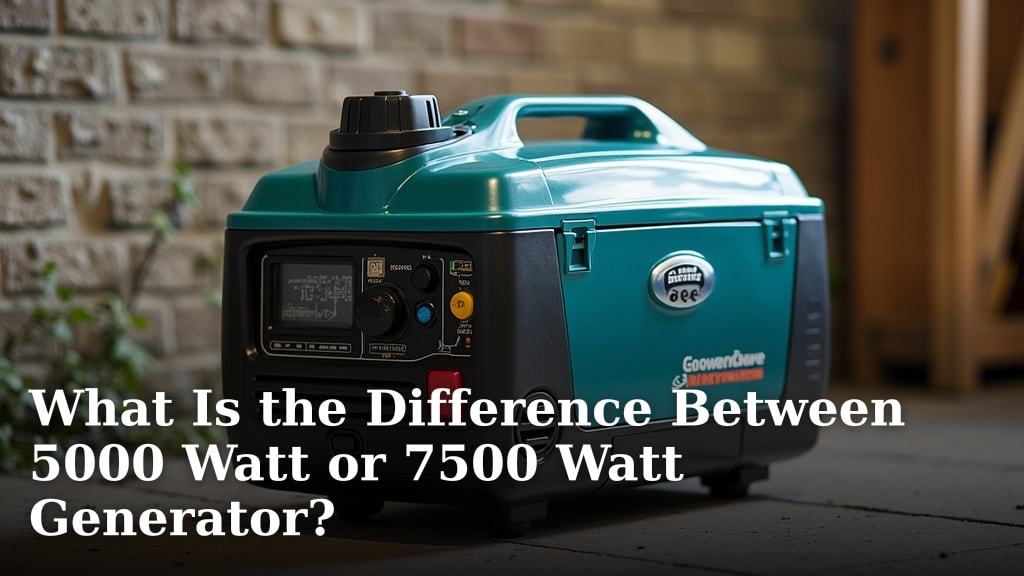
The main difference between a 5000 watt and 7500 watt generator is their power output capacity; a 7500-watt model can run more appliances or larger, power-hungry equipment than a 5000-watt model.
You’re likely asking this question because you need reliable power for your home, job site, or outdoor adventures, right? Choosing the right generator size means you’ll have enough power without spending too much on wasted capacity.
- A 5000-watt generator handles basic home essentials.
- A 7500-watt generator powers more appliances simultaneously.
- Consider starting watts (surge) versus running watts.
- Match generator size to your specific power needs.
- Overpowering or underpowering can lead to problems.
Below, we break down everything you need to know about these two popular generator sizes to help you make a smart choice.
Comparing 5000-Watt and 7500-Watt Generators: What You Need to Know
When you’re trying to decide between a 5000-watt and a 7500-watt generator, you’re essentially looking at how much power each one can provide. The 7500-watt model offers significantly more capacity, allowing you to run a wider array of appliances or heavier-duty equipment simultaneously. Think of it like comparing a sedan to an SUV; both get you around, but one can carry a lot more.
Understanding Generator Wattage: Running vs. Starting Watts
This is where it gets a little technical, but it’s vital for making the right choice. Generators have two important wattage numbers: running watts and starting watts. You’ll often see these listed on the generator itself or in its specifications.
What Are Running Watts?
Running watts, sometimes called continuous watts, describe the power a generator can produce constantly and reliably. This is the wattage most appliances need once they’re already on. It’s the “cruising speed” of your generator.
What Are Starting Watts?
Starting watts, or surge watts, refer to the extra burst of power some appliances need to get going. Appliances with motors, like refrigerators, air conditioners, or power tools, require a brief surge of electricity to kickstart. This surge can be 2 to 3 times their normal running wattage. Once they’re running, they drop back down to their lower running wattage.
If your generator can’t meet these starting watt demands, your appliance won’t turn on, or it might trip the generator’s circuit breaker. You need to account for this when adding up your power needs.
Typical Uses and Capabilities: 5000-Watt Generator
A 5000-watt generator is a popular choice for many homeowners and small businesses. It’s often seen as a good balance of power and portability. Many people find it perfect for basic backup during a power outage.
What Can a 5000-Watt Generator Power?
With a 5000-watt generator, you can typically run several essential items at once. Imagine keeping your food cold and some lights on. We found that most 5000-watt units can handle the following:
- Refrigerator (approx. 600-1200 running watts, 1200-2400 starting watts)
- Freezer (approx. 500-1000 running watts, 1000-2000 starting watts)
- Lights (LED or CFL: 10-200 watts per light)
- Television (100-300 watts)
- Sump pump (750-1500 running watts, 1500-3000 starting watts)
- Well pump (for small wells: 1000-2000 running watts, 2000-4000 starting watts)
- Small window air conditioner (5000 BTU: 500 running watts, 1000 starting watts)
- Furnace fan (gas furnace: 500-800 running watts, 1000-1600 starting watts)
You can run a combination of these items, but you’ll need to be mindful of the total running watts and especially the highest starting wattage of any single appliance. It’s a balancing act!
Typical Uses and Capabilities: 7500-Watt Generator
Stepping up to a 7500-watt generator gives you a lot more headroom. This size is often chosen when you need to power more appliances, larger appliances, or multiple large items simultaneously. It’s a common choice for whole-home backup in smaller homes or for serious job site use.
What Can a 7500-Watt Generator Power?
A 7500-watt generator offers a significant increase in capacity. It can typically handle everything a 5000-watt model can, plus more demanding items. Think about keeping your entire living space comfortable. Our research indicates that a 7500-watt generator often supports:
- All items a 5000-watt generator can run
- Central air conditioning unit (up to 3-ton unit: 2000-4000 running watts, 4000-8000 starting watts) – check your specific unit!
- Electric water heater (4000-5000 watts, but usually not run constantly)
- Multiple power tools on a job site
- Large kitchen appliances like an electric oven (not typically recommended for continuous generator use, but possible for short periods)
- Multiple refrigerators and freezers
- Backup power for a small office with several computers and servers
With a 7500-watt unit, you have much more flexibility. You can often run a major appliance, like a central AC, alongside other essentials without much worry about overload.
Comparing the Two: When to Choose Which
The decision really comes down to your specific power needs and priorities. Are you looking for essential backup, or do you want to maintain a higher level of comfort and functionality during an outage?
| Feature | 5000-Watt Generator | 7500-Watt Generator |
|---|---|---|
| Power Output | Good for essential appliances. | Excellent for more appliances, including larger ones. |
| Common Uses | Emergency home backup (basic needs), small RVs, light job site work. | Whole-home backup (many homes), larger RVs, heavy job site work. |
| Portability | Generally lighter and easier to move. | Heavier, often requires wheels, less portable. |
| Fuel Consumption | Typically less fuel per hour. | Generally consumes more fuel per hour. |
| Cost | Lower initial purchase price. | Higher initial purchase price. |
| Noise Level | Can be loud, but sometimes slightly less than 7500W. | Often louder due to larger engine. |
As you can see, there are trade-offs. The 5000-watt is more budget-friendly and easier to move. The 7500-watt gives you peace of mind with more power, but at a higher cost and typically with more fuel consumption. Think about how long you might need to run it and what you absolutely cannot live without.
Calculating Your Power Needs: A Simple Checklist
Before you buy, grab a pen and paper. We encourage you to make a list of everything you want to power. This is the most important step in choosing the right generator size.
Here’s a quick checklist to guide you:
- List all the appliances you want to power.
- Find the running watts for each item (usually on a sticker or in the manual).
- Find the starting watts for any motor-driven items.
- Add up the running watts of all items you want to run simultaneously.
- Identify the single highest starting wattage of any appliance.
- Add that highest starting wattage to your total running watts. This is your absolute maximum surge requirement.
For example, if your total running watts are 3000, and your refrigerator needs 2000 starting watts (which is the highest starting draw), your generator needs to handle at least 5000 watts of surge power. Your generator’s *running* wattage should cover your *total running* needs, and its *starting* wattage should cover that *surge requirement*. It sounds tricky, but it just means you need a little extra juice for things to kick on.
The Importance of “Headroom” and Future Needs
When you’ve done your calculations, consider adding a little extra wattage as a buffer. This is what we call “headroom.” It’s generally a good idea to aim for a generator that provides 10-20% more power than your calculated needs. Why? Because you might forget an item, or your needs could change. Also, generators operate more efficiently and last longer when not constantly pushed to their absolute maximum capacity (National Electrical Code).
Don’t just think about today. Will your family grow? Are you planning home improvements that might add more powered devices? Buying slightly larger now could save you from needing an upgrade later.
Considerations Beyond Wattage: Fuel Type, Portability, and Noise
While wattage is key, it’s not the only factor. Think about how you’ll use the generator and where.
- Fuel Type: Do you prefer gasoline, propane, natural gas, or a dual-fuel option? Each has pros and cons regarding storage, availability, and efficiency.
- Portability: Will you be moving it frequently, or will it be a stationary backup for your home? Weight and wheel kits become important here.
- Noise Level: Generators can be loud. If it’s for recreational use or close to neighbors, consider models designed for quieter operation (often inverter generators).
- Outlets and Features: Does it have enough outlets for your needs? What about a 240V outlet if you need to power larger appliances or a transfer switch?
A generator is an investment. Take the time to think through these practical aspects to ensure you pick a model that truly fits your lifestyle.
Conclusion
Choosing between a 5000-watt and a 7500-watt generator ultimately boils down to your specific needs. Carefully calculate your power requirements, accounting for both running and starting watts. Remember to add some headroom for future expansion or unexpected demands.
While the 7500-watt option offers greater versatility and the ability to power more substantial appliances, the 5000-watt model might be perfect for essential backup on a budget. Consider fuel, noise, and portability too. By doing your homework now, you’ll ensure you invest in a generator that truly serves you well when the power goes out.
Frequently Asked Questions
Is a 7500-watt generator overkill for home backup?
Not necessarily. For many homes, a 7500-watt generator provides a comfortable level of backup, allowing you to run major appliances like central AC alongside other essentials. It prevents you from having to constantly shuffle appliances to stay within wattage limits.
How much fuel does a 7500-watt generator use compared to a 5000-watt?
Generally, a 7500-watt generator will consume more fuel per hour than a 5000-watt model, especially when under a heavier load. The exact consumption depends on the engine size, efficiency, and the actual wattage being drawn at any given time. Always check the manufacturer’s specifications for fuel run times.
Can I use a 5000-watt generator for an RV?
Yes, a 5000-watt generator can power many RVs, especially smaller to mid-sized ones. It can typically handle an RV’s air conditioner, microwave, and other basic amenities. For larger RVs with multiple AC units or high-demand appliances, you might need more power.
What’s the maximum size central AC unit a 7500-watt generator can start?
A 7500-watt generator can often start and run a central air conditioning unit up to about 3 tons (36,000 BTUs). However, you must check your specific AC unit’s starting wattage requirements. Always ensure the generator’s surge capacity exceeds your AC’s highest starting demand.
Should I buy an inverter generator for quiet operation?
If noise is a major concern, an inverter generator is usually a better choice. They are significantly quieter than traditional open-frame generators of similar wattage. While generally more expensive, their quieter operation and cleaner power output can be worth the extra cost.
