9 Best Generac Portable Generators (November 2026)
The best Generac portable generators include the DuroMax XP13000EH for high home backup output, the WEN Super Quiet 2350-Watt Portable Inverter Generator for lightweight inverter power, and the Westinghouse 13500 Peak Watt Dual Fuel Home for remote-start home backup.
On this page (7 sections)
- How we compared Generac portable generators
- Generac and comparable portable generator picks
- Which output range fits your backup plan?
- How should you compare starting and running watts?
- What does portability mean at these weights?
- Which fuel and starting features matter most?
- Verdict: which Generac portable generator should you choose?
The best Generac portable generators range from compact inverter models for electronics and travel to a tri-fuel unit for larger home loads. The GP9500ETF is the most flexible Generac choice here, while the GP3300i is lighter for smaller power needs.
This roundup includes several brands for comparison because the plan's product set includes both Generac models and alternatives. The Generac picks differ sharply in size: the GP3300i weighs 59.5 lb, while the tri-fuel GP9500ETF weighs 219 lb.
If you’re comparing brands as well as models, see our guide to best portable generator brands. For inverter-specific choices, our best inverter generator brand guide adds context.
Our picks at a glance
-
1

-
2
 Best for lightweight inverter power
WEN Super Quiet 2350-Watt Portable Inverter Generator
9.7/10 our score
See it on Amazon -
3
 Best for remote-start home backup
Westinghouse 13500 Peak Watt Dual Fuel Home
9.6/10 our score
See it on Amazon
- 4
 Check it
Oxseryn Power Equipment 4400 Watts Inverter Generator
Best for portable midrange output - 5
 Check it
Westinghouse 6500 Watt Dual Fuel Home Backup
Best for midrange dual-fuel backup - 6
 Check it
WEN 6800-Watt Dual Fuel RV-Ready Electric Start
Best for dual-fuel RV inverter use - 7
 Best for compact Generac inverter powerCheck it
- 8
 Best for three fuel choicesCheck it
- 9
 Best for electric-start Generac inverter useCheck it
How we compared Generac portable generators
The strongest fit depends on output, fuel choices, starting method and how often you need to move the unit. We compared those specifications and features against home backup, RV and portable power needs.
Our score weighs specs, features and buyer feedback against what you're shopping for. Output numbers can mean running, rated, starting, surge or peak watts, so compare matching figures rather than treating every number as the same measure.
| Product | Best for | Running / surge output | Fuel | Weight | Our score |
|---|---|---|---|---|---|
| DuroMax XP13000EH | high home backup output | 10,500 / 13,000 W | Gasoline or propane | 234 lb | 9.7 |
| WEN Super Quiet 2350-Watt Portable Inverter Generator | lightweight inverter power | Gasoline | 39 lb | 9.7 | |
| Westinghouse 13500 Peak Watt Dual Fuel Home | remote-start home backup | Gasoline or propane | 230 lb | 9.6 | |
| Oxseryn Power Equipment 4400 Watts Inverter Generator | portable midrange output | Gasoline | 56 lb | 9.5 | |
| Westinghouse 6500 Watt Dual Fuel Home Backup | midrange dual-fuel backup | Gasoline or propane | 135.6 lb | 9.2 | |
| WEN 6800-Watt Dual Fuel RV-Ready Electric Start | dual-fuel RV inverter use | Gasoline or propane | 99.2 lb | 8.7 | |
| Generac | compact Generac inverter power | Gasoline | 59.5 lb | 8.6 | |
| Generac | three fuel choices | Gasoline, propane or natural gas | 219 lb | 8.6 | |
| Generac 7127 iQ3500 | electric-start Generac inverter use | Gasoline | 109.1 lb | 8.0 |
Generac and comparable portable generator picks
The top choices cover different power ranges, and the right match depends on your planned loads and moving needs. Each generator below has a distinct use case, from high-output home backup to compact inverter power.
DuroMax XP13000EH: Best for high home backup output
- 10,500 running watts
- 13,000 surge watts
- Gas or propane
- Electric start
- 234 lb
High running output and dual-fuel operation suit substantial backup loads. Its 234 lb weight makes moving it a planned task.
Pros
- High running and surge output
- Gasoline or propane
- Electric start
Cons
- Heavy at 234 lb
- Open frame
The DuroMax XP13000EH is the highest-output pick in this group, with 10,500 running watts and 13,000 surge watts on gasoline. It also runs on propane, so you can choose between two fuel types.
A push-button start and front-facing fuel selector keep the main controls accessible. The 50A outlet is transfer-switch ready, and the generator has a heavy-duty metal frame with no-flat tires.
For more wheeled options, compare portable generators with wheels.
At 234 lb, it is a substantial unit to move, even with wheels. Decide on its storage and operating location before you need backup power.
Choose it for larger household loads and dual-fuel flexibility. Confirm your appliance starting loads and transfer setup with a qualified electrician before connecting it to home circuits.
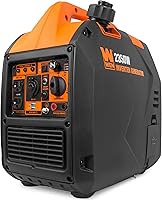
WEN Super Quiet 2350-Watt Portable Inverter Generator: Best for lightweight inverter power
- 1,900 rated watts
- 2,350 surge watts
- Gasoline
- 39 lb
- Two USB ports
This compact inverter weighs 39 lb and provides 1,900 rated watts for smaller loads and electronics. It runs on gasoline only.
Pros
- Lightest listed model
- Inverter output for sensitive electronics
- USB ports
Cons
- Lower output than the larger backup units
- Gasoline only
The WEN 2350 is the lightest pick here at 39 lb, with 1,900 rated watts and 2,350 surge watts. Its compact size makes it easier to store or carry than the high-output open-frame generators.
It provides inverter power and includes two 120V receptacles, a 12V DC outlet and two USB ports. WEN describes its operation as quiet, and the model includes fuel shutoff to use remaining fuel in the carburetor before it stops.
This is a gasoline-only generator with far less output than the home backup models above. Add the running watts of your planned devices and account for startup surges before choosing it.
Choose it for lighter loads, camping and charging electronics. It is not the match for running several large household appliances at once.
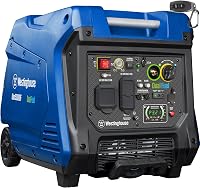
Westinghouse 13500 Peak Watt Dual Fuel Home: Best for remote-start home backup
- 10,500 running watts
- 13,500 peak watts
- Gasoline or propane
- Remote key fob start
- 230 lb
Remote electric start, dual-fuel operation and 10,500 running watts target substantial home backup needs. At 230 lb, plan where it will sit before an outage.
Pros
- Remote and push-button starting
- Gasoline or propane
- 50A and 30A outlets
Cons
- Heavy at 230 lb
- Transfer equipment is sold separately
The Westinghouse WGen10500DFc provides 10,500 running watts and 13,500 peak watts on gasoline, with propane as a second fuel option. Push-button and remote key fob starting offer more choice when starting the generator.
Its 50A and 30A outlets support common home backup connection plans, including a transfer switch or interlock kit. The model is listed as compatible with the Westinghouse WATS200 automatic transfer switch, which is sold separately.
The generator weighs 230 lb and has wheels and a lift bracket. It is portable for planned repositioning, but the weight makes frequent lifting impractical.
Choose this model if remote starting and high output matter for your backup plan. Compare the outlets and transfer equipment with your electrician's recommendation before buying.
Oxseryn Power Equipment 4400 Watts Inverter Generator: Best for portable midrange output
- 3,400 running watts
- 4,400 peak watts
- Gasoline
- 56 lb
- RV port
The 56 lb open-frame inverter balances moderate output with easier transport than large home backup models. It includes an RV port and ECO mode.
Pros
- Inverter technology
- 56 lb weight
- RV port
Cons
- Gasoline only
- Less output than whole-home class models
Oxseryn's 4400-watt inverter generator makes a middle ground between compact electronics power and large home backup units. It produces 3,400 running watts and 4,400 peak watts and weighs 56 lb.
The gasoline-powered unit has two 120V AC ports, a 12V DC port and an RV port. ECO mode and a fuel gauge add basic operating information, while its listed runtime is up to 14 hours at 25% load.
Its open-frame design differs from the enclosed inverter models in this set. The 56 lb weight is manageable for many users, but plan how you'll load it into a vehicle or store it.
Choose it for moderate RV or backup loads where its outlets fit your equipment. It doesn't offer dual-fuel operation, so plan around gasoline availability.
Westinghouse 6500 Watt Dual Fuel Home Backup: Best for midrange dual-fuel backup
- 5,300 running watts on gas
- 4,800 running watts on propane
- Gasoline or propane
- 30A outlets
- 135.6 lb
This dual-fuel model offers a middle ground for home backup and RV use, with a 30A transfer-switch-ready outlet. Check your load needs against the lower propane output.
Pros
- Gasoline and propane
- 30A RV and transfer-switch-ready outlets
- Up to 14.5 hours stated runtime
Cons
- 135.6 lb to move
- Lower output on propane
The Westinghouse 6500 is a midrange dual-fuel option with 5,300 running watts on gasoline and 4,800 on propane. That difference matters when you estimate how much equipment it can run on each fuel.
It has a 30A RV-ready outlet and a 30A transfer-switch-ready outlet, plus a 4.7-gallon gasoline tank. Westinghouse states up to 14.5 hours of runtime, and the model includes a fuel gauge and CO shutdown.
At 135.6 lb, it is lighter than the two larger backup generators in this roundup, but still needs a suitable storage and rolling path. Wheels are included.
Choose it when you need more output than a compact inverter and want a propane option. Match your appliances to the propane running output if that is your outage fuel.
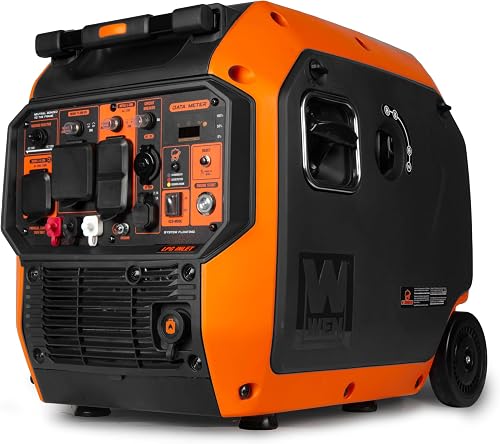
WEN 6800-Watt Dual Fuel RV-Ready Electric Start: Best for dual-fuel RV inverter use
- 5,100 rated watts on gas
- 4,500 rated watts on propane
- Electric start
- RV outlet
- 99.2 lb
An inverter design, dual-fuel flexibility and RV outlet make this a versatile option for travel and backup. Its wheels and telescoping handle help with moving, though it still weighs 99.2 lb.
Pros
- Gasoline or propane
- Inverter output
- Electric start and onboard wheels
Cons
- Heavier than compact inverter models
- Lower propane output
The WEN DF680iX combines inverter output with two fuel choices and an RV-ready outlet. It supplies 5,100 rated watts on gasoline or 4,500 on propane, with electric start and a recoil backup.
Its outlets include a 120V/240V receptacle, two household receptacles and a TT-30R RV receptacle. Onboard wheels and a telescoping pull handle help with movement, though the generator weighs 99.2 lb.
WEN includes a CO shutdown sensor and fuel shutoff. Its inverter design is a useful distinction from the larger open-frame backup models, particularly for travel setups with electronics.
Choose it if you want an inverter generator that can use gasoline or propane and need an RV outlet. Verify your RV's power needs and connection requirements first.
Generac: Best for compact Generac inverter power
- 2,500 running watts
- 3,300 starting watts
- Gasoline
- 59.5 lb
- COsense shutdown
The GP3300i combines inverter output and a carry handle at 59.5 lb. It suits smaller loads, with parallel capability if you later need more output.
Pros
- Inverter power for electronics
- COsense shutdown
- Parallel-ready
Cons
- Gasoline only
- Recoil start
The Generac GP3300i is the most portable Generac pick here, weighing 59.5 lb and producing 2,500 running watts with 3,300 starting watts. Its inverter output is aimed at smaller home backup, camping and RV needs.
For more models, compare portable inverter generators.
Generac describes its TruePower output as a stable sine wave with less than 3% total harmonic distortion. The unit has two household outlets, a 30A twist-lock outlet and two USB-A ports, plus COsense shutdown and economy mode.
It uses gasoline and a recoil pull start. The model is parallel-ready, but the parallel kit is sold separately.
Choose the GP3300i for a compact Generac with enough output for selected smaller loads. Confirm that its outlet matches your RV connection, since a TT-30R adapter is not included.
Generac: Best for three fuel choices
- 9,500 running watts
- 12,500 starting watts
- Gasoline, propane or natural gas
- Electric start
- 219 lb
The GP9500ETF adds natural gas to the usual gasoline and propane choices. Its 219 lb frame and wheels suit planned placement more than frequent carrying.
Pros
- Three fuel options
- Electric start
- 50A and 30A outlets
Cons
- Heavy at 219 lb
- Not an inverter model
The GP9500ETF is Generac's highest-output model in this roundup, with 9,500 running watts and 12,500 starting watts on gasoline. Its tri-fuel system also accepts propane and natural gas.
The electric start, fuel gauge and COsense shutdown support home backup use. Its panel includes a 50A outlet and a 30A twist-lock outlet, and Generac says it is compatible with HomeLink manual transfer switches.
At 219 lb, this generator needs a planned location. It has never-flat wheels and a folding handle, but those features don't make it a carry-friendly camping unit.
Choose it for larger loads and fuel flexibility, especially if you have a suitable natural gas supply. Compare the required running and startup watts for your essential appliances before choosing its size.
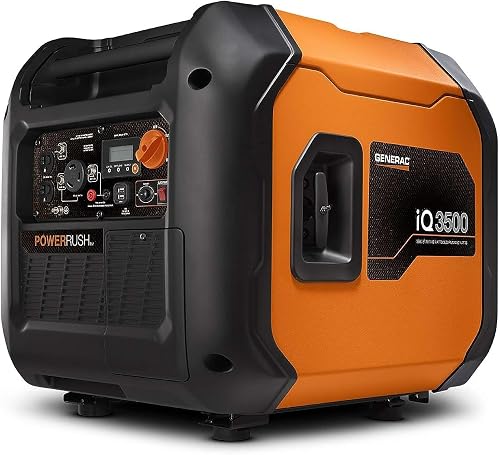
Generac 7127 iQ3500: Best for electric-start Generac inverter use
- Gasoline
- Electric start
- Two engine speeds
- Parallel-ready
- 109.1 lb
The iQ3500 offers electric start, an enclosed inverter design and two engine speeds. Its 109.1 lb weight is notable for a model intended for portable use.
Pros
- Electric start with included battery
- Two engine speeds
- Parallel-ready
Cons
- Gasoline only
- Heaviest inverter model in this group
The Generac 7127 iQ3500 is an enclosed inverter model with electric start and two selectable engine speeds. The manufacturer describes its PowerRush technology as providing more than 50% additional starting capacity.
This gasoline unit is parallel-ready and includes a battery for electric starting. At 109.1 lb, it is considerably heavier than the GP3300i, so check whether its output and starting method justify the extra weight for your setup.
The iQ3500 suits buyers who want inverter power with electric start in a Generac model. It has less output than the GP9500ETF, and it does not offer the tri-fuel flexibility of that larger unit.
Which output range fits your backup plan?
Choose a generator by the appliances you plan to run together and their starting surges. A high peak-watt number alone doesn't show how much continuous load the generator can support.
For modest loads, the GP3300i provides 2,500 running watts. The WEN 2350 has 1,900 rated watts, while the Oxseryn supplies 3,400 running watts for a larger but still portable range.
For more demanding home backup, the WEN DF680iX gives 5,100 rated watts on gasoline, and the Generac GP9500ETF gives 9,500 running watts on gas. Check the lower propane output when you intend to use that fuel.
If you need help deciding whether propane flexibility fits an outage plan, read what a dual-fuel generator is worth buying for home backup. For inverter models, see what a dual-fuel inverter generator is worth buying for home backup.
How should you compare starting and running watts?
Running watts describe the power a generator can supply continuously, while starting or surge watts cover brief startup demand. Use the running figure for the combined load and leave room for appliances that start with a surge.
The Generac GP9500ETF has 9,500 running and 12,500 starting watts on gasoline. The GP3300i lists 2,500 running watts and 3,300 starting watts, a much smaller range for selected appliances.
Appliance needs vary by model, so check each appliance's label or manual. A refrigerator, pump or air conditioner may need more power when its motor starts than while it runs.
What does portability mean at these weights?
Portability depends on the route from storage to the operating spot, not just whether wheels are included. A 39 lb generator is easier to carry than a unit above 200 lb, while larger models often need clear paths and planned placement.
The WEN 2350 weighs 39 lb, Oxseryn weighs 56 lb, and the GP3300i weighs 59.5 lb. The iQ3500 weighs 109.1 lb, while the large home backup models weigh 219 to 234 lb.
Measure doors, ramps and storage space before deciding. Keep in mind that wheels help with rolling but don't remove the need to manage steps, uneven ground or vehicle loading.
Which fuel and starting features matter most?
Pick fuel options that match what you can store or access during an outage. Gasoline-only models are simpler to compare, while dual-fuel or tri-fuel models give more choices when one supply is unavailable.
The Generac GP9500ETF supports gasoline, propane and natural gas. The GP3300i and iQ3500 use gasoline, and the WEN DF680iX supports gasoline or propane.
Starting methods also differ. The GP9500ETF has electric start, the iQ3500 includes electric start, and the GP3300i uses a recoil start.
Verdict: which Generac portable generator should you choose?
Choose the GP9500ETF when you need high output and three fuel choices, or the GP3300i when lighter inverter power for smaller loads matters more. The iQ3500 fits buyers who want a Generac inverter with electric start and can manage its 109.1 lb weight.
For a broader brand comparison, see are Predator inverter generators any good and are Ryobi generators any good. Match the model to your measured loads, fuel plan and moving route before you buy.
Our top 3 picks at a glance
-
1
-
2
Best for lightweight inverter power
WEN Super Quiet 2350-Watt Portable Inverter Generator
9.7/10 our score
See it on Amazon -
3
Best for remote-start home backup
Westinghouse 13500 Peak Watt Dual Fuel Home
9.6/10 our score
See it on Amazon
Frequently asked questions
Which Generac portable generator is best for home backup?
The GP9500ETF is the strongest Generac fit here for larger home backup loads, with 9,500 running watts on gasoline and options for propane or natural gas. Check the running and starting needs of each appliance, then confirm the connection and transfer equipment your home requires.
For lower loads, the GP3300i is smaller and easier to carry.
Which Generac generator is easiest to move?
The GP3300i weighs 59.5 lb and has a molded carry handle, making it the lightest Generac model in this roundup. The iQ3500 weighs 109.1 lb, while the tri-fuel GP9500ETF weighs 219 lb and has wheels and a folding handle.
Consider the whole route, including steps and storage space.
Are Generac portable generators dual fuel?
Some Generac portable generators support more than one fuel, but not all. The GP9500ETF runs on gasoline, propane or natural gas, while the GP3300i and iQ3500 use gasoline.
Check the exact model's fuel options and output for each fuel before planning backup around a propane tank or gas line.
Can a Generac inverter generator power sensitive electronics?
The GP3300i is described as producing stable sine-wave power with less than 3% total harmonic distortion. The iQ3500 is also an inverter model, but the supplied product facts don't give a comparable distortion figure.
Check the equipment's power needs and use the generator's manual to confirm safe connection.