Best 200 Watt Solar Panels: Top 9 Picks (November 2026)
The best 200 watt solar panels include the Callsun N-Type 16BB 400W Bifacial Solar Panel for high-output paired systems, the DOKIO 200W Portable Foldable Solar Panel Kit for portable 12V charging, and the Renogy Solar Panels 200 Watt N-Type for compact Class B vans.
On this page (4 sections)
The best 200 watt solar panels balance rated power, real roof space, system voltage and construction style. The Callsun pair leads this group for high efficiency and a supported 400W series setup, while DOKIO is the easier choice when portability matters.
A 200W rating describes maximum power under standard test conditions. Actual output changes with sunlight, temperature, shade, wiring and controller losses.
That gap between a rating and a real day on a roof is where most buying mistakes happen. A panel can have a strong headline figure and still fit poorly if its shape or voltage does not suit your mounting area and controller.
Think first about where the panel will live. A Class B van, a larger RV, a boat deck and a shed roof place different limits on length, weight and clearance.
System voltage matters just as much as physical fit. The 12V or 24V label in a product title usually describes the battery system a panel is intended to support, not the exact voltage it produces.
Construction style is the third filter. Rigid panels suit fixed installations, while a foldable panel suits travel, storage and placement away from a shaded vehicle.
If you are unsure how much capacity your battery needs, start with our guide to which solar panel size do i need. That step can stop you buying more rated power than your battery or controller can use well.
Buyers with very limited roof space can also compare the best 100 watt solar panel options before choosing a larger panel. Two smaller panels may fit where one 200W panel cannot.
Our score weighs specs, features and buyer feedback against what you are shopping for. We compared N-Type, bifacial, portable, shade-focused and expandable designs below.
The picks that follow are not interchangeable. Some are single panels and some are two-panel sets, so total power and wiring differ from the start.
Our picks at a glance
-
1
 Best for high-output paired systems
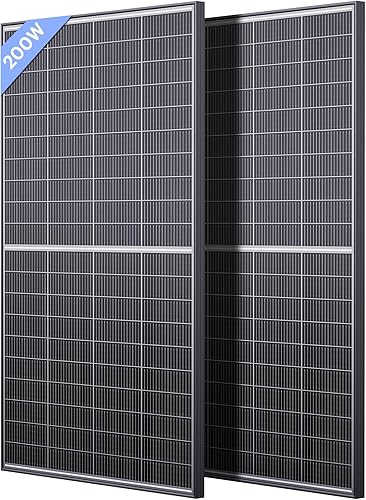
Callsun N-Type 16BB 400W Bifacial Solar Panel
9.7/10 our score
See it on Amazon -
2
 Best for portable 12V charging
DOKIO 200W Portable Foldable Solar Panel Kit
9.6/10 our score
See it on Amazon -
3

- 4
 Best for a compact two-panel arrayCheck it
- 5
 Check it
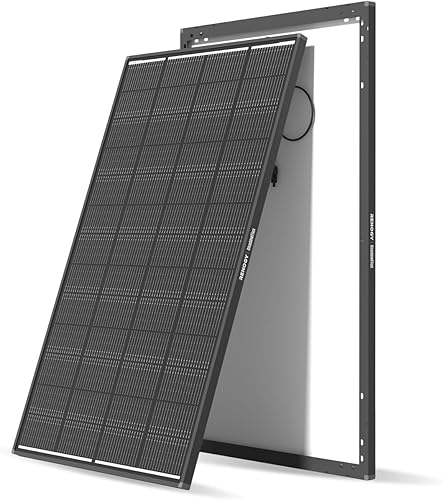
Renogy ShadowFlux Solar Panel 200 Watt
Best for partial shade - 6
 Check it
JJN Bifacial 200 Watt Solar Panel
Best for reflective mounting locations - 7
 Best for expandable 12V systemsCheck it
- 8
 Best for bifacial campervan setupsCheck it
- 9
 Check it
Rvpozwer 200 Watt Solar Panel 18BB
Best for 18BB cell design
The best 200 watt solar panels for different setups
The Callsun pair is the best overall fit for high-output systems, while DOKIO is better for portable 12V charging. The remaining picks separate themselves by roof size, shading, bifacial use and connection options.
Use the sections that follow to narrow the choice by the condition that matters most for your setup. The right panel depends less on winning a single spec and more on fitting your roof, your controller and the light your site actually gets.
Callsun N-Type 16BB 400W Bifacial Solar Panel: Best for high-output paired systems
- 2 x 200W panels
- 25.6% efficiency
- Bifacial design
- Dual-module anti-shade design
Two 200W N-Type panels can connect in series for 400W total and about 54.62V open-circuit voltage. Bifacial cells and a dual-module design suit supported portable power stations, RVs and off-grid systems.
Pros
- 25.6% efficiency
- Bifacial power generation
- Two-panel series setup
Cons
- Heavier than the portable pick
- Needs suitable voltage limits for series use
Callsun is the strongest overall choice when you want more than one 200 watt solar panel. The package includes 2 x 200W N-Type panels, allowing a 400W series setup with about 47.48V operating voltage and 54.62V open-circuit voltage.
Its 25.6% conversion efficiency is the highest stated figure in this group. The bifacial design can use direct, reflected and diffuse light from the rear when the installation gives that side enough exposure.
The dual-module parallel design divides each panel into 2 operating sections. If trees, buildings or another obstacle shade one section, the other can continue producing power.
Each panel measures 51.3 x 30.3 x 1.4 in and weighs 23.8 lb. Tempered glass, an aluminum alloy frame and an IP68-rated junction box suit outdoor installations, but the total panel weight still matters for an RV roof.
Choose Callsun if your power station accepts the series voltage and you want a 400W array from 2 panels. Check the power station's maximum PV voltage and current before wiring.
DOKIO 200W Portable Foldable Solar Panel Kit: Best for portable 12V charging
- Folds to 20 x 27 x 1.1 in
- 9.7 lb
- PWM controller
- Dual USB ports
The lightweight foldable design is easier to carry than rigid panels. A separate PWM controller, dual USB ports and a 9.84 ft cable make it useful for travel and emergency charging.
Pros
- Lightest option here
- Foldable design
- Controller and USB ports
Cons
- PWM rather than MPPT control
- Power stations may cap input below 200W
DOKIO is the best 200 watt portable solar panel here because it folds to about 20 x 27 x 1.1 in and weighs 9.7 lb. That makes it easier to carry, store or move as the sun changes.
The kit includes a separate PWM controller with protection against reverse polarity, overcharge, overload and short circuits. Dual USB ports can power phones, lamps and small gadgets when connected to a 12V battery.
A 9.84 ft cable lets you place the panel in direct sunlight while keeping the controller or power station in a shaded location. The panel uses monocrystalline silicon and is designed for 12V battery charging.
Power station input limits are the main trade-off. Some units cap solar input at 100W or 150W, so the power station may accept less than the panel can produce.
Pick DOKIO for camping, emergency top-ups and portable 12V use. For a lower-output camping option, compare 100 watt solar panels for camping.
For more rigid panels that stay mounted, compare the best compact 200 watt solar panel options.
Renogy Solar Panels 200 Watt N-Type: Best for compact Class B vans
- 25% efficiency
- N-Type 16BB cells
- 7.5% smaller than previous models
- 12V and 24V system use
This 200W N-Type panel focuses on saving roof space while supporting 12V and 24V battery systems. Its 24V panel design helps reduce current loss in compatible installations.
Pros
- Compact footprint
- 25% efficiency
- 12V and 24V system flexibility
Cons
- One rigid panel
- Controller voltage must suit the panel
Renogy's 200W N-Type panel suits Class B vans where roof space is tight. It measures 49.7 x 30.1 x 1.2 in, weighs 23.4 lb and uses 16BB cells with a stated 25% efficiency.
The panel is intended for 12V and 24V battery systems, including lithium, AGM and deep-cycle batteries. Its 24V panel design can help reduce current loss in a compatible system, but the controller still needs to match the panel's voltage.
Renogy describes this model as 7.5% smaller and 11.7% lighter than its previous models. That comparison may help when replacing an older panel, but measure your mounting area rather than relying on a general size label.
The compact footprint is the main practical benefit here. On a small van roof, saving space can make the difference between fitting a panel beside a vent and leaving the area empty.
N-Type cells are a good fit for buyers who want higher efficiency in limited roof space. The 16BB design is also meant to reduce microcrack risk and support more stable output.
Heat is another factor for van and rooftop use. Renogy points to a low temperature coefficient and better performance in high temperatures, which matters when a panel sits in strong summer sun.
Choose it for a compact rigid installation with a compatible charge controller. Check the controller voltage limit before wiring, since the panel title and the panel voltage are not the same thing.
HQST 400W Solar Panel: Best for a compact two-panel array
- 2 x 200W panels
- Up to 25.4% efficiency
- N-Type 16BB cells
- IP65 protection
Two compact 200W panels create a 400W array while using fewer panels than four 100W units. The N-Type 16BB design suits RVs, vans, trailers, boats and rooftops.
Pros
- Compact 200W panels
- Two-panel 400W setup
- Low-light performance claim
Cons
- Protection is IP65
- System wiring still needs careful planning
HQST's 400W option contains 2 x 200W panels with N-Type 16BB cells and up to 25.4% efficiency. Two panels can require fewer mounts and cables than four 100W panels, which may simplify a planned array.
Each panel is described as 46.3 x 30.1 x 1.2 in and 20.17 lb. The compact size suits Class B vans, trailers, boats, rooftops and other installations where panel width matters.
HQST also describes low-light performance for cloudy days, early mornings and late afternoons. That does not remove the need for direct sunlight, but it may matter when your usable solar window is limited.
The panel construction uses tempered glass and an aluminum frame with IP65 protection. That combination suits planned outdoor mounting, but the protection level is lower than the IP68 rating listed for some other options here.
Fewer, larger panels can make a cleaner installation. Two 200W panels mean fewer parallel connections than four 100W panels, which HQST links to less power loss and a simpler layout.
The trade-off is planning. You need room for two panels, a controller that suits the array voltage and current, and mounting hardware for both positions.
Choose this set when you want 400W from 2 relatively compact panels and your mounting area can accept their dimensions. It suits buyers who want scale without moving up to four separate panels.
Renogy ShadowFlux Solar Panel 200 Watt: Best for partial shade
- ShadowFlux anti-shading technology
- 25% efficiency
- N-Type 16BB cells
- IP67 rating
ShadowFlux is designed for shade from trees, leaves, buildings and other obstructions. Renogy recommends an MPPT controller with at least 50V maximum input voltage and more than 10A charging current.
Pros
- Shade-focused design
- 25% efficiency
- IP67 protection
Cons
- MPPT controller is the safer match
- Still works best with more than half the panel in direct sun
Renogy ShadowFlux is the best 200 watt solar panel for a roof or deck where partial shade is hard to avoid. Its anti-shading design targets shadows from trees, leaves, buildings, debris and other small obstructions.
The panel uses N-Type 16BB cells with 25% efficiency and measures 49.69 x 30.08 x 1.18 in. Its maximum voltage is 36.5V, so Renogy recommends an MPPT controller with at least 50V maximum input voltage and more than 10A charging current.
ShadowFlux works with 12V and 24V battery systems. Renogy notes that a 12V system provides better stability in partial shade, especially from trees, debris or boat masts.
The panel has an IP67 rating and weighs 23.8 lb. That weight is in line with other rigid 200W options, so roof structure and mounting hardware still need attention.
The design is aimed at real-world shade. Small spots, patches and moving shadows can upset output from a conventional panel, and ShadowFlux is built to limit that loss.
It is not a way to ignore shade altogether. Renogy advises keeping more than half the panel in direct sunlight.
Choose ShadowFlux when shade is a regular part of your site. It fits RVs, boats and rooftops where trees, masts, vents or debris often cross the panel.
JJN Bifacial 200 Watt Solar Panel: Best for reflective mounting locations
- 25% efficiency
- N-Type 16BB cells
- Bifacial design
- 2400Pa wind and 5400Pa snow loads
The transparent backsheet lets the bifacial panel use light from the front and rear. It makes the most sense where the rear side has room to receive reflected or diffuse light.
Pros
- Bifacial output
- 25% efficiency
- Pre-drilled mounting holes
Cons
- Longer panel shape
- PV panel only
JJN is a good bifacial pick when the rear of the panel can receive reflected light. Its transparent backsheet lets the 200W panel generate electricity from both the front and rear sides.
The N-Type 16BB cells have a stated 25% efficiency. JJN also describes the cells as more compact and less affected by shadows than common 9BB or 10BB designs.
The panel measures 53.7 x 30.3 x 1.18 in and weighs 23.2 lb, so its longer shape needs more roof length than some compact options. Length is the first thing to check on a van or trailer roof.
A corrosion-resistant aluminum frame, tempered glass, IP67 solar connectors and an IP65 junction box support outdoor use. JJN lists 2400Pa wind resistance and 5400Pa snow-load capacity for the frame design.
Pre-drilled holes make it easier to use compatible mounting hardware. Brackets and fasteners still need to suit the surface and the panel frame.
The package contains the PV panel only. Budget separately for the controller, wiring and mounting parts that suit your battery setup.
Choose JJN when your installation can expose the rear side to useful reflected or diffuse light. A bifacial panel gains little from a rear side that stays dark and blocked.
ECOBOSS 200 Watt Solar Panel: Best for expandable 12V systems
- 25.6% efficiency
- N-Type 16BB cells
- IP68 protection
- Series and parallel expansion
ECOBOSS offers a 200W N-Type panel for 12V batteries, with series and parallel connections for 24V or 48V systems. Pre-drilled holes and standard MC4 connectors support a planned installation.
Pros
- 25.6% efficiency
- IP68 protection
- Expandable system design
Cons
- Longer than compact van panels
- Single panel included
ECOBOSS fits buyers who want one 200W panel now and the option to expand later. It supports series or parallel connections for 12V, 24V or 48V systems when the rest of the system is designed for those connections.
The N-Type 16BB cells have a stated efficiency of up to 25.6%. ECOBOSS describes the cells as Grade A+ 182mm units with 16 busbars, which is aimed at better current collection and fewer hot spots.
The panel measures 52.76 x 30.31 x 1.18 in and weighs 22 lb, with 3.2mm tempered glass and a corrosion-resistant aluminum frame. It is lighter than several rigid rivals, but its length still limits where it will fit.
Integrated bypass diodes are intended to reduce power loss from partial shade. That helps when a branch or a passing obstacle covers part of the panel during the day.
ECOBOSS also lists IP68 waterproof protection, 2400Pa wind resistance and 5400Pa snow-load capacity. Those ratings support fixed outdoor use on a roof, in a field setup or on a larger vehicle.
Pre-drilled mounting holes and standard MC4 connectors support a planned installation. Care is still needed when mixing series and parallel wiring, since the controller limits decide what the system can accept.
Pick it when expandability and outdoor protection matter more than a compact van footprint. It suits RVs, boats, cabins and off-grid systems where a longer panel shape fits the layout.
HQST 200W Solar Panel: Best for bifacial campervan setups
- Bifacial design
- N-Type 16BB cells
- Up to 25.4% efficiency
- IP68 protection
This HQST panel uses front and rear light capture in a relatively compact form. Its possible bifacial gain depends on surface reflectivity, installation height and tilt angle.
Pros
- Bifacial design
- Compact footprint
- IP68 protection
Cons
- Rear-side gain depends on installation
- One panel included
HQST's bifacial 200W panel gives campervan buyers a compact rigid option with front and rear light capture. It measures 47.2 x 30.1 x 1.2 in and uses N-Type 16BB cells with up to 25.4% efficiency.
HQST says the panel can reach up to 260W under optimal conditions. That extra output depends on rear-side light, surface reflectivity, installation height and tilt angle, so a close roof mount may not gain much.
The panel has IP68 protection and is designed for RVs, vans, trailers, boats, farms, rooftops, tiny houses and off-grid systems. Its 30-year service-life statement is a brand claim, not a promise that every installation will perform identically.
Choose this model if your roof can expose the rear side and you prefer a shorter panel shape. If you want a broader comparison of cell construction, see our guide to best monocrystalline solar panels.
Rvpozwer 200 Watt Solar Panel 18BB: Best for 18BB cell design
- 25% efficiency
- N-Type 18BB cells
- IP68 protection
- Pre-drilled mounting holes
The Rvpozwer panel combines an 18BB cell design with a lighter 19.2 lb frame. It suits RVs, rooftops, boats and off-grid systems where its long, narrow shape fits the mounting area.
Pros
- Lightest rigid panel here
- 18BB design
- IP68 protection
Cons
- Long panel shape
- Connection limits need attention
Rvpozwer uses an 18BB N-Type cell design and a stated 25% efficiency. At 19.2 lb, it is the lightest rigid panel in this group.
The panel measures 52.76 x 26.38 x 1.18 in, giving it a long and narrow shape. That can work well on some RV, boat or rooftop layouts, but measure the available length before choosing it.
Rvpozwer lists IP68 protection, a corrosion-resistant electroplated aluminum frame, 2400Pa wind resistance and 5400Pa snow-load capacity. The frame and glass build suit fixed outdoor mounting in exposed locations.
Pre-drilled holes support compatible bracket installation. A narrow panel may sit between roof features more easily, but brackets still need to line up with the holes and the frame.
The 18BB design is the main cell difference here. More busbars are intended to improve conversion and support a longer service life than older 10BB or 12BB designs.
Rvpozwer also states connection limits for the panel. Current capacity in the connecting materials matters, so the number of panels in series or parallel should stay within the stated guidance.
The brand estimates about 1000 watt-hours per day from 5 to 6 hours of light. Treat that as a planning estimate because sunlight, season, shade and the rest of your system change daily output.
Choose it when the long, narrow shape fits your roof and the lighter weight is useful. It suits RVs, rooftops, boats and off-grid systems where length is available but width is not.
How do you choose a 200 watt solar panel?
Choose a 200 watt solar panel by matching its shape, voltage, controller needs and construction to your system. A panel that fits the roof but exceeds the controller's input limit is not a suitable match.
What voltage should a 200 watt solar panel use?
The 12V or 24V label describes the battery system in many product titles, not the panel's exact operating voltage. For example, Renogy's panel is described for 24V systems but has a maximum voltage of 37.44V.
Check the panel's maximum voltage, the controller's maximum PV input and the battery system voltage together. Series wiring raises voltage, while parallel wiring raises current, so both limits matter.
Are N-Type cells worth choosing?
N-Type cells are useful when roof space is limited and you want a higher efficiency panel. The N-Type models here list efficiencies from 25% to 25.6%, which can help put more rated power into a similar footprint.
Efficiency does not guarantee a fixed daily output. Shade, heat, sun angle, dirt and wiring still affect the power you receive.
Should you buy a bifacial panel?
Buy a bifacial panel when the rear side can see useful reflected or diffuse light. Callsun, JJN and HQST use bifacial designs, but a panel mounted close to an opaque roof may receive little rear-side light.
A light-colored surface, more clearance and a suitable tilt can improve the rear-side conditions. Compare the installation space and mounting plan before paying extra attention to bifacial claims.
Is portable or rigid better?
Choose portable when you need to move the panel, store it between trips or place it away from a shaded vehicle. DOKIO folds to a compact size, weighs 9.7 lb and includes a controller and dual USB ports.
That flexibility has real value at a campsite. You can chase the sun as the day moves, then fold the panel away when you drive on or need the space.
Portable setups also suit emergency use. A panel that can be carried to clear light may recover charge when a vehicle is parked under trees.
Choose rigid when the panel will stay mounted on an RV, van, boat or rooftop. Rigid options are heavier, but they offer a fixed installation format and include the construction details needed for a permanent array.
A fixed panel can start charging as soon as the sun hits it. There is no daily setup, no folding and no need to move it for the next stop.
Rigid panels also tend to suit larger battery systems. A permanent array makes more sense when the vehicle or building stays in one place for long periods.
The choice comes down to how you actually use the setup. If you move often and need storage space, portable wins.
If you park for days and want power ready at first light, rigid wins.
What controller does a 200 watt panel need?
The controller must accept the panel's voltage and current, then charge the battery system you use. Renogy recommends MPPT for ShadowFlux and specifies at least 50V maximum PV input and more than 10A charging current.
DOKIO includes a PWM controller for its 12V setup. For other panels, confirm the controller's PV voltage and charging-current limits before connecting anything.
How do you install and care for a 200 watt solar panel?
Install the panel where it receives as much direct sunlight as possible and where the mounting hardware matches its pre-drilled holes or frame. Leave enough access to inspect connectors, wiring and the panel surface.
That access matters more than it first seems. Solar panels need regular checks, and a panel sealed away with no room to inspect it is harder to maintain over time.
Keep panels clear of leaves, dirt and bird droppings. Rvpozwer recommends checking every 2 weeks for obstructions, while all panels can produce less power when their surfaces are shaded or dirty.
Cleaning should be gentle and simple. Remove loose debris first, then wash with water and a soft cloth so grit does not scratch the glass.
Do not judge a panel by its rated wattage alone. Check output under the same sunlight conditions, confirm the controller is within its limits and inspect cables for heat or damage.
Connections deserve the same attention as the panel face. Loose, damaged or overheating wiring can cut output and create a safety risk, so it should be checked as part of routine care.
Avoid impacts during handling and installation. Rigid panels use glass, and a damaged surface or connector can affect safe operation.
Two people make light work of a rigid panel. Carry it flat when you can, keep hands clear of the edges and set it down gently on a clean surface.
Store portable panels folded and dry between trips. That protects the cells and keeps cables from kinking or wearing at the folds.
Which 200 watt solar panel should you buy?
The Callsun N-Type 16BB 400W Bifacial Solar Panel is the best overall choice if you want 2 panels, high efficiency, bifacial generation and a supported 400W series setup.
Choose DOKIO if you need a lightweight foldable kit for 12V charging. It folds small, weighs 9.7 lb and suits camping, travel and emergency top-ups where a rigid panel would be a burden.
Choose Renogy ShadowFlux if partial shade is a regular problem. Its anti-shading design is aimed at trees, leaves, buildings and small obstructions that can cut output from a conventional panel.
Choose HQST's bifacial panel if your compact mounting area can expose the rear side. Rear-side gain depends on the surface below, the height of the mount and the tilt, so the roof layout decides whether bifacial is worth it.
For a planned 400W array, compare the Callsun and HQST two-panel sets against your controller's voltage and current limits. Two panels only help if the rest of the system can accept what they produce together.
For a single panel, match the panel's dimensions and system voltage before comparing cell design. A panel that fits the roof and controller will serve you better than a stronger panel that does neither.
Start with your space, then your controller, then your battery. That order keeps the purchase practical and avoids paying for power your setup cannot use.
Our top 3 picks at a glance
-
1
Best for high-output paired systems
Callsun N-Type 16BB 400W Bifacial Solar Panel
9.7/10 our score
See it on Amazon -
2
Best for portable 12V charging
DOKIO 200W Portable Foldable Solar Panel Kit
9.6/10 our score
See it on Amazon -
3
Frequently asked questions
What is the best 200 watt solar panel?
The Callsun N-Type 16BB 400W Bifacial Solar Panel is the strongest overall pick because its 2 x 200W panels provide 400W total, up to 25.6% efficiency and bifacial power generation.
Choose DOKIO for a foldable setup, Renogy ShadowFlux for partial shade, or HQST for a compact bifacial panel.
How much power does a 200 watt solar panel produce?
A 200 watt solar panel reaches its rated output only under standard test conditions. Sun angle, heat, shade, wiring, cleanliness and controller efficiency reduce real-world output.
The Rvpozwer panel estimates about 1000 watt-hours per day from 5 to 6 hours of light, but your location and setup will affect the result.
Is a 200 watt solar panel enough for an RV?
A 200 watt solar panel can suit an RV battery setup when your daily energy use and sunlight are moderate. It may help charge phones, lights and small devices, but larger loads may need more panels or a larger system.
Measure roof space and check the battery, controller and power station limits before connecting it.
What is the difference between 12V and 24V solar panels?
The 12V or 24V label usually describes the battery system the panel is intended to support, not the panel's exact operating voltage. Check the panel's voltage and the controller's maximum PV input before wiring.
A 24V system can reduce current in suitable installations, while a 12V system is common for smaller RV and battery setups.
Do bifacial 200 watt solar panels make more power?
Bifacial panels can make extra power when light reaches the rear side, but the gain depends on reflected light, panel height, tilt and the surface below it.
Callsun, JJN and HQST use bifacial designs in this group. A shaded or tightly mounted rear side may provide little extra output.


