
What Is the Safest Way to Power a Well Pump with a Dual Fuel Generator?
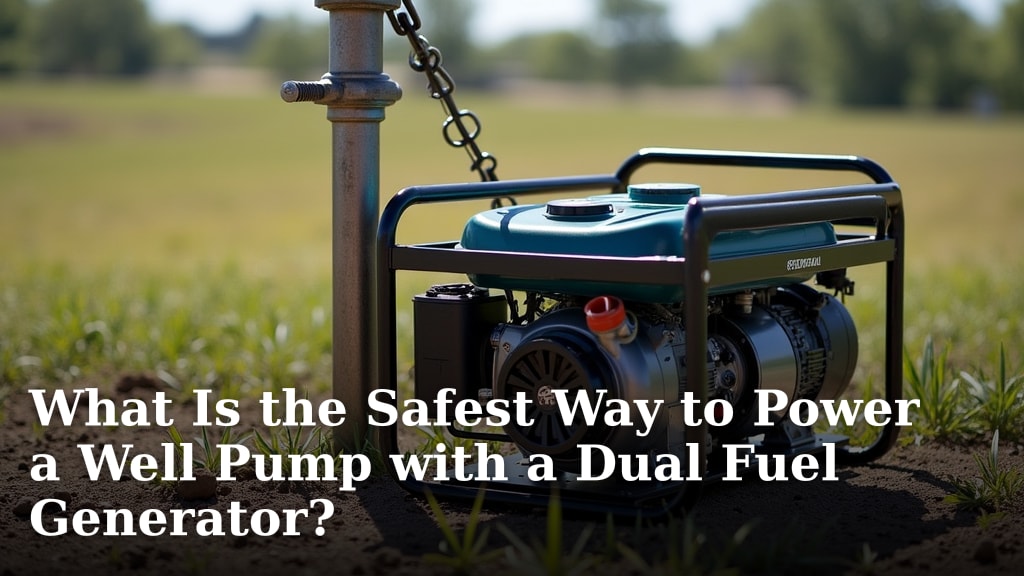
Yes, you can safely power your well pump with a dual fuel generator, but it requires careful planning. The safest way involves matching the generator’s **power output** to your pump’s needs and using the appropriate fuel. Proper connection and **surge protection** are key to preventing damage.
Many homeowners worry about keeping their water flowing during power outages. A dual fuel generator offers flexibility, running on gasoline or propane. This article will guide you through the best practices so your well pump runs smoothly and safely. We’ve researched the best ways to ensure **reliable operation** without risking your equipment.
- Dual fuel generators can power well pumps.
- Match generator wattage to pump requirements.
- Use the correct fuel type.
- Ensure proper electrical connections.
- Consider surge protection.
Ready to make sure your water keeps flowing? Let’s walk through exactly how to connect your dual fuel generator to your well pump safely and effectively.
Safely Powering Your Well Pump with a Dual Fuel Generator
You’ve got a well pump, and you want to keep the water flowing when the power grid takes a break. A dual fuel generator is a smart choice for this. It offers flexibility by running on either gasoline or propane. But how do you connect it without causing a headache for your pump? We’ve researched the best practices to help you do just that, ensuring your water supply stays reliable.
Powering a well pump isn’t like plugging in a lamp. Well pumps have specific electrical demands. You need to ensure your generator can meet these demands consistently. We’ll walk you through the steps to make sure your water keeps running smoothly. Let’s get your dual fuel generator and well pump working together safely.
Understanding Your Well Pump’s Power Needs
Before you even think about connecting a generator, you need to know what your well pump needs. This is the absolute **first step** in the process. Without this information, you’re essentially guessing, and that’s not safe for your equipment.
Finding Your Pump’s Wattage Requirements
Your well pump has a power rating, usually measured in watts. This rating tells you how much electricity it needs to run. You can typically find this information on the pump’s nameplate, which is a small metal plate attached to the pump itself. It might also be in the owner’s manual that came with your pump.
You’ll be looking for two numbers: **running watts** and **starting watts**. Running watts is the power the pump needs constantly to operate. Starting watts, also called surge watts, is the much higher power it needs for a brief moment to kick on. For well pumps, this starting surge can be quite significant, sometimes two to three times the running watts.
Where to Look for Pump Specs
Don’t despair if the nameplate is hard to read or missing. You can often find the specifications online by searching for your pump’s model number. If you have a submersible pump, the control box, usually located near your pressure tank, might also have a label with the required wattage.
Calculating Total Wattage Needed
Once you know your pump’s starting and running watts, you need to consider other things that might be running on the same circuit. Are your well pump and pressure tank controls on the same circuit? If so, you’ll need to add their wattages together. A general rule of thumb is to add the running watts of everything you plan to run simultaneously, then add the starting watts of the item with the largest surge.
For most residential well pumps, you’ll be looking at a range. Many standard 1/2 HP to 1 HP pumps might require between 800-1500 running watts and 2000-4500 starting watts. Larger pumps will need more. It’s always better to **overshoot a little** than to undershoot when it comes to wattage. An undersized generator can overheat and shut down, or worse, damage your pump.
Choosing the Right Dual Fuel Generator
Now that you understand your pump’s needs, you can select a generator that fits the bill. Dual fuel generators are great because they offer backup fuel options. But not all dual fuel generators are created equal. You need one with enough **power output** and reliability.
Matching Generator Output to Pump Demand
Look for a generator that lists its surge wattage capacity clearly. You need a generator whose surge wattage is at least 20-30% higher than your well pump’s highest starting wattage requirement. For example, if your pump needs 4000 starting watts, aim for a generator with at least 5000 surge watts. This buffer ensures the generator won’t strain itself.
Consider the fuel type you’ll be using most often. Propane tends to burn cleaner and can store longer than gasoline, which is a big plus for emergency preparedness. However, gasoline generators can sometimes offer a slightly higher peak output. Research the specific generator model to see how its output differs between gasoline and propane.
Generator Features to Look For
When shopping, check for **automatic voltage regulation (AVR)**. This feature helps keep the voltage stable, which is vital for sensitive electronics and motors like those in your well pump. A generator with a low total harmonic distortion (THD) is also preferable. Lower THD means cleaner power, which is gentler on your pump.
Another feature to consider is a **generator with a high enough amperage output**. Your pump will also draw a certain amount of amperage. Ensure the generator can supply that amperage at the required voltage. This is often listed in the generator’s specifications as well.
Connecting Your Generator Safely and Correctly
This is where many people get nervous, and understandably so. Connecting a generator to your home’s electrical system, especially to a well pump, requires careful attention to safety and code compliance. **Never attempt a direct connection** without proper knowledge or equipment.
The Importance of a Transfer Switch
The safest and most recommended method for connecting a generator to your home’s circuits, including your well pump, is through a **transfer switch**. A transfer switch is a safety device that isolates your home’s wiring from the utility grid when the generator is running. This prevents dangerous backfeeding of electricity onto the power lines, which can injure utility workers.
There are two main types of transfer switches: manual and automatic. For a well pump, a manual transfer switch is often sufficient. You’ll manually flip a switch to disconnect from the grid and connect to the generator. Automatic transfer switches are more common with standby generators and sense power loss, switching over automatically.
Generator Inlet Box for Portable Generators
If you have a portable dual fuel generator, you’ll likely need a generator inlet box installed by a qualified electrician. This box is connected to your transfer switch. Your generator then connects to the inlet box using a heavy-duty extension cord specifically designed for this purpose. This setup ensures a **secure and safe connection**.
Proper Wiring and Grounding
All wiring must be done according to local electrical codes. This includes using the correct gauge of wire for the load and distance. Proper grounding of both the generator and your well pump system is also critical for safety. It provides a path for electricity to flow safely in case of a fault.
If you are not a qualified electrician, please hire one. The cost of hiring a professional is far less than the potential cost of a fire, electrical shock, or damaged equipment. They will ensure everything is up to code and **safely connected**.
Protecting Your Well Pump from Surges and Fluctuations
Generators, especially less expensive models or older ones, can sometimes produce unstable power. This is where surge protection and power conditioning become important for your well pump.
What Are Power Surges and Spikes?
Power surges are brief, sudden increases in voltage. They can happen when the generator starts, stops, or when a heavy load is switched on or off. Well pumps, particularly the motors inside them, are sensitive to these fluctuations. A series of strong surges can overheat and damage the motor windings, leading to premature failure. Think of it like a sudden loud noise startling a sensitive person; repeated shocks can cause damage.
Using Surge Protectors and Voltage Regulators
While a good quality generator with AVR helps, an additional layer of protection is wise. You can install a whole-house surge protector on your electrical panel, or use a high-quality surge protector outlet specifically for the circuit powering your well pump. For maximum protection, consider a device that offers **voltage regulation** as well as surge suppression.
Some experts also recommend using a **soft-start device** for well pumps. These devices limit the initial surge of current when the pump starts, reducing the stress on both the pump motor and the generator. They are particularly useful for larger pumps or generators that might be on the borderline of meeting the pump’s requirements.
Fueling Your Dual Fuel Generator Safely
You’ve got the generator connected, but how do you keep it running reliably? The fuel you choose and how you store and handle it are key to **safe operation**.
Gasoline vs. Propane Considerations
As mentioned, propane offers excellent storage stability. Gasoline, on the other hand, can degrade over time, especially if stabilizers aren’t used. For emergency power, fuel that is ready when you need it is paramount. Store gasoline in approved containers away from heat sources and living areas.
When running on gasoline, ensure your generator is in a well-ventilated area, far from windows and doors. Carbon monoxide poisoning is a **serious risk** with any gasoline-powered engine. Propane is generally considered safer in terms of emissions, but proper ventilation is still essential.
Proper Fuel Storage and Handling
Always refuel a generator when it is **cool and off**. Never refuel a hot generator, as spilled fuel can easily ignite. Keep fuel storage areas clean and organized. For propane tanks, ensure they are upright and that connections are secure. Inspect hoses and fittings for any signs of wear or damage before each use.
We found that many users prefer propane for its ease of use and storage, especially if they already have propane tanks for other uses like heating or cooking. It avoids the issues of old gasoline.
Maintenance for Reliable Performance
Your generator and well pump are essential, so keeping them in top shape is vital. Regular maintenance ensures that when you need them most, they’ll be ready.
Generator Maintenance Checklist
Regular checks are key. Here’s a quick rundown:
- Check oil levels before every use.
- Inspect air filters and clean or replace as needed.
- Test run the generator monthly for about 15-20 minutes.
- Change the oil according to the manufacturer’s recommendations (typically every 50-100 hours of run time).
- Inspect fuel lines and connections for leaks.
- Keep the generator clean and protected from the elements.
Well Pump System Checks
Don’t forget your well pump and its associated equipment. Periodically check your pressure tank for proper air pressure. Inspect wiring connections at the pump and the control box. Listen for any unusual noises from the pump when it’s running normally. A little **preventative care** goes a long way.
Many experts suggest having your well system inspected by a professional every few years. They can spot potential issues before they become major problems. This is particularly true for older systems.
Conclusion
You’ve learned that powering your well pump with a dual fuel generator is completely achievable with the right approach. The key lies in understanding your pump’s specific wattage needs, selecting a generator that comfortably exceeds those requirements, and ensuring a safe, code-compliant connection via a transfer switch. Don’t forget the importance of surge protection and regular maintenance for both your generator and pump. Take the next step by confirming your pump’s exact power draw and then browsing generators that offer that needed headroom. You’ll have reliable water flow, even when the grid goes down.
Frequently Asked Questions
Can I just plug my generator directly into my well pump’s circuit?
No, you should never plug a generator directly into a well pump circuit or your home’s wiring. This is dangerous and can cause severe damage to your pump, generator, and even create a fire hazard. Always use a properly installed transfer switch for a safe connection.
How much bigger should my generator’s wattage be than my pump’s?
It’s best to have a generator with a surge wattage capacity that is at least 20-30% higher than your well pump’s highest starting (surge) wattage. This buffer prevents the generator from being overloaded when the pump kicks on, ensuring smoother operation and protecting your equipment.
Is propane or gasoline safer for running my well pump generator?
Both fuels have safety considerations. Propane stores longer and burns cleaner, reducing issues with stale fuel. Gasoline requires careful storage and handling due to flammability and degradation. Regardless of fuel, always ensure your generator is used in a well-ventilated area to prevent carbon monoxide poisoning.
What is a transfer switch and why is it so important?
A transfer switch is a safety device that safely disconnects your home’s electrical system from the utility grid before connecting it to your generator. This prevents dangerous backfeeding of electricity onto the power lines, protecting utility workers and your home’s wiring.
How often should I run my generator to keep it ready?
You should test-run your dual fuel generator monthly for about 15-20 minutes. This keeps the engine components lubricated, the fuel system fresh, and the battery charged. Regular testing ensures your generator will start and run reliably when you actually need it for your well pump.
