
Is It Worth Buying Propane or Gasoline for a Dual Fuel Generator?
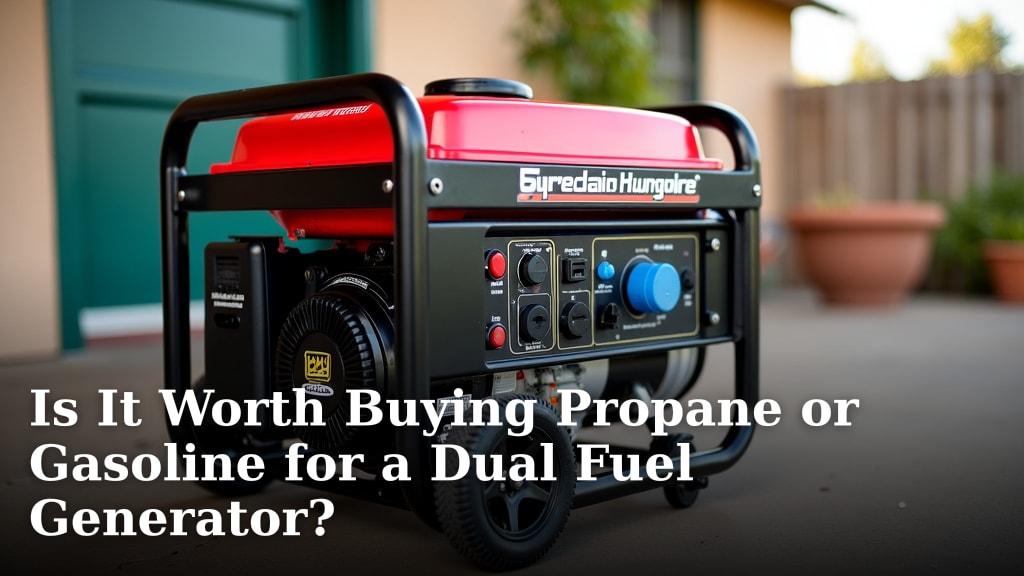
Is Propane or Gasoline Better for Your Dual Fuel Generator?
Choosing between propane and gasoline for your dual fuel generator requires a look at your specific situation. Both fuels have distinct advantages and disadvantages that impact performance, convenience, and cost.
We’ve found that your
primary use case often dictates the better choice. Think about whether you need backup power for short outages or longer, sustained use.
Understanding Propane as a Generator Fuel
Propane, also known as LP gas, is stored in pressurized tanks. It has a long shelf life and burns cleanly. This makes it a popular choice for many.
You might recognize it from your backyard grill. It’s the same fuel, just in a larger quantity for your generator.
The Advantages of Using Propane
Many people find propane appealing for several reasons. It offers some clear benefits over gasoline, especially for long-term power needs.
- Extended Storage Life: Propane does not degrade over time. You can store tanks for years without worrying about it going bad (Department of Energy). This is a huge plus for emergency preparedness.
- Cleaner Burning: Propane burns much cleaner than gasoline. This means less carbon buildup in your generator’s engine.
- Reduced Maintenance: A cleaner burn often translates directly to less engine wear. You’ll likely encounter fewer maintenance issues over your generator’s lifespan.
- Environmental Benefits: From an emissions standpoint, propane generators produce fewer harmful pollutants. This is a common finding among environmental studies.
- Availability: Propane is widely available. You can find tanks at many hardware stores, gas stations, and supermarkets.
The Disadvantages of Using Propane
While propane has many upsides, it’s not without its drawbacks. You need to consider these limitations before relying solely on propane.
- Lower Power Output: Propane generators typically produce less power than gasoline generators of the same size. You might need a larger generator to get the same wattage.
- Fuel Efficiency Differences: Your generator will consume more propane by volume to produce the same amount of energy as gasoline. This means you’ll go through tanks faster.
- Storage Logistics: Propane tanks can be heavy and bulky. Storing multiple tanks for extended outages can take up significant space.
- Cold Weather Performance: In very cold temperatures, propane can vaporize less efficiently. This might make starting your generator more difficult.
- Handling and Safety: Propane is a pressurized gas. You must handle the tanks carefully to prevent leaks or accidents.
Evaluating Gasoline as a Generator Fuel
Gasoline is the traditional fuel for many generators. It’s readily available and provides strong power output.
Most vehicles run on gasoline, so you’re probably already familiar with its characteristics.
The Advantages of Using Gasoline
You’ll find that gasoline excels in areas where propane sometimes falls short. It offers raw power and convenience.
- Higher Power Output: Gasoline provides more energy density than propane. This means you get more power from a smaller volume of fuel.
- Easy Access: Gas stations are everywhere. You can usually find gasoline even in remote areas. This is a significant convenience during emergencies.
- Better Fuel Efficiency (Volume-wise): Per gallon, gasoline delivers more run time than an equivalent amount of propane. Your generator will simply use less of it.
- Common Fuel Type: Most generators are designed to run on gasoline. This makes finding parts and service straightforward.
The Disadvantages of Using Gasoline
However, gasoline comes with its own set of challenges. These can be critical factors, especially for long-term planning.
- Poor Storage Life: Gasoline degrades quickly, often within a few months without stabilizers. This can gum up your generator’s carburetor (Environmental Protection Agency).
- Increased Maintenance: Because it burns less cleanly, gasoline can lead to more engine deposits. This means more frequent maintenance and potential repairs.
- Flammability and Safety: Gasoline is highly flammable. Storing it safely requires special containers and careful handling.
- Environmental Concerns: Burning gasoline produces more carbon monoxide and other harmful emissions than propane. Running a gasoline generator in an enclosed space is extremely dangerous.
- Fuel Availability During Outages: During widespread power outages, gas stations might not be able to pump fuel. This can make resupply challenging.
Cost Comparison: Propane vs. Gasoline
The cost of fuel can vary greatly. You’ll want to consider both the price per unit and how efficiently your generator uses each fuel.
Prices fluctuate based on region, time of year, and global markets. We’ve found that looking at the cost per hour of operation gives you a clearer picture.
| Fuel Type | Average Price (per gallon/tank) | Run Time (example 5KW generator) | Cost per Hour (estimate) |
|---|---|---|---|
| Gasoline (gallon) | $3.50 – $4.50 | ~8-10 hours | $0.35 – $0.56 |
| Propane (20lb tank) | $18 – $25 | ~5-7 hours | $2.57 – $5.00 |
Disclaimer: Prices are illustrative and can change. Run times vary by generator model and load.
As you can see, a 20-pound propane tank costs more and provides less run time. However, the
storage benefits of propane might outweigh the higher hourly cost for emergency readiness.
When to Choose Propane
You might find propane to be the superior choice in several situations.
- Emergency Preparedness: If you’re building an emergency kit, propane’s long shelf life is a game-changer. You don’t have to cycle fuel every few months.
- Long-Term Storage: For generators that sit for long periods, propane prevents carburetor gunk from stale gasoline.
- Reduced Maintenance Needs: If you want to minimize generator upkeep, the cleaner burn of propane will serve you well.
- Residential Use: Propane’s lower emissions make it a better choice for running a generator near your home for extended periods, assuming proper ventilation.
When to Choose Gasoline
Gasoline also has its ideal applications where it shines brighter than propane.
- Maximizing Power Output: If you need every watt your generator can produce, gasoline will give you that extra boost.
- Short-Term Power Needs: For brief outages or quick construction jobs, gasoline’s ready availability and power are excellent.
- When Space is Limited: If you don’t have much room for bulky propane tanks, gasoline stored in smaller, safe containers might be more practical for short durations.
- Cold Weather Considerations: Gasoline generally starts an engine more easily in very cold temperatures than propane.
Making Your Choice for General Use
So, how do you decide? Think about your typical generator use. Is it for occasional power tools, or critical home backup?
If your generator mainly sits in storage for emergencies,
propane often wins due to its stability. Less worry about fuel going bad.
However, if your primary goal is maximum power for a job site, gasoline might be more effective. We recommend weighing these factors carefully.
The Best of Both Worlds: Dual Fuel Operation
Remember, you have a dual fuel generator! This means you don’t always have to pick just one.
Many owners use propane for extended outages due to its storage benefits, then switch to gasoline if they need a
short burst of higher power or if propane supplies run low.
This flexibility is one of the biggest advantages of owning a dual fuel unit.
Considerations for Switching Fuels
When you switch between fuels, your generator might need a brief adjustment period. It’s usually a smooth transition, but something to keep in mind.
Always follow your generator’s manufacturer instructions for switching fuel types. Safety first, right?
Key Factors to Consider Before Buying Fuel
Before you fill up your tanks, take a moment to reflect on these points. Your personal situation is unique.
- How often will you use your generator? Frequent use might favor the convenience of gasoline.
- What’s your primary goal for the generator? Emergency backup leans towards propane; heavy-duty work favors gasoline.
- How much storage space do you have? Propane tanks can be bulky, while gasoline needs careful, well-ventilated storage.
- What are the local fuel prices in your area? These can impact your operational costs significantly.
- Are you comfortable handling pressurized propane tanks, or flammable gasoline? Both require responsible handling.
Final Checklist for Your Dual Fuel Decision
Here’s a quick checklist to help you solidify your decision. Go through these points to find your ideal fuel strategy.
- Do I prioritize long-term fuel storage without degradation?
- Is cleaner burning important to me for less engine maintenance?
- Do I need the absolute maximum power output my generator can provide?
- Is immediate and widespread fuel availability a major concern during outages?
- Am I preparing for short-term tasks or extended emergency power?
Answering these questions will guide you to a confident choice between propane and gasoline for your dual fuel generator. Many people find a
hybrid approach to be most effective.
Conclusion
Deciding between propane and gasoline for your dual fuel generator really comes down to your personal needs. Propane offers a clean burn and excellent storage for emergency preparedness. Gasoline, on the other hand, provides higher raw power and is generally easier to find when you need it fast. You have the flexibility of a dual fuel generator, so you don’t have to rigidly stick to one. Consider your primary use, storage options, and local fuel costs to make the best choice for you.
Frequently Asked Questions
Can I switch between propane and gasoline while the generator is running?
It is generally not recommended to switch between fuels while your generator is actively running. Most manufacturers advise shutting down the generator first. This helps prevent potential engine issues and ensures a smoother, safer transition between fuel sources.
Does using propane void my generator’s warranty?
No, using propane in a generator specifically designed as “dual fuel” will not void its warranty. These generators are built to operate with both fuel types. Always check your specific generator’s manual to confirm fuel compatibility and warranty details.
How can I extend the shelf life of gasoline for my generator?
You can significantly extend gasoline’s shelf life by using a fuel stabilizer. Add the stabilizer directly to your fuel tank and run the generator for a few minutes to circulate it. Store the treated gasoline in an EPA-approved container in a cool, dark place.
Is it safer to store propane or gasoline at home?
Both fuels require careful handling and storage. Propane tanks are pressurized and should be stored outdoors in a well-ventilated area away from ignition sources. Gasoline is highly flammable and needs to be stored in approved containers, also away from heat sources and ventilated areas. Follow all local regulations for safe storage.
Will my generator produce the same amount of noise on propane versus gasoline?
The noise level of your generator is primarily determined by its engine and load, not usually the fuel type. You might notice slight differences, but for most residential generators, the overall noise output will remain similar whether running on propane or gasoline. Check your generator’s specifications for decibel ratings.
