
What Do You Need to Size a Dual Fuel Generator for Home Backup?
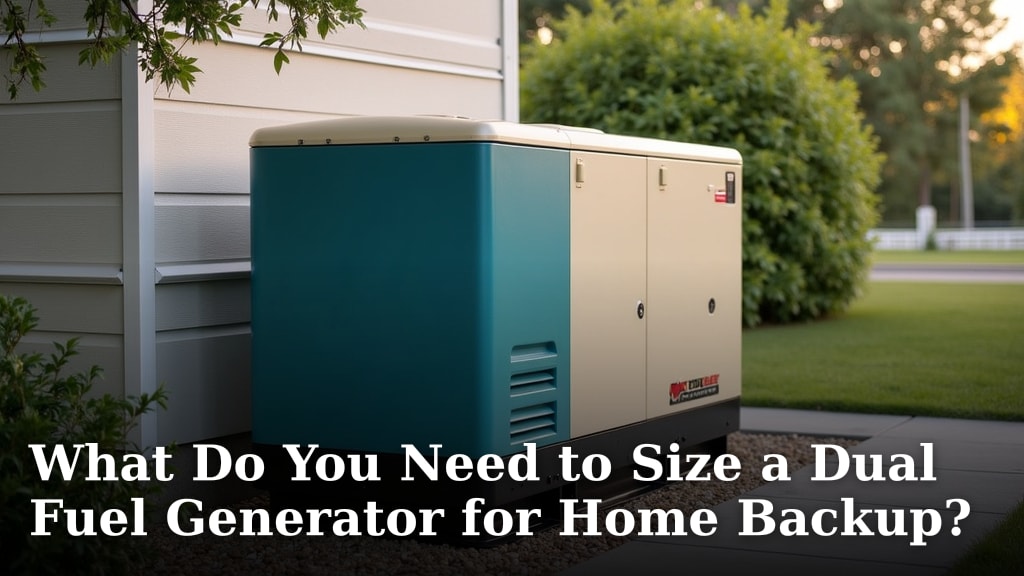
To size a dual fuel generator for home backup, you need to first calculate your home’s power needs, identify essential appliances, and then choose a generator with enough wattage. We found that a common mistake is underestimating the total power required during an outage.
Understanding your household’s electrical demands is key to ensuring your generator can handle the load. This involves figuring out which appliances you absolutely need running and their starting and running wattage. It’s like creating a survival list for your home’s electricity.
- Calculate your essential home wattage.
- Identify starting vs. running watts for appliances.
- Choose a generator based on total wattage.
- Consider fuel type and storage options.
Let’s walk through exactly how to figure out your home’s power needs and select the perfect dual fuel generator for peace of mind.
Determining Your Home’s Power Needs for a Dual Fuel Generator
To choose the right dual fuel generator, you first need to understand your home’s electricity usage. It’s like preparing for a camping trip: you list all your must-have items. You wouldn’t bring a huge tent for a solo trip, right?
This section will guide you through calculating exactly how much power your home might need during an outage. We’ll focus on what’s truly essential.
Identify Your Essential Appliances
When the power goes out, what do you absolutely need to keep running? This is your starting point. Think about safety, comfort, and communication.
Most homes don’t need to power everything. Trying to run your entire house can lead to a much larger, more expensive generator than you truly need.
Prioritizing What Stays On
Make a list. Grab a pen and paper or open a note on your phone. What appliances are critical for your family’s well-being?
Consider items that affect health or safety first. Then think about keeping food fresh and staying connected. We found that most people prioritize similar items.
- Refrigerator/Freezer (to prevent food spoilage)
- Medical equipment (CPAP machines, oxygen concentrators)
- Well pump (if you rely on well water)
- Heating/Cooling system fan (not the entire unit, just the fan for air circulation)
- Lights (a few key rooms)
- Phone chargers and internet modem/router
You probably won’t need your washing machine, dryer, or dishwasher during a power outage. Those can wait until the grid is back online.
Calculate Running Watts vs. Starting Watts
This is where many people get confused. Appliances have two types of wattage needs: running watts and starting watts. It’s a key difference for generator sizing.
Running watts are what an appliance uses continuously to operate. Think of a light bulb: it uses the same power once it’s on.
Starting watts, also called surge watts, are the extra burst of power an appliance needs for a few seconds to start up. Motors, like those in refrigerators or air conditioners, often require a lot more power to get going than they do to keep running. We found this is a common oversight.
Finding Appliance Wattage Information
How do you find these numbers? Most appliances have a label or sticker. It’s usually on the back, bottom, or inside the door.
Look for “watts (W)” or “amperage (A).” If you only see amps, you can multiply amps by volts (usually 120V for most household outlets) to get watts. For example, 10 amps x 120 volts = 1200 watts.
Some manufacturers also list both starting and running watts directly in the user manual or on their website. It takes a little detective work!
Building Your Wattage Worksheet
Now it’s time to put those numbers into action. Create a simple table to list your essential appliances and their wattage requirements. This makes it easy to add everything up.
Here’s a simple way to organize your findings:
| Appliance | Running Watts (W) | Starting Watts (W) |
|---|---|---|
| Refrigerator (18 cu ft) | 800 | 1200 |
| Well Pump (1/2 HP) | 1000 | 2000 |
| Furnace Fan (gas furnace) | 800 | 1300 |
| Lights (6 x 100W equivalent LEDs) | 60 | 60 |
| TV (LED) | 100 | 100 |
| Laptop | 50 | 50 |
| Internet Modem/Router | 20 | 20 |
| Phone Charger | 10 | 10 |
| Medical Device (CPAP) | 60 | 60 |
This table gives you a clear overview. Remember, these are common estimates; your specific appliances might vary.
Calculating Your Total Wattage Needs
With your worksheet ready, let’s figure out your generator size. You need two main calculations: total running watts and peak starting watts.
Total Running Watts: Add up the running watts for ALL the essential appliances you want to run at the same time. This is your baseline.
Peak Starting Watts: Identify the appliance with the HIGHEST starting wattage on your list. Add that single highest starting wattage to your total running watts. This accounts for the surge when one large appliance kicks on.
Why only the highest? Because it’s unlikely all your motor-driven appliances will start at the exact same moment. The generator needs to handle the largest surge one at a time.
For example, using the table above:
- Total Running Watts (if all were on): 800+1000+800+60+100+50+20+10+60 = 2900 Watts.
- Highest Starting Wattage (from the list): Well Pump at 2000 Watts.
- Your Generator Needs: 2900 (total running) + 2000 (highest single starting surge) = 4900 Watts.
So, you’d look for a generator that can provide at least 4900 starting watts and 2900 running watts. Many experts suggest adding a 10-20% buffer for safety and future needs (Consumer Reports).
Considering Dual Fuel Generator Features
Once you have your wattage target, it’s time to look at dual fuel generators. These generators offer flexibility by running on both gasoline and propane. Our guide on how to choose between propane or gasoline for a dual fuel generator can help you decide which fuel type best suits your needs.
This flexibility can be a real lifesaver during extended outages. Gasoline might be hard to get, but propane tanks can be stored more easily.
Understanding Power Output on Different Fuels
A key point about dual fuel generators: they often produce slightly less power when running on propane compared to gasoline. It’s a common characteristic due to the properties of the fuels.
Always check the manufacturer’s specifications for both gasoline and propane output. We found that the propane wattage is typically 10-15% lower. Make sure the propane output still meets your calculated needs.
Fuel Storage and Run Time
Think about how long you might need your generator to run. This impacts the size of your fuel storage.
Propane burns cleanly and can be stored for very long periods without degrading. Gasoline, however, has a shorter shelf life and requires stabilizers. Understanding the key difference between propane or gasoline for a dual fuel generator can help you make informed decisions about fuel storage and usage.
Consider having multiple propane tanks. It’s easier to swap out a tank than to refuel a hot generator with gasoline, especially in the dark or bad weather.
Other Important Sizing Considerations
Sizing isn’t just about watts. A few other factors play a role in choosing the perfect dual fuel generator for your peace of mind.
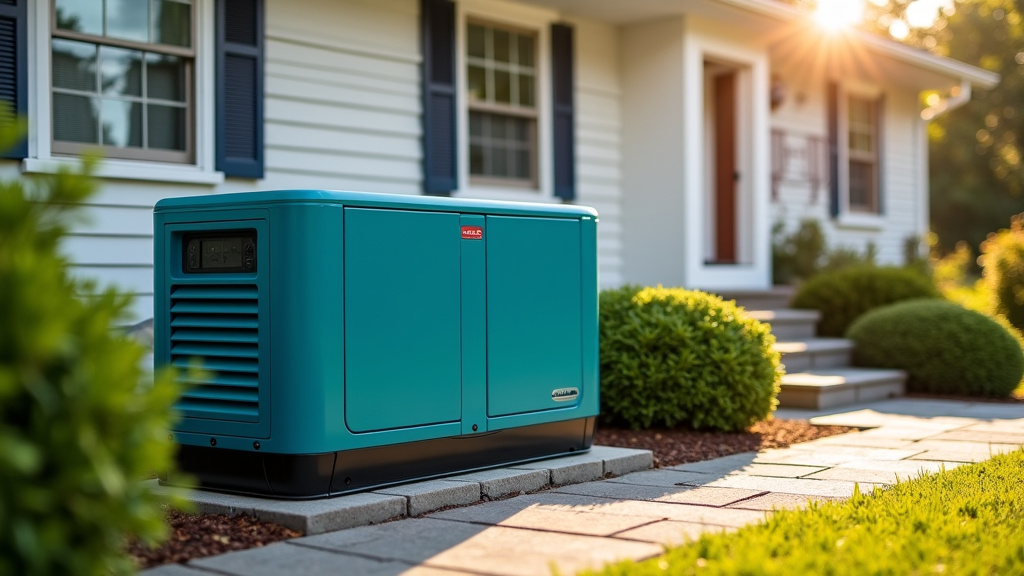
Generator Portability and Placement
Where will you put your generator? Generators produce carbon monoxide, so they must always be operated outdoors, far from windows and doors (CDC).
Do you need to move it easily? Wheels and handles are important features for portability. A larger generator means a heavier generator.
Noise Levels
Generators can be noisy. Decibel levels are usually listed in the specifications. Consider how this might affect you and your neighbors.
Some generators come with noise-reducing enclosures. Quieter models are often a bit more expensive but can be worth it for comfort.
Transfer Switch vs. Extension Cords
How will you connect your generator to your home? You have two main options:
- Extension Cords: Suitable for powering a few individual appliances directly. Be careful not to overload cords.
- Manual Transfer Switch: A safer, more convenient way to power specific circuits in your home directly from the generator. This requires professional installation by a licensed electrician (National Electrical Code).
A transfer switch ensures you’re not back-feeding power into the grid, which is dangerous for utility workers.
Your Generator Sizing Checklist
Here’s a quick recap to ensure you’ve covered all the bases for sizing your dual fuel generator:
- Did you list all your truly essential appliances?
- Have you found the running and starting watts for each?
- Did you calculate your total running watts?
- Did you add the highest single starting wattage to your total running watts?
- Have you accounted for the slight power reduction when using propane?
- Are you considering fuel storage needs for both gasoline and propane?
- Have you thought about placement, noise, and connection methods?
Taking these steps will help you choose a generator that reliably meets your family’s needs during a power outage.
Conclusion
Sizing a dual fuel generator for your home backup doesn’t have to be overwhelming. By carefully calculating your essential appliance wattage and understanding the difference between starting and running watts, you can confidently choose the right unit. Remember to factor in the slight power difference when using propane and consider your fuel storage needs. Taking these steps ensures you’re prepared and can keep your household running smoothly when the power goes out, giving you genuine peace of mind.
Frequently Asked Questions
How much buffer room should I add to my total wattage calculation?
We found that adding a 10-20% buffer to your calculated wattage needs is a smart move. This accounts for unexpected appliances, future needs, and ensures your generator isn’t constantly running at its maximum capacity, which can extend its lifespan.
Can I use a dual fuel generator indoors if I open a window?
Absolutely not. Generators produce carbon monoxide, a colorless, odorless gas that can be deadly. They must always be operated outdoors, far away from any windows, doors, or vents to prevent fumes from entering your home.
Is it better to use gasoline or propane for a dual fuel generator?
Both fuels have pros and cons. Gasoline generally offers slightly higher power output and is readily available. Propane stores much longer without degradation and burns cleaner, but typically provides a bit less power. We suggest having both options available for maximum flexibility during an outage.
Do I need a transfer switch for my dual fuel generator?
While you can use heavy-duty extension cords for individual appliances, a transfer switch is the safest and most convenient way to power circuits in your home. It prevents dangerous back-feeding into the electrical grid and requires professional installation by a licensed electrician.
How often should I test run my dual fuel generator?
It’s a good practice to test run your generator for about 20-30 minutes every month or two. This keeps the engine lubricated, circulates fuel, and helps ensure it will start reliably when you truly need it. Always refer to your generator’s owner’s manual for specific maintenance recommendations.
