
What Do You Need to Connect a Dual Fuel Generator to a House?
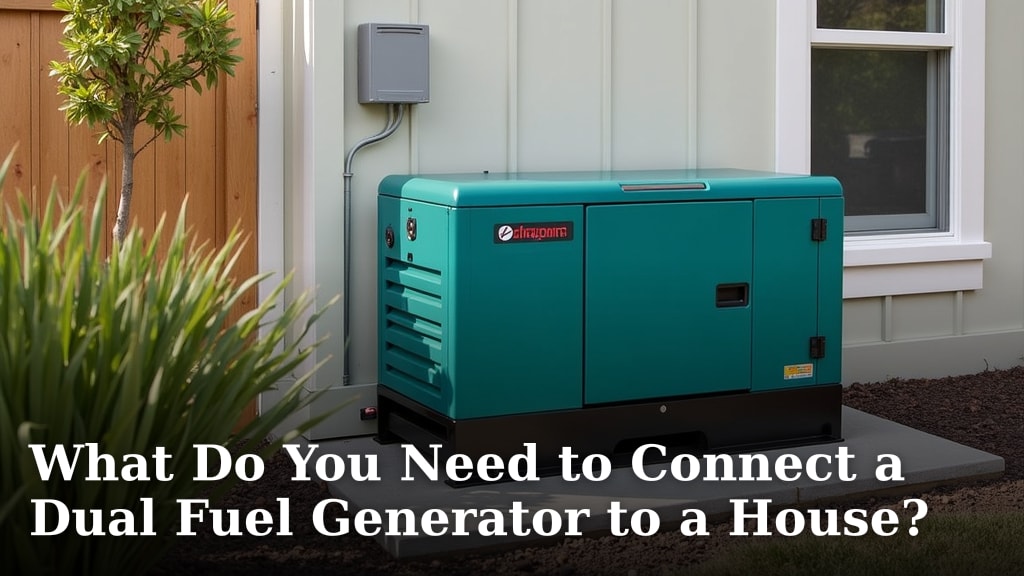
To connect a dual fuel generator to a house, you will primarily need a transfer switch, a sturdy power cord, and the appropriate generator. We found these three items are essential for safely linking your generator to your home’s electrical system.
Connecting a generator isn’t just about plugging it in; it’s about doing so safely and effectively. You want to make sure your home’s power supply is secure during an outage. This setup protects both your appliances and any utility workers who might be restoring power.
- Understand essential components like transfer switches and power cords.
- Learn about critical safety measures.
- Discover the difference between manual and automatic transfer switches.
- Ensure proper sizing for your generator and connections.
Let’s walk through exactly what you need and how to connect your dual fuel generator to your house, ensuring peace of mind when the lights go out.
Getting Your Dual Fuel Generator Ready for Home Connection
Connecting your dual fuel generator to your home requires careful planning and the right equipment. You’re essentially creating a temporary, but vital, power bridge. Let’s break down exactly what you’ll need to make this connection safely and efficiently.
The Heart of the Connection: Your Transfer Switch
This is arguably the most critical component. A transfer switch is a device that safely switches your home’s power source from the utility grid to your generator. It’s not just a fancy gadget; it’s a safety device that prevents dangerous backfeeding. Backfeeding sends electricity from your generator back into the utility lines, which can seriously injure or even kill utility workers (Electrical Safety Foundation International).
Manual Transfer Switches: Your Hands-On Approach
A manual transfer switch requires you to physically flip a lever or switch to change power sources. When the power goes out, you’ll start your generator, then go to the transfer switch and manually switch your home’s circuits over. It’s a straightforward process, but it does mean you’ll be actively involved in managing your power during an outage.
- Cost-effective: Generally less expensive than automatic options.
- Direct control: You decide exactly when to switch power sources.
- Simpler installation: Often easier for a qualified electrician to install.
Automatic Transfer Switches: Set It and Forget It
An automatic transfer switch (ATS) is like a smart butler for your power. When it senses a utility outage, it automatically starts your generator and switches your home’s power supply. When utility power returns, it switches back and shuts down the generator. This means you don’t have to lift a finger during an outage.
- Convenience: No manual intervention needed during an outage.
- Seamless transition: Power is restored quickly, even if you’re not home.
- Higher cost: More expensive to purchase and install.
Which one is right for you? It often comes down to your budget and how much convenience you desire. We found that for most homeowners, a manual transfer switch provides a reliable and affordable solution.
Powering Up: The Essential Generator Power Cord
Once you have your transfer switch, you’ll need a way to get the power from your dual fuel generator to that switch. That’s where a high-quality generator power cord comes in. This isn’t just any extension cord; it’s a heavy-duty cable specifically designed to handle the generator’s output. Using the wrong type of cord can be a serious fire hazard.
Sizing Your Power Cord Correctly
The size of your power cord (its gauge) needs to match your generator’s output and the distance it will travel. A cord that’s too thin for the amount of power it carries can overheat, melt, and start a fire. We always recommend checking your generator’s manual for the recommended cord specifications. Generally, larger generators require thicker cords (lower gauge numbers).
You’ll also need to consider the type of plug and receptacle. Generator cords typically have a locking plug (like an L14-30 or L5-30) that twists into the generator outlet, preventing accidental disconnections. Make sure your cord’s plug matches your generator’s output receptacle and the inlet box you’ll connect to your transfer switch.
Ensuring Proper Connection: The Generator Inlet Box
A generator inlet box is the bridge between your external generator power cord and your home’s electrical system (specifically, the transfer switch). It’s a weather-resistant box mounted on the exterior of your house, typically near your electrical meter or main panel. Your generator power cord plugs into this box, which is then hardwired to the transfer switch inside.
This setup is far safer than running extension cords through windows or doors. It provides a secure, weatherproof connection point, protecting the electrical connections from the elements and accidental damage.
Safety First: Essential Protective Gear and Practices
Working with electricity, even indirectly, demands respect and caution. Always prioritize safety. Many experts say that proper preparation is key when dealing with generator power. Here’s what you need to keep in mind:
- Carbon Monoxide Detector: Generators produce carbon monoxide (CO), a colorless, odorless, and deadly gas. Always run your generator outdoors, far away from windows, doors, and vents. Place CO detectors inside your home.
- Fire Extinguisher: Have a working fire extinguisher readily available, especially near your generator.
- Gloves and Eye Protection: When handling electrical connections or refueling, protect your hands and eyes.
- Proper Ventilation: Never run a generator in an enclosed space, even a garage with the door open.
- Grounding: Ensure your generator is properly grounded according to the manufacturer’s instructions.
The Right Fit: Sizing Your Dual Fuel Generator
Before you even think about connecting, you need to ensure your dual fuel generator is the right size for your home’s needs. Too small, and it won’t power everything you want. Too large, and you’ve spent extra money for power you don’t use. We found that most homeowners overestimate their power needs, so a little planning goes a long way. You can learn more about how to calculate generator wattage needs to ensure you pick the right size.
Here’s a quick guide to help you estimate:
| Appliance Type | Typical Wattage (Running) | Starting Wattage (Approx.) |
|---|---|---|
| Refrigerator | 600-800 W | 1200-1600 W |
| Microwave | 750-1500 W | 750-1500 W |
| Sump Pump | 800-1500 W | 1600-3000 W |
| Furnace Fan (Gas) | 400-800 W | 800-1600 W |
| Window AC (10,000 BTU) | 1200 W | 1800-2400 W |
| Lights (LED) | 10-20 W/bulb | 10-20 W/bulb |
Make a list of the essential appliances you want to run during an outage. Add up their running wattages. Then, identify the single appliance with the highest starting wattage (usually something with a motor, like a refrigerator or sump pump) and add that to your running wattage total. This gives you a good estimate of the minimum generator size you’ll need.
Fueling Your Power: Propane and Gasoline Considerations
Since you have a dual fuel generator, you have the flexibility of using either gasoline or propane. Both have their pros and cons. Understanding these will help you prepare your fuel supply.
- Gasoline: Readily available, but has a shorter shelf life (especially without stabilizers). It’s also more prone to gumming up carburetors if left untreated.
- Propane: Longer shelf life, burns cleaner (less engine maintenance), and can be stored in large tanks. However, it’s generally less energy-dense than gasoline, meaning you’ll burn through more propane to get the same amount of power.
We recommend having a good supply of both on hand, safely stored, to maximize your run time options during an extended outage.
Professional Installation: When to Call an Electrician
While some aspects of generator connection might seem straightforward, installing a transfer switch and generator inlet box is not a DIY project for most homeowners. This work involves your home’s main electrical system and requires specialized knowledge to be done safely and up to code. Incorrect wiring can be incredibly dangerous.
Always hire a licensed electrician to install your transfer switch and inlet box. They will ensure everything is wired correctly, grounded properly, and meets all local electrical codes. Your safety, and the safety of utility workers, depends on it.
Your Generator Connection Checklist
To summarize, here’s a quick checklist of what you’ll need to connect your dual fuel generator to your house:
- Appropriately sized dual fuel generator
- Manual or automatic transfer switch
- Generator inlet box
- Heavy-duty generator power cord (correct gauge and plug type)
- Carbon monoxide detectors
- Fuel (gasoline and/or propane)
- Licensed electrician for installation
Conclusion
Connecting your dual fuel generator to your home safely gives you incredible peace of mind during power outages. You’ve learned about the essential components like a transfer switch and the right power cord, plus vital safety practices. Remember, proper sizing and professional installation of the transfer switch are non-negotiable for your safety and to protect your home’s electrical system. Taking these steps ensures your family stays comfortable and secure when the grid goes dark.
Your next step is to assess your home’s power needs and consult with a licensed electrician to plan your specific setup.
Frequently Asked Questions
Can I just use extension cords to power my house from a dual fuel generator?
No, you should never try to power your entire house with extension cords directly from your generator. This is extremely unsafe and can overload circuits, cause fires, or lead to dangerous backfeeding into the utility grid. A properly installed transfer switch and generator inlet box are essential for safe home connection.
How far away should my dual fuel generator be from my house?
You should operate your dual fuel generator at least 20 feet away from your house. It needs to be in an open-air environment, away from windows, doors, and vents. This distance helps prevent dangerous carbon monoxide fumes from entering your home.
Do dual fuel generators require special maintenance compared to gas-only generators?
Dual fuel generators generally require similar maintenance to gasoline-only models, but with an added consideration for the fuel systems. We found that regularly checking both the gasoline and propane fuel lines and connections is important. Also, if you switch between fuels frequently, be sure to follow manufacturer guidelines for engine care related to each fuel type.
Can I install a transfer switch myself, or do I need an electrician?
Installing a transfer switch is a complex electrical task that ties into your home’s main power panel. For safety and compliance with electrical codes, you absolutely need a licensed electrician to install it. Attempting this yourself can lead to serious injury, fire, or damage to your home’s electrical system.
How much fuel (gasoline or propane) should I keep on hand for my dual fuel generator?
The amount of fuel you need depends on your generator’s run time and how long you anticipate needing power. We recommend having at least a 24-hour supply based on your generator’s fuel consumption rate at your expected load. For propane, consider larger tanks (like 20lb or 30lb BBQ tanks, or even larger permanent tanks) for extended outages, and keep gasoline stabilized if stored long-term.
