How to Use a Midwest Gas Can Spout
To use a Midwest gas can spout, fit the threaded collar to the measured can opening, secure the gasket, add a vent if needed, and pour slowly with the spout aimed into the fuel tank. Tighten the outlet cap after every use and follow safe fuel-handling practices.
On this page (8 sections)
- How do you use a Midwest gas can spout?
- What should you check before fitting a Midwest gas can spout?
- Which spout length works best for outdoor equipment?
- How do you use a Midwest gas can spout with a deep tank opening?
- How can you prevent spills while pouring?
- How should you clean and store the spout?
- What common mistakes should you avoid?
- Which replacement spout should you choose?
To use a Midwest gas can spout, measure the can opening, fit the correct threaded collar and gasket, secure the spout, and pour slowly into the equipment tank. Keep the spout aimed at the tank opening, avoid overfilling, and tighten the outlet cap before moving the can.
A replacement spout can restore a gas can when the original nozzle is cracked, missing, too short, or leaking. The right fit depends on the opening diameter, thread style, gasket position, vent arrangement, and the reach you need.
How do you use a Midwest gas can spout?
Attach the threaded spout to the measured opening, check the seal, and control the pour with the can held steadily. Before starting, move the equipment outdoors or to a well-ventilated area away from flames, sparks, cigarettes, and hot surfaces.
- Check the gas can opening and compare it with the replacement collar.
- Confirm the rubber gasket sits flat inside the connection.
- Screw the collar and spout together without cross-threading.
- Set up the vent cap if the can design requires one.
- Place the spout deep enough in the equipment fuel opening to reduce splashing.
- Tilt the can slowly and stop before the tank reaches the neck.
- Return the can upright and tighten the outlet cap.
Do not force a collar that does not match the opening. A connection that feels loose, binds early, or leaves the gasket uneven can leak during pouring or transport.
For background on choosing a suitable fuel storage container, check the can's opening, vent, cap, and intended fuel before selecting a replacement spout.
What should you check before fitting a Midwest gas can spout?
Measure the opening before buying or installing a replacement. A visual match is not enough because similar cans can use different collar sizes or thread patterns.
Clean dirt and old fuel residue from the opening with a suitable method, then inspect the neck for cracks. Do not install a replacement on a damaged opening that cannot hold the gasket evenly.
The spout should sit firmly without excessive force. Tighten threaded parts by hand until secure, then check the connection for movement.
Over-tightening can damage plastic threads or distort the gasket.
The best gas can spout replacement depends on the opening measurement, the required reach, the number of cans you need to repair, and whether you need a replacement vent.
How do you use a Midwest gas can spout with a vent?
Use the vent arrangement that matches the can. A can that already has a vent cap may need a replacement vent cap, while a can without an end vent may need the included vent setup installed according to its instructions.
Do not drill a vent hole by guesswork. If a kit includes a drill bit and instructions for installing a vent cap, follow those instructions and keep plastic shavings away from the fuel.
A vent that is blocked, loose, or incorrectly fitted can make pouring uneven. Stop if the can bulges, the flow surges, or fuel escapes around the vent.
Which spout length works best for outdoor equipment?
Choose a standard spout for ordinary access and a longer spout when the tank opening sits deep or far from the can. A longer tube can reduce awkward tilting, but it still needs to fit the opening and remain easy to control.
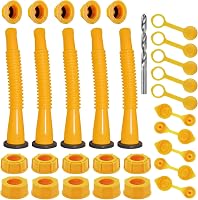
The Zoolowua Gas Can Spout Replacement Kit has an 8.1 in nozzle tube. Its 5-kit package includes 5 spout tubes, 10 screw collar caps with coarse and fine threads, 5 threaded nozzle caps, rubber gaskets, 2 vent cap types, and a drill bit for the gas discharge cap.
This kit suits someone repairing several cans or wanting spare parts in the same package. The stated opening range is 1.7 to 1.82 in, and the kit is intended for most 1, 2, 5, 6, and 10 gallon oil cans after you measure the opening.
The Zoolowua Gas Can Spout Replacement Kit has a 3-kit package with 3 spout tubes, 6 screw collar caps with coarse and fine threads, 3 threaded nozzle caps, rubber gaskets, 2 vent cap types, and a drill bit for the gas discharge cap.
This option fits the same general replacement task when you need 3 spouts instead of 5. Its stated opening range is 1.7 to 1.82 in, with a 1.76 in inlet and outlet connection size.
For a longer reach into a mower, generator, ATV, or other outdoor equipment, compare long gas can spout options after measuring the equipment opening.
How do you use a Midwest gas can spout with a deep tank opening?
Keep a long spout supported by the tank opening and tilt the can gradually. Do not push the tube against the bottom of the tank or lift the can so high that you lose control.
The FOANRIY Long Gas Can Spout Replacement Kits include 6 yellow HDPE spouts with a 10.2 in hose length. The package also includes 12 screw collar caps with coarse and fine threads, 6 threaded tube caps, rubber gaskets, 2 vent cap types, a drill bit, and installation instructions.
FOANRIY names Midwest among the gas can brands its spout is designed to fit. It is intended for 1.7 to 1.82 in gas can openings and for 1, 2, 5, and 10 gallon oil cans.
The 10.2 in reach can help when a standard nozzle stops short, but extra length can also make the end harder to steady. Keep one hand on the can handle and guide the spout with the other hand when the equipment opening is awkward.
How can you prevent spills while pouring?
Pour at a slow, steady angle and stop as soon as the fuel level approaches the tank opening. A spout helps direct fuel, but it cannot prevent overflow when the tank is already full or the can is tilted too quickly.
Place the nozzle inside the tank opening before tilting the can. If you are considering a pump instead, see Milwaukee pump gasoline compatibility.
Keep the can stable and avoid resting its full weight on a thin plastic tank neck.
If the flow surges, return the can upright and check the vent. A blocked vent can interrupt the flow and encourage sudden movement when air enters the can.
Never refuel a hot engine. Turn equipment off, let it cool, and follow its instructions for fuel type and refueling.
The how to use a gas can spout guide covers the same basic pouring sequence in broader terms.
How should you clean and store the spout?
Wipe fuel residue from the outside, keep the threads and gasket area clean, and tighten the outlet cap after use. Store the can upright in a suitable, cool, well-ventilated location away from ignition sources.
Do not leave the spout uncapped during transport. Check the collar, tube, cap, gasket, and vent before each use, especially if the can has been stored for a long time.
Replace a part if it is cracked, badly distorted, or no longer seals. Do not rely on a tightened cap to compensate for damaged threads or a torn gasket.
If your can uses a different replacement system, the how to use a Scepter gas can spout guide explains why opening measurements and cap designs matter across brands.
What common mistakes should you avoid?
The most common errors are skipping the measurement, fitting the wrong collar, misplacing the gasket, and pouring too quickly. Each can create leaks, splashing, or a poor seal.
Avoid these mistakes:
- Do not assume every Midwest can has the same opening.
- Do not mix a coarse collar with a fine threaded connection.
- Do not install a gasket that is folded, dirty, or out of position.
- Do not drill a vent without following the kit instructions.
- Do not carry a can with the outlet cap loose.
- Do not refuel near flames, sparks, or a running engine.
A damaged plastic can may need more than a new nozzle. Read how to repair a plastic gas can before deciding whether a spout replacement is suitable.
Which replacement spout should you choose?
Choose by opening fit first, then choose by reach and package size. The Zoolowua 5-kit is useful when you need several 8.1 in replacements and multiple collar options.
The Zoolowua 3-kit suits a smaller repair batch with the same 8.1 in tube length.
Choose FOANRIY when the 10.2 in reach helps you access a deep or awkward fuel opening. Its yellow 6-pack also includes coarse and fine caps, vent cap types, a drill bit, and installation instructions.
If you use fuel for a dual-fuel generator, keep gasoline handling separate from propane procedures. The guide to how to switch a dual fuel generator from gas to propane explains that changeover as a separate task.
For color guidance, what is a blue gas can for explains how can color can relate to the fuel type or storage purpose. Always confirm the fuel required by your equipment before pouring.
The decision is simple: measure the Midwest can opening, select a matching threaded collar and gasket, then choose 8.1 in or 10.2 in reach based on the equipment tank. Keep the spout capped, the can upright, and the refueling area free of ignition sources.
Frequently asked questions
How do you use a Midwest gas can spout?
Measure the Midwest can opening first, then choose a threaded collar and gasket that fit. Attach the spout, confirm the cap is secure, add the correct vent setup if needed, and pour slowly into the equipment tank.
Keep the can upright when finished and tighten the outlet cap.
What size opening does a Midwest gas can spout need?
Measure the threaded opening before ordering a replacement. The FOANRIY spout is designed for 1.7 to 1.82 in openings and names Midwest among its compatible gas can brands.
The Zoolowua kits cover openings from 1.7 to 1.82 in, depending on the kit.
Does a Midwest gas can need a vent?
A vent helps air enter the can as fuel leaves, but the correct setup depends on the can design. Some replacement kits include two vent cap types, including one for cans without an end vent and another for cans with an existing vent cap.
Follow the can and kit instructions.
How do you stop a gas can spout from leaking?
Start with the correct opening size, an evenly seated gasket, and a fully tightened threaded connection. Pour slowly and keep the spout cap clean.
After use, tighten the outlet cap and store the can upright.
Replace damaged gaskets, caps, or spouts before carrying fuel.