How to Use a Scepter Gas Can Spout
To use a Scepter gas can spout, fit the threaded collar securely, open the can vent, place the spout into the equipment opening, and pour slowly. Close the vent and tighten the outlet cap when finished.
On this page (7 sections)
- How to use a Scepter gas can spout step by step
- What should you check before using a Scepter spout?
- How do you control the Scepter vent while pouring?
- How slowly should you pour fuel from a Scepter can?
- What should you do if the spout leaks?
- How do you store a Scepter gas can after pouring?
- Which Scepter gas can spout replacement should you choose?
To use a Scepter gas can spout, secure the threaded collar, place the spout into the equipment opening, open the vent, and pour slowly. Keep the can steady, avoid splashing, and close the vent and outlet cap when the transfer is finished.
Scepter cans can use different spout and vent arrangements, so inspect the controls before pouring. If the original spout is cracked, loose, or leaking, measure the can mouth before choosing a replacement.
How to use a Scepter gas can spout step by step
Fit the spout, open the vent, and control the pour slowly. The basic order is to prepare the equipment, connect the spout, position the can, open the vent, pour, and seal the can afterward.
- Move the equipment to a stable, well-ventilated area away from ignition sources.
- Check that the gas can, spout, collar, gasket, and outlet cap are clean and undamaged.
- Thread the spout assembly onto the can opening and tighten it securely by hand.
- Place the nozzle inside the equipment fuel opening before opening the vent.
- Open the can vent if your Scepter setup has a separate vent control.
- Tilt the can gradually and pour at a rate you can control.
- Return the can upright, close the vent, and tighten the outlet cap.
Keep the nozzle inside the fuel opening while pouring. If fuel starts to splash, stop, return the can upright, and let the equipment opening clear before continuing.
For a broader overview of spout controls and pouring positions, see our guide to how to use a gas can spout.
What should you check before using a Scepter spout?
Check the fit, seal, thread condition, and vent before adding fuel. A spout that does not sit squarely can leak or make the can difficult to control.
Look for cracks in the nozzle tube, collar, cap, and vent area. Check the gasket for flattening, cuts, or dirt, then wipe away debris before reconnecting the spout.
The opening size matters when replacing a Scepter spout. A fuel storage container buying guide can help you compare container designs, openings, vents, and storage needs before you choose a replacement part.
How should you measure the opening?
Measure the inside or outside opening according to the replacement kit's instructions, and compare that measurement with the kit's stated range. Do not assume that every gas can uses the same thread or collar.
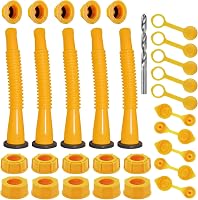
The Zoolowua Gas Can Spout Replacement Kit has an 8.1 in nozzle tube and is made for gas can mouth sizes from 1.7 to 1.82 in. Its kit includes coarse- and fine-thread screw collar caps, installed rubber gaskets, threaded nozzle caps, 2 types of vent caps, and a drill bit for vent-cap installation.
This Zoolowua kit suits people replacing multiple worn spouts or keeping spare parts available. The gaskets are installed, which reduces the assembly work before use.
It supports 1/2, 5, 6, and 10 gallon oil cans according to its product details, but the mouth still needs to measure within the stated range. Check the exact opening before ordering.
How do you control the Scepter vent while pouring?
Open the vent only after the nozzle is positioned in the equipment opening. The vent lets air enter as fuel leaves, which can make the flow more consistent.
Some cans have a vent at the rear, while replacement kits may include a vent cap for cans without one. Read the instructions for the can and replacement part before drilling or changing a vent.
Never drill a fuel can while it contains fuel or fuel vapors. If a replacement kit calls for drilling, follow its instructions only after the can is empty, clean, and safe to work on.
The Zoolowua Gas Can Spout Replacement Kit includes 3 spouts, 3 coarse-thread and 3 fine-thread screw collar caps, threaded nozzle caps, 2 types of vent caps, installed rubber gaskets, and a drill bit for installing the gas discharge cap.
Choose this Zoolowua kit when you need fewer replacement assemblies than the 5-kit version. Its stated mouth range is 1.7 to 1.82 in, so measure a Scepter can before relying on the collar fit.
Use the threaded nozzle cap after pouring. A closed cap helps contain the remaining fuel and reduces the chance of a spill when the can is moved.
How slowly should you pour fuel from a Scepter can?
Pour slowly enough to keep the nozzle seated and the fuel opening clear. A controlled angle is safer than lifting the can high or trying to empty it quickly.
Keep both hands available if the can is difficult to balance. Stop before the equipment tank is full, since fuel needs room for expansion and the opening can overflow if you continue pouring.
Do not leave a fuel can unattended while the vent is open. Return it upright as soon as the transfer is complete, then close the vent and outlet cap.
If the equipment opening is deep or hard to reach, a long gas can spout may reduce awkward positioning. Length helps reach, but it does not remove the need to control the can and watch the fuel level.
When does a long replacement spout help?
A long spout helps when the equipment fuel opening is recessed or difficult to reach with a short tube. Measure the path and opening first, because a longer tube still needs the correct collar and thread fit.
The FOANRIY Long Gas Can Spout Replacement Kits have 10.2 in flexible spouts and are designed for 1/2, 5, and 10 gallon gas cans. The product details name Scepter among the compatible brands and specify 1.7 to 1.82 in openings.
This FOANRIY kit is the best fit here when extra reach is the main problem. It includes 6 spouts, coarse- and fine-threaded caps, rubber gaskets, threaded tube caps, 2 vent-cap types, drill bits, and installation instructions.
Its longer tube may be less convenient where a short spout already reaches comfortably. The kit uses industrial-grade HDPE, but inspect every tube and gasket before use.
What should you do if the spout leaks?
Stop pouring and find the leak before using the can again. Set the can upright in a safe, ventilated place, keep it away from flames and electrical sparks, and wait until any spilled fuel has been dealt with safely.
Check whether the collar is cross-threaded or loose. Inspect the gasket for dirt, damage, or poor placement, and examine the nozzle cap and tube for cracks.
Do not solve a leak by wrapping damaged plastic with tape. Replace the worn part with a correctly sized kit, and confirm that the replacement threads match the can opening.
For more replacement choices, see our guide to the best gas can spout replacement options. If the can itself is damaged, replace the container instead of fitting another spout.
How do you store a Scepter gas can after pouring?
Close the vent and tighten the outlet cap before moving or storing the can. Keep the container upright in an approved, well-ventilated storage area away from heat, flames, and ignition sources.
Wipe any fuel from the outside before putting the can away. Do not store it where children, pets, vehicles, or equipment can knock it over.
Inspect the spout before the next use. A cap that no longer tightens, a gasket that is split, or a tube that has softened or cracked is a reason to replace the part.
If you are preparing fuel for a generator, review how to switch a dual fuel generator from gas to propane so you use the correct fuel procedure for that equipment. A gas can spout is for controlled transfer, not for changing the generator's fuel mode.
Which Scepter gas can spout replacement should you choose?
Choose the replacement that matches your measured opening and solves your reach problem. Pick the 5-kit Zoolowua set for more spare assemblies, the 3-kit Zoolowua set for a smaller supply, or the 6-pack FOANRIY set when a 10.2 in tube helps reach the fuel opening.
The most important checks are the mouth measurement, thread type, gasket condition, vent arrangement, and nozzle length. Use the spout only when it fits securely, pour with the can stable, and close every cap and vent before storage.
If you want to change a standard can into a different spout setup, compare gas can spout conversion kits. For another brand-specific process, read how to use a Midwest gas can spout and compare its controls with your Scepter can.
Frequently asked questions
How do you use a Scepter gas can spout?
Fit the threaded spout and collar to the can opening, place the nozzle into the equipment fuel opening, and open the vent if your can uses one. Pour slowly while keeping the can stable, then close the vent and tighten the outlet cap before storing the can.
How do you stop a Scepter gas can spout from leaking?
Check that the opening, collar, threads, and gasket are clean and correctly aligned. Tighten the threaded connections by hand without forcing them, keep the outlet cap closed during storage, and replace the spout or gasket if it is damaged or no longer seals.
What size replacement spout fits a Scepter gas can?
Measure the can mouth before buying a replacement. The FOANRIY long replacement kit is designed for 1.7 to 1.82 in openings and names Scepter among the compatible brands, while the Zoolowua kits list gas can mouth sizes from 1.7 to 1.82 in.
Should the gas can vent be open while pouring?
A vent usually needs to be open for air to enter as fuel leaves the can, but the exact control depends on the can design. Open it only when you are ready to pour, keep the can upright and stable, and close it again after the transfer is complete.