
Can You Learn to Size a Dual Fuel Generator for Home Backup?
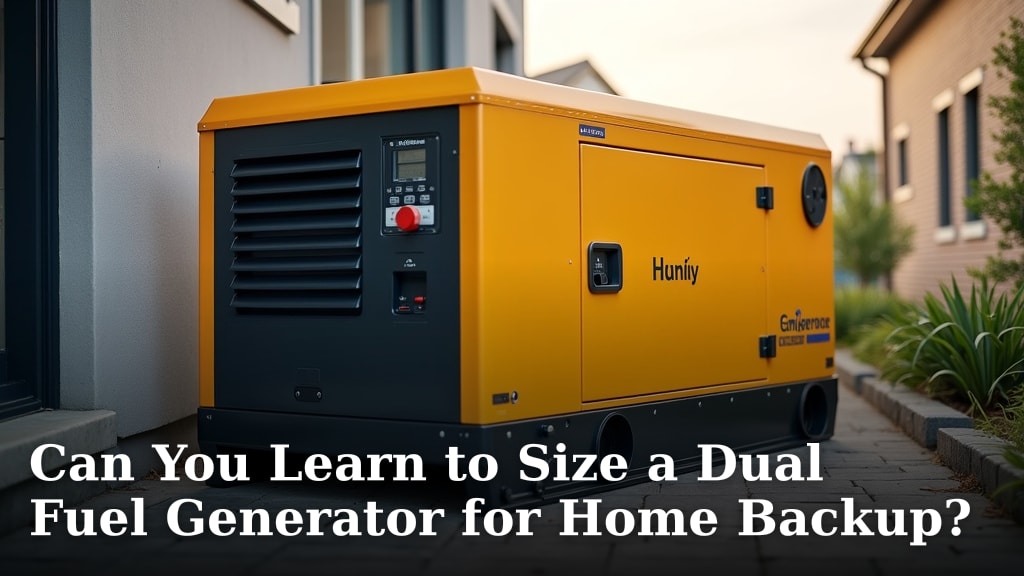
Yes, you absolutely can learn to size a dual fuel generator for home backup. Many resources and experts can guide you. It involves understanding your power needs during an outage.
You need to calculate the wattage of essential appliances. This helps you pick a generator that is just right for your home. Too small, and you won’t have enough power; too large, and you waste money.
- Calculate your home’s essential wattage.
- Understand starting vs. running watts.
- Consider fuel types and storage for dual fuel.
- Look into transfer switch options.
- Budget for generator and installation costs.
Let’s walk through how to figure out your home’s power requirements. We’ll help you select the perfect dual fuel generator for your peace of mind.
Understanding Your Home’s Power Needs for Generator Sizing
Sizing a dual fuel generator starts with a clear understanding of your home’s power demands. You don’t want to be caught off guard during an outage. Imagine your refrigerator losing power, or your well pump going silent. We need to prevent that.
This means making a list of everything you want to keep running. It’s a critical first step. Think about essential comforts and safety first.
Identifying Essential Appliances
First, grab a pen and paper or open a spreadsheet. You’ll want to list every appliance you can’t live without during a power outage. This isn’t about running your entire home. It’s about what keeps you safe and comfortable.
Consider your family’s needs. Do you have medical equipment that needs constant power? Is your home heated by a furnace that relies on electricity? These are top priorities.
- Refrigerator/Freezer
- Furnace fan or space heaters (if electric)
- Well pump (if you rely on well water)
- Medical equipment (CPAP, oxygen concentrator)
- Lights (at least a few key ones)
- Sump pump (if you have a basement)
- Phone chargers and a computer for communication
You might also want a microwave for quick meals or a TV for news. It’s about finding a balance between need and what your budget allows for generator size.
Distinguishing Between Starting and Running Watts
This is where many people get confused, but it’s really quite simple. Appliances have two types of wattage needs: running watts and starting watts.
Running watts are what an appliance uses constantly once it’s on. Starting watts, also called surge watts, are the extra burst of power an appliance needs for a few seconds to get going. This is especially true for items with motors.
Think of it like pushing a heavy car. It takes a lot more effort to get it moving than it does to keep it rolling once it’s already in motion. Your generator needs to handle those initial “pushes.”
Calculating Your Total Wattage Requirements
You’ll need to find the wattage for each item on your list. Most appliances have a label or sticker that lists their wattage. If not, a quick online search for the model number usually works.
For each appliance, note both its running watts and its starting watts. The starting watts will always be higher than the running watts. You’ll add up all the running watts first.
Then, identify the single appliance with the highest starting wattage. This is crucial. Your generator needs to supply the total running wattage of everything currently on, PLUS the starting wattage of that one highest item when it kicks on.
Here’s a simple example:
| Appliance | Running Watts | Starting Watts |
|---|---|---|
| Refrigerator | 800 | 1200 |
| Microwave | 1000 | 1800 |
| TV | 200 | 200 |
| Lights (total) | 300 | 300 |
| Well Pump | 1500 | 3000 |
In this example, your total running watts would be 800 + 1000 + 200 + 300 + 1500 = 3800 watts. The highest starting watt item is the well pump at 3000 watts. So, you’d need a generator that can deliver at least 3800 watts continuously, and also surge up to 3000 watts on top of that for a moment (assuming everything else is already running). This means you’d look for a generator with a running wattage of around 3800W and a starting wattage capacity of at least 6800W (3800 + 3000). Always factor in a little extra as a buffer, say 10-20% more than your calculated maximum.
The Unique Advantages of Dual Fuel Generators
Now that you know how much power you need, let’s talk about why dual fuel generators are such a popular choice. They offer a flexibility that single-fuel units just can’t match. This adaptability can be a real lifesaver during extended outages.
You get to choose your fuel source. This means less worry about supply chain issues affecting just one type of fuel. It’s like having a backup for your backup fuel.
Understanding Fuel Options: Propane vs. Gasoline
Dual fuel generators can run on either gasoline or liquid propane (LP). Each has its own set of pros and cons. Knowing these differences helps you plan for fuel storage and availability.
Gasoline is readily available at most gas stations. However, it has a shorter shelf life and can gum up carburetors if not properly stabilized. Propane, on the other hand, stores for much longer. It also burns cleaner, which can extend the life of your generator’s engine (Environmental Protection Agency).
Benefits of Propane for Generator Use
Many homeowners prefer propane for backup power. It’s a clean-burning fuel that produces fewer emissions than gasoline. This is good for both the environment and your generator’s engine components.
Propane also has an almost indefinite shelf life. You can store large tanks for years without worrying about the fuel degrading. This is a huge advantage for emergency preparedness. You won’t have to rotate your fuel supply as often.
Plus, propane tanks are sealed systems. This means less risk of spills or odors compared to gasoline. It’s generally considered safer to store around your home.
Benefits of Gasoline for Generator Use
Gasoline offers higher energy density than propane. This means you might get slightly more power or longer run times per gallon. It’s also incredibly easy to find almost anywhere. Most cars run on it, so gas stations are abundant.
For shorter outages, having a few cans of fresh, stabilized gasoline might be all you need. It gives you immediate access to power without needing to connect a large propane tank. It’s a good option for quick, unexpected power interruptions.
Fuel Storage and Safety Considerations
No matter which fuel you choose, proper storage is essential. Safety should always be your top concern when dealing with flammable liquids and gases.
For gasoline, always use approved containers. Store them in a cool, dry place, away from your living space and any ignition sources. Add a fuel stabilizer to extend its life, typically up to a year (Department of Energy).
Propane tanks should be stored outdoors, in a well-ventilated area, away from direct sunlight. Never store propane tanks indoors, even in a garage. Always ensure tanks are upright and secured.
Connecting Your Dual Fuel Generator to Your Home
Getting the right size generator is one thing; connecting it safely is another. You can’t just plug a powerful generator into a wall outlet in your home. That’s extremely dangerous and can damage your appliances or even harm utility workers.
This is where a transfer switch comes in. It’s the safest and most recommended way to integrate your generator into your home’s electrical system. Don’t skip this step!
The Importance of a Manual Transfer Switch
A manual transfer switch is like a traffic cop for your electricity. It makes sure that your home is only getting power from one source at a time – either the utility grid or your generator. It prevents “backfeeding.”
Backfeeding is when your generator sends electricity back into the utility lines. This can electrocute utility workers who are trying to restore power. It’s illegal and incredibly dangerous. A transfer switch completely isolates your home from the grid when the generator is running.
When the power goes out, you manually flip the switch to generator power. When the grid comes back on, you flip it back. It’s a simple, safe process that an electrician installs directly into your home’s main electrical panel.
Professional Installation is Key
Installing a manual transfer switch is not a DIY project. You absolutely need a licensed electrician. They will ensure the system is installed correctly and safely, meeting all local electrical codes.
The electrician will help you determine which circuits in your home will be connected to the transfer switch. These are usually the essential circuits you identified earlier, like your refrigerator, well pump, and key lighting circuits.
Don’t try to save a few dollars by doing it yourself. The safety of your family and your home depends on a professional installation. We cannot stress this enough (National Electrical Code).
Final Considerations for Your Dual Fuel Generator
You’ve calculated your power needs, understood dual fuel options, and learned about safe connection. What else should you think about? A few more things will help ensure your generator purchase is a success.
Think about where the generator will sit. Consider noise levels. And don’t forget the budget, which includes more than just the generator itself.
Location, Noise, and Exhaust Ventilation
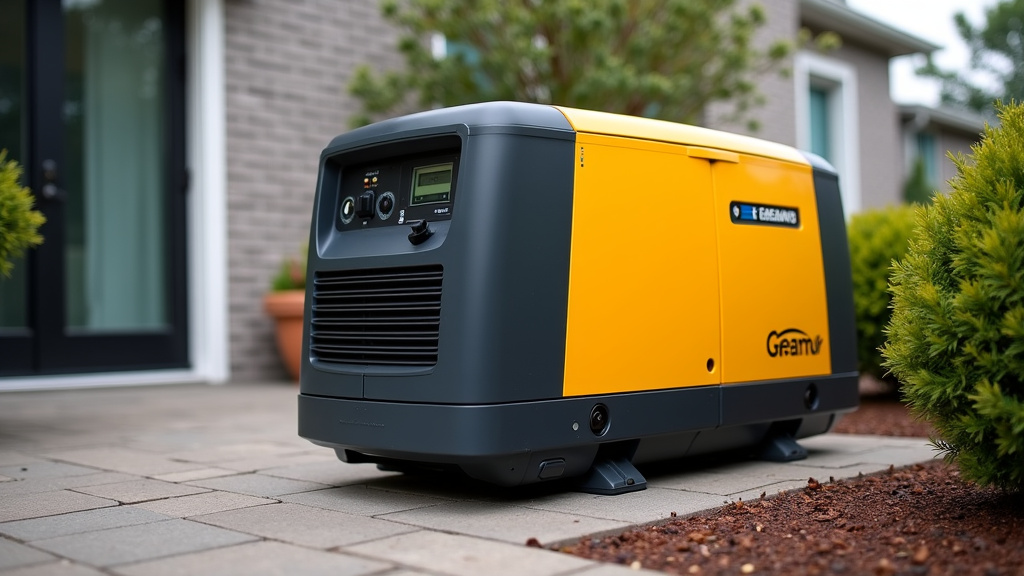
Generators produce carbon monoxide, a colorless, odorless, and deadly gas. Never run a generator indoors, in a garage, or near windows or doors. Always operate it outdoors, at least 20 feet from your home, with the exhaust pointing away.
Noise is another factor. Generators can be loud. If you have close neighbors, consider models designed for quieter operation. Some have special mufflers or enclosed designs to reduce noise pollution. You’ll thank yourself during a long outage.
Budgeting Beyond the Generator Purchase
The cost of the generator is just one part of the equation. Remember to factor in other expenses:
- Transfer Switch and Installation: This is a significant cost, but a necessary one for safety.
- Fuel Storage: Propane tanks or gasoline cans, plus stabilizer for gasoline.
- Extension Cords: Heavy-duty, outdoor-rated cords appropriate for your generator’s output.
- Maintenance: Oil changes, spark plugs, air filters. Generators need regular upkeep.
- Generator Cover: To protect your investment from the elements when stored.
Having a clear budget will help you avoid surprises down the road. It ensures you have a complete, ready-to-use backup power system when you need it most.
Your Generator Sizing Checklist
Let’s recap what you need to do. Use this checklist to guide your journey to home backup power:
- List all essential appliances you want to power.
- Determine the running and starting watts for each appliance.
- Calculate your total running watts and the highest single starting watts.
- Choose a generator with enough running AND starting capacity (with a 10-20% buffer).
- Plan for safe storage of your chosen fuel (propane or gasoline).
- Budget for a manual transfer switch and professional installation.
- Select a safe, well-ventilated outdoor location for generator operation.
By following these steps, you will confidently size a dual fuel generator that perfectly fits your home’s needs. You’ll gain peace of mind, knowing you’re prepared for whatever comes your way.
Conclusion
You now have the tools to confidently size a dual fuel generator for your home. By understanding your essential power needs, differentiating between running and starting watts, and choosing the right fuel, you’re well on your way. Remember the importance of professional installation for your transfer switch and always prioritize safety. Taking these steps ensures you’ll have reliable backup power when outages strike. Don’t wait for the next storm; start planning your home’s power security today.
Frequently Asked Questions
How often should I test my dual fuel generator?
It’s a good practice to test your dual fuel generator at least once a month. Run it under a small load for 15-20 minutes. This helps keep the engine lubricated and ensures it will start when you truly need it.
Can a dual fuel generator run on both fuels simultaneously?
No, a dual fuel generator operates on one fuel source at a time, either gasoline or propane. You select which fuel to use before starting the generator. You cannot mix them or run on both concurrently.
Is it more cost-effective to run a generator on gasoline or propane?
The cost-effectiveness depends on current fuel prices in your area and the duration of use. Propane often costs slightly more per energy unit, but it stores much longer and burns cleaner, potentially extending generator life. Gasoline might be cheaper per gallon but degrades quickly. To further evaluate your fuel options, consider if it’s worth buying propane or gasoline for a dual fuel generator based on your specific needs.
What is the maximum distance a generator can be from my house?
For safety, generators should be operated at least 20 feet away from your home. This distance helps prevent carbon monoxide fumes from entering your living spaces. Always ensure proper ventilation and exhaust direction.
Do dual fuel generators require different maintenance than single-fuel generators?
Dual fuel generators have similar maintenance requirements as single-fuel units, such as oil changes, spark plug checks, and air filter replacement. However, you might need to clean the carburetor more frequently if primarily using gasoline due to its tendency to leave deposits.
