
Can You Learn to Power a Refrigerator with a Dual Fuel Generator?
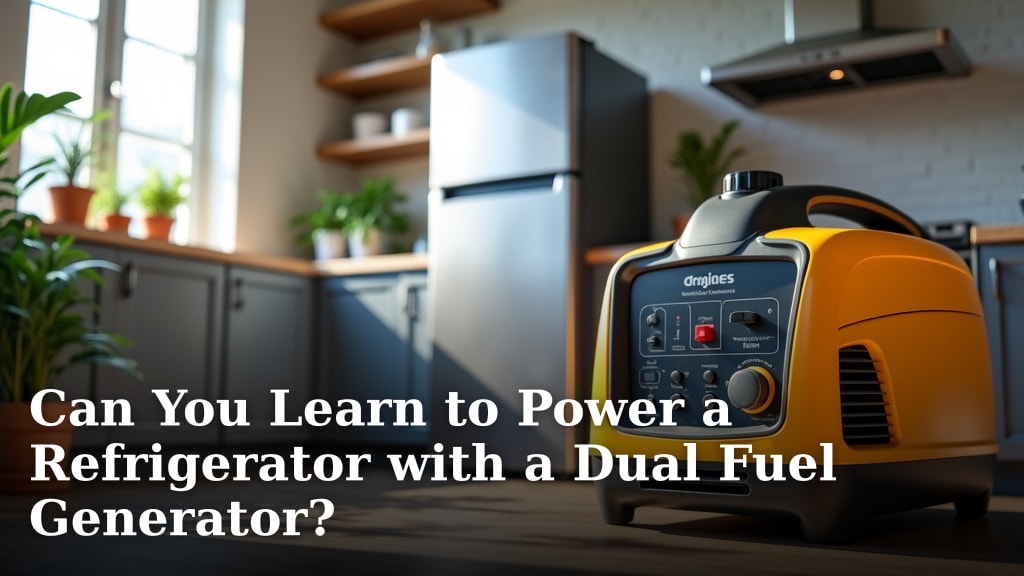
Yes, you can absolutely learn to power a refrigerator with a dual fuel generator. With the right generator and some simple considerations, you can keep your food cold even when the power is out. It’s a smart way to prepare for emergencies.
Dual fuel generators offer a lot of flexibility. They run on either gasoline or propane, giving you options depending on what’s available. Knowing how much power your refrigerator needs is key to choosing the right generator and ensuring it runs smoothly. This can be a real lifesaver during outages.
- Dual fuel generators can power your fridge.
- You need to know your fridge’s power needs.
- Propane or gasoline can be used as fuel.
- Proper generator sizing is important.
Let’s dive in and figure out exactly what you need to know to get your refrigerator running on a dual fuel generator.
Powering Your Refrigerator with a Dual Fuel Generator
You’re probably wondering if it’s actually possible to keep your fridge humming along using a dual fuel generator. The short answer is a resounding yes! It’s completely achievable to power a refrigerator with one of these versatile machines. Many people are discovering this as a practical way to safeguard their groceries during unexpected power outages.
The key is understanding a few fundamental concepts. You’ll need to match your generator’s output to your refrigerator’s energy demands. Think of it like picking the right size engine for a car; too small, and it won’t get the job done. Too big, and you’re wasting fuel.
Understanding Your Refrigerator’s Power Needs
Before you even think about generators, let’s get to know your refrigerator. Every appliance has an energy appetite, and refrigerators are no exception. They need a certain amount of power to run their cooling systems and compressors.
Starting Watts vs. Running Watts
This is where things get a little technical, but don’t worry, we’ll keep it simple. Refrigerators have two power ratings you need to be aware of: starting watts and running watts. The starting watts, also called surge watts, are needed for just a few seconds when the compressor kicks on. This is usually the highest power draw. The running watts, or continuous watts, are the power needed to keep the refrigerator running smoothly after it’s started.
Your refrigerator’s compressor is the main culprit for high starting watts. It’s like the starter motor in your car; it needs a jolt of energy to get going. Once it’s running, it settles into a lower, steady power consumption.
Finding Your Refrigerator’s Wattage
So, how do you find these numbers for your specific fridge? Check the appliance’s data plate. This is a small sticker or label usually found on the back or inside the door frame of your refrigerator. It will list the electrical requirements, often in amps or watts. If it lists amps, you can calculate watts by multiplying amps by the voltage (usually 120 volts in the US).
For example, if your fridge lists 5 amps and 120 volts, its running wattage would be 5 amps * 120 volts = 600 watts. However, the starting watts can be significantly higher, often 2-3 times the running watts. So, for a 600-watt running fridge, the starting watts could be anywhere from 1200 to 1800 watts.
If you can’t find the data plate, you can look up your refrigerator model online. Manufacturers usually provide specifications for their appliances. Many experts recommend adding about 20% to your calculated running watts to be safe and account for variations. For starting watts, it’s wise to estimate generously, as this is where many people run into trouble.
How Dual Fuel Generators Work
Dual fuel generators are fantastic because they offer you options. You’re not locked into just one type of fuel. This flexibility is a huge advantage when preparing for an emergency.
Gasoline vs. Propane: Fueling Your Generator
Your generator can run on either gasoline or propane (LPG). Gasoline is readily available but has a limited shelf life. Propane, on the other hand, stores much longer and burns cleaner, which can be better for the generator’s engine over time. Many people keep both on hand if possible.
The switch between fuels is usually quite simple. Most dual fuel generators have a selector switch and a connection point for each fuel type. You’ll typically run the generator on gasoline first to warm it up, then switch to propane, or vice versa, depending on the model’s instructions. Always follow the manufacturer’s guide carefully to avoid damaging the unit.
Generator Wattage Explained
Generators are rated by their power output in watts. Like refrigerators, they have both running watts (continuous power) and starting watts (peak power). You need to make sure the generator can supply more watts than your refrigerator requires, especially during startup.
Let’s say your refrigerator needs 600 running watts and 1500 starting watts. You wouldn’t want a generator that only offers 1000 running watts. You need enough power to handle the surge when the compressor kicks in. Many experts suggest choosing a generator with at least 10-20% more running watts than your appliance needs, and enough starting watts to cover the peak demand.
Choosing the Right Dual Fuel Generator for Your Fridge
Now for the main event: picking the generator that will keep your food cold. It’s all about matching power and needs. Don’t just grab the first generator you see!
Calculating Total Wattage Needs
Your refrigerator is likely the biggest power draw you’ll want to run during an outage. However, consider what else you might need power for. Will you want to charge your phone? Run a small fan? Turn on a light? Each of these adds to the total wattage requirement.
Add up the running watts of everything you anticipate needing simultaneously. Then, look at the starting watts for any appliances with motors (like your fridge). The generator must meet the highest starting wattage requirement plus the running wattage of all other appliances.
For example:
- Refrigerator: 600 running watts / 1500 starting watts
- Light bulb: 60 running watts
- Phone charger: 20 running watts
Recommended Generator Sizes
For just a refrigerator and a few small essential items, a generator in the 2000 to 3500 running watts range is often sufficient. These are typically portable and easier to manage. Make sure to check the surge wattage rating; it needs to be higher than your fridge’s starting watts.
If you plan to run more appliances, like a microwave, a small freezer, or a window air conditioner, you’ll need a larger generator, potentially in the 5000-watt range or higher. Always err on the side of a slightly larger unit than you think you need. It’s better to have a little extra power than not enough.
Setting Up and Running Your Generator Safely
You’ve got the generator, you know its specs, and you’ve figured out your fridge’s needs. Now, let’s talk about getting it all connected and running safely. This is super important, as generators produce carbon monoxide, which is a silent killer.
Location, Location, Location!
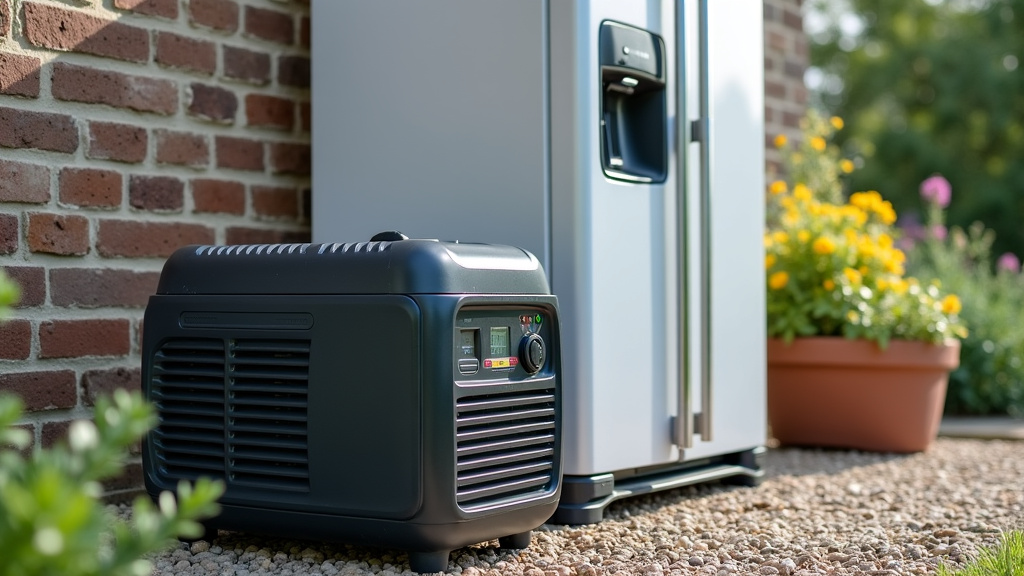
Never, ever run a generator indoors. This includes garages, basements, or sheds, even with the doors open. The carbon monoxide (CO) gas produced is odorless and colorless, and it can build up to deadly levels quickly. The U.S. Consumer Product Safety Commission (CPSC) strongly advises placing generators at least 20 feet away from your home, with the exhaust pointing away from any windows, doors, or vents.
Make sure the generator is on a level, dry surface. You don’t want it to tip over, and you want to keep it away from any water sources to prevent electrocution. Consider a small canopy to protect it from rain, but ensure there’s plenty of airflow.
Connecting Your Refrigerator
You have a couple of options for connecting your refrigerator to the generator. The most common and safest method is using a transfer switch. This is a professionally installed device that safely connects your generator to your home’s electrical panel. It prevents backfeeding power onto the utility lines, which is dangerous for utility workers.
If a transfer switch isn’t in the cards right now, you can use a heavy-duty outdoor-rated extension cord to plug your refrigerator directly into the generator’s outlet. Ensure the cord is the correct gauge (thickness) for the distance and the load. A cord that is too thin can overheat and is a fire hazard. Look for cords rated for 12-gauge or 10-gauge wire for appliances like refrigerators.
Never plug the generator into a wall outlet. This is called backfeeding and is extremely dangerous. It can damage your generator, your home’s wiring, and poses a serious risk of electrocution to anyone working on the utility lines.
Maintenance and Fuel Storage
Keep up with your generator’s maintenance schedule. This means regular oil changes and air filter cleaning. A well-maintained generator is a reliable generator. For fuel, store gasoline in approved containers away from heat sources and living areas. It can degrade over time, so using a fuel stabilizer can help extend its life. Propane tanks should be stored upright and in a well-ventilated area.
A Quick Checklist for Success
Ready to make this happen? Here’s a quick rundown to ensure you’re on the right track:
- Know Your Fridge: Find its running and starting watt requirements.
- Check Generator Specs: Ensure it has enough running and starting watts.
- Choose Your Fuel: Decide between gasoline and propane (or have both).
- Safe Placement: Always operate your generator outdoors and away from your home.
- Proper Connection: Use a transfer switch or a heavy-duty extension cord.
- Test Run: Do a short test run before an emergency to ensure everything works.
By following these steps, you can confidently power your refrigerator using a dual fuel generator, giving you peace of mind during any power disruption.
Conclusion
You absolutely can power your refrigerator with a dual fuel generator! We’ve covered how to figure out your fridge’s power needs, understand generator wattages, and choose the right fuel type. Remember, matching your refrigerator’s starting and running watts to the generator’s output is key for smooth operation. Safety is also top priority; always run your generator outdoors and use proper connections. Take the steps now to get prepared so you’re ready for any unexpected power outage.
Frequently Asked Questions
Will running my refrigerator all the time wear out the generator faster?
Running a generator continuously at or near its maximum capacity can lead to increased wear over time. It’s wise to have a generator with a bit of extra wattage beyond your refrigerator’s needs. This allows it to run more efficiently and can extend its lifespan.
Can I connect multiple refrigerators to one dual fuel generator?
You might be able to connect multiple refrigerators, but you’ll need to carefully calculate the total starting and running watts required. Most standard dual fuel generators in the 2000-3500 watt range are typically best suited for one refrigerator plus a few small essential items.
How long will a propane tank last running a refrigerator?
The run time for a propane tank powering a refrigerator depends on the tank size and the generator’s fuel consumption. A standard 20-pound propane tank, like those on a grill, might run a generator powering a fridge for several hours, possibly 6-10, but this can vary greatly.
Is it better to use gasoline or propane for my generator when powering a fridge?
Propane often burns cleaner, which can be better for your generator’s engine in the long run, and it stores for much longer than gasoline. Gasoline is widely available, but it can degrade over time. For emergency preparedness, having access to both is ideal.
What happens if my generator’s starting watts aren’t high enough for the refrigerator?
If the generator’s starting wattage is insufficient, the refrigerator’s compressor won’t be able to kick on. You might hear a hum, or the generator could surge and then shut down. This is why carefully matching starting watt requirements is so critical.
