9 Best Pulsar Dual Fuel Generators (November 2026)
The best Pulsar dual fuel generators include the Pulsar G12KBN Heavy Duty Portable Dual Fuel for whole-home backup, the Westinghouse 12500 Watt Dual Fuel Home Backup for remote start home backup, and the PowerSmart 3800 Watt Dual Fuel Inverter Generator for quiet inverter power.
On this page (9 sections)
- Pulsar dual fuel generators and the best alternatives, compared
- Best Pulsar dual fuel generator: large models compared
- How we compared these generators
- How many watts do you need for home backup?
- Gas or propane: which fuel should you pick?
- Inverter or open-frame: which type fits your use?
- How quiet and portable do you need it to be?
- What outlets and safety features should you check?
- Verdict: which Pulsar dual fuel generator should you buy?
The best pulsar dual fuel generator for most buyers is the Pulsar G12KBN, because its 9,500 rated watts on gasoline can run major home loads through a transfer switch. The smaller Pulsar PG2200BiS wins for quiet camping, and the inverter rivals below beat Pulsar on noise, weight or run time for lighter jobs.
Our score weighs specs, features and buyer feedback against what you are shopping for. A high score means strong output for the job, useful outlets and safety features, not a lab test result.
We compared nine models by rated watts, fuel flexibility, noise, weight and outlet layout. For another brand comparison, see DuroMax dual-fuel generators.
Pulsar leads on raw home-backup power, while inverters lead on clean, quiet power for electronics and RVs.
You can learn basics first with What Is a Dual Fuel Generator and How Does It Work? and What Is a Dual Fuel Inverter Generator and How Does It Work?. Those guides explain starting watts, rated watts and why propane output drops.
If you are still deciding on brand, our best portable generator brands guide compares Pulsar with other makers. For more Pulsar choices, see best pulsar inverter generator, and for rival families see best firman dual fuel generator and best genmax inverter generator.
Our picks at a glance
-
1
 Best for whole-home backup
Pulsar G12KBN Heavy Duty Portable Dual Fuel
9.7/10 our score
See it on Amazon -
2
 Best for remote start home backup
Westinghouse 12500 Watt Dual Fuel Home Backup
9.7/10 our score
See it on Amazon -
3
 Best for quiet inverter power
PowerSmart 3800 Watt Dual Fuel Inverter Generator
9.6/10 our score
See it on Amazon
- 4
 Check it
Champion 4000-Watt Dual Fuel RV Ready Portable
Best for RV camping - 5
 Check it
BILT HARD Dual Fuel Gas & Propane
Best for enclosed quiet camping - 6
 Check it
WEN Quiet and Lightweight 3600-Watt Dual Fuel
Best for light portable inverter use - 7
 Check it
WEN 6800-Watt Dual Fuel RV-Ready Electric Start
Best for EV backup and RV power - 8
 Check it
BILT HARD 5500W Dual Fuel Inverter Generator
Best for smart display controls - 9
 Best for compact Pulsar inverter powerCheck it
Pulsar dual fuel generators and the best alternatives, compared
Pulsar takes the top two slots for home backup and compact inverter use. The rest of the list fills gaps Pulsar leaves, such as remote start, ultra-quiet camping power and 240V EV charging.
Pulsar G12KBN Heavy Duty Portable Dual Fuel: Best for whole-home backup
- 12,000 peak watts and 9,500 rated watts on gasoline
- 10,800 peak watts and 8,550 rated watts on LPG
- 457cc OHV engine with electric start
- 8-gallon tank, up to 12 hours at half load on gasoline
- Transfer switch and RV ready outlets
The biggest Pulsar here for running major appliances, a fridge, pumps and a transfer switch during a long outage.
Pros
- High rated output for home backup
- 50A and 30A outlets for large loads
- Drop-down handles and 10-inch wheels
Cons
- Large frame needs storage room
- Open-frame design is louder than inverter picks
The Pulsar G12KBN suits homeowners who want one generator for a fridge, sump pump, lights and a transfer switch. Its 9,500 rated watts on gasoline and 8,550 rated watts on LPG put it near the top of this list for sustained loads.
The 457cc OHV engine uses electric start, and the 8-gallon tank runs up to 12 hours at half load on gasoline. That runtime matters in a long outage when refuelling becomes a chore.
The powder coated frame protects the engine, and automatic voltage regulation plus a 3-in-1 digital meter help you track output under changing loads.
Outlet choice is a strength. You get four 120V 20A outlets, a 120V/240V 30A twist-lock, a 120V/240V 50A outlet and a 12V DC output.
Pulsar includes a propane hose and backs it with a 1-year limited warranty. At 28.5 by 26 by 25.5 inches, the footprint is large, so measure your storage space first.
The trade-off is size and noise. This is a large open-frame unit, so it suits a driveway, garage edge or yard rather than a quiet campsite.
Drop-down handles and 10-inch never-flat wheels help you move it, but plan storage space. Choose it for whole-home backup and RV-ready 50A power, and skip it if you need inverter clean power near sleeping areas.
Westinghouse 12500 Watt Dual Fuel Home Backup: Best for remote start home backup
- 9,500 running watts and 12,500 peak watts on gasoline
- 8,500 running watts and 11,200 peak watts on propane
- Remote electric start with key fob
- 6.6-gallon tank, up to 12 hours run time
- Transfer switch ready L14-30R outlet
A close rival to the Pulsar G12KBN with remote start and a 50A RV-style outlet for high-demand home loads.
Pros
- Remote start from a distance
- GFCI household outlets with covers
- Digital meter shows voltage and hours
Cons
- Heavy open-frame unit to move
- No inverter clean-power claim for sensitive electronics
The Westinghouse 12500 Watt suits buyers who want remote start for home backup. Its 9,500 running watts on gasoline match the Pulsar G12KBN for sustained loads, with 8,500 running watts on propane and peak figures of 12,500 and 11,200 watts respectively.
Remote start with an included key fob is the headline feature. You can start it from a distance instead of walking out in bad weather.
Electric and recoil start are both provided, and the 457cc 4-stroke OHV engine uses a cast iron sleeve for durability. Automatic low oil shutdown protects the engine during a long run.
The 6.6-gallon tank runs up to 12 hours, and the VFT display shows voltage, frequency and lifetime hours. Two GFCI household outlets have rubber covers, and a 14-50R 50A outlet handles large appliances or an RV.
A transfer switch ready L14-30R 30A outlet connects to a home inlet through a single cord hookup, which simplifies whole-home wiring.
Westinghouse includes a key fob, 12V battery charger, oil, funnel, tool kit and manual. It also carries a 3-year limited service, labor and parts warranty.
The trade-off is weight and power quality. This is a heavy open-frame generator with no inverter clean-power claim for sensitive electronics.
Choose it for remote-start convenience and home loads, not for a quiet campsite.
PowerSmart 3800 Watt Dual Fuel Inverter Generator: Best for quiet inverter power
- 3,800 starting watts and 3,300 running watts on gasoline
- 3,500 starting watts and 3,100 running watts on propane
- 59 dBA at 25% load in Eco Mode
- Up to 24 hours on a 20 lb propane tank at 25% load
- CO sensor and low oil shutdown
A quiet, light inverter for campsites, tailgates and essentials at home, with clean power for phones and laptops.
Pros
- Very quiet at light load
- Long propane run time
- Parallel ready for more power
Cons
- 1.3-gallon gas tank is small
- Not sized for whole-home loads
The PowerSmart 3800 Watt suits campers and homeowners who need quiet, clean power for essentials. It delivers 3,300 running watts on gasoline and 3,100 on propane, with starting watts of 3,800 and 3,500 respectively from its 149cc OHV engine.
Noise is a key win. PowerSmart says it runs at 59 dBA at 25% load in Eco Mode.
That level suits a campsite or yard where neighbours are close. The inverter design also gives clean power under 3% THD for phones, laptops and other sensitive electronics, plus cold start technology in the spec list.
Run time is strong on propane. It lasts 8 hours at 25% load on a 1.3-gallon gas tank, or up to 24 hours on a 20 lb propane tank.
That split helps you plan a long weekend without refuelling daily. Eco mode extends run time further by lowering engine speed when your load is light.
Safety and outlets are well covered. It has a CO sensor, low oil shutdown, overload and short circuit protection, a 30A twist-lock outlet, a household duplex, a 12V DC port and dual USB ports.
It is certified to ANSI/PGMA G300 and ANSI/UL2201 standards. The trade-off is tank size and total output.
It cannot run a whole home, so step up to the Pulsar G12KBN or Westinghouse for large loads.
Champion 4000-Watt Dual Fuel RV Ready Portable: Best for RV camping
- 4,000 starting watts and 3,000 running watts on gasoline
- 2,700 running watts on propane
- Up to 25 hours on propane at 25% load
- 64 dBA from 23 feet
- TT-30R RV outlet and CO Shield
An RV-ready inverter with a TT-30R outlet, clean power and long propane run time for campsite hookups.
Pros
- Dedicated RV outlet
- Less than 3% THD clean power
- 3-year limited warranty
Cons
- Recoil start, no electric start
- Parallel kit is sold separately
The Champion 4000-Watt suits RV owners who want a dedicated hookup outlet. It provides 4,000 starting watts and 3,000 running watts on gasoline, with 2,700 running watts on propane from its 149cc engine.
The TT-30R 25A outlet connects directly to many RVs. A household duplex, 12V outlet and parallel outlets add flexibility for campsite gear and lights.
The EZ Start Dial makes fuel selection simple, and cold start technology helps with starts in cold weather. Champion includes a propane hose, engine oil and an oil funnel, so you can run it right out of the box.
Champion says it runs at 64 dBA from 23 feet. That is quiet enough for conversation at a picnic table, though not as quiet as the 58 to 59 dBA rivals here.
The CO Shield carbon monoxide auto shutoff system adds safety when you run the unit near an RV or tent, and clean power under 3% THD suits laptops and phone chargers.
Run time favours propane. You get up to 10 hours on gasoline at 25% load from the 1.54-gallon tank and up to 25 hours on a 20 lb propane tank.
The trade-off is recoil start and a separate parallel kit. It weighs 51.8 pounds, so choose it for RV-ready inverter power with a 3-year limited warranty.
BILT HARD Dual Fuel Gas & Propane: Best for enclosed quiet camping
- 4,500 peak watts and 3,500 rated watts on gasoline
- 4,150 peak watts and 3,200 rated watts on propane
- 58 dBA at 23 feet
- Less than 3% THD inverter power
- CO sensor and parallel capable
A fully enclosed inverter that aims for quiet, conversation-friendly power with RV and household outlets.
Pros
- Quiet enclosed design
- TT-30R and duplex household outlets
- Eco mode to save fuel
Cons
- Parallel kit not included
- Mid-size output limits large appliance loads
The BILT HARD Dual Fuel suits campers who prioritise low noise and sensitive electronics. It gives 3,500 rated watts on gasoline and 3,200 on propane from a 141cc OHV air-cooled engine, with peak watts of 4,500 and 4,150 respectively.
Its fully enclosed design aims for 58 dBA at 23 feet. BILT HARD says that meets national park requirements for quiet operation.
Eco mode lowers engine speed to save fuel and sound when your load is light, which helps on a long camping weekend. At 57.7 pounds with a built-in handle, it is portable, but it is not the lightest inverter in this group.
Clean inverter power under 3% THD is standard here. You get a 120V 20A duplex, a TT-30R 30A RV outlet, dual USB ports and a 12V 8A DC output.
All outlets are circuit breaker protected. That mix covers a travel trailer, lights, fans and device charging from one control panel without extra adapters.
A CO sensor shuts the engine down in unsafe conditions. Parallel capability lets you connect two units with a kit that is not included.
A propane hose with regulator is included. The trade-off is mid-range output.
It will not match the Pulsar G12KBN for home backup, so choose it for quiet, enclosed inverter power at a campsite, jobsite or home essentials setup.
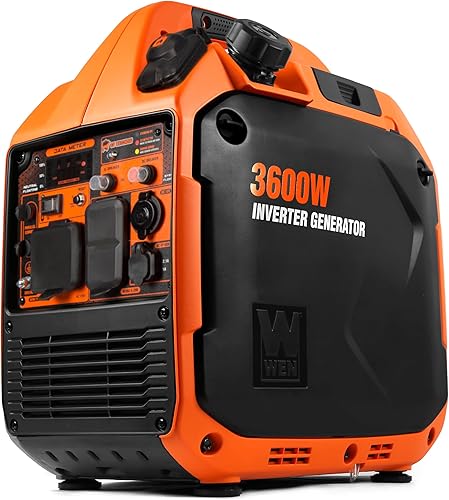
WEN Quiet and Lightweight 3600-Watt Dual Fuel: Best for light portable inverter use
- 3,600 surge watts and 2,900 rated watts on gasoline
- 3,500 surge watts and 2,600 rated watts on propane
- 49 pounds
- 65 decibels at quarter load
- CO Watchdog shutdown sensor
A light RV-ready inverter for camping, tailgating and backup basics, with fuel shutoff to ease storage.
Pros
- Lightest inverter in this group
- Tool-free LPG quick connector
- Fuel shutoff helps limit maintenance
Cons
- Lower rated output on propane
- Shorter run time than rivals on gas
The WEN 3600-Watt suits buyers who want the lightest inverter here. At 49 pounds, it is easy to carry from a car to a campsite or tailgate, and its compact 18 by 11.63 by 19.68 inch footprint stores in a small space.
It delivers 2,900 rated watts on gasoline and 2,600 on propane, with surge watts of 3,600 and 3,500 respectively from a 149cc engine. That is enough for lights, fans, phones, laptops and small appliances, but not for large home loads or heavy power tools.
Clean power prevents damage to sensitive electronics such as smartphones, tablets and laptops.
WEN says the 149cc engine runs at 65 decibels at quarter load. The Watchdog CO shutdown sensor adds safety when you run it near a tent or RV.
You also get two three-prong 120V receptacles, one TT-30R RV receptacle, one 12V DC receptacle and two 5V USB ports, which covers most camping and tailgate setups.
Fuel shutoff is a practical plus. It lets the generator use remaining carburetor fuel before shutdown, which helps limit build-up from stagnant fuel.
A tool-free LPG quick connector speeds fuel changes. The trade-off is run time and output.
The 1.5-gallon tank gives up to 5 hours at half load, so step up to the Champion or PowerSmart for longer propane run time.
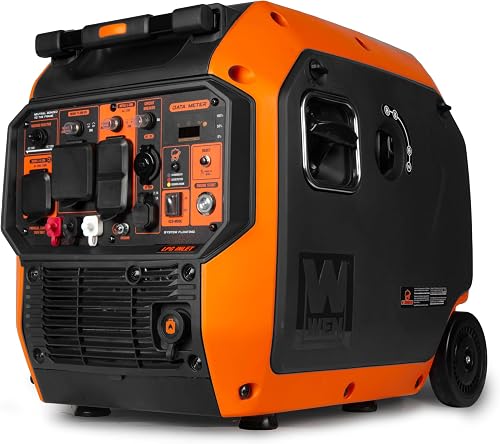
WEN 6800-Watt Dual Fuel RV-Ready Electric Start: Best for EV backup and RV power
- 6,800 surge watts and 5,100 rated watts on gasoline
- 6,000 surge watts and 4,500 rated watts on propane
- 224cc engine with electric start
- 240V bonded-neutral output for low-power Level 2 EV charging
- Wheels and telescoping pull handle
A mid-size inverter that bridges RV power and low-power EV charging, with electric start and a voltage selector.
Pros
- 240V output for EV charging
- Electric start with recoil backup
- Clean power under 1.2% THD at full load
Cons
- Nearly 100 pounds to move
- Lower output on propane than gasoline
The WEN 6800-Watt suits RV owners and EV drivers who need more than 120V power. It delivers 5,100 rated watts on gasoline and 4,500 on propane from a 224cc engine, with surge watts of 6,800 and 6,000 respectively.
Its bonded-neutral 240V configuration supports low-power Level 2 charging for battery and hybrid EVs. That feature sets it apart from every other model in this roundup.
A voltage selector switch lets you change output for different devices, and total harmonic distortion is under 0.3 percent at no load and under 1.2 percent at full load for sensitive electronics.
You get electric start, plus a recoil starter as backup. Onboard wheels and a telescoping pull handle help you move the 99.2-pound unit.
Outlets include an L14-30R 120V/240V receptacle, two household outlets, a TT-30R RV outlet, a 12V DC outlet and dual USB ports. A six-foot LPG regulator hose and tool-free quick connector are included.
WEN says it runs at 64 decibels at quarter load. The Watchdog CO sensor and fuel shutoff are included, along with a three-year warranty.
The trade-off is weight. This is not a backpack generator, so plan for vehicle loading.
Choose it for RV power plus EV backup, not for a light camping trip.
BILT HARD 5500W Dual Fuel Inverter Generator: Best for smart display controls
- 5,500 starting watts and 4,000 running watts on gasoline
- 5,000 starting watts and 3,600 running watts on LPG
- 160cc OHV engine, recoil start
- 1.14-gallon tank
- Digital display for volts, amps, watts, hours and fuel
A compact inverter with a detailed digital display and parallel connectors for growing power needs.
Pros
- Detailed digital display
- Parallel connectors for two units
- CO auto-shutoff and overload protection
Cons
- Small 1.14-gallon tank
- Recoil start only
The BILT HARD 5500W suits buyers who like detailed readouts and parallel expansion. It delivers 4,000 running watts on gasoline and 3,600 on LPG, with starting watts of 5,500 and 5,000 respectively from a 160cc OHV engine.
The digital display cycles through volts, frequency, amps, watts, runtime hours and fuel level. That helps you manage load and plan refuelling without guessing.
The engine runs at 4850 RPM with forced-air cooling and recoil start, and the 1.14-gallon tank supports practical portable operation for camping, RV use and home backup essentials.
Economy mode lowers engine speed under lighter loads to reduce fuel use and noise. Outlets include 120V 20A outlets, a 120V 30A TT-30R RV outlet, a 12V DC 8A output and a USB-C/USB-A adapter.
Parallel connectors let you pair two identical units to increase output later, which matters if your power needs grow for a larger RV or a jobsite.
CO auto-shutoff, overload indicators, AC and DC breakers, low-oil protection and reset functions help monitor operation. At 61.7 pounds, it is heavier than the lightest inverters here.
The trade-off is the small tank and recoil start. Choose it for smart controls and RV-ready inverter power at a lower output tier.
Pulsar: Best for compact Pulsar inverter power
- 2,200 peak watts and 1,800 rated watts on gas
- 2,000 peak watts and 1,600 rated watts on LPG
- 80cc OHV engine
- 60 dB super quiet operation
- Parallel capability and USB outlet
The Pulsar PG2200BiS is the small, quiet Pulsar pick for camping, tailgating and sensitive electronics.
Pros
- Compact carrying case design
- Stable sine wave for sensitive gear
- Includes propane hose and oil bottle
Cons
- Lowest output in this roundup
- Only 75 minutes on a 1 lb LPG tank at half load
The Pulsar PG2200BiS suits campers who want a small Pulsar inverter. It gives 1,800 rated watts on gas and 1,600 on LPG from an 80cc OHV engine, with peak watts of 2,200 and 2,000 respectively.
At 44 pounds, it is the lightest unit in this roundup and fits a compact carrying case design. Pulsar says it runs at 60 dB, which suits a campsite where neighbours are close.
At 19.7 by 11.22 by 17.91 inches, it stores easily in a car boot, truck bed or storage closet. The steel and aluminum construction keeps weight down while staying durable.
Inverter technology gives stable sine wave power for sensitive electronics. You get two 120V 15A outlets, a 5V USB outlet and parallel sockets for adding a second unit later.
That parallel capability is useful if you want more power for a larger campsite setup without moving to a much heavier generator.
The 1.18-gallon tank runs 8 hours on gas at half load. On a 1 lb LPG tank, run time is 75 minutes at half load, so gas is the practical choice for longer days.
Recoil start, a low oil indicator and shutdown are included, along with a propane hose, spark plug wrench, oil bottle and funnel. The trade-off is low output, so choose it for compact Pulsar inverter power, not home backup.
Best Pulsar dual fuel generator: large models compared
The Pulsar G12KBN and Westinghouse 12500 Watt share 9,500 rated watts on gasoline. Pulsar wins on tank size at 8 gallons, while Westinghouse wins on remote start.
Check the comparison table below for peak watts, fuel options and outlets side by side. Rated watts matter more than peak watts for running loads all day.
Peak watts help start motors, such as a fridge compressor or air conditioner. Rated watts show what the generator can sustain without overloading.
| Product | Best for | Rated watts (gas) | Peak watts (gas) | Fuel | Our score |
|---|---|---|---|---|---|
| Pulsar G12KBN Heavy Duty Portable Dual Fuel | whole-home backup | 9,500 | 12,000 | Gasoline / LPG | 9.7 |
| Westinghouse 12500 Watt Dual Fuel Home Backup | remote start home backup | 12,500 | Gasoline / Propane | 9.7 | |
| PowerSmart 3800 Watt Dual Fuel Inverter Generator | quiet inverter power | 9.6 | |||
| Champion 4000-Watt Dual Fuel RV Ready Portable | RV camping | 9.4 | |||
| BILT HARD Dual Fuel Gas & Propane | enclosed quiet camping | 3,500 | 4,500 | 9.4 | |
| WEN Quiet and Lightweight 3600-Watt Dual Fuel | light portable inverter use | 2,900 | 8.9 | ||
| WEN 6800-Watt Dual Fuel RV-Ready Electric Start | EV backup and RV power | 5,100 | 8.7 | ||
| BILT HARD 5500W Dual Fuel Inverter Generator | smart display controls | 8.4 | |||
| Pulsar | compact Pulsar inverter power | 1,800 | 2,200 | 8.4 |
How we compared these generators
We checked specs for rated watts, peak watts, tank size, noise, weight and outlet types. We also compared fuel flexibility, because propane run time often matters more than a small power drop.
We looked at safety features such as CO sensors, low oil shutdown and GFCI outlets. We weighed warranty terms and included items, such as propane hoses, oil and tool kits.
Scores reflect how well each model fits the search for a Pulsar dual fuel generator and its alternatives, based on published data.
Buyer patterns in reviews helped us judge ease of use, starting and noise. Where buyers mention a pattern, we treat it as reported experience, not a guarantee.
What the scores do not measure
Scores do not measure long-term reliability, fuel use at high load or performance in extreme weather. Those factors depend on maintenance, oil choice and how often you run the unit.
Noise figures also use different methods across brands. Some quote distance from the unit, others quote load level, so treat small gaps as close calls rather than exact rankings.
How many watts do you need for home backup?
Start by listing the appliances you must run. A fridge, sump pump, lights and phone chargers need far less power than a whole home with electric heating.
Add up rated watts for the loads you will run at once. Then check peak watts for motor starting surge, which can spike well above the running figure.
Whole-home loads
Choose a model with at least 8,000 rated watts on your chosen fuel. The Pulsar G12KBN gives 8,550 rated watts on LPG and 9,500 on gasoline.
A transfer switch lets you feed selected circuits safely. The Pulsar G12KBN and Westinghouse both offer transfer switch ready outlets.
Essential loads only
A 3,000 to 4,000 watt inverter covers essentials for most homes. The PowerSmart, Champion and BILT HARD inverters fit this tier.
Expect to choose which appliances run at once. Run the fridge first, then add lights and chargers in steps.
Gas or propane: which fuel should you pick?
Gasoline gives the highest rated watts on every model here. Propane gives longer run time and fuel that is easy to store.
Check the LPG rating before you buy. The Pulsar G12KBN drops from 9,500 to 8,550 rated watts, so plan loads for the lower figure.
When gasoline wins
Pick gasoline for maximum output and fastest refuelling at a petrol station. It also suits heavy tools and large motors.
Gasoline needs careful storage and a stabiliser for long shelf life. Keep fuel in approved containers away from living spaces.
When propane wins
Pick propane for camping and RV use. A 20 lb tank can run the PowerSmart for up to 24 hours at 25% load.
Propane stores well and burns cleanly, but tanks add weight. Keep a spare tank if you want multi-day run time.
Inverter or open-frame: which type fits your use?
Inverters give clean sine wave power for electronics. Open-frame models give more watts for the money and stronger motor starting.
The Pulsar PG2200BiS, PowerSmart and Champion are inverters. The Pulsar G12KBN and Westinghouse are open-frame home backup units.
Clean power for electronics
Look for THD under 3% if you charge laptops and phones. The Champion and BILT HARD both state under 3% THD.
Inverter noise is also lower. The BILT HARD claims 58 dBA, while the PowerSmart claims 59 dBA at light load.
Raw power for appliances
Open-frame models handle large surge loads better for their size. The Pulsar G12KBN offers a 50A outlet for big appliances.
Expect more noise and no clean-power claim. Use these models outdoors and away from sleeping areas.
How quiet and portable do you need it to be?
Noise ratings use different test points, so compare them with care. Some makers quote distance, others quote load percentage.
Weight matters just as much. A 44-pound Pulsar PG2200BiS is easy to carry, while a 99-pound WEN needs wheels.
Campsite and tailgate use
Choose an inverter under 65 dBA at light load. The PowerSmart, BILT HARD and both Pulsar inverters fit this need.
Check local rules before you go. Some parks limit generator hours or ban them entirely.
Home and jobsite use
Wheels and handles matter more than low weight. The Pulsar G12KBN has 10-inch never-flat wheels and drop-down handles.
Plan a level, dry spot with exhaust airflow. Keep cords away from walkways and water.
What outlets and safety features should you check?
Match outlets to your devices before you compare watts. An RV needs a TT-30R outlet, while home backup often needs a 50A outlet.
Look for CO sensors on any model you run near people. Low oil shutdown protects the engine if oil runs low.
RV and 240V outlets
The Champion, BILT HARD and WEN inverters include TT-30R outlets. The WEN 6800-Watt adds 240V for EV charging.
The Pulsar G12KBN includes both 30A and 50A 120V/240V outlets. That range covers RVs and home loads in one unit.
Safety and included items
Check for GFCI protection, circuit breakers and overload indicators. The Westinghouse adds rubber covers on its outlets.
Confirm what is in the box. Several models include a propane hose, oil, funnel and tool kit, which saves extra purchases.
Verdict: which Pulsar dual fuel generator should you buy?
The best pulsar dual fuel generator for home backup is the Pulsar G12KBN. It pairs 9,500 rated watts on gasoline with an 8-gallon tank and transfer switch ready outlets.
Pick the Pulsar PG2200BiS for compact, quiet camping power. Pick the Westinghouse for remote start, or the PowerSmart for the quietest light inverter use.
Pick the Champion for RV hookups and the WEN 6800-Watt for EV backup. For a wider brand shortlist, read our best portable generator brands guide before you order.
Our score weighs specs, features and buyer feedback against what you're shopping for. Check outlet types and propane ratings carefully, because those details decide whether the generator fits your home, RV or campsite.
Our top 3 picks at a glance
-
1
Best for whole-home backup
Pulsar G12KBN Heavy Duty Portable Dual Fuel
9.7/10 our score
See it on Amazon -
2
Best for remote start home backup
Westinghouse 12500 Watt Dual Fuel Home Backup
9.7/10 our score
See it on Amazon -
3
Best for quiet inverter power
PowerSmart 3800 Watt Dual Fuel Inverter Generator
9.6/10 our score
See it on Amazon
Frequently asked questions
Which Pulsar dual fuel generator is best for home backup?
The Pulsar G12KBN is best for home backup. It delivers 9,500 rated watts on gasoline and 8,550 rated watts on LPG.
Its 8-gallon tank runs up to 12 hours at half load on gasoline.
Are Pulsar dual fuel generators good for camping?
Yes, the Pulsar PG2200BiS suits camping. It gives 1,800 rated watts on gas at 60 dB and weighs 44 pounds.
Its sine wave output suits phones, laptops and other sensitive electronics.
Do dual fuel generators lose power on propane?
Yes, output drops on propane on every model here. The Pulsar G12KBN falls from 9,500 to 8,550 rated watts.
You gain easier fuel storage and longer run time, but plan loads for the propane rating.
What outlet do I need for RV use?
Look for a TT-30R 30A outlet for most RV hookups. The Champion 4000-Watt and both WEN inverters include one.
The Pulsar G12KBN adds a 50A outlet for larger loads.
How do I choose between gas and propane?
Choose gasoline for maximum rated watts and starting surge. Choose propane when you want longer run time and fuel that stores easily.
Many buyers keep both options and switch based on the outage or trip ahead.