7 Best Briggs & Stratton Generators for Home Backup (November 2026)
The best Briggs & Stratton home generators for backup power include the Westinghouse 12500 Watt Dual Fuel Home Backup for broad home circuit coverage, the DuroMax XP13000HX for high-output dual-fuel backup, and the Westinghouse 6500 Watt Dual Fuel Home Backup for essential circuits.
On this page (5 sections)
The best Briggs and Stratton home generator option in this comparison is the Briggs & Stratton 8000 Watt Portable Generator, with 8000 running watts, 10000 starting watts, electric start and CO Guard shutdown technology. If you need propane or natural gas, the dual-fuel and tri-fuel models below offer more fuel choices.
The right generator depends on whether you need a few essential circuits or a larger whole-home load. A refrigerator, freezer, sump pump, furnace blower, lights and internet equipment may fit a focused plan, while central air conditioning and several motor loads require more starting capacity.
For the basic sizing method, start with How to Size a Dual Fuel Generator for Home Backup?. If your plan centers on refrigeration, compare the guidance for Best Dual Fuel Generator For Home Backup For Refrigerators and Best Dual Fuel Generator For Home Backup For Freezers.
Our picks at a glance
-
1
 Best for broad home circuit coverage
Westinghouse 12500 Watt Dual Fuel Home Backup
9.7/10 our score
See it on Amazon -
2

-
3
 Best for essential circuits
Westinghouse 6500 Watt Dual Fuel Home Backup
9.2/10 our score
See it on Amazon
- 4
 Check it
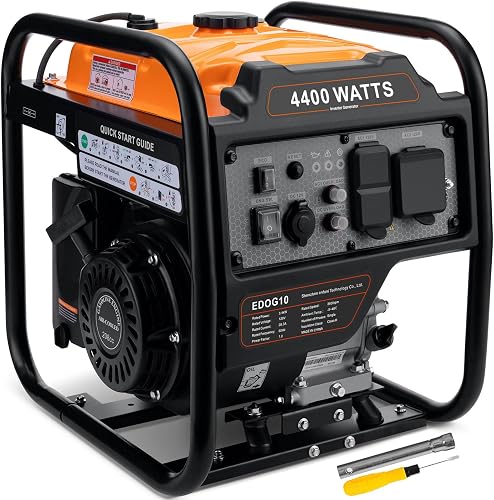
Oxseryn 4400-Watts Inverter Generator
Best for lighter backup and RV use - 5
 Best for three fuel choicesCheck it
- 6
 Best for natural-gas planningCheck it
- 7
 Check it
Briggs & Stratton 8000 Watt Portable Generator
Best for Briggs & Stratton buyers
The best Briggs and Stratton home generator alternatives
The Briggs & Stratton 8000 Watt Portable Generator is the direct brand match, but the other picks offer higher output, more fuel choices or a smaller format. Choose by your essential circuits first, then compare outlet type and fuel flexibility.
Westinghouse 12500 Watt Dual Fuel Home Backup: Best for broad home circuit coverage
- 12500 peak watts on gasoline
- 9500 running watts on gasoline
- Gasoline or propane
- Remote electric start
This high-output dual-fuel generator gives you gasoline or propane flexibility, remote electric start and transfer-switch-ready connections for a wide home backup plan.
Pros
- High gasoline output
- Remote start key fob
- Fuel gauge and digital hour display
Cons
- Large open-frame design
- Propane output is lower than gasoline output
The Westinghouse 12500 Watt Dual Fuel Home Backup is the strongest overall option for a broad residential backup plan. It produces 9500 running watts and 12500 peak watts on gasoline, with lower output on propane at 8500 running watts and 11200 peak watts.
Its dual-fuel design lets you choose gasoline or propane. The remote electric start includes a key fob, and the control panel has a transfer-switch-ready 120V L14-30R 30A outlet plus a 120/240V 14-50R 50A RV-ready outlet.
The 6.6 gal fuel tank supports up to 12 hours of runtime, and the fuel gauge helps you watch the remaining supply. A digital display shows voltage output, frequency and lifetime hours.
That display is useful in daily use because it turns maintenance and load checks into quick glances instead of guesswork. You can track hours for oil changes and keep an eye on output while appliances cycle on and off.
Choose this model when you want high output with a wide outlet selection. Its 27.2 x 26.1 x 26.5 in open-frame body needs a planned storage and operating location.
The trade-off is size and the lower propane figures, so plan for the fuel you will actually use most often. For a home that needs several circuits at once, that planning makes the output easier to use with confidence.
DuroMax XP13000HX: Best for high-output dual-fuel backup
- 13000 watts
- Gasoline or propane
- 500cc OHV engine
- 120/240V 50A outlet
The XP13000HX is aimed at large home loads, with 13000 watts, dual-fuel operation and a 120/240V 50A outlet that supports a transfer-switch setup.
Pros
- Highest stated output in this group
- CO Alert
- Wide outlet selection
Cons
- Heavy at 245 lb
- Large 30 x 29 x 26 in footprint
The DuroMax XP13000HX is the best fit for buyers who want 13000 watts and dual-fuel operation in a portable unit. It runs on gasoline or propane and uses a 500cc OHV engine with copper windings.
The front-facing interface lets you change fuel type, while the push-button start avoids a recoil-only setup. Its panel includes four 120V GFCI household outlets, a 120V 30A outlet, a 120/240V 30A twist-lock outlet and a 120/240V 50A outlet.
At 245 lb and 30 x 29 x 26 in, this is a large generator. Plan how it will reach its operating position before an outage, especially if you expect to move it without help.
That weight shapes daily use more than the spec sheet suggests. You will want a level spot, clear space around the frame and a clear path in and out for fuel and cords.
Choose it for high-demand backup where 13000 watts and a 50A connection make sense. Compare the starting demands of your largest motor loads rather than using the wattage number alone.
CO Alert adds a safety shutdown layer for carbon monoxide in the operating area. It helps, but it still does not replace outdoor placement well away from doors, windows and other openings.
Westinghouse 6500 Watt Dual Fuel Home Backup: Best for essential circuits
- 6500 peak watts on gasoline
- 5300 running watts on gasoline
- Gasoline or propane
- Up to 14.5-hour runtime
This smaller Westinghouse model fits a focused backup plan for circuits such as refrigeration, lighting and selected appliances.
Pros
- Long stated runtime
- Transfer-switch-ready 30A outlet
- CO and low-oil shutdown
Cons
- Lower output than the larger picks
- Manual ignition system
The Westinghouse 6500 Watt Dual Fuel Home Backup is a better match for essential circuits than a whole-home load. It delivers 5300 running watts and 6500 peak watts on gasoline, or 4800 running watts and 5800 peak watts on propane.
The 4.7 gal tank supports up to 14.5 hours of runtime, and the 120/240V selector switch helps match the generator to the intended connection. Its 30A transfer-switch-ready outlet can support a properly designed essential-circuit setup.
This model also has an RV-ready TT-30R 30A outlet, one household duplex receptacle and automatic low-oil and carbon-monoxide shutdown. At 135.6 lb and 23.2 x 20.1 x 19.1 in, it is easier to position than the largest options here.
Pick it when your backup list is limited to selected appliances and circuits. If central air conditioning or several large motors must run together, calculate the starting load before choosing this output level.
Oxseryn 4400-Watts Inverter Generator: Best for lighter backup and RV use
- 4400 peak watts
- 3400 running watts
- Inverter technology
- 30A RV outlet
The Oxseryn is the easiest unit here to move, with 57 lb of weight, inverter technology and a 30A RV outlet for smaller backup loads.
Pros
- Lightest generator here
- 14-hour runtime at 25% load
- Low-oil and overload protection
Cons
- Gasoline only
- Lower running output
The Oxseryn 4400-Watts Inverter Generator is the most portable choice in this group. Its 3400 running watts and 4400 peak watts fit a smaller backup plan, RV use or selected outdoor loads.
The 57 lb body and 19.4 x 15.2 x 19.2 in dimensions make it easier to move than the open-frame units with higher output. It has two 120V AC ports, a 30A RV port and a 12V DC port.
A 2 gal gasoline tank supports up to 14 hours at 25% load. Inverter technology, overload protection and low-oil shutdown add useful controls for a smaller generator, but it does not offer propane or natural gas operation.
In practice, the 25% load figure matters. Light loads such as lighting, fans, a refrigerator and charging phones will stretch runtime, while heavier loads will use fuel much faster.
Choose it for refrigeration, lighting, communications equipment and other loads that stay within its running capacity. It is not the right pick for a large whole-home plan with several high-starting-wattage appliances.
Its lighter weight also makes storage and setup simpler in a garage, truck bed or RV compartment. The trade-off is clear, since higher output and fuel choice are left to the larger models.
DuroMax XP13000HXT: Best for three fuel choices
- 13000 watts
- Gasoline, propane or natural gas
- Remote start
- 120/240V 50A outlet
Choose the XP13000HXT when natural gas matters as much as gasoline and propane, and when a high-output transfer-switch-ready setup is required.
Pros
- Tri-fuel operation
- Remote control
- Natural gas hose and propane regulator included
Cons
- Heavy 240 lb design
- Large 30 x 30 x 26 in footprint
The DuroMax XP13000HXT is the strongest fuel-flexibility pick because it runs on gasoline, propane or natural gas. It produces 13000 watts and includes a 120/240V 50A transfer-switch-ready outlet.
Remote start and push-button start give you two convenient ways to turn it on. The 500cc engine and front-facing fuel interface are designed around a high-output backup setup, while the included natural gas hose, propane regulator and remote control support the three-fuel arrangement.
At 240 lb and 30 x 30 x 26 in, this generator needs a permanent storage plan even though it is portable. Natural gas use also depends on having a suitable connection and a safe installation.
That installation point is the key decision for many homes. If a natural gas line is already available, tri-fuel can simplify long outages, but the connection still needs proper setup and testing before you rely on it.
Choose the XP13000HXT when your home already has a practical natural gas plan or you want the widest fuel choice. The XP13000HX is the simpler alternative if gasoline and propane are enough.
CO Alert also supports safer operation by shutting the unit down when carbon monoxide builds up nearby. Keep the generator outdoors and away from openings even with that protection in place.
Generac: Best for natural-gas planning
- 9500 running watts
- 12500 starting watts
- Gasoline, propane or natural gas
- COsense technology
Generac gives homeowners tri-fuel flexibility, automatic voltage regulation and a 120/240V 50A outlet for a planned home backup connection.
Pros
- Tri-fuel flexibility
- COsense shutdown technology
- Electric start and battery included
Cons
- 219 lb weight
- Natural gas connection requires suitable household installation
Generac's tri-fuel portable generator suits homeowners who want gasoline, liquid propane or natural gas, with 9500 running watts and 12500 starting watts on gasoline. Its automatic voltage regulation helps stabilize output for connected equipment.
The 7.5 gal steel fuel tank supports up to 9.5 hours at 50% load or up to 14 hours at 25% load on gasoline. A fuel gauge shows the remaining level, and a natural gas connection can support a longer-running backup plan when the installation is suitable.
COsense technology detects rising carbon monoxide and shuts the generator down before dangerous thresholds. The panel includes two 120V 20A GFCI duplex outlets, a 120/240V 30A twist-lock outlet and a 120/240V 50A outlet.
At 219 lb, it is still a heavy portable generator. Choose it for tri-fuel planning, AVR and CO protection, especially when those features matter more than the lowest weight.
The AVR feature is worth noting for daily use with motor-driven equipment. Stable voltage can help pumps, blowers and tools run more predictably when loads change.
Electric start and the included 12V battery reduce the effort of getting power back on quickly. Still plan for oil checks, fuel storage and a level outdoor spot before an outage happens.
Briggs & Stratton 8000 Watt Portable Generator: Best for Briggs & Stratton buyers
- 8000 running watts
- 10000 starting watts
- 420cc Briggs & Stratton engine
- CO Guard shutdown
This Briggs & Stratton model suits buyers who want the brand's 420cc engine, electric start, CO Guard and enough output for a substantial essential-circuit plan.
Pros
- Strong gasoline output
- CO Guard technology
- 12 in never-flat wheels
Cons
- Gasoline only
- No dual-fuel or tri-fuel option
The Briggs & Stratton 8000 Watt Portable Generator is the direct choice for shoppers searching for a Briggs and Stratton home generator. It provides 8000 running watts and 10000 starting watts from a 420cc Briggs & Stratton engine.
Electric start and remote choke make startup simpler from the control panel. The 7 gal metal fuel tank supports up to 9 hours at 50% load, while the 12 in never-flat wheels and fold-up handle help with movement.
Its control panel has four GFCI 120V household outlets and one 120/240V 30A locking outlet. CO Guard shuts the generator down when harmful carbon monoxide levels are detected in the operating area.
This is a gasoline-only model, so it does not offer the fuel flexibility of the Westinghouse, DuroMax or Generac tri-fuel options. Pick it when the Briggs & Stratton brand, high gasoline output and CO Guard are your main priorities.
The Power Surge alternator helps with the short burst needed to start large motor-driven appliances. That matters when a refrigerator, pump or tool starts while other loads are already running.
For care, keep the fuel tank, oil level and battery start system ready before storm season. A metal tank and large wheels help with durability and movement, but outdoor placement remains essential.
How do you match generator output to essential circuits?
Match running watts to the loads that operate together, then leave room for the starting surge of motors. Refrigerators, freezers, sump pumps, furnace blowers and air conditioners can draw more power when their motors start.
Write down each appliance's running and starting wattage. Add the running watts for the circuits you plan to use, then compare the highest starting requirement with the generator's peak or starting output.
Do not assume that a generator's maximum wattage equals its continuous capacity. The Briggs & Stratton model has 8000 running watts and 10000 starting watts, while the Westinghouse 12500 Watt model has 9500 running watts and 12500 peak watts on gasoline.
Start with a realistic list, not every circuit in the house. Most backup plans work better when you protect food, water, heat, lights and communications first.
Next, sort loads by how they behave in daily use. A refrigerator cycles on and off, a sump pump may run for long stretches, and a furnace blower can add a large start demand.
Then check whether those loads can really run at the same time. Staggering starts, such as letting a pump finish before starting a blower, can keep total demand inside the running range.
A transfer switch can help you select home circuits from the panel instead of running loose cords through doors and windows. The generator must have a compatible outlet, and the home's connection should be installed by a qualified electrician.
That setup also makes load control easier during an outage. You can bring circuits online in a planned order instead of plugging everything in at once.
Fuel choice changes the math on some models. The Westinghouse 12500 Watt produces different running and peak figures on propane than on gasoline, so size for the fuel you expect to use.
Runtime matters as much as output for overnight outages. A generator that meets the load on paper still needs enough fuel, oil and safe placement to run through the night.
Is dual fuel or tri-fuel better for home backup?
Tri-fuel gives the widest choice, while dual fuel is often enough when you plan to use gasoline and propane. Natural gas can support a longer backup period, but it requires a suitable household connection and a safe installation.
Gasoline can provide the highest stated output on some models, but it needs fresh storage and refueling during longer outages. Propane has a long shelf life and gives you another fuel option when gasoline is limited.
The Westinghouse 12500 Watt Dual Fuel Home Backup, DuroMax XP13000HX and Westinghouse 6500 Watt Dual Fuel Home Backup all use gasoline or propane. The DuroMax XP13000HXT and Generac models add natural gas.
Check the output for each fuel before making your choice. A generator may produce different running and peak wattage on propane than on gasoline.
Think about how you store fuel at home. Gasoline needs careful storage and rotation, while propane tanks are easier to keep for long periods in many households.
Natural gas changes the daily routine in a different way. When a proper line is available, you avoid refueling and fuel runs, but the setup must be installed correctly.
Dual fuel suits many buyers because it covers the most common outage scenarios. You can use gasoline for higher output in normal conditions and switch to propane when gas is hard to get.
Tri-fuel suits buyers who want backup options for longer events. It can keep essential circuits running while gas stations, roads or fuel deliveries are disrupted.
Look at outlet type alongside fuel type. A transfer-switch-ready 30A or 50A outlet may matter more than fuel choice if your plan is to power fixed home circuits.
Also consider runtime at realistic loads, not just the headline figure. Light loads can run for many hours, while heavy motor loads will use fuel much faster.
For RV or job site use, the same fuel logic applies. Propane may be easier to carry and store, while gasoline may give more power for demanding tools.
Match the fuel plan to your home, not to a generic ranking. The best choice is the one you can store, connect and operate safely when an outage actually happens.
What should you check before running a portable generator?
Run a portable generator outdoors and away from doors, windows and other openings. Carbon monoxide protection such as CO Guard, CO Alert or COsense adds a shutdown feature, but it does not replace safe placement and working carbon monoxide alarms.
Keep the generator level and follow its operating instructions. Leave enough room around the unit for safe operation, and keep fuel away from ignition sources.
Before an outage, confirm the oil, fuel, transfer-switch connection and start method. Electric-start models still need their battery and the correct fuel connection ready.
The Briggs & Stratton 8000 Watt Portable Generator includes a CO Guard shutdown system, while the Westinghouse 6500 Watt model has CO and low-oil shutdown. These features help with safety planning, but they do not make indoor operation safe.
Prep work should happen in calm conditions, not during a storm. Check oil with the engine off and on a level surface, as the manual directs.
Confirm the fuel type and connection before you start. A dual-fuel or tri-fuel model still needs the right hose, regulator or line connected for the fuel you plan to use.
Keep cords dry, covered and away from walkways where people can trip. Rubber outlet covers and GFCI outlets help, but they do not fix a wet or damaged cord.
Place the generator where exhaust can travel away from the home. Wind direction matters, so recheck placement if the wind shifts during the outage.
Store gasoline in approved containers away from living spaces and ignition sources. Keep a safe way to refuel only after the unit has cooled, as directed in the manual.
Test start methods before you need them. Electric start, remote start and recoil start should all be checked, along with battery charge and fuel flow.
Keep working carbon monoxide alarms in the home and check them regularly. Alarms protect people inside, while generator shutdown systems protect against buildup near the unit.
Plan for noise and neighbors as well as safety. A clear operating spot, good airflow and enough distance from openings make daily use easier for everyone.
Which generator should you choose?
Choose the Briggs & Stratton 8000 Watt Portable Generator if you want the named brand, gasoline power, electric start and CO Guard for a substantial essential-circuit plan.
Choose the Westinghouse 12500 Watt model or DuroMax XP13000HX for higher-output dual-fuel backup. Pick the DuroMax XP13000HXT or Generac if natural gas is part of your emergency plan.
For a smaller, easier-to-move unit, the Oxseryn 4400-Watts Inverter Generator is the lightest option here. If you are comparing other major brands, see our guides to the best WEN generator for home, best Generac generator for home and best Honda generator for home backup.
Our score weighs specs, features and buyer feedback against the needs of home backup shoppers. Check your essential circuits and starting loads first, then choose the generator whose fuel, outlet and output plan matches them.
If your priority is a focused essential-circuit plan, the Westinghouse 6500 Watt model can fit selected appliances with a transfer-switch-ready outlet. It trades higher output for a smaller body and a long stated runtime.
If your priority is moving the unit often, weight and footprint should lead the decision. The Oxseryn is far easier to carry, while the DuroMax and Generac models need a planned path and storage space.
If your priority is fuel security, compare gasoline, propane and natural gas storage at your home. The right choice depends on what you can keep fresh, connect safely and use during a long outage.
If your priority is whole-home capability, start with your largest motor loads. Central air conditioning, pumps and blowers can push a plan beyond a smaller generator very quickly.
Read the outlet list carefully before you buy. A 120/240V 50A outlet supports a different transfer-switch plan than a 30A outlet or standard household receptacles.
Also plan the setup before an outage arrives. Storage, fuel, oil, battery charge, transfer-switch connection and outdoor placement should all be ready in advance.
A generator only helps if you can start it safely and connect it correctly. Take time to match the model to your circuits, your fuel plan and your space.
Our top 3 picks at a glance
-
1
Best for broad home circuit coverage
Westinghouse 12500 Watt Dual Fuel Home Backup
9.7/10 our score
See it on Amazon -
2
-
3
Best for essential circuits
Westinghouse 6500 Watt Dual Fuel Home Backup
9.2/10 our score
See it on Amazon
Frequently asked questions
What is the best Briggs and Stratton home generator?
The Briggs & Stratton 8000 Watt Portable Generator is the best match in this guide for buyers who specifically want a Briggs & Stratton home generator. It has 8000 running watts, 10000 starting watts, electric start and CO Guard.
Choose a different model if propane or natural gas is essential.
Can the Briggs & Stratton 8000 Watt Portable Generator power a whole house?
The Briggs & Stratton 8000 Watt Portable Generator can support a substantial essential-circuit plan, but whole-home use depends on your home's running and starting loads. Add the refrigerator, pumps, heating equipment, air conditioning and other motor loads before deciding if 8000 running watts is enough.
Is a dual-fuel generator better for home backup?
A dual-fuel generator gives you gasoline and propane options, which can help when one fuel is unavailable. Gasoline and propane output can differ, so size the generator using the running and starting watts for the fuel you expect to use most often.
How many watts do I need for home backup?
You need enough running watts for the circuits you plan to operate and enough starting watts for motors that start together. List refrigerators, freezers, pumps, heaters, air conditioners, lights and outlets, then use the highest combined load instead of guessing from the generator's peak number.
Can a portable generator connect to a transfer switch?
Yes, several generators here have transfer-switch-ready outlets, including the Briggs & Stratton 8000 Watt Portable Generator's 120/240V 30A locking outlet and the larger models with 30A or 50A connections. Have a qualified electrician handle the home connection and circuit selection.