Best 7000-Watt Inverter Generators: Top 7 Picks (November 2026)
The best 7000 watt inverter generators include the Westinghouse 8200 Peak Watt Tri-Fuel Portable Inverter for home backup with tri-fuel flexibility, the AIVOLT 8000W Dual Fuel Inverter Generator 50A for RV and job site power, and the Honda EU7000iS 7000 Watt 120/240V Inverter Generator for quiet camping and RV use.
On this page (9 sections)
- How we compared these 7000 watt inverter generators
- The best 7000 watt inverter generators in detail
- How the comparison table breaks down
- How much running wattage do you need?
- Dual fuel, tri-fuel or gasoline only?
- How quiet is quiet enough for camping and RV use?
- What outlets and safety features should you check?
- How do you choose the right 7000 watt inverter generator for you?
- Our verdict on the best 7000 watt inverter generator
The best 7000 watt inverter generator for most buyers is the Westinghouse 8200 Peak Watt Tri-Fuel Portable Inverter, because it pairs 6600 running watts on gasoline with tri-fuel choice, remote start and a 50A outlet for home backup. If you want gas-only quiet power, the Honda EU7000iS leads on noise.
If weight matters most, the WEN and BILT HARD are far easier to move.
We compared seven models in or near the 7000 watt class. Running watts, fuel choice and outlet layout matter more than the headline peak number.
A model with 7000 peak watts but only 5100 rated watts behaves very differently from one with 7600 running watts.
Our picks at a glance
-
1
 Best for home backup with tri-fuel flexibility
Westinghouse 8200 Peak Watt Tri-Fuel Portable Inverter
9.3/10 our score
See it on Amazon -
2
 Best for RV and job site power
AIVOLT 8000W Dual Fuel Inverter Generator 50A
9.2/10 our score
See it on Amazon -
3
 Best for quiet camping and RV use
Honda EU7000iS 7000 Watt 120/240V Inverter Generator
9.1/10 our score
See it on Amazon
- 4
 Check it
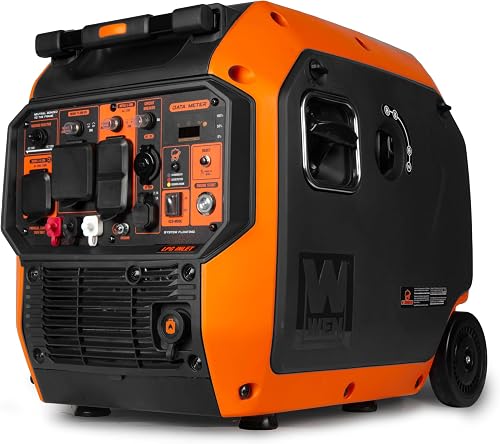
WEN 6800-Watt Dual Fuel RV-Ready Electric Start
Best for light dual fuel RV power - 5
 Check it
Genkins 8000W Portable Quiet Inverter Generator
Best for long runtime on gasoline - 6
 Check it
BILT HARD 5500W Dual Fuel Inverter Generator
Best for portable dual fuel backup - 7
 Check it
Westinghouse 10000 Peak Watt Portable Open Frame
Best for maximum peak power
How we compared these 7000 watt inverter generators
We checked running watts on each fuel, THD, noise, tank size, runtime at stated loads, weight and outlet types. Peak watts only help with short motor starts, so we weighted running watts first.
We also looked at start type, safety features and portability. Electric start, remote start, CO sensors and low oil shutdown affect daily use.
Weight and wheel design affect whether you will actually move the unit.
If your needs are smaller, our best 5000 watt portable generator guide covers lighter loads. If you need more headroom, the best 7000 watt generator roundup includes non-inverter options.
For larger loads, see the best portable 10000 watt generator picks and the best 9000 watt inverter generator models.
The best 7000 watt inverter generators in detail
The Westinghouse tri-fuel model is our top pick for home backup, while the Honda is the quietest choice. The WEN and BILT HARD win on portability for camping and RV use.
Read each write-up for the trade-off that matters to you.
Westinghouse 8200 Peak Watt Tri-Fuel Portable Inverter: Best for home backup with tri-fuel flexibility
- 6600 running watts and 8200 peak watts on gasoline
- 5940 running watts on propane and 5280 on natural gas
- Less than 3% THD for sensitive electronics
- Remote electric start with key fob
- 50A 14-50R outlet and TT-30R 30A RV outlet
- CO sensor and automatic low oil shutdown
Tri-fuel power with a 50A home backup outlet and clean inverter output for electronics. Remote start and quiet inverter operation suit extended outages.
Pros
- Three fuel choices
- 50A outlet for home backup
- Remote start
- Low THD under 3%
Cons
- Lower running watts on natural gas
- 134.5 lb needs wheels and handle to move
This Westinghouse suits buyers who want one generator for home backup, RV use and job site power. It gives 6600 running watts and 8200 peak watts on gasoline, with 5940 running watts on propane and 5280 on natural gas.
That drop on natural gas matters if that will be your main fuel.
Inverter output with less than 3% THD means you can charge phones, run laptops and power TVs during an outage. Copper windings help the unit run cooler and make cleaner power.
The 298 cc 4-stroke OHV engine has a cast iron sleeve and automatic low oil shutdown.
For home use, the 120/240V 14-50R 50A outlet is transfer switch or interlock kit ready. Westinghouse says one cord can run an air conditioner, refrigerator, sump pump and lights at the same time.
You also get a TT-30R 30A RV outlet and a GFCI 120V duplex outlet.
Runtime reaches up to 17 hours at 25% load on a 3.9 gallon tank. Noise is around 60 dBA at 25% load.
Remote start with a key fob, electric start, a CO sensor and a digital display round out daily use.
The trade-off is weight at 134.5 lb and lower watts on natural gas. If you need maximum running watts on gasoline only, the 10000 peak Westinghouse below gives 7600 running watts.
If you want tri-fuel choice and home backup outlets, this is the stronger all-around pick.
AIVOLT 8000W Dual Fuel Inverter Generator 50A: Best for RV and job site power
- 8000 surge watts and 6100 running watts on gasoline
- 7200 starting watts and 5500 running watts on LPG
- 62 dBA noise level from 23 feet
- Electric start with low-temperature lithium battery
- 5-in-1 LCD display and four outlets plus USB
- CO Alert auto-shutoff
Dual fuel inverter power with a 50A focus, quiet 62 dBA operation and electric start for RV and emergency use. The LCD display tracks fuel, voltage and runtime.
Pros
- Dual fuel with automatic switching
- Quiet 62 dBA rating
- Electric start for cold and hot weather
- Multiple outlets including USB
Cons
- Lower running watts on LPG
- 130.7 lb is still heavy for frequent moves
This AIVOLT suits RV owners and job site users who want dual fuel power with a 50A focus. It delivers 8000W surge power and 6100 running watts on gasoline, and 7200 starting watts with 5500 running watts on LPG.
Those propane numbers are the ones to plan around if propane will be your main fuel.
The 322cc 4-stroke OHV engine uses 100% copper windings. Eco-Mode adjusts to lower fuel use, with over 10 hours of runtime at 25% load.
Automatic fuel switching between gas and propane removes manual adjustments during a switch.
Noise is 62 dBA from 23 feet away, which AIVOLT describes as quieter than a dishwasher. At 130.7 lb with a telescopic handle and two 7 inch never-flat wheels, it is portable but still needs planning to load into a truck or RV bay.
Electric start uses an upgraded low-temperature lithium battery rated from -4°F to 140°F. That helps with cold starts and long standby storage.
A 5-in-1 LCD display shows fuel use, voltage and runtime, and the panel includes four outlets plus a 12V DC outlet and dual USB adapter.
CO Alert technology shuts the unit down if unsafe carbon monoxide is detected. The trade-off against the top pick is fewer fuel choices and lower running watts on LPG, but it is strong if you want dual fuel and quiet operation.
Honda EU7000iS 7000 Watt 120/240V Inverter Generator: Best for quiet camping and RV use
- 7000 watts at 120 and 240 volts
- 52 to 58 dB(A) operating noise
- 6.4 to 16 hours on a 5.1 gallon tank
- Eco Throttle System
- Bluetooth app monitoring and remote operation
- CO-MINDER auto-shutdown system
A quiet 7000 watt gas inverter generator with 120/240V output, long runtime and Bluetooth monitoring. Best suited to fixed RV and home backup placement.
Pros
- Very quiet 52 to 58 dB(A)
- 120/240V output
- Up to 16 hours runtime
- App and Bluetooth monitoring
Cons
- 263.2 lb is the heaviest pick here
- Gas only, no dual fuel option
This Honda suits buyers who put quiet operation first for camping, RV power and home backup. It provides 7000 watts at 120 and 240 volts with inverter technology for computers and other sensitive loads.
Operating noise is 52 to 58 dB(A), which Honda says is less than a normal conversation. That is the quietest rating in this group.
If you camp near neighbors or run it near a home during an outage, that difference is easy to hear.
Runtime is 6.4 to 16 hours on a 5.1 gallon tank, depending on load. The Eco Throttle System adjusts engine speed for fuel efficiency.
That long light-load runtime helps with overnight RV use.
Honda's My Generator app offers remote operation and monitoring through Bluetooth, plus wireless stop and service reminders. A CO-MINDER system continually monitors carbon monoxide and shuts the generator down before levels near a home or camper become dangerously high.
The major trade-off is size and weight at 263.2 lb. It is best treated as a semi-fixed unit for a home or RV site.
It is also gas only, with no dual fuel option, and Honda backs it with a 3-year residential warranty.
WEN 6800-Watt Dual Fuel RV-Ready Electric Start: Best for light dual fuel RV power
- 6800 surge watts and 5100 rated watts on gasoline
- 6000 surge watts and 4500 rated watts on propane
- 224cc dual-fuel engine
- 64 dB at quarter load
- TT-30R RV outlet and L14-30R 120V/240V outlet
- CO Watchdog shutdown sensor
A lighter dual fuel inverter generator with RV-ready outlets, electric start and low THD for sensitive electronics. Good for camping and backup essentials.
Pros
- Lightest dual fuel pick at 99.2 lb
- RV and 120/240V outlets
- Tool-free LPG quick connector
- Fuel shutoff helps carburetor care
Cons
- 5100 rated watts is lower than larger picks
- 4500 rated watts on propane
This WEN suits RV and camping buyers who want dual fuel power without carrying a heavy unit. It runs on gasoline for 6800 surge watts and 5100 rated watts, or propane for 6000 surge watts and 4500 rated watts.
Plan loads around rated watts, not surge.
The 224cc dual-fuel engine operates at 64 decibels at quarter load. At 99.2 lb with onboard wheels and a telescoping handle, it is one of the easiest models here to move.
For RV use, the outlet layout is strong. You get a TT-30R RV receptacle, an L14-30R 120V/240V receptacle, two 120V receptacles, a 12V DC receptacle and two USB ports.
A voltage selector switch and tool-free LPG quick connector simplify fuel and voltage changes.
Clean power is a key benefit. WEN says THD stays under 0.3 percent at no load and under 1.2 percent at full load.
That makes it safe for laptops, phones, monitors and tablets. The bonded-neutral 240V setup also supports low-power Level 2 charging for battery and hybrid vehicles, according to WEN.
Safety features include a WEN Watchdog CO shutdown sensor and fuel shutoff that uses remaining carburetor fuel before shutdown. The trade-off is lower rated watts than the Westinghouse and Genkins models, so it fits essential loads and RV needs better than whole-home backup.
Genkins 8000W Portable Quiet Inverter Generator: Best for long runtime on gasoline
- 8000W peak and 6500W rated power
- Pure sine wave at 2% THD or less
- 62 dBA from 23 feet
- 16 hours at 25% load on a 4 gallon tank
- Electric start and digital display
- 240V L14-30R and 120V outlets
Gas-only inverter power with 6500W rated output, 16 hours at 25% load and clean sine wave output. A strong value for home and camping use.
Pros
- 6500W rated power
- 16 hours at 25% load
- 112 lb portable design
- Clean power for electronics
Cons
- Gasoline only
- 8 hours at 50% load is shorter than light-load runtime
This Genkins suits home and camping buyers who want strong rated power on gasoline. It offers 8000W peak and 6500W rated power from a 327cc 4-stroke OHV engine.
That rated output is higher than most dual fuel models here on their primary fuel.
Pure sine wave output at 2% THD or less delivers clean, stable power for laptops, TVs and refrigerators. That matters during a storm outage when you want to keep phones and computers running.
Noise is 62 dBA from 23 feet away. At 112 lb with a telescopic handle and two explosion-proof tires, it is lighter than the Westinghouse models and easier to store.
Runtime is a highlight. Genkins says the 4 gallon tank delivers 8 hours at 50% load and 16 hours at 25% load.
ESC Mode adjusts engine speed for fuel efficiency under lighter loads. That helps with overnight backup for essentials.
Electric start, a digital display, overload protection and low-oil shutdown simplify use. The panel has one 240V L14-30R outlet, one 120V L5-30R outlet and two 120V household outlets.
The trade-off is gasoline only, with no dual fuel choice.
BILT HARD 5500W Dual Fuel Inverter Generator: Best for portable dual fuel backup
- 5500 starting watts and 4000 running watts on gasoline
- 5000 starting watts and 3600 running watts on LPG
- 160cc OHV engine with recoil start
- 1.14 gallon fuel tank
- Economy Mode and digital display
- CO auto-shutoff and parallel connectors
The lightest pick here at 61.7 lb, with dual fuel flexibility and parallel-ready design for pairing two units. Best for essential loads rather than whole-home backup.
Pros
- Lightest at 61.7 lb
- Dual fuel gasoline and LPG
- Parallel connectors for two units
- Economy Mode for lighter loads
Cons
- 4000 running watts is lowest here
- 1.14 gallon tank limits runtime
This BILT HARD suits buyers who need the lightest dual fuel option for portable backup. It delivers 5500 starting watts and 4000 running watts on gasoline, and 5000 starting watts and 3600 running watts on LPG.
Those running watts define what you can actually power for hours.
At 61.7 lb, it is by far the lightest generator in this group. That weight makes a real difference for camping, tailgating and moving it in and out of storage.
The 160cc OHV engine uses recoil start and forced-air cooling.
The 1.14 gallon fuel tank supports practical portable operation, but it also means shorter runtime than larger tanks here. Economy Mode lowers engine speed under lighter loads to reduce fuel use and noise.
A digital display cycles through volts, frequency, amps, watts, runtime hours and fuel level.
Outlet choice fits RV and camping use. You get 120V 20A outlets, a 120V 30A RV TT-30R outlet, 12V DC 8A output and a USB-C/USB-A adapter.
Parallel connectors let you pair two identical units to increase output.
Safety features include CO auto-shutoff, overload indicators, AC/DC breakers, low-oil protection and reset functions. The trade-off is clear: 4000 running watts will not cover whole-home loads.
Choose this for essentials and portability.
Westinghouse 10000 Peak Watt Portable Open Frame: Best for maximum peak power
- 7600 running watts and 10000 peak watts on gasoline
- Less than 3% THD
- Remote electric start with key fob
- Up to 12 hours on a 5.28 gallon tank
- Transfer switch ready L14-30R and 14-50R outlets
- CO sensor and digital hour meter
The highest running and peak wattage in this group, with transfer switch ready outlets for home backup. Gas-only and open frame, so plan for placement and noise.
Pros
- 7600 running watts, highest here
- 10000 peak watts
- 50A transfer switch ready outlet
- Remote start
Cons
- Gasoline only
- Open frame design
- 147.7 lb weight
This Westinghouse suits buyers who want the most power in this group for home backup. It produces 7600 running watts and 10000 peak watts on gasoline at less than 3% THD.
That running wattage is the highest here and gives more headroom for motor loads.
The 420cc 4-stroke OHV engine has a cast iron sleeve, automatic low oil shutdown and a digital hour meter. Runtime reaches up to 12 hours on a 5.28 gallon tank with a fuel gauge.
That tank size helps through a full day or night at moderate loads.
For home backup, the panel is built around transfer switch ready outlets. You get a 120/240V 14-50R 50A outlet and a 120V L14-30R outlet, plus four GFCI 120V household outlets.
Westinghouse says the 50A outlet can power major appliances like air conditioners, refrigerators and sump pumps with one cord hookup.
Remote electric start with a key fob, push-button start and recoil backup make starting easier. A VFT display shows voltage, frequency and lifetime hours.
Never-flat wheels, a handle and a lift bracket help with moving the 147.7 lb unit.
The trade-offs are gasoline only and an open frame design. Noise and placement need more care than with enclosed inverter models.
If you want tri-fuel choice, choose the top pick. If you want maximum running watts, this is the strongest option.
How the comparison table breaks down
Start with running watts on the fuel you will actually use, then check weight and outlets. The Honda stands out on noise at 52 to 58 dB(A) but weighs 263.2 lb.
The Westinghouse 10000 peak model stands out on running watts at 7600. The BILT HARD stands out on weight at 61.7 lb but has only 4000 running watts.
| Product | Best for | Running watts (gas) | Peak watts (gas) | Fuel type | Our score |
|---|---|---|---|---|---|
| Westinghouse 8200 Peak Watt Tri-Fuel Portable Inverter | home backup with tri-fuel flexibility | 6600 | 8200 | Gasoline, propane, natural gas | 9.3 |
| AIVOLT 8000W Dual Fuel Inverter Generator 50A | RV and job site power | 6100 | Dual fuel | 9.2 | |
| Honda EU7000iS 7000 Watt 120/240V Inverter Generator | quiet camping and RV use | Gas | 9.1 | ||
| WEN 6800-Watt Dual Fuel RV-Ready Electric Start | light dual fuel RV power | Gasoline, LPG | 8.7 | ||
| Genkins 8000W Portable Quiet Inverter Generator | long runtime on gasoline | Gasoline | 8.6 | ||
| BILT HARD 5500W Dual Fuel Inverter Generator | portable dual fuel backup | 4000 | Gasoline, LPG | 8.4 | |
| Westinghouse 10000 Peak Watt Portable Open Frame | maximum peak power | Gasoline | 8.4 |
How much running wattage do you need?
Running watts are the power a generator can supply continuously. Peak or surge watts only help for a few seconds when a motor starts.
Always size loads to running watts.
Add up essential loads first. A refrigerator, lights, phones, a sump pump and a furnace fan will each use a portion of the rating.
Leave headroom for motor starts.
For home backup, 6100 to 7600 running watts gives more options than 4000 running watts. For RV and camping, 4500 to 5500 running watts often covers essentials.
What about starting watts and transfer switches?
Air conditioners, refrigerators and pumps need extra power briefly at startup, which surge watts cover. A transfer switch ready 50A outlet lets you feed selected home circuits with one cord.
Both Westinghouse models offer that outlet, so confirm your switch and cord match it before you buy.
Dual fuel, tri-fuel or gasoline only?
Dual fuel models run on gasoline or propane. Tri-fuel adds natural gas.
Gasoline gives the highest watts on every model here, while propane gives lower watts but easier storage.
For more on how dual fuel works, read What Is a Dual Fuel Inverter Generator and How Does It Work?. If long runtime matters most, our Best Dual Fuel Inverter Generator For Long Runtime guide compares models built for extended use.
Propane stores well and does not go stale like gasoline. Gasoline is easier to find in many areas and gives more power.
Natural gas is the least common fuel here. Only the top Westinghouse pick offers it, and its running watts drop to 5280 on that fuel.
Choose tri-fuel only if you have a hookup you will actually use.
Which fuel should you pick for camping?
Propane is convenient for camping because tanks are clean to store and transport. Gasoline may be simpler if you already carry fuel for other gear.
Check propane running watts before you decide, since every dual fuel model here loses watts on LPG.
How quiet is quiet enough for camping and RV use?
Noise ratings here range from 52 dB(A) to about 64 dB at quarter load. The distance and load for each rating differ, so compare those details as well as the number.
Inverter generators adjust engine speed to the load, which helps with noise and fuel use.
For campsite use, place the generator downwind and away from sleeping areas. Run it only as long as needed, and use Eco-Mode or Economy Mode for light loads.
Does quiet mean you can run it close to a tent?
No. Carbon monoxide safety always comes first.
Keep any generator outside and away from tents, RVs and homes, even if it is quiet. Every model here has a CO sensor or shutdown system, but placement still matters.
What outlets and safety features should you check?
Outlet layout decides what you can plug in without adapters. A TT-30R outlet fits RVs.
A 50A 14-50R outlet fits home backup cords and transfer switches. Household outlets fit phones, lights and small appliances.
Clean power matters for electronics. Models here with THD under 3% or under 1.2% at full load suit laptops, TVs and phones.
Look for pure sine wave or low THD in the specs rather than assuming all generators are safe for electronics.
Safety features to look for include a CO sensor, low oil shutdown, overload protection and GFCI outlets. Electric start and remote start help if you need to start the unit at a distance.
A fuel gauge and hour meter help with planning and maintenance.
How do you plan for safe setup at home?
Set the generator on level ground outdoors, away from windows and doors. Connect it to a transfer switch or interlock kit for home backup rather than plugging it directly into a home outlet.
Let it cool before refueling.
How do you choose the right 7000 watt inverter generator for you?
Start with your main job. Home backup needs a 50A outlet and high running watts.
RV use needs a TT-30R outlet and manageable weight. Camping needs quiet operation and portability.
Use this rule. Pick the Westinghouse tri-fuel for home backup flexibility.
Pick the Honda for quiet gas-only use. Pick the WEN for light dual fuel RV power.
Pick the BILT HARD if you need the lightest unit for essentials.
Check weight before you buy. A 263.2 lb Honda needs a truck bed or ramp.
A 61.7 lb BILT HARD can be carried by one person with care. Finally, check the fuel you will store at home.
If you already store propane, dual fuel may fit your routine. If you want maximum watts, gasoline only models may be easier.
Our verdict on the best 7000 watt inverter generator
The best 7000 watt inverter generator overall is the Westinghouse 8200 Peak Watt Tri-Fuel Portable Inverter, with 6600 running watts, tri-fuel choice, remote start and home backup outlets. It covers more use cases than any other model here.
Choose the Honda EU7000iS if quiet operation matters more than weight. Choose the AIVOLT or Genkins for strong dual fuel or gasoline rated power.
Choose the WEN or BILT HARD if portability matters most.
Before you order, confirm running watts on your chosen fuel, outlet types you need and weight you can move. That short check will point you to the right model faster than peak watts alone.
Our top 3 picks at a glance
-
1
Best for home backup with tri-fuel flexibility
Westinghouse 8200 Peak Watt Tri-Fuel Portable Inverter
9.3/10 our score
See it on Amazon -
2
Best for RV and job site power
AIVOLT 8000W Dual Fuel Inverter Generator 50A
9.2/10 our score
See it on Amazon -
3
Best for quiet camping and RV use
Honda EU7000iS 7000 Watt 120/240V Inverter Generator
9.1/10 our score
See it on Amazon
Frequently asked questions
How many watts do you really need from a 7000 watt inverter generator?
Look at running watts, not peak watts, for everyday loads. A 7000 watt class model here provides about 5100 to 7600 running watts depending on fuel and model, so list your fridge, lights, pumps and electronics before you buy.
Is dual fuel worth it for a 7000 watt inverter generator?
Dual fuel gives you gasoline for maximum watts and propane for storage flexibility. Propane running watts are lower on every dual fuel model here, so check the propane rating against your essential loads.
Can a 7000 watt inverter generator power a home during an outage?
Yes, for essential loads, if the model has a transfer switch ready 50A outlet. The Westinghouse tri-fuel and the 10000 peak Westinghouse both list that outlet for items like air conditioners, refrigerators and sump pumps.
How quiet is a 7000 watt inverter generator?
Inverter models here range from 52 dB(A) for the Honda to about 64 dB at quarter load for the WEN. Noise ratings are measured at different distances and loads, so compare the stated distance and load, not just the number.
Which is better, a 7000 watt inverter generator or a standard generator?
An inverter generator gives cleaner power with THD under 3% on several models here, which suits laptops, phones and TVs. A standard generator may offer more peak watts for motor loads, but inverter power is safer for sensitive electronics.