
How to Power an Air Conditioner with a Dual Fuel Generator?
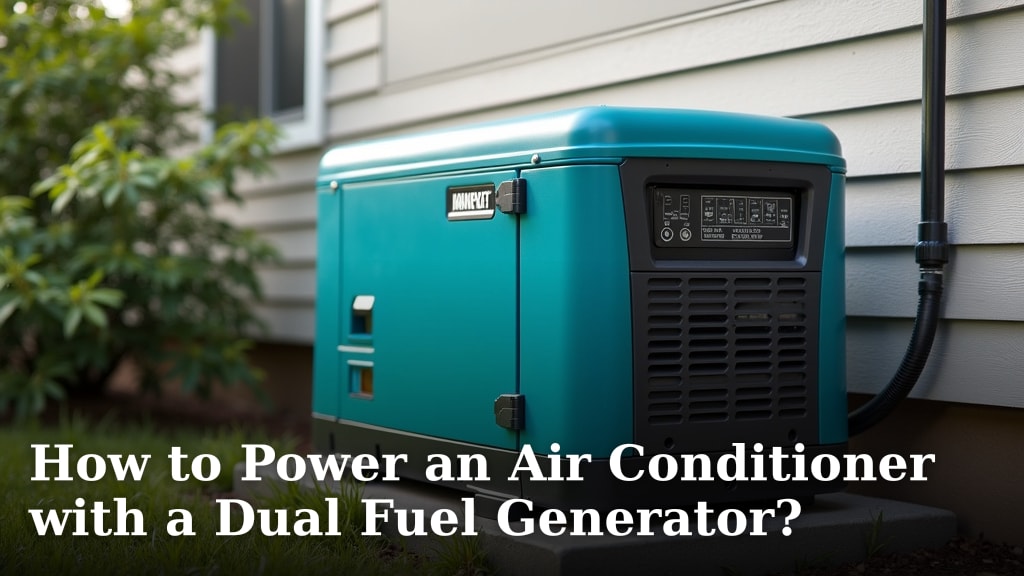
Yes, you can absolutely power an air conditioner with a dual fuel generator, provided the generator has enough wattage. The key is matching the AC’s power demands to the generator’s output capacity. Many people find this an effective way to keep cool during outages.
When considering this setup, it’s smart to check both the running watts and the starting watts for your air conditioner. AC units require a surge of power to kick on. A dual fuel generator offers flexibility, running on either gasoline or propane, which can be a real lifesaver.
- Dual fuel generators can power ACs.
- Check the generator’s wattage against the AC’s needs.
- Know your AC’s starting vs. running watts.
- Propane or gasoline provides fuel options.
Let’s walk through exactly how to get your air conditioner up and running with your dual fuel generator, step by step.
So, you’ve got a dual fuel generator and a hot summer day is making you think about your air conditioner. Can these two work together? Absolutely! It’s a smart way to stay comfortable when the power grid decides to take a break. We’ll guide you through making sure your generator is up to the task.
Making Your AC Generator-Ready
Connecting your air conditioner to a dual fuel generator is more about matching power needs than anything else. Think of it like plugging in a lamp versus a toaster. The AC needs a good chunk of power, especially when it first starts. Your generator needs to be able to deliver that power without breaking a sweat.
Understanding Generator Wattage
Generators are rated by their wattage. This tells you how much power they can supply. There are two important numbers to look at: running watts and starting watts. Your air conditioner will have these numbers too.
Running Watts Explained
Running watts are the amount of power your AC needs continuously to operate. This is the steady hum once the compressor kicks in. You’ll find this listed on your AC unit’s label or in its manual. It’s usually a lower number than the starting watts.
Starting Watts: The Big Surge
This is where things get interesting for AC units. Starting watts, also known as surge watts, are the extra burst of power your AC needs for just a few seconds when the motor starts up. For an air conditioner, this surge can be two to three times higher than its running watts. This is the most critical number to match up.
Calculating Your AC’s Power Needs
First, find the wattage requirements for your specific air conditioner. Most portable AC units will clearly state their wattage. If it only lists amps and volts, you can calculate watts by multiplying amps by volts (Amps x Volts = Watts). Remember, this is for running watts.
Then, you need to figure out the starting watts. A good rule of thumb is to double the running watts to get a reasonable estimate for the starting surge. For example, a 5,000 BTU window AC might run at 500 watts but need 1,000-1,500 watts to start.
Let’s look at a quick example:
| Item | Running Watts | Starting Watts |
|---|---|---|
| Window AC Unit | 500 Watts | 1,500 Watts (estimated) |
This table shows that your generator needs to supply at least 500 watts steadily, but it must be able to handle a sudden 1,500-watt demand for the AC to kick on.
Choosing the Right Dual Fuel Generator
Now that you know what your AC demands, let’s talk about generators. Not all dual fuel generators are created equal. The capacity of the generator is king here. You need one that can provide more power than your AC needs, with a buffer.
Generator Wattage Requirements
For your air conditioner, you need a generator that meets these criteria:
- Running Watts: The generator’s running watts must be higher than your AC’s running watts. We recommend at least a 10-20% buffer. If your AC runs at 500 watts, aim for a generator with at least 550-600 running watts.
- Starting Watts: This is the big one. The generator’s starting (or peak) watts must be higher than your AC’s starting watts. If your AC needs 1,500 starting watts, your generator should ideally offer 2,000 starting watts or more. This ensures a smooth startup without tripping the generator.
The Dual Fuel Advantage
Dual fuel generators offer a fantastic advantage: flexibility. You can run them on gasoline or propane. This is super helpful during an emergency. You might have more of one fuel on hand than the other. Propane, for instance, has a longer shelf life than gasoline and tends to burn cleaner, which can be easier on your generator’s engine over time.
Propane vs. Gasoline for ACs
When powering an AC, both fuels will work. Propane often offers a slightly more stable power output, which can be good for sensitive electronics. However, gasoline might be more readily available in some areas. You’ll want to check the generator’s manual for specific output differences, if any, between fuel types.
What About Other Appliances?
It’s tempting to run your fridge, lights, and maybe even a TV alongside your AC. Remember that every appliance adds to the total wattage demand. Before you switch everything on, do the math. Add up the running watts of everything you plan to run simultaneously, and then add your AC’s starting watts to that total. This gives you the peak demand your generator must meet.
For example, if your AC needs 1,500 starting watts, and you also want to run a refrigerator (around 600 running watts) and some lights (say 100 running watts), your generator needs to handle at least 1,500 (AC start) + 600 (fridge run) + 100 (lights run) = 2,200 watts for that initial surge.
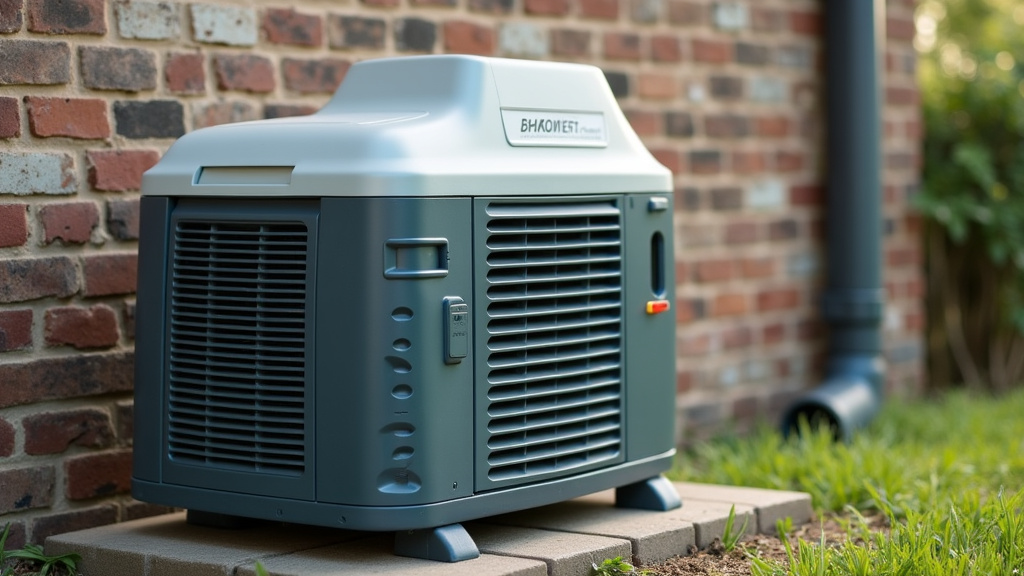
Connecting Your Air Conditioner Safely
Once you’ve confirmed your generator is a good match, the connection process is pretty straightforward. Safety first, always!
Safety Precautions Before You Start
Before you plug anything in, ensure your generator is on a level surface outdoors, away from windows and doors to prevent carbon monoxide buildup. Never run a generator indoors or in an enclosed space (National Institute of Environmental Health Sciences). Make sure the generator is turned off and cool before adding fuel.
The Connection Process
Here’s a simple checklist to follow:
- Start the Generator: Let the generator run for a few minutes to stabilize.
- Select Fuel: Choose either gasoline or propane according to your generator’s setup.
- Turn Off the AC: Ensure your air conditioner is completely turned off before plugging it in.
- Plug It In: Use a heavy-duty extension cord rated for outdoor use and the appropriate wattage for your AC and generator. Plug it directly into the generator’s outlet.
- Turn On the AC: Now, turn on your air conditioner. The fan might start first, then the compressor should kick in.
- Monitor: Listen for any unusual noises from the generator or AC. Check that both are running smoothly.
If your AC doesn’t start or the generator sputters, turn off the AC immediately. This usually indicates the generator isn’t providing enough power. You might need a larger generator or to reduce the load on the generator.
Conclusion
You’ve learned that powering your air conditioner with a dual fuel generator is definitely achievable. The main point is to match your AC’s power demands, especially its surge needs, with your generator’s output. Understanding running versus starting watts is your key to success. With the right generator and a bit of careful planning, you can keep cool and comfortable during any power outage. Your next step is to check your specific AC’s wattage and then shop for a dual fuel generator that comfortably exceeds those requirements.
Frequently Asked Questions
What size generator do I need for a window AC unit?
For a typical window AC unit, you’ll need to consider its running watts and its higher starting watts. A general rule of thumb is to find a generator with running watts that exceed your AC’s running watts by at least 10-20%, and starting watts that are double or triple your AC’s running watts.
Can I run other appliances with my AC on a dual fuel generator?
You can, but you must be careful about the total wattage. Add up the running watts of all appliances you plan to run simultaneously, and then add your AC’s starting watts to that sum. Ensure your generator’s total starting wattage capacity is higher than this combined peak demand.
Is propane or gasoline better for running an air conditioner?
Both fuels work, but propane often provides a more stable power output, which can be beneficial for sensitive electronics like those in some AC units. Propane also has a longer shelf life and burns cleaner than gasoline, potentially being easier on your generator’s engine over time.
How can I tell if my generator is too small for my air conditioner?
If your generator sputters, the AC doesn’t turn on, or the generator’s circuit breaker trips immediately after you try to start the AC, it’s a strong sign the generator is too small. This indicates it can’t handle the AC’s starting wattage surge.
What type of extension cord should I use?
You need a heavy-duty extension cord rated for outdoor use. Crucially, it must be rated to handle the wattage your air conditioner requires and be compatible with your generator’s output to prevent overheating or damage.
