
What Do You Need to Power an RV with a Dual Fuel Generator?
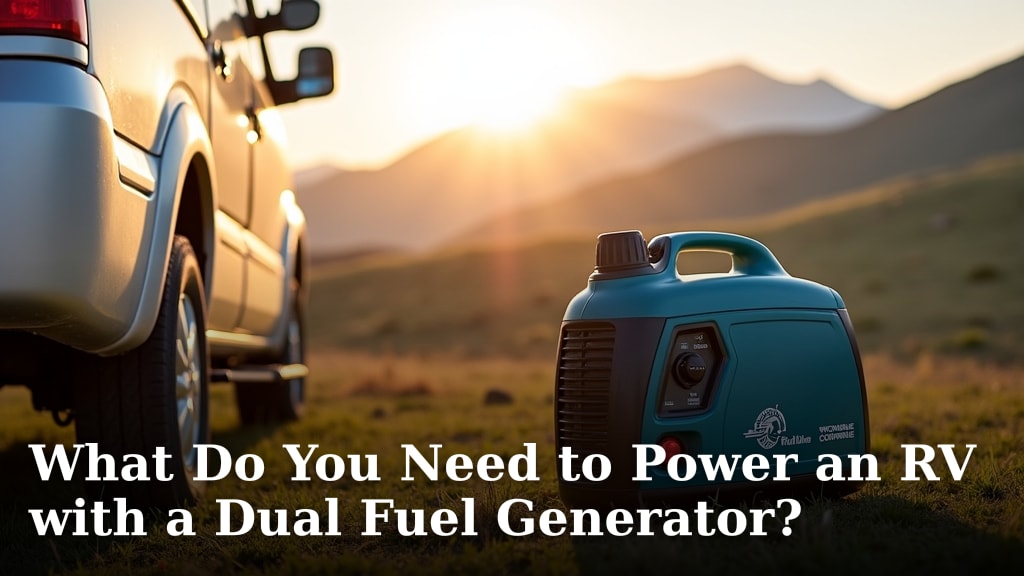
You absolutely need a dual fuel generator that can run on both gasoline and propane to power your RV. This type of generator is essential because it offers flexibility and ensures you have power, even if one fuel source becomes unavailable. Many RV owners prefer dual fuel models for their reliability on the road.
When choosing a generator, consider the wattage needed for your RV’s appliances. You’ll also want to think about portability and noise levels, as RV parks often have restrictions. Understanding these factors will help you find the perfect power solution for your adventures.
- Dual fuel generators run on gasoline and propane.
- They offer greater fuel flexibility.
- Check wattage for your RV appliances.
- Consider noise levels for campgrounds.
- Portability is important for travel.
Below, we break down exactly what you need to consider to successfully power your RV with a dual fuel generator.
“`htmlChoosing the Right Dual Fuel Generator for Your RV Power Needs
Powering your RV with a dual fuel generator means you’ve got a solid plan for staying charged on the go. But what exactly do you need to make this happen smoothly? It’s all about matching the generator’s capabilities to your RV’s demands. We’ve researched this extensively, and here’s what you should focus on.
Understanding Your RV’s Power Requirements (Wattage)
The first step is knowing how much power your RV appliances use. This is measured in watts. Think of watts like the “energy currency” your devices need to run. Your RV has a mix of appliances, each with its own wattage needs. Some need a lot of power to start up (starting watts), while others need less to keep running (running watts).
Calculating Your Starting and Running Wattage
You’ll need to figure out your total running wattage and your total starting wattage. Running wattage is the continuous power an appliance needs. Starting wattage is the surge of power required to turn on appliances with motors, like air conditioners or microwaves. This surge can be two or three times the running wattage.
How to find these numbers:
- Check the appliance’s label or owner’s manual. It usually lists the wattage.
- If only volts and amps are listed, you can calculate watts: Watts = Volts x Amps.
- Add up the running watts for all appliances you might use at the same time.
- Identify the appliance with the highest starting wattage. Add its starting wattage to the total running watts of everything else. This gives you your peak demand.
Many experts recommend adding a 10-20% buffer to your total calculated wattage. This ensures the generator isn’t constantly running at its maximum capacity. Overloading a generator can damage it and your RV’s electronics. We found that this buffer is key for longevity.
Common RV Appliance Wattage Examples
Here’s a general idea of what some common RV appliances consume:
| Appliance | Running Watts (Approx.) | Starting Watts (Approx.) |
|---|---|---|
| RV Air Conditioner (13,500 BTU) | 1500 | 3000-4000 |
| Microwave | 1000-1500 | 1500-2500 |
| Coffee Maker | 800-1200 | N/A |
| Hair Dryer | 1200-1800 | N/A |
| Refrigerator (Residential style) | 150-200 | 400-600 |
| Lights (LED) | 5-10 per bulb | N/A |
| Television | 50-150 | N/A |
Remember, these are just estimates. Your specific models might vary. Always check the manufacturer’s specifications for the most accurate numbers. We found this step to be the most critical for avoiding power surprises.
Choosing the Right Size Generator (Wattage)
Once you know your power needs, you can select a generator with adequate wattage. Generators are rated by their peak output (surge watts) and continuous output (running watts). You need a generator whose running watts exceed your maximum simultaneous running load, and whose peak watts exceed your highest starting wattage requirement.
Inverter Generators vs. Conventional Generators
For RVs, inverter generators are usually the preferred choice. Why? They produce clean, stable power that’s safe for sensitive electronics like laptops, TVs, and smartphones. Conventional generators often produce “dirtier” power, which can damage these devices over time.
Inverter generators also tend to be quieter and more fuel-efficient. Many are designed to be portable and compact, which is a big plus for RV travel. We found that the investment in an inverter generator pays off in peace of mind and appliance safety.
Recommended Wattage for Different RV Setups
Here’s a general guide to help you decide on wattage:
- Small Travel Trailers/Pop-ups: If you’re just powering lights, charging phones, and running a small fan, a generator in the 1,000-2,000 watt range might suffice.
- Mid-Size RVs/Trailers: For running a microwave, coffee maker, TV, and charging devices, look for generators between 2,000-4,000 watts. This is a popular range for many RVers.
- Large RVs/Motorhomes with AC: If you need to power an RV air conditioner, you’ll be looking at 3,500 watts and up. For running multiple appliances simultaneously, including the AC, a 5,000-watt generator or even a parallel setup might be necessary.
The key is to match your biggest power-guzzling appliance with the generator’s capabilities. For instance, if your AC unit has a 3,500-watt starting requirement, your generator needs to be able to handle that. We found that many users underestimate their AC needs, so double-check those numbers!
Fuel Considerations: Propane vs. Gasoline
The beauty of a dual fuel generator is its flexibility. You can run it on either gasoline or propane (LPG). Each fuel source has its own advantages and disadvantages for RVing.
Propane (LPG) Advantages and Disadvantages
Advantages:
- Cleaner Burning: Propane burns cleaner than gasoline. This means less carbon buildup in the generator’s engine, leading to longer engine life and reduced maintenance. Many experts suggest this is a major plus for engine health (EPA).
- Stable Storage: Propane has an indefinite shelf life when stored properly. Gasoline, on the other hand, can degrade over time, especially if treated with stabilizers.
- Readily Available on RVs: Most RVs come equipped with propane tanks for cooking and heating. You can often just connect your generator directly to your RV’s propane supply.
Disadvantages:
- Lower Power Output: Generally, a generator will produce slightly less power when running on propane compared to gasoline. This difference is usually not significant enough to be a dealbreaker.
- Colder Temperatures: Propane pressure can drop in very cold weather, potentially affecting generator performance.
Gasoline Advantages and Disadvantages
Advantages:
- Higher Power Output: You’ll typically get a bit more wattage from your generator when running on gasoline.
- Widespread Availability: Gasoline stations are everywhere, making refueling easy.
Disadvantages:
- Shorter Shelf Life: Gasoline can go bad in as little as 3-6 months if not properly stored with fuel stabilizer.
- Engine Fouling: Gasoline combustion produces more carbon deposits. This can lead to more frequent maintenance and a shorter engine lifespan compared to propane.
- Smell and Spills: Gasoline can have a strong odor and is more prone to spills, which can be messy in an RV setting.
Making the Most of Dual Fuel Capability
The dual fuel capability is your superpower on the road. If you’re running low on propane at a remote campsite, you can switch to gasoline. If gas stations are scarce or prices are high, propane is your friend. We found that having both options provides incredible peace of mind.
Consider your travel style. If you’re frequently in very cold climates, be aware of propane’s performance limitations. If you plan to boondock for extended periods, having a large propane tank on your RV is a huge advantage for generator fuel. Researching the specific fuel consumption of the generator you’re considering is also wise.
Portability and Noise Levels
When you’re RVing, you’re often moving around. This means the generator needs to be practical for your lifestyle. Two key factors are how easy it is to move and how loud it is.
Generator Weight and Size
Generators range from lightweight portable units to heavier, more powerful models. If you’ll be moving the generator in and out of storage compartments frequently, a lighter model is a definite plus. Some larger, more powerful units are almost stationary, designed to be mounted permanently on an RV.
Consider the physical space you have available for storing the generator when not in use. Most portable inverter generators come with built-in handles and are designed to be relatively compact. We found that a generator weighing under 50 pounds is generally easy for most people to manage.
Understanding RV Park Noise Restrictions
Many RV parks and campgrounds have strict noise ordinances. A generator that’s too loud can disrupt your neighbors and even lead to you being asked to turn it off. Generators are rated in decibels (dB). A typical conversation is around 60 dB.
Inverter generators are significantly quieter than conventional generators. Many models designed for RV use operate in the 50-60 dB range when running at 25% load. Always check the generator’s dB rating and the RV park’s rules before you go. We found that quieter generators contribute greatly to a more enjoyable camping experience.
Essential Accessories for Generator Operation
Beyond the generator itself, you’ll need a few accessories to keep it running safely and efficiently.
Fuel Storage and Transfer
If you’re using gasoline, you’ll need a safe and approved gas can. For propane, ensure you have the correct hoses and adapters to connect to your RV’s system or portable propane tanks. Always store fuel securely and away from heat sources. We found that a good quality fuel transfer pump can make filling your generator’s tank much easier.
Power Cords and Adapters
You’ll need appropriate power cords to connect your generator to your RV’s shore power inlet. Ensure the cords are rated for outdoor use and the correct gauge for the wattage you’re using. RVs typically use a 30-amp or 50-amp plug, so make sure your generator setup can accommodate this, possibly with an adapter.
Generator Covers and Security
A generator cover will protect your unit from the elements when it’s not in use, extending its lifespan. For security, consider a generator lock or cable to deter theft, especially when camping in busy areas. We found that simple security measures offer significant peace of mind.
Quick Checklist for Your Dual Fuel Generator Setup
Before you head out on your next adventure, run through this quick checklist:
- Calculate your RV’s total starting and running wattage.
- Select a dual fuel generator with sufficient wattage and inverter technology.
- Ensure you have the correct fuel hoses, adapters, and safe fuel storage.
- Pack the right power cords and RV-specific adapters.
- Verify the generator’s decibel rating meets campground noise requirements.
- Consider accessories like a cover and security cable.
Conclusion
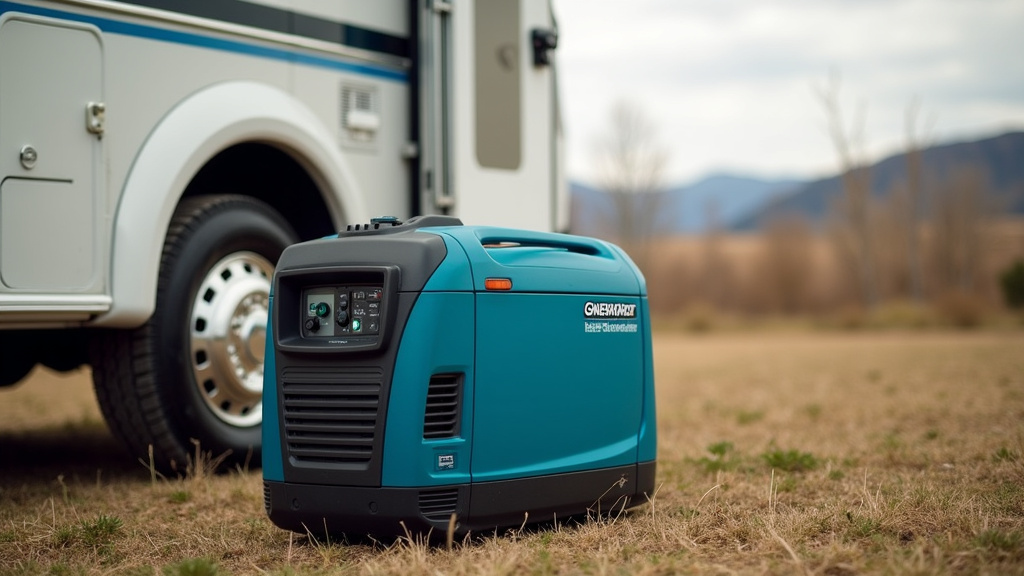
Powering your RV with a dual fuel generator offers incredible flexibility and peace of mind on your travels. You’ve learned how critical it is to accurately calculate your RV’s wattage needs, considering both running and starting watts for appliances like your AC and microwave. Choosing an inverter generator provides clean power and quieter operation, essential for campgrounds. Remember to weigh the pros and cons of propane versus gasoline for your specific travel style. With the right generator and essential accessories, you’ll ensure reliable power for all your adventures. Your next step is to measure your RV’s power draw and select the dual fuel generator that best fits your setup.
Frequently Asked Questions
What’s the biggest mistake RV owners make when choosing a generator?
A common oversight is underestimating the starting wattage required for appliances with motors, especially RV air conditioners. You need a generator that can handle that initial power surge. We found that failing to account for this surge often leads to tripped breakers or generator shutdown.
Can I connect a dual fuel generator directly to my RV’s built-in propane tanks?
Yes, many dual fuel generators come with adapters to connect directly to your RV’s existing propane supply. This is incredibly convenient, as you can use your RV’s larger propane tanks instead of carrying separate smaller ones. Just ensure you have the correct hoses and regulator.
How loud is too loud for an RV generator in a campground?
Most campgrounds have noise restrictions, often around 60-65 decibels (dB), which is about the level of normal conversation. Inverter generators are much quieter, typically operating in the 50-60 dB range, making them ideal for respecting your neighbors’ peace.
How much fuel does a dual fuel generator typically consume?
Fuel consumption varies greatly by generator size, load, and fuel type. A 2,000-watt generator might use about a quarter to half a gallon of gasoline per hour at 50% load. Propane consumption will be similar but might be slightly higher for the same power output.
Do I really need an inverter generator for my RV, or will a conventional one work?
While a conventional generator might power basic appliances, an inverter generator is highly recommended for RVs. They produce cleaner, more stable power that’s safe for sensitive electronics like laptops, smartphones, and modern TVs. We found inverter generators offer superior protection for your devices.
