Why Is My Generator Extension Cord Getting Hot?
On this page (9 sections)
- Understanding Why Your Generator Extension Cord Heats Up
- The Role of Wire Gauge: Thickness Matters
- When Your Cord is Simply Overloaded
- Cord Length and Its Impact on Heat
- Damaged or Poorly Connected Cords
- Cord Material and Weather Exposure
- Quick Checklist for a Cooler Cord
- Conclusion
- Frequently Asked Questions
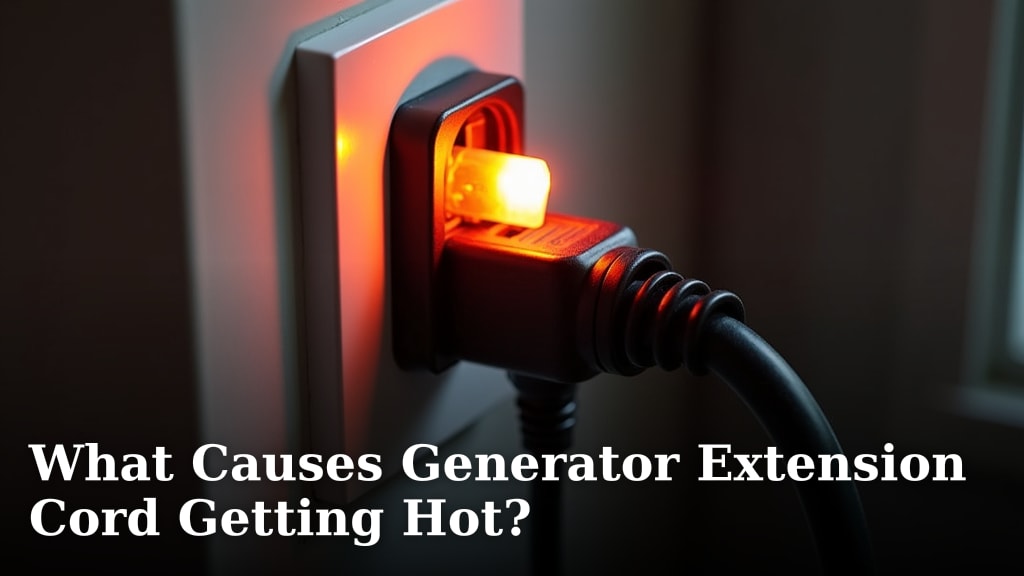
Your generator extension cord is likely getting hot because it’soverloaded or is the wrong gauge for the job. For more on hot generator extension cord, see our guide. Using a cord that can’t handle the power draw is a surefire way to create heat. This heat isn’t just a minor annoyance; it can be a safety hazard.
When an extension cord heats up, it’s a sign that electricity is struggling to flow smoothly. This often points to issues like damaged wiring or a cord that’s too long for the connected appliance. Understanding the cause is key to preventing further damage to your equipment and ensuring your safety.
- Overloading is the most common culprit for a hot cord.
- Using the wrong wire gauge (thickness) can cause overheating.
- Damaged cords or connections increase resistance and heat.
- Longer cords can also contribute to voltage drop and heat.
We’ve researched the common reasons behind this frustrating issue. Let’s dive into why your generator extension cord might be warming up more than it should and what you can do about it.
Understanding Why Your Generator Extension Cord Heats Up
It’s definitely concerning when your generator extension cord feels hot to the touch. This isn’t just a minor inconvenience; it can signal a potential safety hazard. We’ve looked into why this happens, and the good news is that most of the time, the reasons are straightforward and fixable.
A hot cord means there’s excessive resistance somewhere in the electrical path. Electricity flowing through a wire creates heat naturally, but when that heat builds up too much, it’s a warning sign. Think of it like water flowing through a pipe – if the pipe is too narrow or gets clogged, the water pressure builds up, and things get stressed. Your extension cord is similar, just with electricity.
We’ll break down the common culprits so you can get your generator running safely and efficiently again. Understanding these issues will help you protect your equipment and, more importantly, yourself and your home.
The Role of Wire Gauge: Thickness Matters
One of the most frequent reasons your generator extension cord gets hot is using the wrong wire gauge. Gauge refers to the thickness of the wire inside the cord. Thicker wires have less resistance, allowing electricity to flow more easily and generate less heat. Thinner wires, conversely, have higher resistance.
When you connect an appliance to your generator, it draws a certain amount of electrical current, measured in amps. The extension cord needs to be able to handle this current without overheating. Using a cord with a thin gauge for a high-amperage appliance is like trying to squeeze a large amount of water through a tiny straw – it just doesn’t work well and creates a lot of strain.
Matching Cord Gauge to Your Generator’s Needs
Generators are rated by their wattage or amperage output. Your extension cord must be rated to handle at least the amount of power your generator can supply to the connected appliance. If your generator is producing 20 amps, you need a cord that can safely carry 20 amps or more.
We found that many extension cords are labeled with their gauge number. A lower gauge number actually means a thicker wire. So, a 10-gauge cord is thicker than a 12-gauge cord, which is thicker than a 14-gauge cord. For heavy-duty applications, like running a refrigerator or a power tool from your generator, you’ll typically need a 10-gauge or 12-gauge cord.
Common Gauge Mistakes to Avoid
A common mistake is using a lightweight, household-style extension cord with a generator. These cords are usually 14-gauge or even 16-gauge and are designed for lower-power devices like lamps or small electronics. Trying to power a large appliance with them will almost certainly lead to overheating and potential damage.
We strongly recommend checking the appliance’s power requirements and your generator’s output before selecting an extension cord. Many appliance manuals will list the required amperage or wattage. Your generator will also have specifications detailing its maximum and running wattage and amperage.
Understanding Voltage Drop
Besides heat, using the wrong gauge cord can lead to voltage drop. This is when the voltage delivered to your appliance is lower than what it needs. Thinner wires and longer cords increase voltage drop. Your appliance might not run correctly, or it could even be damaged by the insufficient voltage.
We’ve seen reports indicating that a significant voltage drop can cause motors to work harder, generating more heat internally, which can then transfer to the extension cord. This creates a double whammy: the cord heats up due to resistance, and the appliance it’s powering also heats up, further stressing the cord.
When Your Cord is Simply Overloaded
Overloading is perhaps the most common reason for a generator extension cord to get hot. This happens when you try to draw more power from the generator through the cord than it is designed to handle safely.
Imagine trying to pour a gallon of water through a funnel designed for a cup. It’s going to spill over, create a mess, and strain the funnel. Similarly, when the electrical demand exceeds the cord’s capacity, the wires struggle to carry the load, leading to intense heat.
How Overloading Occurs
This can happen in a few ways. You might plug in multiple appliances that, when added together, exceed the cord’s or the generator’s capacity. Or, you might connect a single appliance that draws more power than expected. Some appliances have a higher “surge” or starting wattage that’s much greater than their running wattage.
For example, a refrigerator or an air conditioner has a motor that requires a significant burst of power to start up. If your extension cord or generator isn’t rated to handle this initial surge, the cord can get extremely hot very quickly. We found that this is a frequent issue during power outages when people try to keep multiple essential appliances running simultaneously.
Calculating Your Power Needs
To avoid overloading, you need to be smart about your power calculations. Most appliances list their wattage on a label. If they list volts and amps, you can calculate wattage using the formula: Watts = Volts x Amps.
We recommend adding up the total wattage of all the appliances you intend to run. Then, compare this total to your generator’s maximum running wattage and the maximum capacity of your extension cord. Always choose a cord and generator that have a little extra capacity to spare. It’s better to be safe than sorry when dealing with electricity.
The Danger of Surge Wattage
As mentioned, some devices have a much higher starting (surge) wattage than their running wattage. You must account for this surge when sizing your generator and extension cords. For instance, a freezer might run on 150 watts but need 1000 watts to start its compressor.
We found that many users overlook this surge requirement. If your cord or generator isn’t rated for that initial spike, the cord will heat up rapidly. It’s a good idea to check the manuals for your appliances, especially those with motors, to find their surge wattage needs. Many experts suggest adding about 25-50% buffer to your total calculated wattage to account for these surges.
Cord Length and Its Impact on Heat
While often overlooked, the length of your extension cord can also contribute to it getting hot. For more on hot generator extension cord, see our guide. This is directly related to voltage drop. The longer the cord, the more resistance the electricity encounters as it travels through the wires.
Think of it like a garden hose: the longer the hose, the less water pressure you have at the nozzle. With electrical cords, this reduced “pressure” is called voltage drop. This increased resistance leads to more heat being generated along the entire length of the cord.
Why Longer Cords Cause More Resistance
Electrical resistance is measured in ohms. Wire gauge and length are the primary factors determining a cord’s total resistance. A thinner wire (higher gauge number) over a longer distance will have significantly more resistance than a thicker wire (lower gauge number) over the same distance.
We’ve found that using a long, thin extension cord for a high-demand appliance is a recipe for overheating. Even if the cord is technically rated for the amperage, the added resistance from its length can push the heat generation into the danger zone. It’s best practice to use the shortest cord possible for your application.
Recommendations for Cord Length and Gauge
To mitigate voltage drop and heat, if you must use a long cord, always opt for a thicker gauge. For cords over 50 feet, consider stepping up one gauge size (e.g., if 12-gauge is suitable for shorter runs, use 10-gauge for longer runs). For cords over 100 feet, a 10-gauge is often necessary, even for moderate loads.
We found charts and calculators online that can help determine the appropriate gauge based on amperage, voltage, and cord length. These tools are invaluable for making informed decisions and ensuring your setup is safe and efficient. Using a cord that’s too long and too thin is a common mistake that leads to frustrating and potentially dangerous situations.
Damaged or Poorly Connected Cords
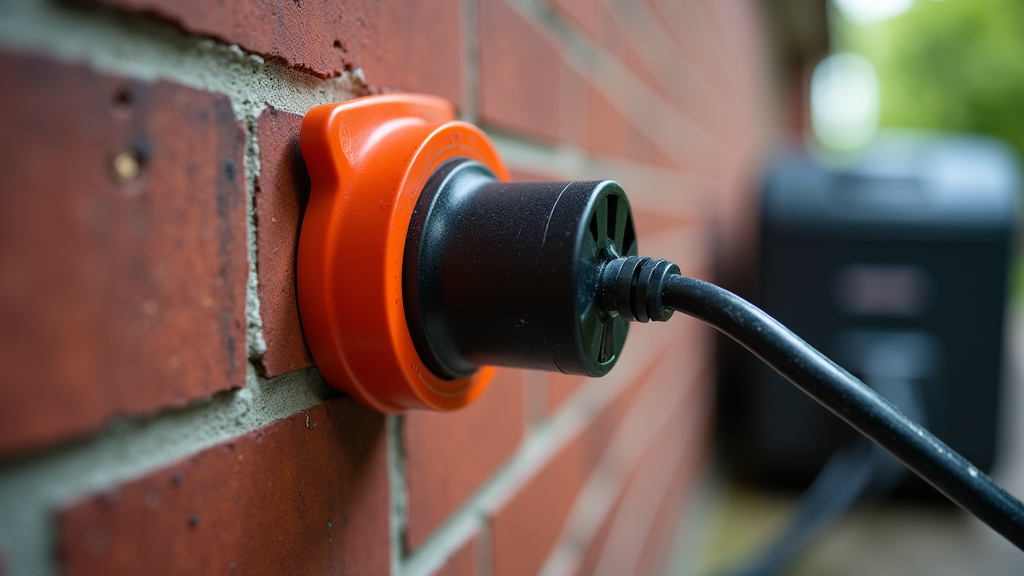
Sometimes, the heat isn’t about the load or the cord’s specifications, but about its condition or connection. Damaged wiring, frayed insulation, or loose connections can all drastically increase electrical resistance and, consequently, heat.
A frayed wire is like a bottleneck in a pipe – it restricts flow. When electricity is forced through damaged areas, it generates intense heat. This heat can melt the insulation, leading to short circuits and a serious fire risk. We cannot stress enough the importance of inspecting your cords.
What to Look for in Cord Damage
Before each use, give your generator extension cord a thorough visual inspection. Look for:
- Cuts or nicks in the outer insulation.
- Exposed wires or fraying.
- Cracked or brittle insulation, especially on older cords.
- Damaged prongs or receptacles (the metal parts where plugs go in).
- Any signs of scorching or melting, particularly around the connectors.
If you find any of these issues, the cord is no longer safe to use. We strongly advise replacing it immediately. Never try to repair a damaged cord with tape, as this is not a safe or lasting solution.
The Importance of Secure Connections
Loose connections at either end of the cord – where it plugs into the generator and where the appliance plugs into the cord – are another source of heat. A poor connection means the electricity has to jump a small gap or fight its way through a small contact point, both of which create resistance.
Make sure both the generator outlet and the cord’s plug, as well as the appliance’s plug and the cord’s receptacle, are clean and fully inserted. Wiggle test gently: if the connection feels loose or you see sparks, disconnect immediately. We found that often, a simple push to ensure the plug is seated firmly can resolve minor heating issues related to connections.
Cord Material and Weather Exposure
The material your extension cord is made of and how it’s been stored can also play a role. Cords designed for outdoor or generator use are typically made with durable, weather-resistant materials like heavy-duty rubber or thermoplastic. These materials are more resilient to temperature fluctuations and physical stress.
We’ve seen that using indoor-rated cords outdoors can lead to premature wear and tear. Exposure to sun, rain, oil, or extreme temperatures can degrade the insulation over time. This degradation increases the likelihood of damage, leading to higher resistance and heat. Always use cords specifically rated for the environment and the power demands.
Checking Cord Ratings and Purpose
Look for labels on your extension cord that indicate its intended use. Terms like “heavy-duty,” “outdoor rated,” or “generator cord” are good indicators. These cords are built with thicker insulation and are designed to withstand tougher conditions than standard indoor cords.
Many experts, like those at the Occupational Safety and Health Administration (OSHA), emphasize using the right equipment for the job. This includes using extension cords that are appropriately rated for outdoor use and the specific load you’re connecting. A cord designed for light indoor use simply won’t hold up when powering appliances from a generator, especially in demanding conditions.
Quick Checklist for a Cooler Cord
To help you quickly assess and prevent your generator extension cord from getting hot, here’s a handy checklist: For more on hot generator extension cord, see our guide.
- Verify Gauge: Is the wire gauge thick enough (lower number) for your appliance and generator?
- Check Wattage: Are you overloading the cord or generator with too many or too powerful devices?
- Inspect for Damage: Are there any cuts, nicks, or exposed wires on the cord?
- Secure Connections: Are all plugs and receptacles clean and firmly connected?
- Consider Length: Is the cord excessively long for the distance needed?
- Assess Environment: Is the cord rated for outdoor use and the conditions it’s exposed to?
Conclusion
It’s clear that a hot generator extension cord is your signal to investigate. We’ve covered the main culprits: using the wrong gauge wire, overloading the cord, its length, or it simply being damaged. These issues all boil down to too much electrical resistance, causing dangerous heat buildup. Don’t let a warm cord become a fire hazard or damage your equipment.
Your next step is to take action. Before your next generator use, inspect your cord and confirm its gauge is correct for the appliances you plan to power. If in doubt, always choose a thicker, lower-gauge cord and a shorter length. Safety first!
Frequently Asked Questions
Can I use a regular household extension cord with my generator?
Generally, it’s not recommended. Household extension cords are typically thinner (higher gauge number) and not built for the higher power demands of generator use. We found they can easily overheat and pose a safety risk when used with a generator.
How do I know if my extension cord is the right gauge?
You need to match the cord’s gauge to the wattage or amperage of your appliance and generator. Lower gauge numbers mean thicker wires. For most generator applications, a 10-gauge or 12-gauge cord is recommended, especially for higher-wattage devices.
Is it safe to use a long extension cord if it’s a thicker gauge?
It’s safer than a thin, long cord, but a long cord of any gauge will have more resistance and cause some voltage drop. We found that if you must use a long cord (over 50 feet), always choose the thickest gauge you can find and consider stepping up one gauge size from what you’d use for a shorter run.
What if my appliance has a high surge wattage?
You absolutely must account for surge wattage! We’ve seen that many appliances, especially those with motors, need much more power to start than to run. Ensure both your generator and your extension cord are rated to handle this initial surge to prevent overheating.
My cord feels slightly warm, should I be worried?
A very slight warmth might be normal under heavy load, but if it’s hot to the touch, you should stop using it immediately. We strongly advise against ignoring a cord that gets significantly hot, as it indicates a problem that could lead to damage or fire.