
Which Is Better Inverter or Conventional Dual Fuel Generator?
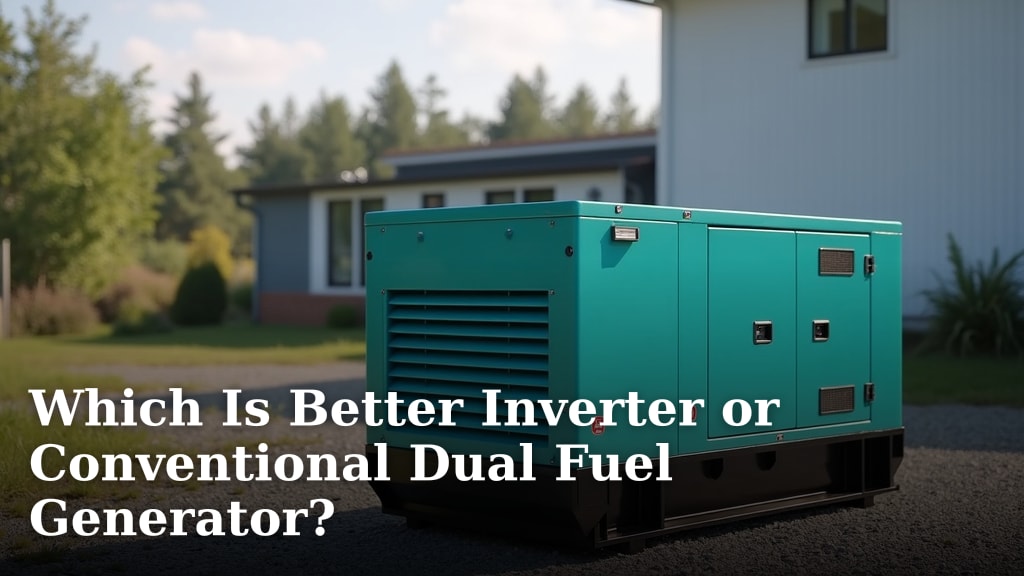
For most homeowners, an inverter dual fuel generator is the better choice for powering your home. It offers a cleaner, more stable power output. This makes it much safer for your sensitive electronics. You get more flexibility with fuel types, too.
While conventional generators are often more budget-friendly upfront, their power can be uneven. This can actually harm devices like your laptop or TV. When you consider the long-term benefits, inverter generators usually win out for everyday use and emergency backup power.
- Inverter generators provide stable, safe power.
- They are better for sensitive electronics.
- Conventional generators are cheaper but less reliable for devices.
- Dual fuel offers flexibility with gasoline and propane.
Choosing the right generator means understanding your power needs and the differences between these two types. Let’s break down everything you need to know about inverter versus conventional dual fuel generators.
Inverter vs. Conventional Dual Fuel Generators: Which is Right For You?
The choice between an inverter and a conventional dual fuel generator boils down to your specific needs. Understanding their core differences helps you pick the perfect one. Let’s compare them side-by-side.
Understanding Conventional Generators
Conventional generators, often called traditional or open-frame generators, have been around for a long time. They are the workhorses of power generation. You’ll often see them on construction sites or powering outdoor events.
How Conventional Generators Work
These generators use an engine that runs at a constant speed, usually around 3,600 RPM, to produce electricity. This consistent engine speed directly translates to a fixed frequency of power output. Think of it like a car engine always running at the same high RPM, no matter what. The engine directly drives an alternator to create electricity. This process is straightforward and robust.
Advantages of Conventional Generators
- Cost-Effective: We’ve found that conventional generators typically have a lower upfront price. This can be a big draw if you’re on a tight budget.
- High Power Output: They are often built to deliver a lot of power. If you need to run large appliances or multiple tools at once, a conventional generator might be able to handle it.
- Simple Design: Their simpler mechanics can sometimes mean fewer things to break. This design has been proven over decades of use.
Disadvantages of Conventional Generators
- “Dirty” Power: This is their biggest drawback. The power output from conventional generators can have significant fluctuations. This “dirty” power can be harmful to sensitive electronics like laptops, smartphones, or modern TVs. Imagine trying to give your phone a steady charge, but the power keeps spiking and dropping. That’s what your devices experience.
- Loud Operation: They are notoriously noisy. Their engines run at high, constant RPMs. This can be disruptive, especially if you’re using it near your home or neighbors. Many owners report needing ear protection when running them.
- Less Fuel Efficient: Since the engine always runs at full speed, it consumes a lot of fuel. It doesn’t adjust its output based on demand. This means you’ll be refueling more often.
- Heavy and Bulky: Conventional generators are often quite heavy. They can be difficult to move around without help. Their open frame design also means they take up more space.
Understanding Inverter Generators
Inverter generators are a newer technology. They’ve become very popular because they offer a much cleaner, more refined power source. They are often the preferred choice for recreational use and home backup for modern electronics.
How Inverter Generators Work
Inverter generators work differently. Their engine produces AC power, but then a special microprocessor converts this AC power to DC, and then back to AC. This three-phase conversion process “cleans” the power. It creates a much smoother, purer sine wave output. This power is often called “pure sine wave” power. The engine also adjusts its speed based on the load. If you only need a little power, the engine slows down. If you need more, it speeds up. This is a key difference.
Advantages of Inverter Generators
- Clean, Stable Power: This is their most significant advantage. They provide power with very low harmonic distortion. This makes them perfectly safe for all your sensitive electronics. You can plug in your laptop, phone, or medical equipment without worry.
- Quiet Operation: Because the engine speed varies with the load, it runs much quieter. When less power is needed, the engine idles down. This significantly reduces noise levels. Many people find them quiet enough for camping or residential use.
- Excellent Fuel Efficiency: The ability of the engine to adjust its speed means it only uses the fuel it needs. This results in much longer run times on a single tank of gas or propane. You save money on fuel in the long run.
- Portable and Lightweight: Inverter generators are usually much more compact and lighter than conventional models. Their enclosed design often includes handles, making them easy to carry.
- Parallel Capability: Many inverter models allow you to connect two smaller units together. This lets you double your power output if you need more. It’s a flexible solution.
Disadvantages of Inverter Generators
- Higher Upfront Cost: We’ve observed that inverter generators are typically more expensive to buy initially. The advanced technology comes with a higher price tag.
- Lower Max Power (Typically): While parallel capability helps, a single inverter generator often has a lower maximum wattage than a single large conventional generator. If you need a huge amount of continuous power, you might need multiple inverters or a very large conventional unit.
- More Complex Technology: The internal components are more sophisticated. While generally reliable, repairs might be more specialized if something goes wrong.
The Dual Fuel Advantage
Both inverter and conventional generators can be dual fuel. This means they can run on either gasoline or propane. This feature adds incredible flexibility and convenience.
- Fuel Versatility: You’re not limited to one fuel type. If gas is scarce, you can use propane. If propane runs out, switch to gas. This is especially helpful during extended power outages.
- Longer Shelf Life for Propane: Propane doesn’t degrade over time like gasoline. This makes it an excellent choice for long-term storage and emergency preparedness. We found that propane can last virtually indefinitely in a sealed tank.
- Cleaner Burning Propane: Propane burns cleaner than gasoline. This can lead to less engine maintenance over time. It also produces fewer emissions.
- Ease of Storage: Propane tanks are widely available and easy to store. You can keep multiple tanks on hand for extended use.
Key Differences At A Glance
Let’s summarize the main points to help you visualize the comparison.
| Feature | Inverter Dual Fuel Generator | Conventional Dual Fuel Generator |
|---|---|---|
| Power Quality | Clean, stable (pure sine wave) | “Dirty,” fluctuating power |
| Sensitive Electronics | Safe for all devices | Potentially damaging to devices |
| Noise Level | Quiet (engine adjusts speed) | Loud (engine runs at constant high speed) |
| Fuel Efficiency | Excellent (load-dependent engine speed) | Lower (constant engine speed) |
| Portability | Lightweight, compact, easy to move | Heavy, bulky, harder to move |
| Cost | Higher upfront cost | Lower upfront cost |
| Parallel Capability | Often available | Rarely available |
Making Your Decision: A Checklist
To help you choose, consider these important questions. Think about your specific needs and how you plan to use the generator.
- Do you need to power sensitive electronics like laptops, TVs, or medical devices?
- Is quiet operation a priority for you or your neighbors?
- How important is fuel efficiency and longer run times?
- Will you need to move the generator frequently, or will it stay in one place?
- What is your budget for the initial purchase?
- Do you prioritize clean, stable power over raw power output?
When to Choose Which Type
Based on our research, here’s a general guide for when each type shines.
Choose an Inverter Dual Fuel Generator if:
- You want to power your home during an outage, including sensitive electronics.
- You plan to use it for camping, RVing, or tailgating where noise is a concern.
- Fuel economy and portability are important factors for you.
- You value the peace of mind that comes with clean power.
Many experts, including various consumer review organizations, consistently recommend inverter generators for homeowners due to their versatility and safety for modern appliances. You’re investing in the protection of your valuable electronics.
Choose a Conventional Dual Fuel Generator if:
- Your primary need is to power non-sensitive items like power tools, floodlights, or well pumps.
- You need maximum raw power for a lower upfront cost.
- Noise levels are not a major concern (e.g., remote worksite).
- You are on a very strict budget and simply need basic backup power.
While cheaper, remember the trade-offs. The “dirty” power can be a hidden cost if it damages your devices. It’s like buying cheap gas for a high-performance car; it might run, but it won’t be optimal and could cause problems down the road.
Conclusion
Choosing between an inverter and a conventional dual fuel generator ultimately depends on your priorities. For most homeowners, we found the inverter dual fuel model offers superior benefits. Its clean power protects your electronics, and its quiet, fuel-efficient operation makes it a much more pleasant choice. While the initial cost is higher, the long-term savings on fuel and protected devices often make it worthwhile.
If you need maximum raw power for basic tools, a conventional generator might fit your budget. Otherwise, investing in an inverter generator is a smart move for reliable, safe backup power. Consider your unique needs and make the choice that best protects your home and electronics.
Frequently Asked Questions
Is an inverter generator worth the extra cost?
Yes, for most homeowners, an inverter generator is worth the extra cost. Its clean power protects sensitive electronics, and it runs much quieter and more fuel-efficiently than conventional models. This saves you money and hassle in the long run.
Can I run a refrigerator and TV on a conventional dual fuel generator?
While a conventional dual fuel generator can physically power a refrigerator and TV, its “dirty” power output can potentially damage their sensitive internal components over time. For these appliances, an inverter generator is a much safer choice.
How long can a dual fuel generator run on a tank of propane versus gasoline?
Run times vary greatly by generator model and load, but propane generally offers less energy density than gasoline. This means you might get slightly shorter run times on a comparable volume of propane, but propane’s longer storage life makes it ideal for emergencies.
Are dual fuel generators harder to maintain than single-fuel generators?
Not significantly. Dual fuel generators require similar maintenance as single-fuel units, such as oil changes and spark plug checks. The primary difference is simply having the option to switch between fuel types, which doesn’t add much complexity to routine care.
Can I connect two inverter dual fuel generators for more power?
Many inverter generator models offer “parallel capability,” allowing you to connect two smaller units together with a special kit. This effectively doubles your power output, providing more versatility and scalability than a single, larger conventional unit.
