
What Is the Difference Between Inverter or Conventional Dual Fuel Generator?
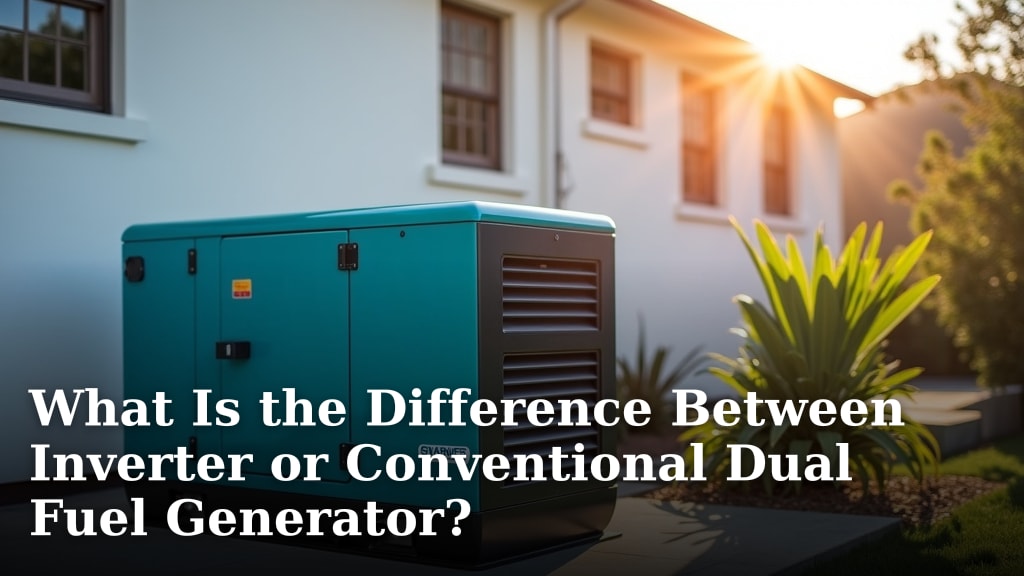
The main difference between an inverter and a conventional dual fuel generator is how they produce electricity. Inverter generators create cleaner, more stable power, making them safe for sensitive electronics. Conventional generators are simpler and often more powerful, but their power output can fluctuate, which isn’t ideal for delicate devices.
Choosing the right generator depends on your needs. Do you want to power your home appliances safely during an outage? Or do you just need brute force for tools? We found that understanding these differences helps you make a smart choice for your specific situation. Both types use gasoline or propane, giving you fuel flexibility.
- Inverter generators offer stable power, great for electronics.
- Conventional generators provide raw power, suitable for heavy-duty tasks.
- Dual fuel means you can use gas or propane.
- Consider your power needs before buying.
Ready to figure out which generator is your perfect match? Let’s break down the key differences between these two types of dual fuel generators.
Inverter vs. Conventional Dual Fuel Generators: What’s the Real Difference?
The core difference between these generators lies in how they produce power. One offers smooth, clean electricity, while the other provides raw, robust energy.
Understanding How Each Generator Works
Let’s peel back the layers and see what makes these two types tick. Knowing their inner workings helps you understand their benefits and drawbacks.
The Conventional Generator: A Direct Approach
Think of a conventional generator as a straightforward workhorse. It has an engine that spins an alternator, directly producing AC power. This power goes straight out to your appliances.
Because of this direct method, the engine needs to run at a constant speed, usually around 3,600 RPM, to produce the correct frequency (60 Hz in the US). This constant speed means it’s often louder and less fuel-efficient, especially if you’re not using all its available power.
We found that many conventional generators are built for tough jobs. They can handle large power surges from tools like saws or well pumps. However, the power they produce isn’t always perfectly stable. There can be small fluctuations in voltage and frequency.
The Inverter Generator: Smart and Stable Power
Inverter generators are a bit more sophisticated. They also have an engine that spins an alternator. But instead of sending that power directly out, they convert it.
First, the raw AC power from the alternator is converted into DC power. Then, a special microprocessor, called an inverter, converts it back into AC power. This second conversion creates a much cleaner, more stable sine wave. We often call this “clean power.”
Why is this important? This clean power is similar to what you get from your wall outlets at home. It’s safe for delicate electronics like laptops, smartphones, and medical equipment. The engine speed can also adjust to the power demand, making them quieter and more fuel-efficient (Environmental Protection Agency).
Power Output: Clean vs. Raw
The type of power each generator provides is a big deal, especially for your valuable electronics. Let’s look closer at what this means for your devices.
Conventional Generators and Sensitive Electronics
Imagine a rough ocean wave. That’s a bit like the power output from a conventional generator. While it’s perfectly fine for things like lights, refrigerators, or power tools, it’s not ideal for devices with microprocessors.
These voltage fluctuations can potentially harm or shorten the life of sensitive electronics. You might notice flickering lights or erratic behavior from some devices. For this reason, many experts advise against connecting items like laptops or modern TVs directly to a conventional generator.
Inverter Generators: Your Electronics’ Best Friend
Now, picture a smooth, calm lake. That’s the power from an inverter generator. The “clean sine wave” means the electricity is delivered consistently, without those sudden ups and downs.
This stability is why inverter generators are often recommended for camping, RVs, and as home backup for modern households. You can confidently plug in your laptop, charge your phone, or even run a CPAP machine without worry. We found that the high-quality power protects your devices.
Noise Levels: Keep the Peace or Make Some Noise?
Nobody wants a generator that sounds like a jet engine, especially if you’re camping or trying to sleep during an outage. Noise is a significant factor to consider.
Conventional Generators: Often Loud and Proud
Because conventional generators run at a constant, high RPM, they tend to be significantly louder. You can often hear them from a good distance away. We found that decibel levels for these can range quite high, sometimes up to 70-80 dB at 23 feet.
This noise level can be disruptive for neighbors, uncomfortable for users, and might even be restricted in some campgrounds or residential areas. If you need to talk over it, you’ll likely have to shout.
Inverter Generators: The Quiet Achievers
Inverter generators are designed with noise reduction in mind. Their ability to adjust engine speed based on demand means they don’t always have to run at full throttle. When you’re only powering a few small items, they run much quieter.
Many inverter models feature special sound-dampening enclosures too. We’ve seen models boast noise levels as low as 50-60 dB at 23 feet, which is comparable to a normal conversation. This makes them much more pleasant to be around, whether you’re camping or providing backup power (Consumer Reports).
Fuel Efficiency: Getting the Most Out of Your Gas or Propane
Running a generator costs money, and how efficiently it uses fuel directly impacts your wallet and how long it can run on a tank.
The Thirsty Conventional Generator
Since conventional generators run at a constant high speed, they consume fuel at a relatively steady rate, regardless of how much power you’re actually using. If you’re only powering a few lights, it’s still burning fuel as if it’s powering much more.
This “always on” mentality makes them less fuel-efficient overall. You’ll likely find yourself refueling more often, especially if you’re not consistently drawing maximum power from it.
The Frugal Inverter Generator
Inverter generators excel in fuel efficiency thanks to their variable engine speed. When your power demand is low, the engine slows down, burning less fuel. When you need more power, it speeds up to meet that demand.
This “on-demand” fuel consumption can lead to significantly longer run times on a single tank of gas or propane. We found this often makes them a more economical choice for prolonged use, especially if your power needs fluctuate.
Portability and Size: Where Will You Take It?
Generators come in all shapes and sizes. Your intended use will largely dictate how important portability is to you.
Conventional Generators: Generally Bigger and Heavier
Due to their simpler, more robust design, conventional generators often weigh more and take up more space. They typically have a larger frame and open design. Many larger models come with wheels and handles for easier movement, but they’re still not something you’d easily toss into the back of a small car.
If you plan to keep your generator in one spot, like a shed for home backup, their size might not be a big issue. But for tailgating or frequent moves, it could be a challenge.
Inverter Generators: The Compact Choice
Inverter generators are usually more compact and lightweight. Their advanced internal components allow for a smaller footprint. They often feature fully enclosed designs with carrying handles, making them much easier to transport.
Many models are designed to be easily carried by one person, making them perfect for camping trips, RV adventures, or small job sites where you need to move the power source around. We found their portability is a major selling point for many users.
Cost: An Upfront Investment
Price is almost always a factor in any significant purchase. Generators are no exception, and there’s a noticeable difference in their price tags.
Conventional Generators: The Budget-Friendly Option (Initially)
Generally, conventional dual fuel generators tend to have a lower upfront cost. Their simpler technology translates to a lower manufacturing price, which is passed on to you. If you need a lot of raw power and your budget is tight, a conventional model might seem appealing.
However, remember to factor in the potential higher fuel costs over time and the possible need for a surge protector for sensitive devices.
Inverter Generators: A Higher Price for Advanced Tech
Inverter generators usually come with a higher price tag. The advanced technology, including the inverter circuitry and variable speed engine, adds to the manufacturing cost. You’re paying for the clean power, quiet operation, and better fuel efficiency.
While the initial investment is greater, we found that the long-term savings on fuel and the peace of mind knowing your electronics are safe often make them a worthwhile investment for many users.
Dual Fuel Capability: A Shared Advantage
Regardless of whether you choose an inverter or conventional model, the “dual fuel” aspect offers significant benefits. Both types can run on gasoline or propane.
- Fuel Flexibility: If gas is scarce, you can use propane. If propane runs out, switch to gas.
- Longer Shelf Life: Propane doesn’t degrade like gasoline, which can gum up carburetors.
- Cleaner Burning: Propane burns cleaner than gasoline, potentially extending engine life (Department of Energy).
- Storage Benefits: Propane tanks can be stored indefinitely, unlike gasoline, which needs stabilizers.
This dual fuel capability means you have more options during an emergency or extended use, making your generator more versatile and reliable.
Which Generator Type Is Right for You? A Quick Checklist
Deciding between an inverter and a conventional dual fuel generator boils down to your specific needs. Ask yourself these questions:
- Do you need to power sensitive electronics like laptops, TVs, or medical devices?
- Is quiet operation important to you (e.g., for camping, RVs, or close neighbors)?
- Do you prioritize fuel efficiency and longer run times?
- Will you be moving the generator frequently, so portability is key?
- Do you need raw, high wattage for heavy-duty tools or whole-home backup?
- Is your budget a primary concern for the initial purchase?
Comparing Inverter and Conventional Dual Fuel Generators
Sometimes seeing it all laid out helps clarify the differences. Here’s a table summarizing the key aspects we’ve discussed:
| Feature | Inverter Dual Fuel Generator | Conventional Dual Fuel Generator |
|---|---|---|
| Power Quality | Clean, stable sine wave (safe for electronics) | Raw, less stable (fine for robust appliances) |
| Noise Level | Quiet (variable engine speed, enclosed design) | Loud (constant high RPM, open design) |
| Fuel Efficiency | High (engine adjusts to load) | Lower (constant speed, fixed consumption) |
| Portability | Compact, lightweight, easy to carry | Bulkier, heavier, less portable |
| Cost | Higher initial investment | Lower initial investment |
| Best Use For | Camping, RVs, sensitive electronics, quiet backup | Construction sites, heavy tools, basic home backup |
Conclusion
Choosing between an inverter and a conventional dual fuel generator ultimately depends on your specific needs. If you prioritize protecting sensitive electronics, desire quieter operation, and value fuel efficiency, an inverter model is likely your best bet. We found its clean power and portability make it ideal for many modern applications.
However, if raw power for heavy tools or basic, non-sensitive appliances is your primary concern, and initial cost is a major factor, a conventional generator could serve you well. Carefully weigh these differences against how you plan to use your generator to make the smartest choice for your home or adventures.
Frequently Asked Questions
Can I connect a conventional dual fuel generator to my home’s electrical panel?
Yes, you can connect a conventional dual fuel generator to your home, but it requires a transfer switch installed by a qualified electrician. This prevents backfeeding power onto the utility grid, which is dangerous. Never plug a generator directly into a wall outlet.
Are dual fuel generators harder to maintain than single-fuel generators?
Not necessarily. Dual fuel generators offer flexibility, but maintenance largely depends on engine type and usage. You’ll still need regular oil changes and filter checks. Using propane can actually lead to cleaner engine components over time compared to gasoline.
Will an inverter generator power my entire house?
It depends on the inverter generator’s wattage and your home’s power needs. Smaller inverter generators might only power essential circuits. Larger inverter models are available, but whole-home backup often requires a substantial generator and proper transfer switch installation.
What are the safety considerations for storing propane and gasoline for my dual fuel generator?
Always store gasoline in approved containers in a well-ventilated area away from living spaces and heat sources. Propane tanks should be stored upright outdoors, away from ignition sources. Follow all local regulations for fuel storage to ensure safety.
Can I run a dual fuel generator indoors with proper ventilation?
No, you should never run any generator, including dual fuel models, indoors or in partially enclosed spaces like garages or sheds. Generators produce carbon monoxide, a colorless, odorless, and deadly gas. Always operate generators outdoors in an open area, far from windows and doors.
