
Can You Learn to Power an Air Conditioner with a Dual Fuel Generator?
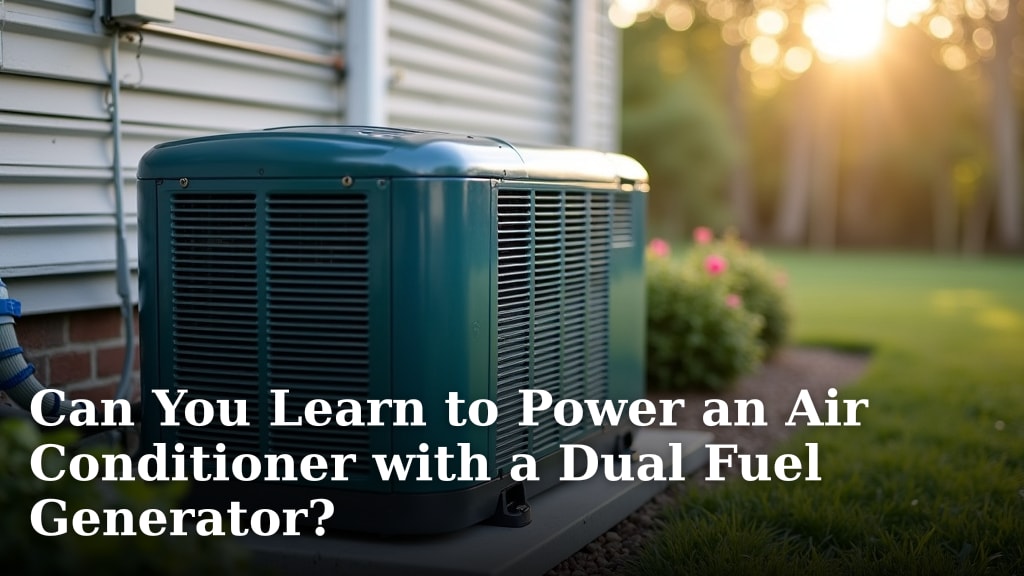
Yes, you absolutely can learn to power an air conditioner with a dual fuel generator, but it requires careful planning. Understanding your AC unit’s power needs and the generator’s output capacity is key to making this work safely and efficiently.
Many homeowners are looking for reliable backup power solutions for their cooling systems. Dual fuel generators offer flexibility by running on either gasoline or propane. This makes them a popular choice for powering essential appliances like your air conditioner during an outage.
- You can power an AC with a dual fuel generator.
- Calculate your AC’s wattage needs.
- Ensure your generator has enough running and starting watts.
- Consider fuel type and runtime.
- Safety first when connecting.
Below, we break down exactly what you need to know to successfully power your air conditioner with a dual fuel generator.
Powering Your Air Conditioner with a Dual Fuel Generator: What You Need to Know
Yes, you can absolutely power an air conditioner with a dual fuel generator. It’s a smart way to stay cool during power outages. But it’s not as simple as just plugging it in. You need to understand a few key things first. Think of it like picking the right battery for your phone. You wouldn’t use a tiny one for a gaming session, right?
We’ve researched this extensively. Many homeowners face the same questions about generator compatibility with their AC units. The good news is, with a little planning, it’s very achievable. We’ll guide you through the steps. You’ll be able to make an informed decision about powering your AC.
Understanding Your Air Conditioner’s Power Needs
Your air conditioner is likely the biggest power-hungry appliance in your home. It needs a lot of electricity to start up and keep running. This is especially true for central air conditioning units. Window units also use a good chunk of power.
Running Watts vs. Starting Watts: The Big Difference
Air conditioners have two main power requirements. These are running watts and starting watts. Running watts are the power your AC uses continuously to operate. Starting watts, also known as surge watts, are much higher. They are needed for a brief moment when the compressor kicks in.
Think of it like a car. It needs a burst of energy to get the engine started. Then, it uses less energy to keep moving. Your AC’s compressor is the part that needs that big initial jolt. This surge can be 2 to 3 times higher than its running wattage. Always check your AC’s nameplate. It’s usually on the side or back of the unit.
Finding Your AC’s Wattage Specifications
Locating your AC’s wattage information is straightforward. You’ll find a specifications plate or label on the unit itself. This plate details the voltage (V), amperage (A), and wattage (W) requirements. You might need a flashlight to see it clearly.
If you can’t find the plate, check your owner’s manual. If that’s missing, a quick online search for your AC model number should provide the specs. Many manufacturers list these details on their websites. Knowing these numbers is critical for generator selection.
For example, a typical 15,000 BTU portable air conditioner might have running watts around 1,500W. Its starting watts could jump to 3,000W or even higher. A central AC unit would require significantly more power. It’s always better to overestimate slightly to be safe.
Generator Output Capacity: Matching Your AC’s Demands
Now, let’s talk about the generator. Dual fuel generators are great because they offer flexibility. You can use gasoline or propane. Propane often burns cleaner and can be easier to store for long periods. Gasoline is readily available but can degrade over time. Understanding fuel type and runtime is important, and our guide explains which is better, propane or gasoline, for a dual fuel generator.
What Are Running Watts and Starting Watts on a Generator?
Generators are rated by their maximum output. This is usually listed as starting watts and running watts. The running watts, or rated watts, are the continuous power the generator can produce. The starting watts, or surge watts, is the extra power it can provide for a short time.
You need to match your AC’s starting wattage needs to your generator’s starting wattage capacity. You also need to ensure the generator’s running watts can handle your AC’s continuous power draw. Plus, remember other essential items you might want to power simultaneously.
Calculating Required Generator Wattage
Here’s a simple formula to help you figure out the generator size you need:
- Find your AC’s running watts.
- Find your AC’s starting watts. This is usually the highest number.
- Add the running watts of any other devices you want to run at the same time.
The total starting watts needed will be your AC’s starting watts plus the running watts of other appliances. The total running watts needed will be your AC’s running watts plus the running watts of other appliances.
We found that a common mistake is only considering running watts. This will lead to an overloaded generator. It might shut down or even be damaged. Always prioritize the starting watts requirement. This is the most common reason for incompatibility.
Choosing the Right Generator Size for Your AC
A good rule of thumb is to have a generator that provides at least 20-25% more starting watts than your AC requires. This buffer ensures the generator isn’t constantly running at its absolute limit. It also allows for minor fluctuations in power draw.
For example, if your AC needs 3,000 starting watts, aim for a generator with at least 3,750 starting watts (3,000 x 1.25). For running watts, if your AC needs 1,500W and you want to run a few lights and a fan (say, 200W combined), you’d need at least 1,700 running watts (1,500 + 200). So, look for a generator with 1,700+ running watts and 3,750+ starting watts.
Here’s a quick look at generator sizes and typical uses:
| Generator Size (Running Watts) | Typical Use |
|---|---|
| 1,000 – 2,000 Watts | Small electronics, lights, fans, power tools |
| 3,000 – 4,000 Watts | Refrigerators, microwaves, small AC units, sump pumps |
| 5,000 – 7,500 Watts | Larger AC units, multiple appliances, home essentials |
| 10,000+ Watts | Whole-house power, large central AC units, multiple high-draw appliances |
Fuel Considerations for Dual Fuel Generators
The dual fuel capability is a major advantage. It means you can switch between gasoline and propane. This gives you options depending on what’s available or what you have on hand.
Propane vs. Gasoline: Which is Better for Your AC?
Propane tends to burn cleaner. This can mean less maintenance for your generator over time. It also stores very well. You can buy propane tanks in various sizes. A standard 20-pound propane tank (like those used for grills) can power many generators for several hours.
Gasoline is widely available. However, it can go bad if stored for too long. You need to use fuel stabilizers to keep it fresh. When running a generator, propane often provides slightly less power than gasoline. But for most AC applications, the difference is usually negligible. Many experts suggest propane for long-term storage and reliability.
Calculating Runtime and Fuel Needs
The runtime of a generator depends on its fuel tank size, fuel type, and the load it’s carrying. A generator will run longer on a lower load. Running your AC will consume a significant amount of fuel.
Manufacturers usually provide runtime estimates at different load levels. For example, a 3,500-watt generator might run for 10 hours at a 50% load on a full tank of gasoline. On propane, it might run for 8 hours on a 20-pound tank at 50% load. Always check these specifications carefully.
To estimate your needs, divide the generator’s fuel tank capacity (or propane tank size) by the fuel consumption rate at your expected load. This will give you a rough idea of how long it will run. Having extra fuel on hand is always a smart idea during an extended outage. Stocking up on both gasoline and propane tanks can give you maximum flexibility.
Safety First: Connecting Your AC to the Generator
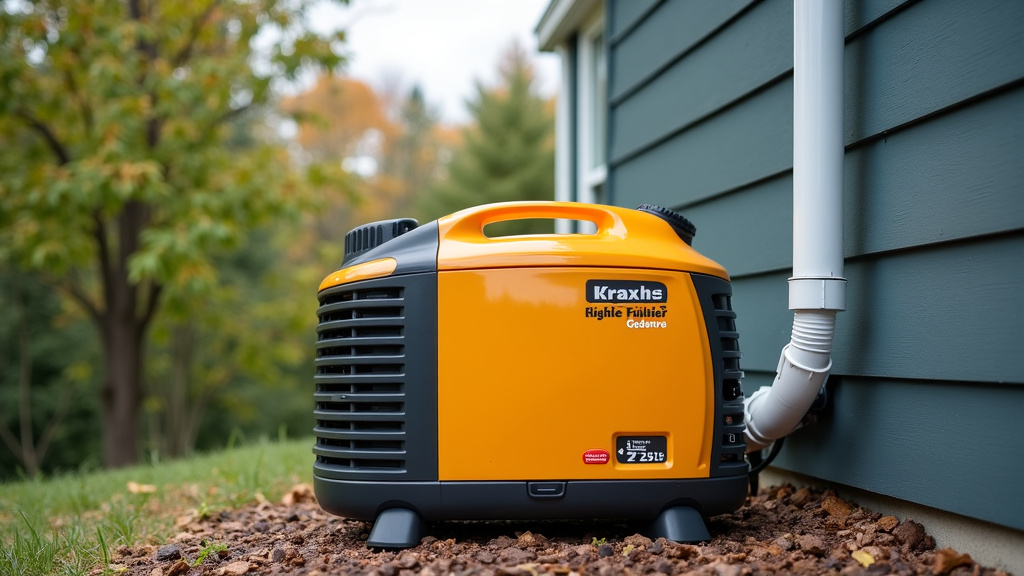
This is perhaps the most important part. Safety must be your top priority. Improper connections can damage your appliances or generator, or worse, pose a risk to life.
Using Extension Cords Wisely
You’ll likely need a heavy-duty extension cord to connect your AC to the generator. Not just any cord will do. You need a cord that is rated for the amperage and wattage your AC requires. Look for cords labeled 12-gauge or thicker (lower gauge numbers mean thicker wires).
A thin, cheap extension cord can overheat. It can melt, cause a fire hazard, or even damage your AC. The cord should also be rated for outdoor use if the generator is outside. Keep the cord as short as possible to minimize voltage drop. Avoid running it through doorways or windows where it could be pinched.
The Importance of Grounding
Grounding is a vital safety feature. It provides a path for stray electrical current to flow into the earth. This helps prevent electrical shock. Most generators have a grounding terminal. You should connect this terminal to a grounding rod driven into the ground.
Consult your generator’s manual for specific grounding instructions. Many experts stress that proper grounding is non-negotiable. This is especially true when connecting appliances like air conditioners. Don’t skip this step. Your safety depends on it.
Never Connect Directly to Your Home’s Electrical Panel Without a Transfer Switch
Connecting a generator directly to your home’s wiring or outlet can be extremely dangerous. It can cause backfeeding, which sends electricity back into the utility grid. This is a serious safety hazard for utility workers trying to restore power. It can also damage your generator and home wiring.
For safe and code-compliant generator hookup to your home’s electrical system, you need a transfer switch. This device safely disconnects your home from the utility grid before connecting it to the generator. There are manual and automatic transfer switches. For powering a specific appliance like an AC, a heavy-duty extension cord from the generator directly to the AC unit is often the simplest method, provided you use the correct cord and follow safety guidelines.
Checklist for Powering Your AC with a Dual Fuel Generator
Ready to get started? Here’s a quick checklist to ensure you’re on the right track:
- Verify AC Wattage: Find both running and starting watts on the unit’s label or manual.
- Calculate Generator Needs: Add AC watts to other desired appliances, prioritizing starting watts.
- Choose a Generator: Select a dual fuel generator with sufficient running and starting wattage.
- Inspect Fuel Options: Ensure you have enough gasoline or propane (or both!).
- Get the Right Cord: Purchase a heavy-duty, outdoor-rated extension cord (12-gauge or thicker).
- Prioritize Safety: Understand grounding requirements and never backfeed the grid.
Conclusion
You’ve learned that powering your air conditioner with a dual fuel generator is definitely achievable with the right preparation. The key lies in understanding your AC’s specific running and starting wattage needs and matching them to your generator’s output. We found that by carefully calculating these requirements and considering fuel options like propane or gasoline, you can ensure a reliable cooling solution during outages. Always prioritize safety by using the correct extension cords and proper grounding. Your next step should be to check your AC unit’s label and start comparing generator specifications to find the best fit for your home’s comfort.
Frequently Asked Questions
How much bigger does my generator need to be than my AC’s wattage?
We recommend a generator that offers at least 20-25% more starting watts than your AC unit requires. This buffer helps prevent the generator from being overloaded and ensures it can handle the initial surge. Always check both running and starting watt requirements.
Can I run my central air conditioner with a portable dual fuel generator?
It depends on the size of your central AC unit. Most portable dual fuel generators, typically in the 3,000-7,500 running watt range, can power smaller central AC units. Larger central AC systems often require significantly more power, potentially necessitating a whole-house generator.
What’s the difference between running watts and starting watts for an AC?
Running watts are the continuous power your air conditioner needs to operate. Starting watts, also known as surge watts, are the much higher power burst needed for a few seconds when the compressor kicks on. The starting watts are typically 2 to 3 times higher than the running watts.
Is propane or gasoline better for running an AC on a dual fuel generator?
Both fuels work, but propane often offers advantages for long-term storage and cleaner burning, which can mean less generator maintenance. Gasoline is readily available but can degrade over time and requires stabilizers. For most AC applications, the power output difference is usually minor.
Can I just use a regular outdoor extension cord to connect my AC to the generator?
No, not just any cord will do. You need a heavy-duty, outdoor-rated extension cord that is at least 12-gauge (or lower gauge for thicker wire) and rated for the amperage and wattage your AC unit requires. Using an inadequate cord can lead to overheating, fire hazards, or damage to your AC.
