
Can You Learn to Choose Propane Tank Size for a Generator?
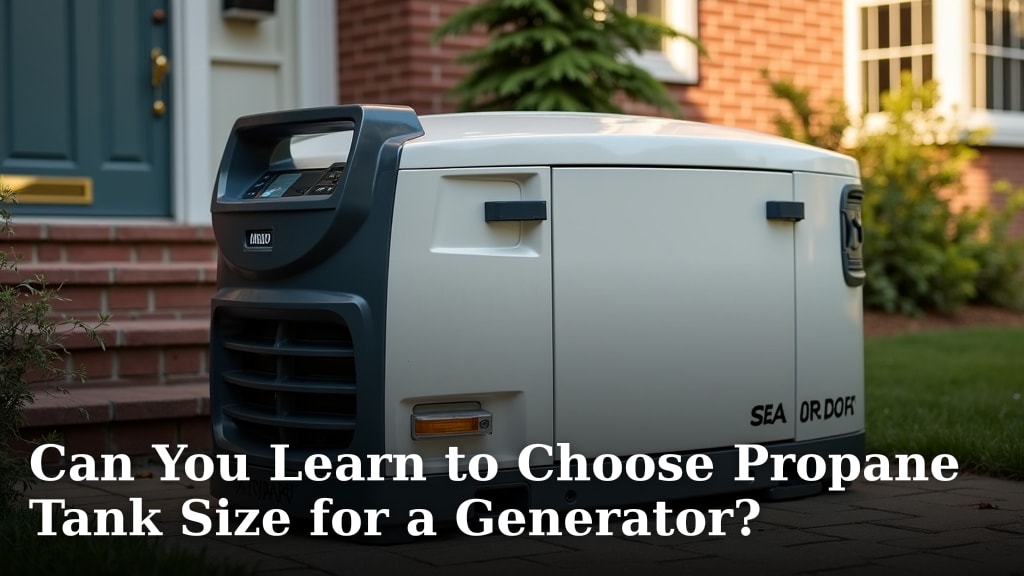
Yes, you absolutely can learn to choose the right propane tank size for your generator. It all comes down to understanding your generator’s fuel consumption and your power needs. Getting this right means you’ll have the power you need for as long as you need it, without running out unexpectedly. Don’t worry, it’s not rocket science!
Many homeowners find themselves wondering about propane tank sizing, especially when preparing for potential power outages. It’s a smart move to get ahead of the curve and understand how much fuel you’ll need. Choosing the correct tank size ensures your generator runs efficiently and safely, preventing costly mistakes or frustrating shortages during critical times.
- Understand your generator’s fuel needs.
- Calculate how long you need power.
- Match tank size to your usage.
- Don’t forget safety regulations.
Let’s walk through exactly how to figure out the best propane tank size for your generator. We’ll break it down so you can make an informed decision with confidence.
Figuring Out Your Generator’s Propane Needs
You’re thinking about propane for your generator, and that’s a smart choice. Propane offers a clean-burning fuel source. It’s also widely available and easy to store. But how much do you actually need? We’ll help you You’re thinking about propane for your generator, and that’s a smart choice. Learn what is a dual fuel generator and how it works.figure out the right propane tank size.
Understanding Your Generator’s Fuel Consumption
The first step is to know how much propane your generator uses. This is often measured in gallons per hour (GPH). You can usually find this information in your generator’s owner’s manual. Look for specifications related to fuel consumption at different load levels. You might see figures for 25%, 50%, 75%, or 100% load.
Why are load levels important? Because your generator doesn’t use the same amount of fuel all the time. When you’re running just a few lights and charging your phone, it’s at a low load. When you’re powering your refrigerator, microwave, and maybe a few other appliances, it’s at a higher load. Generators are most efficient when running at about 50% to 75% capacity.
Where to Find Fuel Consumption Data
Your owner’s manual is the best place to start. If you can’t find it, search online for your generator’s make and model number. Many manufacturers provide downloadable manuals on their websites. You might also find this information on the generator’s data plate, which is usually attached to the unit itself. We found that sometimes the labels can be a bit faded, so a manual is often clearer.
What if you have a portable generator that runs on both gasoline and propane? The fuel consumption for propane will be different from gasoline. Make sure you’re looking at the The fuel consumption for propane will be different from gasoline. Our guide helps you choose between propane or gasoline for your dual fuel generator.propane-specific GPH. This is a common point of confusion for many.
Estimating Consumption for Different Loads
Let’s say your manual states your generator uses 0.5 GPH at 50% load and 0.9 GPH at 100% load. This gives you a range. If you plan to run mostly essential items, you might operate at the lower end. If you’re powering more appliances, you’ll be closer to the higher end. It’s wise to plan for the higher consumption to be safe. This avoids running out of fuel when you need it most.
Calculating Your Power Run Time Needs
Now that you have an idea of how much fuel your generator uses, you need to think about how long you’ll need it to run. This depends on your situation. Are you preparing for a hurricane? Or just a short power flicker? Think about the essential appliances you’ll need to keep running.
Make a list of what’s most important. This could include your refrigerator, freezer, sump pump, lights, medical equipment, or even your internet router. Some items, like a refrigerator, cycle on and off. Others, like a medical device, may need continuous power. Estimating run time helps you avoid guesswork.
A Simple Run Time Formula
You can use a simple formula to estimate your required run time. It’s: Total Gallons Needed = Generator GPH × Desired Run Time (in hours).
For example, if your generator uses 0.7 GPH and you want it to run for 24 hours, you’ll need 0.7 GPH × 24 hours = 16.8 gallons of propane. This is a good starting point. Remember, this calculation assumes a constant load. Your actual usage might vary.
Considering Fuel-Efficient Appliances
If you’re running a lot of appliances, consider their energy use. Some appliances are more efficient than others. For instance, a newer LED TV uses far less power than an older, large CRT television. Running your appliances smartly can significantly reduce your generator’s fuel consumption. This means you might be able to get by with a smaller tank than you initially thought.
Matching Propane Tank Size to Your Needs
Propane tanks come in various sizes, and understanding these options is key. For generators, you’ll most commonly see portable tanks and larger, stationary tanks. The size is measured in gallons or pounds. Knowing the capacity helps you make the right choice for your generator.
Common Propane Tank Sizes and Types
Portable propane tanks are familiar to most people. These are the ones you might use for a barbecue grill. They typically range from 20 pounds to 100 pounds. A 20-pound tank is about the size of a standard grill tank. A 100-pound tank is much larger and heavier.
Larger tanks, often called stationary or ASME tanks, are much bigger. These can hold hundreds or even thousands of gallons. They are typically installed permanently on your property. For most home backup generators, a 100-pound portable tank or a smaller stationary tank (like 250-500 gallons) is common. We found that for intermittent use, 100-pound tanks are very popular.
Understanding Tank Capacity: Pounds vs. Gallons
Propane tank capacity is often listed in pounds (lbs), especially for portable tanks. However, generators are often rated for fuel consumption in gallons per hour. You need to convert these units. Approximately 4.2 pounds of propane equals one gallon.
So, a 20-pound tank holds roughly 4.76 gallons (20 lbs / 4.2 lbs/gallon). A 100-pound tank holds about 23.8 gallons (100 lbs / 4.2 lbs/gallon). Keep this conversion in mind when comparing tank sizes to your generator’s GPH rating.
How to Choose the Right Size Tank
Here’s where we put it all together. You’ve figured out your generator’s GPH and how long you need power. Now, let’s match that to a tank size.
Example Scenario: Let’s say your generator uses 0.7 GPH at 75% load. You want to run it for 48 hours during an outage. Total fuel needed = 0.7 GPH × 48 hours = 33.6 gallons.
Now, convert this to pounds: 33.6 gallons × 4.2 lbs/gallon = approximately 141 pounds of propane.
With this information, you know you’d need more than a single 100-pound tank (which holds about 24 gallons or 100 lbs). You might consider two 100-pound tanks, or a larger stationary tank. It’s always good to have a little extra fuel on hand.
Factors Influencing Your Decision
Consider your typical power outage duration. If outages in your area are usually brief, a smaller tank might suffice. If they tend to be prolonged, you’ll need a larger capacity. Also, think about storage. Do you have space for a large stationary tank? Or are you limited to portable tanks? Your local regulations might also dictate tank size and placement.
Another factor is convenience. Swapping out 20-pound tanks is easy but requires frequent changes. Maneuvering a 100-pound tank is more work. Larger tanks mean fewer refills. Many people opt for a 100-pound tank as a good balance for portability and capacity. Some even have two 100-pound tanks hooked up in parallel to extend run time. This is a practical solution we see often.
Tank Sizing Table for Quick Reference
Here’s a quick table to help you visualize. Remember, these are approximate capacities.
| Tank Size (Pounds) | Approximate Gallons | Approximate Run Time (Hours) for a 0.5 GPH Generator |
|---|---|---|
| 20 lbs | 4.76 gal | ~9.5 hours |
| 30 lbs | 7.14 gal | ~14.3 hours |
| 60 lbs | 14.28 gal | ~28.5 hours |
| 100 lbs | 23.8 gal | ~47.6 hours |
| 250 gal (Stationary) | 250 gal | ~500 hours |
This table shows how much longer a generator can run on different tank sizes at a consistent fuel burn rate. Adjust the “Run Time” column based on your generator’s specific GPH. We found this table really helps make the numbers click.
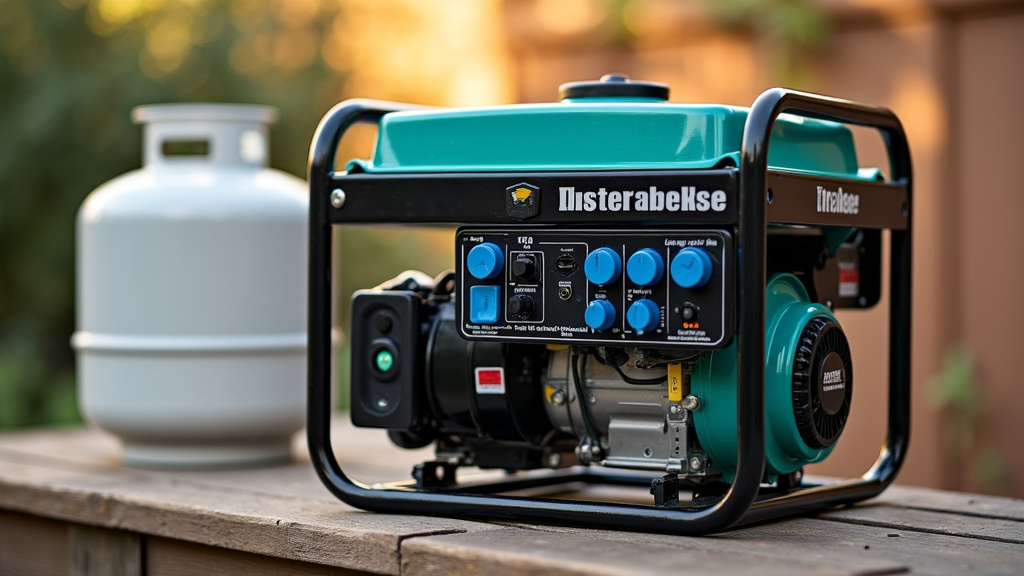
Ensuring Safe and Proper Propane Use
Safety is non-negotiable when dealing with propane. Understanding how to connect, store, and use propane tanks correctly is as important as choosing the right size. Improper handling can lead to serious accidents.
Safe Connection and Handling Practices
Always ensure your generator is turned off and cool before connecting or disconnecting propane tanks. Use the correct hoses and regulators specified for your generator and tank. Check connections for leaks using a soapy water solution. If you see bubbles, you have a leak and should disconnect immediately and seek professional help.
When moving tanks, especially the heavier 100-pound ones, use a dolly or cart. Never roll propane tanks. Always keep them upright. Tanks should be stored in a well-ventilated area, away from ignition sources like open flames or sparks. It’s also a good idea to keep spare tanks outdoors and away from your home.
Understanding Regulator and Hose Requirements
Generators that run on propane often require a specific regulator to reduce the high pressure of the propane tank to a usable pressure for the generator’s engine. Check your generator’s manual for the correct regulator type and pressure setting. Using the wrong regulator can damage your generator or create a safety hazard.
Hoses need to be specifically designed for propane use and rated for the required pressure. Inspect hoses regularly for cracks, abrasions, or damage. Replace them immediately if any wear is visible. Many experts recommend replacing propane hoses every five years, even if they look okay, as the material can degrade over time (Consumer Product Safety Commission).
When to Call a Professional
While many tasks, like connecting a portable tank, are straightforward, there are times when you should call in the experts. If you are installing a larger, stationary tank, this is a job for a licensed propane dealer. They have the knowledge and equipment to ensure the installation meets all safety codes and regulations.
Also, if you suspect any leaks that you can’t easily fix, or if your generator is not running correctly on propane, don’t hesitate to seek professional advice. A qualified technician can diagnose and repair issues, ensuring your generator operates safely and efficiently. It’s better to be safe than sorry, especially when dealing with flammable gas.
Your Propane Tank Sizing Checklist
To wrap up, here’s a quick checklist to guide your decision:
- 1. Find your generator’s propane GPH rating in the manual.
- 2. List your essential appliances and estimate run time needed.
- 3. Calculate total gallons and pounds of propane required.
- 4. Research available tank sizes (pounds vs. gallons).
- 5. Consider storage space and local safety regulations.
- 6. Choose a tank size that meets your needs with a buffer.
Conclusion
You’ve learned that choosing the right propane tank size for your generator is definitely within your reach. It boils down to understanding your generator’s fuel use and planning your power needs. By looking at your generator’s GPH and estimating your required run time, you can confidently select a tank size. Remember to convert between pounds and gallons and always prioritize safety when handling propane. With this knowledge, you’re prepared to keep your essential appliances running when you need them most. Your next step is to gather your generator’s manual and start calculating!
Frequently Asked Questions
How do I know if my generator can even run on propane?
Check your generator’s model number and consult its owner’s manual. The manual will clearly state if the generator is designed to run on propane (often listed as “LPG” or “Liquefied Petroleum Gas”) and provide its specific fuel consumption rates for propane.
What’s the difference between a 20-pound and a 100-pound propane tank?
A 20-pound propane tank is like a standard BBQ grill tank and holds about 4.76 gallons. A 100-pound tank is much larger, holding about 23.8 gallons, offering significantly longer run times before needing a refill.
Do I need a special regulator for my generator?
Yes, most propane generators require a specific regulator to reduce the tank’s high pressure to the correct level for the generator’s engine. Always refer to your generator’s manual for the exact regulator type and pressure settings recommended by the manufacturer.
Can I connect multiple 100-pound propane tanks to my generator?
You can connect multiple 100-pound tanks, often using a Y-fitting or a dual-tank regulator system. This setup allows you to extend your generator’s run time considerably without needing to swap tanks as frequently.
How often should I inspect my propane hoses and connections?
You should visually inspect your propane hoses and connections before each use for any signs of wear, cracks, or damage. It’s also a good practice to replace propane hoses every five years, as recommended by safety guidelines, even if they appear undamaged.
