9 Best Standby Generators for Whole Home Backup (November 2026)
The best standby generators for home use include the WEN for smaller emergency loads, the Westinghouse 14500 Peak Watt Tri-Fuel Home Backup for fuel flexibility, and the Jackery Solar Generator 1000 v2 and 200W for quiet essential backup.
On this page (8 sections)
- How we chose the best standby generators for home use
- The best standby generators for home use
- How many watts do you need for whole-home backup?
- Is tri-fuel worth choosing for a home generator?
- Portable or battery backup for a home outage?
- What should you check before installing home backup power?
- Best standby generators for home use: final choices
- For outage-focused fuel planning, continue with the Best Dual Fuel Generator For Home Backup For Power Outages. RV owners may also want the Best Dual Fuel Generator For RV Use For Whole House Backup.
The best standby generators for home use are high-output systems with transfer-switch readiness, but the right choice depends on whether you need automatic operation, portable flexibility or quiet essential backup. We compared permanently installed standby-style needs with portable fuel generators and battery power stations.
For the largest household loads, the Westinghouse 28000 Peak Watt Home Backup Portable offers the most output here. The Westinghouse 14500 Peak Watt Tri-Fuel Home Backup is a more balanced choice for fuel flexibility, while the Jackery suits smaller loads without engine noise.
If you want a dual-fuel option, compare this guide with the Best Dual Fuel Generator For Whole House Backup. For a home backup setup focused on outages, see the Best Dual Fuel Generator For Home Backup For Whole House Backup.
Our picks at a glance
-
1

-
2
 Best for fuel flexibility
Westinghouse 14500 Peak Watt Tri-Fuel Home Backup
9.7/10 our score
See it on Amazon -
3
 Best for quiet essential backup
Jackery Solar Generator 1000 v2 and 200W
9.6/10 our score
See it on Amazon
- 4
 Check it
Oxseryn Power Equipment 4400 Watts Inverter Generator
Best for portable inverter value - 5
 Check it
PowerSmart 4000 Watt Portable Inverter Generator
Best for quiet gasoline backup - 6
 Check it
GENMAX 15000W Tri-Fuel Portable Generator
Best for high-output tri-fuel backup - 7
 Check it
Oxseryn 4400-Watts Inverter Generator
Best for simple RV-ready backup - 8
 Best for dual-fuel whole-home outputCheck it
- 9
 Check it
Westinghouse 28000 Peak Watt Home Backup Portable
Best for extreme electrical demand
How we chose the best standby generators for home use
The best standby generators for home use must match your running wattage needs before extra features matter. We checked output, fuel choices, transfer switch readiness, starting methods and portability.
Running watts tell you what can stay on together during an outage. Peak watts cover the short burst when a motor starts.
A unit with strong surge power can still struggle if its running watts are too low. That difference shapes every pick in this guide.
Fuel choice changes daily use. Gasoline is widely available, propane stores cleanly, and natural gas removes refuelling when a suitable connection exists.
Some models use standard outlets for selected loads. Others pair with a transfer switch, inlet or interlock kit.
A permanent standby system is installed outside and wired through approved transfer equipment. These products are portable or battery units, so transfer equipment and installation are often separate.
Automatic operation and whole home coverage depend on the setup as much as the generator. Starting method also matters, as electric, remote and recoil start suit different access needs.
Fuel generators need outdoor use and oil checks, while battery units need recharge planning. Use this guide as a shortlist, then confirm wattage, fuel access and transfer equipment.
| Product | Best for | Fuel | Output | Runtime | Our score |
|---|---|---|---|---|---|
| WEN | smaller emergency loads | Gasoline or propane | 4,750 surge watts | Up to 11 hours at half load | 9.7 |
| Westinghouse 14500 Peak Watt Tri-Fuel Home Backup | fuel flexibility | Gasoline, propane or natural gas | Up to 19 hours at 25% load | 9.7 | |
| Jackery Solar Generator 1000 v2 and 200W | quiet essential backup | 9.6 | |||
| Oxseryn Power Equipment 4400 Watts Inverter Generator | portable inverter value | Gasoline | Up to 14 hours at 25% load | 9.5 | |
| PowerSmart 4000 Watt Portable Inverter Generator | quiet gasoline backup | Gasoline | 9.4 | ||
| GENMAX 15000W Tri-Fuel Portable Generator | high-output tri-fuel backup | 9.4 | |||
| Oxseryn 4400-Watts Inverter Generator | simple RV-ready backup | Gasoline | 3,400 running watts | 9.2 | |
| DuroStar DS13000MX | dual-fuel whole-home output | 8.9 | |||
| Westinghouse 28000 Peak Watt Home Backup Portable | extreme electrical demand | Gasoline | 8.7 |
The best standby generators for home use
The top picks cover different backup plans, from a smaller transfer-switch-ready unit to very high-output portable generators. Read the wattage as a planning tool, not as a promise that every home circuit can run at once.
WEN: Best for smaller emergency loads
- 4,750 surge watts on gasoline
- 3,800 running watts on gasoline
- 120V/240V selector
- Gasoline and propane operation
The WEN DF475T suits buyers who need transfer-switch-ready backup in a smaller portable frame. Its dual-fuel setup gives you gasoline and propane options.
Pros
- Electric start
- 120V/240V operation
- Wheel and handle kit
Cons
- Lower output than the large whole-home picks
- Not a permanently installed standby system
The WEN is the most approachable choice for a smaller home backup plan. Gasoline produces 4,750 surge watts and 3,800 running watts, while propane produces 4,350 surge watts and 3,500 running watts.
That fuel difference is worth planning around. Propane gives you a little less power, but some owners prefer it for storage and handling.
A voltage selector lets you switch between 120V and 240V. That matters when your backup plan uses a transfer switch or a 240V load.
The 4-gallon tank can run up to 11 hours at half load. Runtime will fall as the connected load rises, so lighter loads help it last through the night.
Electric start powers the 224cc 4-stroke OHV engine. The package includes a wheel and handle kit, a 47-inch LPG connection hose, two 120V GFCI outlets, a 30A twist-lock outlet and a 12V DC plug.
At 105.8 lb, it still needs a clear moving path. Choose the WEN for dual-fuel flexibility and selected home circuits, such as essentials, lights, a refrigerator and a sump pump, rather than full central cooling.
Westinghouse 14500 Peak Watt Tri-Fuel Home Backup: Best for fuel flexibility
- 14,500 peak watts
- 11,500 running watts on gasoline
- Gasoline, propane and natural gas
- Remote electric start
This Westinghouse gives home backup buyers three fuel choices and transfer-switch-ready outlets. It is a strong fit when long runtime and broad appliance coverage matter.
Pros
- Tri-fuel operation
- 50A and 30A outlets
- Less than 5% THD
Cons
- 230 lb weight
- Automatic transfer switch sold separately
The Westinghouse 14500 is the strongest all-around choice for households that want high output and three fuel options. On gasoline, it delivers 11,500 running watts and 14,500 peak watts.
That running wattage helps cover several major loads together. You still need to total the running watts, then leave room for motor starting demand.
You can use gasoline, propane or natural gas. The 9.5-gallon gasoline tank supports up to 19 hours at 25% load, and remote electric start adds convenience when the generator is stored in a prepared location.
Runtime changes with load. At 25% load it aims for long overnight use, while heavier loads will use fuel much faster.
Its 50A and 30A outlets can pair with an interlock kit, manual transfer switch or the Westinghouse WATS200 automatic transfer switch. The switch is sold separately, so the full home backup cost includes that equipment and proper installation.
Less than 5% THD is intended for cleaner power to phones, computers and TVs. Copper windings also help the engine run cooler over time.
The 550cc engine uses pressure lubrication and a reusable oil screen. That design supports longer engine life when oil type and change intervals are followed.
At 230 lb, this is portable in the broad sense, but it needs a deliberate storage and operating plan. Choose it when natural gas access or fuel choice matters as much as output.
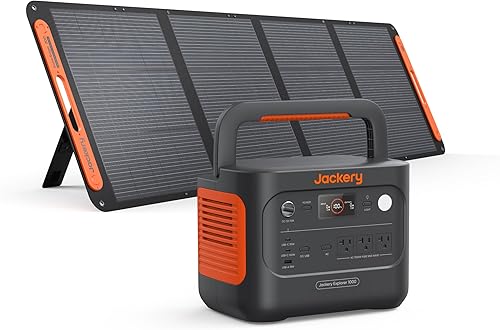
Jackery Solar Generator 1000 v2 and 200W: Best for quiet essential backup
- 1,070Wh capacity
- 1,500W AC output
- 200W solar panel
- LiFePO4 battery
The Jackery is a quiet battery option for phones, lights, small appliances and other essentials. It cannot replace a high-output fuel generator for whole-home loads.
Pros
- Solar charging
- 30 dB quiet charging mode
- Pure sine wave AC ports
Cons
- Much lower output than fuel generators
- Not a whole-house transfer-switch system
The Jackery is best for quiet essential backup rather than whole-house power. Its 1,070Wh battery and 1,500W AC output can support smaller appliances, phones, lights and electronics without gasoline.
Think in terms of essentials, not every circuit in the home. It fits a fridge for limited periods, lighting, charging and small devices when loads are managed.
The included 200W solar panel gives you an off-grid charging option. The battery uses LiFePO4 chemistry and is rated to keep more than 70% of its original capacity after 4,000 charge cycles.
Three pure sine wave AC ports sit alongside 2 USB-C ports, 1 USB-A port and a DC car port. The unit weighs 23.8 lb, so it is easier to move than every fuel generator here.
The Jackery can charge from 0% to 100% in 1 hour with emergency charging enabled in the app. Its normal default is 1.7 hours, while the 200W panel can reach 80% in 6 hours under the stated conditions.
Choose this model for quiet rooms, camping, road trips and small emergency loads. It will not run central air conditioning or a whole house through a transfer switch.
Oxseryn Power Equipment 4400 Watts Inverter Generator: Best for portable inverter value
- 4,400 peak watts
- 3,400 running watts
- ECO mode
- RV-ready port
This Oxseryn fits buyers who want a compact gasoline inverter generator for selected home circuits, camping or RV use. Its 56 lb weight makes movement easier.
Pros
- Low-noise design
- Fuel gauge
- 12V DC port
Cons
- Gasoline only
- 3,400 running watts limits whole-home coverage
The Oxseryn 4400-Watt inverter generator suits buyers who need portable gasoline power for selected home loads, camping or an RV. It produces 4,400 peak watts and 3,400 running watts.
That output class fits essentials and outdoor use. It is not built for central air conditioning plus several large appliances at once.
Its 2-gallon tank can run up to 14 hours at 25% load with ECO mode. A fuel gauge helps you check the tank, while the panel includes 2 120V AC ports, a 12V DC port and an RV port.
ECO mode helps the engine match output to load. Light loads should use less fuel, while heavy loads will shorten runtime.
At 56 lb, it is much easier to position than the high-output whole-home units. You can move it to a campsite, store it in a garage corner or carry it to outdoor work with far less effort.
A 3,400-watt running limit calls for careful load selection, especially when refrigerators, pumps or other motors start. Add running watts first, then allow extra room for starting demand.
Low noise design helps at a campsite or in a neighbourhood outage. Still, it must run outdoors with exhaust directed safely away from living spaces.
Choose this model for portable inverter power and moderate emergency loads. It is not the best match for a home plan that expects central air conditioning and several large appliances together.
PowerSmart 4000 Watt Portable Inverter Generator: Best for quiet gasoline backup
- 4,000 starting watts
- 3,200 running watts
- Under 3% THD
- Parallel-ready design
PowerSmart suits buyers who need clean power for electronics and a portable unit for selected loads. Two compatible generators can be connected with a separate parallel kit.
Pros
- Low THD
- Eco Mode
- USB ports
Cons
- Gasoline only
- Parallel kit sold separately
PowerSmart is a quiet gasoline inverter option for buyers who want cleaner power for electronics. It produces 4,000 starting watts and 3,200 running watts, with THD under 3%.
Clean power matters for laptops, phones and tablets. Inverter output with low THD gives you more confidence for sensitive devices than a basic conventional generator.
The 59 dBA noise level is measured from 23 ft, and Eco Mode can help reduce fuel use during lighter loads. The panel has a 120V 20A duplex outlet, a 120V 30A twist-lock outlet, a 12V DC outlet and 2 USB ports.
A parallel connection can combine two compatible 4000W generators, but the separate parallel kit is not included. Recoil start keeps the design simple, though it does not provide the electric start found on larger home backup models.
PowerSmart fits a smaller outage plan where laptops, phones, lights and selected appliances matter most. Its 50.7 lb weight also makes it practical for camping and storage.
Keep oil checks, fuel storage and outdoor placement part of the routine. Low oil shutdown helps protect the engine if oil runs low.
Choose it for quiet, portable gasoline backup and electronics friendly power. Whole house coverage would need a much larger and higher output model.
GENMAX 15000W Tri-Fuel Portable Generator: Best for high-output tri-fuel backup
- 15,000 peak watts
- 11,000 running watts
- Gasoline, LPG and natural gas
- 50A output
The GENMAX is aimed at households that need high output and three fuel choices. Its 2-wire auto start function and ATS-focused design suit more involved backup setups.
Pros
- High running wattage
- CO sensor
- 120V/240V switching
Cons
- Large and heavy
- Portable rather than permanently installed
The GENMAX is a high-output tri-fuel choice for households that want gasoline, LPG and natural gas. It delivers 11,000 running watts and 15,000 peak watts from a 10.56-gallon tank.
That output suits larger backup plans. It can support major appliances through suitable transfer equipment when loads are added up first.
Starting options include one-button electric start, remote start and recoil start. A 2-wire automatic start and stop function supports more involved backup arrangements, while the panel switches between 120V and 240V.
Multiple starting methods give you backup options. Remote start helps when the unit is in a prepared spot, and recoil start remains available if the battery is flat.
The control panel includes a digital display, battery charging port, DC cigarette-lighter outlet and CO detection. The package includes an automatic start and stop cable, NG and LPG hoses, a rain cover, remote control key and other tools.
The rain cover can help during wet weather, but the generator still needs safe outdoor placement. CO detection adds a safety layer, not a reason to run it in a closed space.
At 242.5 lb, the GENMAX needs a clear location and a safe moving plan. Pick it when high output and three fuel choices are more important than a compact frame.
Fuel planning matters here. Confirm natural gas access, propane storage and gasoline handling before you rely on one source during a long outage.
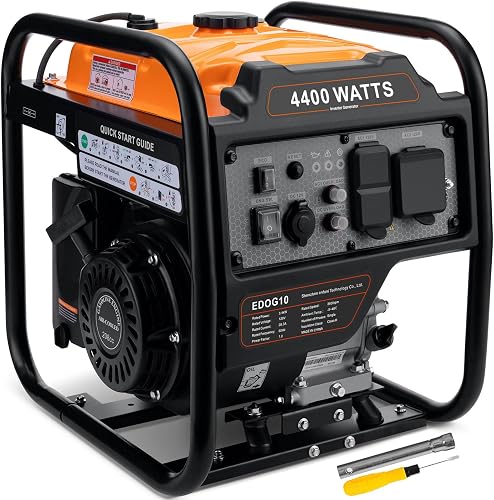
Oxseryn 4400-Watts Inverter Generator: Best for simple RV-ready backup
- 4,400 peak watts
- 3,400 running watts
- 2-gallon tank
- 14-hour runtime at 25% load
This Oxseryn is a practical choice for selected circuits, outdoor power and RV use. It has a 30A RV outlet and inverter technology in a 57 lb frame.
Pros
- ECO mode
- Low-oil shutdown
- Portable frame
Cons
- Gasoline only
- Not sized for every household circuit
This Oxseryn uses the same basic output class as the other 4400-watt Oxseryn pick, with 4,400 peak watts and 3,400 running watts. It is a gasoline inverter generator with a 2-gallon tank and a stated 14-hour runtime at 25% load.
That runtime figure is at light load. Heavier loads will use the 2 gallons faster, so plan refuelling for longer outages.
The unit weighs 57 lb and includes a 30A RV outlet, two 120V AC ports and a 12V DC port. ECO mode, low-oil shutdown, overload protection and cold-start technology support routine operation.
ECO mode can reduce fuel use and noise when demand is low. Low oil shutdown helps protect the engine, while overload protection guards against pushing the unit too far.
Its size makes it suitable for selected home circuits, outdoor use and RV power. The gasoline-only design gives you fewer fuel choices than the WEN, DuroStar or tri-fuel models.
That trade-off is simpler to manage for some owners. You only need to store gasoline, but you lose propane storage benefits and natural gas convenience.
Choose this model when portability and an RV-ready outlet are priorities. Before using it for home backup, decide which circuits stay on and add their running and starting wattage.
Keep the load list short and realistic. A refrigerator, lights, phones and a few small devices fit this class far better than central cooling.
DuroStar DS13000MX: Best for dual-fuel whole-home output
- 13,000 peak watts
- Gasoline and propane
- 50A transfer-switch-ready outlet
- CO alert
The DuroStar DS13000MX gives whole-home buyers high output with gasoline or propane operation. Its 220 lb frame requires a planned storage and operating location.
Pros
- Dual-fuel operation
- 50A outlet
- Electric start
Cons
- Heavy portable unit
- No natural gas option
The DuroStar DS13000MX is a strong dual-fuel option for whole-home backup planning. It delivers 13,000 peak watts and runs on gasoline or propane.
Use 10,500 running watts for load planning. Peak watts help with motor starts, while running watts decide what stays on.
A 50A outlet supports a transfer-switch connection. The front fuel selector, electric start and remote control simplify startup and fuel changes.
The CO alert can shut the unit down when carbon monoxide levels get dangerous. It does not replace outdoor placement away from windows and vents.
The 500cc engine sits in a steel frame with wheels and handles. At 220 lb, it needs a planned moving path and level ground.
This model suits buyers who want more output than the WEN and more fuel flexibility than gasoline-only units. For another comparison, see the guide to the best Champion whole house generator.
Choose gasoline for maximum power or propane for storage and handling. Confirm transfer equipment and fuel supply before an outage.
Westinghouse 28000 Peak Watt Home Backup Portable: Best for extreme electrical demand
- 28,000 peak watts
- 20,000 running watts
- 999cc engine
- 30A and 50A outlets
This Westinghouse is for unusually high home loads and major appliances running together. Its 541.1 lb weight makes it a planned-installation portable unit, not a casual move-around generator.
Pros
- Highest output here
- Transfer-switch ready
- Electric start
Cons
- Very heavy
- Gasoline only
The Westinghouse 28000 is the highest-output choice in this roundup, with 20,000 running watts and 28,000 peak watts. It is designed for major appliances, air conditioning, refrigeration, pumps and home electronics running through suitable transfer equipment.
The gasoline-powered unit uses a 999cc engine and a 17.17-gallon tank. Its 30A and 50A outlets support an interlock kit, manual transfer switch or Westinghouse WATS200 automatic transfer switch, which is sold separately.
A push-button electric start, CO sensor, automatic low-oil shutdown and less than 5% THD add useful operating features. The 541.1 lb weight is the central trade-off.
Plan the location, access and moving equipment before relying on this model.
Choose it only when your calculated load justifies an unusually large portable generator. For a quieter and smaller inverter option, compare the Best Dual Fuel Inverter Generator For Whole House Backup.
How many watts do you need for whole-home backup?
You need enough running watts for appliances running together, plus starting watts for motors and compressors. List refrigerators, pumps, heating, lights and electronics first.
Start with running watts, not peak watts. Running watts are supplied continuously, while peak watts cover only short starting bursts.
Motors draw much more for a few seconds when they start. A refrigerator, well pump or air conditioner needs that extra margin.
Note running watts for each appliance, then add margin for motor-driven items. Separate essentials from nice-to-have loads, as central cooling changes the generator size you need.
A 3,200-watt unit suits selected essentials, not the load of an 11,000-watt or 20,000-watt model. Higher output also means more weight and fuel storage.
Never connect a generator to home wiring with improvised cords. Use a properly sized transfer switch or approved interlock and inlet, ideally checked by a licensed electrician.
Is tri-fuel worth choosing for a home generator?
Tri-fuel is useful when you want gasoline, propane and natural gas as options. The Westinghouse 14500 and GENMAX 15000 offer that flexibility, while dual-fuel models limit you to gasoline and propane.
The benefit is choice when one fuel runs low. You can switch sources instead of waiting for a delivery or a trip to a petrol station.
Fuel availability matters more than the label. Check for a suitable natural gas connection, practical propane storage and safe gasoline storage.
Natural gas is convenient when a connection already exists, as it removes refuelling during an outage. Propane also stores well, and many owners keep a spare tank ready.
Gasoline gives strong power and wide availability, but storage life and safe handling need more attention. Keep the chosen fuel ready and follow the operating instructions.
Switching fuel does not remove the need for ventilation and outdoor placement. Test hoses, connectors and starting method before storm season.
Choose tri-fuel when fuel access varies. Choose dual-fuel or gasoline only when simplicity and a known supply fit your home better.
Portable or battery backup for a home outage?
A portable fuel generator is better for longer, higher-wattage loads, while a battery power station is quieter and easier for smaller essentials. The Jackery is the clear battery choice here, but its 1,500W AC output is far below the largest fuel generators.
Battery power also depends on stored capacity and recharge access. Solar charging can help extend use, but weather and panel conditions affect how quickly the battery replenishes.
A portable fuel generator needs outdoor operation, fuel handling and engine care. A battery unit avoids exhaust during use, but it cannot automatically power a whole home through a transfer switch in the same way a properly installed standby system can.
For indoor use during an outage, the battery unit has a clear advantage. It can run quietly in a living space without carbon monoxide risk from exhaust.
For a refrigerator, pumps or central air, the fuel generator is the stronger tool. It can keep running as long as fuel is supplied and loads stay within its rating.
Many homes use both approaches. A battery station covers phones, lights and small devices, while a fuel generator handles larger motor loads.
Your choice should follow your load list. If essentials are small and quiet matters most, battery backup may be enough for short outages.
What should you check before installing home backup power?
Check your home's total running load, motor-starting demand, transfer equipment, generator location, fuel supply and local electrical requirements. A licensed electrician can help match the generator to the service panel and the circuits you want backed up.
Start with a written load list. Add running watts for every appliance you want together, then allow for motor starting demand on pumps, refrigerators and cooling equipment.
Transfer equipment decides how power reaches those circuits. A transfer switch, interlock kit and inlet must be compatible with the generator outlets and your service panel.
Keep fuel generators outdoors and away from doors, windows and vents. Carbon monoxide can build up indoors, in garages or in partly enclosed spaces even when a door is open.
Placement also affects convenience and safety. The unit needs level ground, clear airflow, protection from weather where suitable, and a safe route for moving fuel and cables.
Leave room for safe operation and maintenance. The 220 lb DuroStar, 230 lb Westinghouse 14500, 242.5 lb GENMAX and 541.1 lb Westinghouse 28000 all need more planning than a 50 lb class inverter generator.
Fuel supply needs the same planning. Decide where gasoline or propane will be stored, how much you will keep, and how you will refuel safely during a long outage.
Do a dry run before you need it. Test starting, outlets, transfer equipment and your load list in calm weather so problems appear before a storm does.
Best standby generators for home use: final choices
Choose the Westinghouse 14500 if you want high output with gasoline, propane and natural gas. Choose the GENMAX 15000 when high output, remote starting and 2-wire automatic start support matter.
Pick the WEN for smaller transfer-switch-ready backup, the Jackery for quiet essential power, or the DuroStar DS13000MX for dual-fuel whole-home planning. Choose the Westinghouse 28000 only when your calculated electrical demand justifies its size and weight.
For outage-focused fuel planning, continue with the Best Dual Fuel Generator For Home Backup For Power Outages. RV owners may also want the Best Dual Fuel Generator For RV Use For Whole House Backup.
Our top 3 picks at a glance
-
1
-
2
Best for fuel flexibility
Westinghouse 14500 Peak Watt Tri-Fuel Home Backup
9.7/10 our score
See it on Amazon -
3
Best for quiet essential backup
Jackery Solar Generator 1000 v2 and 200W
9.6/10 our score
See it on Amazon
Frequently asked questions
What are the best standby generators for home use?
The best standby generators for home use depend on your required running watts and fuel source. The Westinghouse 14500 and GENMAX 15000 offer high output with tri-fuel operation, while the DuroStar DS13000MX offers dual-fuel backup.
A battery power station fits smaller essential loads.
What size generator can power a whole house?
A whole-house generator may need several thousand watts or more, depending on your heating, cooling, water pump and kitchen loads. Add the running watts of the appliances you want together, then account for motor-starting demand.
A licensed electrician can size the transfer equipment.
Are portable generators the same as standby generators?
No. A permanently installed standby generator normally connects to a transfer switch and starts automatically when utility power fails.
The products in this roundup are portable or battery units, so placement, connection and starting steps still matter.
Is tri-fuel better than dual-fuel for home backup?
Tri-fuel gives you gasoline, propane and natural gas choices, while dual-fuel uses gasoline and propane. Natural gas can be useful when a suitable supply is available, but gasoline and propane may be easier in some locations.
Choose the fuel options you can store or connect safely.


