
What Is a Generator Interlock Kit Needed for Safe Operation?
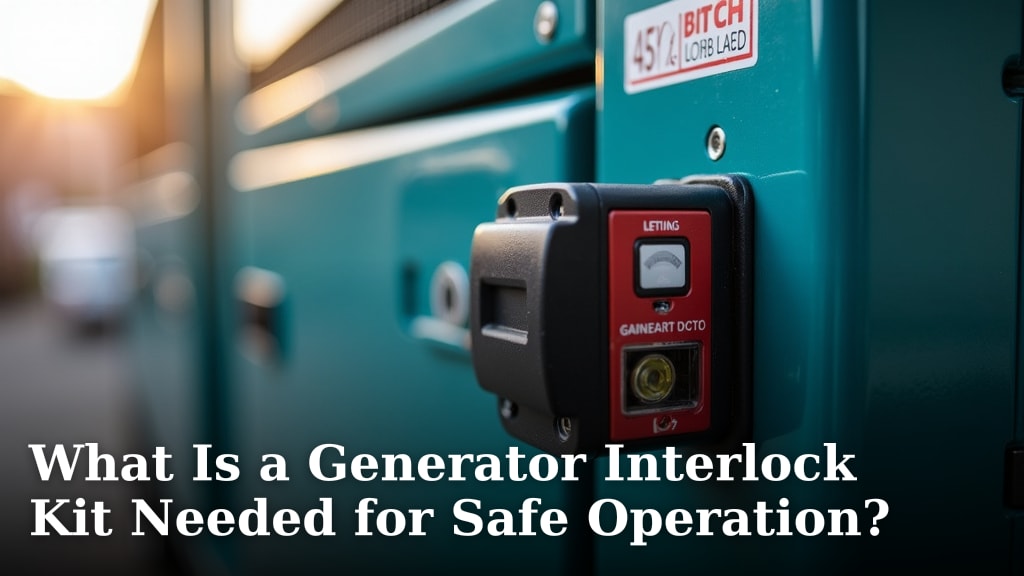
A generator interlock kit is absolutely needed for safe operation when connecting a portable generator to your home’s electrical system. It prevents dangerous backfeeding, which protects utility workers. This vital safety device ensures you can only use utility power or generator power, never both at the same time.
Without a generator interlock kit, you risk sending electricity back into the power grid. This “backfeeding” is extremely hazardous, potentially electrocuting utility line workers repairing outages. We found that proper installation is key to safeguarding your home and community during a power outage.
- Generator interlock kits prevent dangerous backfeeding into the power grid.
- They ensure only one power source (utility or generator) is active at a time.
- Installation is crucial for safety and protecting utility workers.
- Interlocks are a code-compliant way to connect a portable generator.
Let’s walk through why a generator interlock kit is so important and how it keeps everyone safe when your power goes out.
Why a Generator Interlock Kit is Essential for Safe Operation
You might be wondering, “Do I really need one of these?” The answer is a resounding yes. A generator interlock kit is a mechanical device that prevents you from energizing your home’s electrical panel with two different power sources at the same time. It’s a simple, yet incredibly effective safety measure.
Think of it like a traffic cop for your electricity. It makes sure only one lane of power is open at any given moment. This prevents dangerous situations that could put you, your family, and even utility workers at risk.
Understanding the Dangers of Backfeeding
Backfeeding is the main reason why interlock kits are so critical. This happens when your generator sends electricity beyond your home and back into the main power grid. Why is this such a big deal? Let’s break it down.
The Threat to Utility Workers
Imagine a power outage in your neighborhood. Linemen are out there, sometimes in terrible weather, trying to restore power. They assume the lines are dead and safe to work on. If your generator is backfeeding, those lines can become live, creating an invisible and deadly hazard. We found that hundreds of injuries and even fatalities have occurred due to backfeeding incidents (Electrical Safety Foundation International).
You might think, “I’d never do that on purpose!” And you’re right. But accidents happen, and a forgotten switch or a wiring mistake can have tragic consequences. An interlock kit takes that human error out of the equation, ensuring that power cannot flow in the wrong direction.
Risks to Your Home and Appliances
Beyond the grid, backfeeding can also cause severe damage within your home. If utility power is restored while your generator is still connected and backfeeding, the two power sources can collide. This can result in a massive surge of electricity, frying your appliances, damaging your home’s wiring, and even causing electrical fires. It’s like trying to force two rivers to flow into each other head-on.
Protecting your expensive electronics and keeping your home safe from fire hazards are certainly good reasons to consider an interlock kit. It’s an investment in both safety and peace of mind.
How a Generator Interlock Kit Works
The beauty of a generator interlock kit lies in its straightforward design. It’s typically a metal plate or a sliding mechanism that attaches to your main electrical panel. Its job is to physically prevent you from turning on your main utility breaker and your generator breaker simultaneously.
When you want to use your generator, you first turn off the main utility breaker. This action slides the interlock plate into a position that then allows you to turn on your generator’s breaker. Conversely, if your generator is running, the interlock kit prevents you from turning the main utility breaker back on until the generator breaker is off. It’s a foolproof mechanical lockout.
- You turn off the main utility breaker.
- The interlock kit moves, allowing access to the generator breaker.
- You turn on the generator breaker.
- Your home is powered by the generator.
- When utility power returns, you turn off the generator breaker.
- The interlock kit moves back, allowing access to the main utility breaker.
- You turn on the main utility breaker.
This sequential operation ensures that there is always a clear separation between the two power sources. It’s a simple, yet highly effective safety system.
Code Compliance and Legal Requirements
Beyond the safety aspect, generator interlock kits are often a legal requirement. Many local and national electrical codes, including the National Electrical Code (NEC), mandate the use of an approved transfer switch or interlock device when connecting a generator to your home’s wiring. We found that the NEC Article 702 covers optional standby systems, clearly stating these requirements.
Ignoring these codes can lead to several problems. You might face fines, have your homeowner’s insurance policy voided, or even be held liable for damages or injuries if an incident occurs. Proper installation, following all local regulations, is not just a recommendation; it’s a necessity.
Always check with your local authority having jurisdiction (AHJ) or a licensed electrician to understand the specific codes in your area. They can confirm what type of interlock or transfer switch is required for your setup.
Interlock Kit vs. Transfer Switch: What’s the Difference?
You might hear the terms “interlock kit” and “transfer switch” used, and it’s helpful to know the distinction. Both devices serve the same core purpose: preventing backfeeding. However, they achieve this in slightly different ways and offer varying levels of convenience and cost. To help you decide which option is best for your needs, our guide compares a transfer switch or interlock kit.
| Feature | Generator Interlock Kit | Manual Transfer Switch |
|---|---|---|
| Installation | Installs on existing main electrical panel. | Separate sub-panel installed next to main panel. |
| Cost | Generally less expensive. | More expensive, but offers more features. |
| Circuit Control | Powers entire main panel (after selecting specific circuits). | Powers only pre-selected essential circuits. |
| Convenience | Requires manual flipping of individual breakers. | Dedicated generator breakers for essential circuits. |
| Complexity | Simpler mechanical device. | More complex wiring, often with indicator lights. |
An interlock kit is often the more budget-friendly option, especially for portable generator users who want to power a good portion of their home. A manual transfer switch, while more expensive, offers a dedicated panel for specific circuits, making power management a bit simpler during an outage. For whole-home backup with a standby generator, an automatic transfer switch is common, but that’s a different discussion.
For most portable generator owners, an interlock kit provides a safe and compliant way to connect their generator without the higher cost and complexity of a full transfer switch installation. It’s a pragmatic choice for many households.
The Installation Process: What to Expect
Installing a generator interlock kit is a job for a qualified, licensed electrician. This is not a DIY project. Working with your home’s main electrical panel is extremely dangerous and can lead to severe injury or death if not done correctly. Moreover, improper installation can invalidate warranties and violate electrical codes.
Here’s a general overview of what the electrician will do:
- They will assess your electrical panel to ensure compatibility with an interlock kit.
- The main power to your home will be safely shut off.
- A dedicated generator breaker will be installed in your panel.
- The interlock kit will be mechanically attached to the panel, aligning with your main and generator breakers.
- An inlet box will be installed on the exterior of your home, where you’ll plug in your generator.
- They will then wire the inlet box to the new generator breaker in your panel.
- Finally, the electrician will test the entire system to confirm it works safely and correctly.
It’s a straightforward process for a professional, typically taking a few hours. When it’s done, you’ll have a safe, code-compliant way to use your generator.
Ensuring Safe Generator Operation with an Interlock
Once your interlock kit is installed, operating your generator safely becomes much easier. Here’s a quick checklist to follow:
- Always operate your generator outdoors, far from windows and doors, to prevent carbon monoxide poisoning (CDC).
- Before starting the generator, turn off all major appliances in your home to prevent an overload.
- Ensure the generator is properly grounded according to manufacturer instructions.
- Plug your generator into the external inlet box using a heavy-duty, outdoor-rated generator cord.
- Once connected, flip the necessary breakers in your panel according to the interlock kit’s sequence.
Following these steps, along with the correct interlock operation, ensures that you can power your home safely during an outage. It provides peace of mind, knowing you’ve taken the necessary precautions.
Conclusion
You now understand why a generator interlock kit isn’t just a suggestion; it’s a critical safety device. It stands as your primary defense against the severe risks of backfeeding, protecting utility workers, your home, and your appliances. This simple mechanical solution ensures safe power transitions during an outage, keeping you compliant with electrical codes.
Don’t wait for the next power outage to consider this vital upgrade. Your next step should be to contact a licensed electrician. They can assess your panel, provide a quote, and ensure proper, code-compliant installation for ultimate peace of mind.
Frequently Asked Questions
Can I install a generator interlock kit myself?
No, you should never attempt to install a generator interlock kit yourself. Working with your home’s main electrical panel is extremely dangerous and requires specialized knowledge. Always hire a qualified, licensed electrician to ensure safe and code-compliant installation.
What’s the difference between a generator interlock kit and a regular breaker?
A generator interlock kit is a mechanical device that physically prevents you from turning on two specific breakers at the same time: your main utility breaker and your generator breaker. A regular breaker simply protects a circuit from overcurrent. The interlock’s purpose is purely safety-focused, ensuring only one power source can energize your panel.
Will an interlock kit work with any generator?
An interlock kit itself doesn’t connect directly to your generator. It connects to your electrical panel and works in conjunction with a generator inlet box. As long as your generator has the appropriate power output and connection type for the inlet box, it can power your home through an interlock setup.
How much does it typically cost to have an interlock kit installed?
The cost for an interlock kit and professional installation can vary based on your location and panel type. Generally, you can expect to pay anywhere from a few hundred to over a thousand dollars. This includes the cost of the kit, a generator breaker, the inlet box, wiring, and the electrician’s labor.
Does an interlock kit power my whole house or just specific outlets?
When an interlock kit is installed, it allows your generator to feed power to your entire main electrical panel. This means you can then selectively turn on individual circuit breakers within your panel to power various appliances and lights throughout your home, much like you would with utility power.
