
What Is a Generator Transfer Switch Used For?
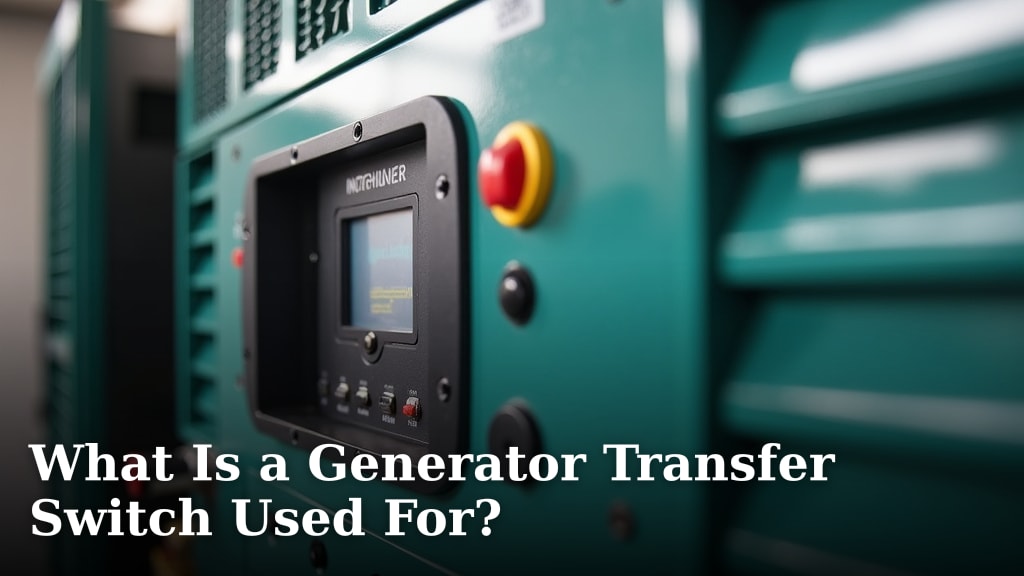
A generator transfer switch is used to safely connect a portable or standby generator to your home’s electrical system. It lets you switch your power source from the utility grid to your generator without any danger. This device makes sure your generator power doesn’t accidentally flow back to the utility lines, protecting utility workers.
When the power goes out, a transfer switch lets you restore electricity quickly to essential circuits. It provides a safe and compliant way to use your generator during outages. We found that most homeowners choose a transfer switch for convenience and peace of mind.
- Safely connects a generator to your home.
- Prevents power from backfeeding the grid.
- Protects utility workers from electrical shock.
- Allows for quick and easy power restoration during outages.
- Is required by electrical codes for permanent generator installations.
Curious how this smart device keeps you safe and powered up? Let’s walk through exactly how a generator transfer switch works and why it’s so important for your home.
Why a Generator Transfer Switch Is Essential for Your Home
A generator transfer switch is not just a convenience; it’s a critical safety device that ensures your home’s backup power system operates correctly and safely. It prevents dangerous electrical situations and protects both your property and utility workers.
Understanding Backfeeding: The Danger You Must Avoid
Have you ever heard of “backfeeding”? It’s a serious hazard that a transfer switch is designed to prevent. When you connect a generator directly to your home’s electrical system without a transfer switch, the power can flow backward onto the utility grid.
Imagine this: utility workers are out in the dark, trying to fix power lines. If your generator is backfeeding, those lines, which they expect to be dead, can suddenly become live. This creates an extremely dangerous situation, potentially leading to severe injury or even death for them.
We found that backfeeding is illegal and highly risky. Electrical codes strictly prohibit it. A transfer switch acts as a barrier, making sure this never happens. It’s truly a matter of life and death, so understanding its role here is vital.
How a Generator Transfer Switch Works: Your Home’s Electrical Guardian
At its core, a transfer switch is a simple yet incredibly important device. Think of it as a gatekeeper for your home’s electricity. It manages which power source — the utility grid or your generator — is connected to your house at any given time.
When the power goes out, the transfer switch disconnects your home from the main utility lines. Then, and only then, does it connect your home to your generator. This mechanical isolation is key to its safety function.
It’s important to remember that you can’t have both sources connected simultaneously. The transfer switch physically separates them, ensuring a safe transition between grid power and generator power. This is why it’s such an essential component of any home generator setup.
Manual vs. Automatic Transfer Switches: Choosing Your Convenience Level
Transfer switches come in two main types: manual and automatic. Each offers different levels of convenience and functionality, helping you decide what’s best for your lifestyle and budget.
- Manual Transfer Switches (MTS): These require you to physically flip a switch to change power sources. When the power goes out, you start your generator, then go to the transfer switch and manually switch from utility to generator power. We found that manual switches are often more affordable and simpler to install.
- Automatic Transfer Switches (ATS): These are much more hands-off. An ATS constantly monitors the utility power. If it detects an outage, it automatically starts your standby generator, waits for it to come up to speed, and then switches your home’s electrical load to the generator. When utility power returns, it switches back and shuts down the generator. This provides seamless, nearly instantaneous power restoration.
Many homeowners prefer automatic switches for their convenience, especially for standby generators. With an ATS, you don’t need to be home to restore power, which can be a huge relief if you travel often or have family members who might struggle with a manual process.
What Circuits Can a Transfer Switch Power? Focus on Your Essentials
When you install a generator transfer switch, you’re not usually powering your entire home. Instead, you’re selecting specific circuits — the ones that run your most important appliances and systems during an outage.
This is where careful planning comes in. You’ll work with an electrician to identify your “essential circuits.” These are the lights, outlets, and appliances you absolutely need to keep running when the grid goes down. Think about what truly matters.
Planning Your Essential Circuits: What to Prioritize
What would you want to keep running during a power outage? We recommend making a list. This helps you and your electrician decide which circuits to connect to your transfer switch. Prioritizing ensures you get the most out of your generator’s capacity.
- Refrigerator/Freezer: To keep food from spoiling. This is often at the top of everyone’s list.
- Well Pump/Water Heater: For access to fresh water and hot showers, especially if you rely on a well.
- Lights: A few key lights in living areas, bedrooms, and bathrooms for visibility and safety.
- HVAC Fan (Furnace/AC): To run the blower fan for heating in winter or air circulation in summer. Note that generators typically won’t power a central AC compressor due to its high power draw.
- Medical Equipment: Any essential life-sustaining devices that require continuous power.
- Internet Modem/Router: To stay connected with the outside world, for news and communication.
- A few Outlets: For charging phones, laptops, or small electronics.
By focusing on these essential circuits, you can often use a smaller, more economical generator. You’re not trying to run everything; you’re keeping your household functional and comfortable.
The Installation Process: What to Expect
Installing a generator transfer switch is not a DIY project for most homeowners. It involves working with high voltage electricity and must comply with strict electrical codes. This is a job for a qualified, licensed electrician.
The electrician will first assess your home’s electrical panel and your generator’s capacity. They’ll help you select the right size and type of transfer switch for your needs. Then, they’ll physically install the switch, wiring it correctly between your main electrical panel and a dedicated inlet box for your generator.
The process ensures that your setup is safe, reliable, and compliant with local regulations (NEC).
Many experts say that attempting to install a transfer switch yourself can lead to serious electrical hazards, damage to your property, or even void your home insurance (Electrical Safety Foundation International).
Benefits Beyond Safety: Convenience and Peace of Mind
While safety is the primary reason for a transfer switch, the benefits extend much further. It brings a level of convenience that makes generator use during an outage far less stressful.
Imagine this scenario: the power goes out late at night. Instead of fumbling in the dark to run extension cords everywhere, an automatic transfer switch means your critical appliances are back online within seconds. With a manual switch, you still have a simple, centralized way to power your home without a tangle of wires.
This translates directly into peace of mind. You know your family will stay warm (or cool), your food won’t spoil, and you’ll have light. It’s a significant upgrade from simply running a few extension cords from your generator.
Legal and Code Compliance: Avoiding Fines and Hazards
We cannot stress this enough: for permanent generator installations and for safely connecting any generator to your home’s wiring, a transfer switch is required by the National Electrical Code (NEC). This isn’t just a suggestion; it’s a legal requirement designed to protect you, your family, and utility workers.
Ignoring this code can lead to several problems. Beyond the safety risks, you could face fines, difficulty with insurance claims, and even potential legal liability if your improper setup causes harm to others. Think of it as a necessary part of responsible homeownership, especially when dealing with electricity.
Choosing the Right Transfer Switch: A Quick Checklist
When it comes to selecting a transfer switch, there are a few key factors to consider. We’ve put together a checklist to guide you, helping you discuss options with your electrician:
- Generator Type: Is it a portable or standby generator? This affects the type of switch you need.
- Generator Size (Wattage): Ensure the transfer switch matches or exceeds your generator’s output.
- Number of Circuits: How many essential circuits do you want to power? (Typically 6-16 circuits for portable generators).
- Manual vs. Automatic: Do you want to manually switch power, or prefer an automatic system?
- Amperage Rating: The switch must match your home’s main electrical panel amperage (e.g., 100A, 200A).
- UL Listing: Always choose a transfer switch that is UL listed, ensuring it meets safety standards.
Comparing Generator Connection Methods
Let’s look at how a transfer switch stacks up against other methods of connecting a generator. This helps illustrate why it’s the preferred and safest choice for homeowners.
| Connection Method | Safety | Convenience | Legal/Code Compliance | Typical Use |
|---|---|---|---|---|
| Transfer Switch | Highest (prevents backfeeding) | High (centralized control, automatic options) | Required by NEC for permanent connections | Powering essential home circuits |
| Extension Cords | Low (fire hazard, tripping risks) | Low (limited devices, messy, indoor/outdoor issues) | No (for home circuits, only direct appliance use) | Very temporary, powering one or two outdoor appliances |
| “Suicide Cord” (Illegal) | Extremely Low (direct backfeeding, electrocution risk) | Seems convenient, but catastrophic potential | Illegal and strictly prohibited by all codes | Never, under any circumstances (extremely dangerous) |
As you can see, the transfer switch is by far the safest and most practical method for powering your home from a generator. Avoid using extension cords for anything more than a single appliance, and absolutely never use a “suicide cord” (a male-to-male extension cord) to backfeed your panel. It is deadly.
Conclusion
You’ve seen how a generator transfer switch is far more than just a convenience. It’s a fundamental safety device for your home and the community. By preventing dangerous backfeeding, it protects utility workers and keeps your household running smoothly during outages. Whether you choose a manual or automatic switch, this device provides a legal and secure way to use your generator.
Prioritizing essential circuits ensures you maximize your generator’s effectiveness. We recommend consulting with a licensed electrician to properly install the right transfer switch for your home. This important step will give you genuine peace of mind when the lights go out.
Frequently Asked Questions
Do all generators need a transfer switch?
Not all generators. If you only plan to run a few appliances directly by plugging them into the generator with extension cords, you don’t need one. However, if you want to power circuits within your home’s electrical panel, a transfer switch is absolutely necessary for safety and code compliance.
Can a transfer switch power my entire house?
Typically, no. Most transfer switches for home generators are designed to power a select number of essential circuits, not your whole house. This helps you get by with a smaller, more economical generator. You and your electrician will decide which circuits are most important to you.
What’s the main difference between a manual and automatic transfer switch?
The biggest difference is convenience. A manual transfer switch requires you to physically operate it when the power goes out and comes back on. An automatic transfer switch monitors the grid and switches power sources completely on its own, providing nearly instant power restoration without any effort from you.
Is it difficult to install a generator transfer switch?
Yes, installing a generator transfer switch is complex and involves high-voltage electricity. We found that it is not a DIY project for homeowners. A qualified, licensed electrician must perform the installation to ensure it’s safe, up to code, and properly configured for your home and generator.
How many circuits can a typical transfer switch handle?
The number of circuits a transfer switch can handle varies. For portable generators, you’ll often find switches that can manage 6, 8, 10, or up to 16 essential circuits. Standby generator transfer switches can handle more, sometimes powering your entire electrical panel, depending on their design and your generator’s capacity.
