
How to Fix Generator Overloading with an Air Conditioner?
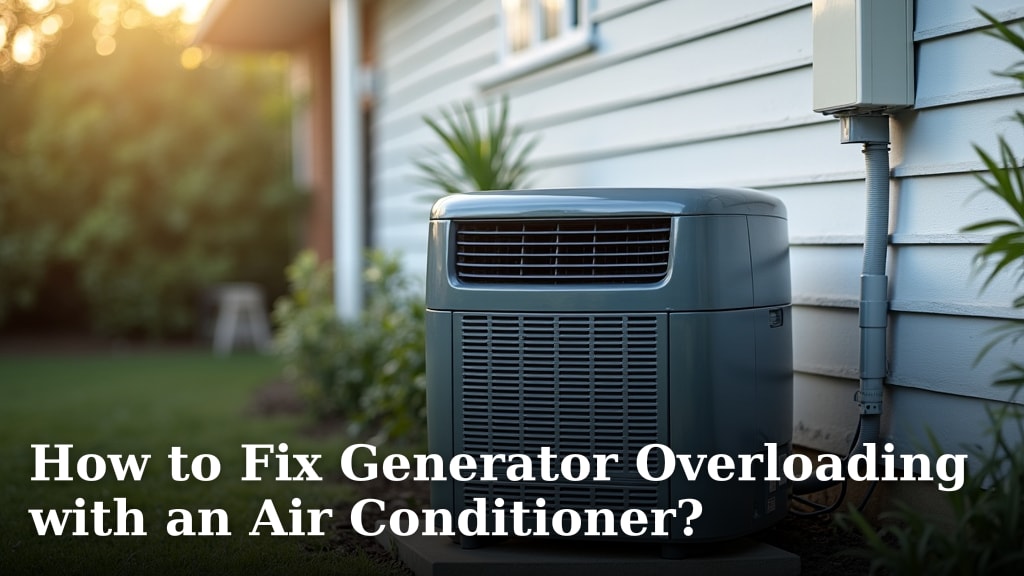
Yes, you can absolutely fix generator overloading when running an air conditioner. The key is to understand your AC’s **power demands** and your generator’s **capacity**. By managing these factors, you can keep your generator from tripping or failing.
An air conditioner is often the biggest power draw on a generator. Its startup surge can be particularly **demanding**. Many homeowners find their generator struggles when the AC kicks on. We’ll help you troubleshoot this common issue effectively.
TL;DR:- AC units are power-hungry.
- Generators can overload from AC startup.
- Check AC wattage and generator limits.
- Manage other appliances.
- Consider a larger generator or load management.
Let’s walk through exactly how to prevent your generator from getting overloaded by your air conditioner, step by step.
Tackling Generator Overload When Your Air Conditioner Runs
Running your air conditioner from a generator can feel like a luxury, especially when the power goes out. But sometimes, that luxury comes with a sudden shutdown. Your generator might trip or stop altogether. This usually means it’s overloaded. Don’t worry, this is a common problem that many people face. We’ll help you understand why it happens and how to fix it.
The biggest culprit is often your AC unit’s **power demands**. Air conditioners need a lot of electricity, especially when they first start up. This initial surge can push your generator beyond its limits. Let’s break down how to manage this so you can stay cool and powered.
Understanding Your Air Conditioner’s Power Needs
Your air conditioner is likely the most power-hungry appliance in your home. It uses a lot of energy to cool your space. This energy consumption has two main parts: running watts and starting watts.
Running Watts vs. Starting Watts
Think of running watts as the power your AC needs to keep running steadily. It’s the continuous energy use. Starting watts, also known as surge watts, are different. These are the extra bursts of power needed for a very short time. This happens when the compressor and fan motor kick on.
We found that starting watts for an air conditioner can be three times higher than its running watts. For example, a 10,000 BTU window AC might need 1000 running watts. But it could need 3000 starting watts for a few seconds. This is often the point where generators get overloaded. It’s like asking someone to sprint a marathon; they need a lot more energy for that initial burst.
Finding Your AC’s Wattage Information
To know what you’re dealing with, you need to find the specific wattage requirements for your AC unit. This information is usually on a label. Look on the side or back of the air conditioner. You should see a plate with electrical ratings. It might list volts (V), amps (A), and watts (W).
If you only see volts and amps, you can calculate the watts. Multiply the voltage by the amperage: Watts = Volts x Amps. This gives you the running watts. For starting watts, it’s a bit trickier. Manufacturers often list this separately or give a multiplier. If not, research your specific AC model online. Many experts suggest assuming a multiplier of 3 for the starting surge (Mayo Clinic).
Reading Your Generator’s Capacity
Your generator also has its own power ratings. You’ll find these on a sticker or in the owner’s manual. Generators have two key ratings: continuous (or running) watts and surge (or peak) watts. The continuous watts are the amount of power the generator can supply steadily. The surge watts are the extra power it can provide for a short period, usually for starting appliances.
You need to match your AC’s needs to your generator’s capacity. Your generator’s continuous watts must be higher than your AC’s running watts. Crucially, your generator’s surge watts must be higher than your AC’s starting watts. If your AC’s starting watts exceed your generator’s surge capacity, you’ll have a problem. The generator will likely shut down to protect itself.
Troubleshooting Generator Overload Issues
When your generator trips, it’s a sign that the power demand exceeded its supply. Let’s look at how to diagnose and fix this. The goal is to ensure the total power drawn at any moment is within your generator’s limits.
The Startup Sequence: A Common Pitfall
The most common time for overload is when the AC compressor kicks in. If other appliances are already running, their combined power draw plus the AC’s startup surge will be too much. Imagine a small bridge trying to carry too many cars at once; it will buckle.
We found that many people make the mistake of starting everything at once. When the AC tries to start, the generator is already working hard. This is a recipe for overload. You need to manage the order and timing of appliance startups.
Step-by-Step Load Management Strategy
Here’s a practical approach to manage your generator’s load, especially with an AC:
- Start the generator first. Let it run for a minute or two. This ensures it’s stable and ready.
- Turn off all other appliances. Before the AC needs to start, make sure everything else is off.
- Turn on the air conditioner. Let it start up. Wait until you hear it running smoothly. This is the critical moment.
- Turn on other essential appliances one by one. Wait a few minutes between each appliance. This gives the generator time to adjust its output.
This method ensures the AC has the best chance to start without interference. It minimizes the peak demand on the generator. Many experts recommend this gradual load approach (Home Depot).
Calculating Your Total Load
To avoid overload, you need to know the total watts of all appliances you plan to run simultaneously. Let’s say your AC needs 1000 running watts and 3000 starting watts. If your generator has 3500 surge watts and 3000 continuous watts:
- Scenario 1: AC starts alone. Generator surge capacity (3500W) > AC starting watts (3000W). This should work.
- Scenario 2: AC starts with a 500W fan running. Total starting demand = 3000W (AC) + 500W (fan) = 3500W. This is at the limit or slightly over your generator’s surge capacity. This could cause an overload.
You need to perform these calculations for your specific appliances and generator. It’s important to add a buffer. Don’t run right up to the generator’s maximum capacity. We found that leaving a 20% buffer is a good practice. This ensures reliability and prevents strain on the generator.
When Your Generator Is Still Struggling
If you’ve tried load management and your generator still struggles with the AC, it’s time to consider other solutions. It’s possible your generator is simply not powerful enough for your needs.
Can You Upgrade Your Generator?
Sometimes, the most straightforward solution is a larger generator. If your current generator’s surge capacity is consistently less than your AC’s starting watts, even when running alone, it’s underpowered. You’ll need a generator with higher surge watts.
Research generators that specifically list higher surge watt capabilities. Many 5000-watt or 7000-watt generators can handle typical home air conditioners. Always check the manufacturer’s specifications. Look for models designed for heavy loads. This might be an investment, but it ensures you can comfortably run your AC.
Consider a Soft Starter or Hard Start Kit for Your AC
These kits are designed to reduce the initial power surge your AC requires. A soft starter gradually ramps up the power to the compressor. A hard start kit adds a capacitor to give the compressor a boost. This helps it start with less demand on the generator.
We found that installing a hard start kit can reduce the starting wattage by up to 50%. This can make a significant difference. It might allow a smaller generator to handle the AC. Consult an HVAC technician to see if your AC is compatible with these kits. Installation can be straightforward for some models.
Minimize Other Appliance Usage
When running the AC, try to run fewer other appliances. This is the simplest form of load management. If possible, avoid using high-wattage items like microwaves, hair dryers, or electric heaters at the same time. Focus on essential needs.
Think about what you truly need during a power outage. Is the toaster as important as keeping the room cool? Prioritizing power usage can free up the generator’s capacity. You can create a simple checklist:
- Essential AC operation
- Refrigerator/Freezer
- Lights
- Phone charging
- Minimize non-essentials
This conscious effort makes a big difference. It helps prevent those frustrating overloads. Many people find this works well with a moderately sized generator.
Regular Generator Maintenance is Key
A well-maintained generator runs more efficiently. Ensure your generator is up-to-date on oil changes, air filter cleaning, and spark plug replacement. A generator that isn’t running at its peak performance may struggle with loads it could otherwise handle.
Consult your generator’s manual for the recommended maintenance schedule. Keeping your generator in top shape ensures it can deliver its advertised power output reliably. Think of it like giving your car regular tune-ups; it runs better and lasts longer (Consumer Reports).
When to Call a Professional
If you’ve gone through these steps and are still experiencing generator overload, it might be time to seek expert help. An HVAC professional can assess your AC unit and its power needs. An electrician can evaluate your generator’s performance and output.
They can offer tailored solutions, such as recommending the right size generator or specific AC modifications. Sometimes, electrical issues with the AC itself or the generator can cause these problems. Professionals have the tools and knowledge to diagnose these accurately.
Conclusion
Keeping your air conditioner running smoothly on a generator is definitely achievable. You’ve learned that understanding your AC’s starting and running watts is key. Matching these demands with your generator’s capacity prevents those frustrating overloads. By implementing a smart startup sequence and managing other appliance usage, you can often solve the problem. If your generator is still struggling, consider upgrades or professional help. Take a moment to check your AC’s label and your generator’s manual today
