
What Product Helps with Dual Fuel Generator Not Starting on Gasoline?
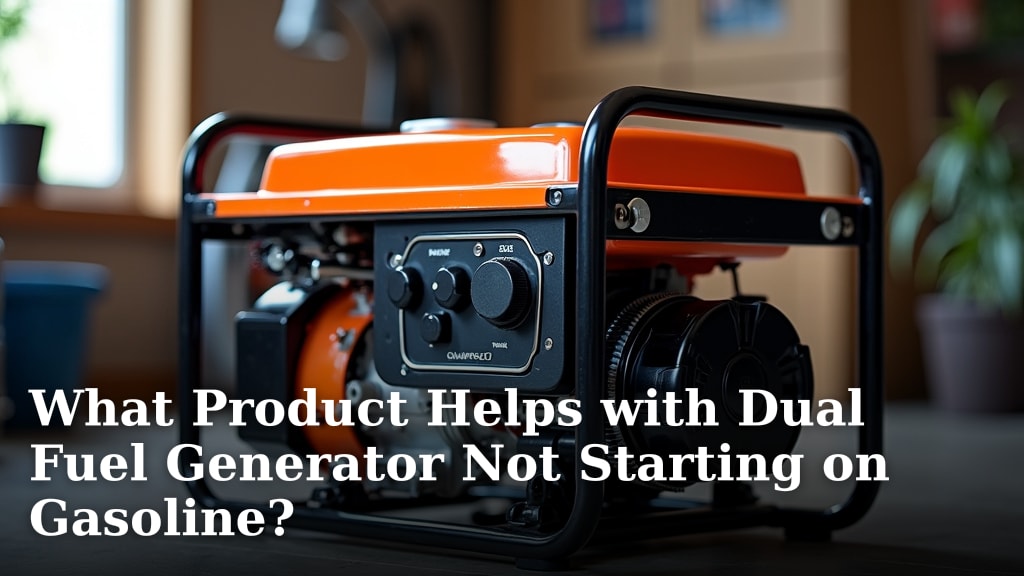
When your dual fuel generator refuses to start on gasoline, a specific type of fuel stabilizer is often your best bet. This isn’t just any additive; it’s one designed to clean and protect your fuel system components. Using the right product can help ensure your generator runs smoothly on its gasoline setting when you need it most.
Many dual fuel owners face this frustrating problem. It often stems from stale gasoline or clogged fuel lines. A good fuel stabilizer doesn’t just prevent gumming; it can also help dissolve existing deposits. This makes it a vital tool for maintaining your generator’s readiness.
- Gasoline starting issues are common for dual fuel generators.
- A quality fuel stabilizer is the most direct solution.
- Look for products that clean as well as stabilize.
- This helps prevent and remove fuel system clogs.
Let’s look at what makes a fuel stabilizer work wonders for your dual fuel generator’s gasoline mode.
Troubleshooting Your Dual Fuel Generator’s Gasoline Start Issues
When your dual fuel generator won’t kick over on gasoline, it’s a common frustration. You’ve got your propane ready, but sometimes, that gasoline option is your go-to. The good news is, there’s usually a simple fix. A particular type of fuel additive is frequently the hero here. When your dual fuel generator won’t kick over on gasoline, it’s a common frustration.
Many owners discover this problem when they need it most. Stale gasoline or gunked-up fuel lines are often the culprits. A specialized fuel stabilizer can prevent this buildup. It can even help dissolve existing clogs, making it a key tool for generator upkeep.
The Best Product for Dual Fuel Generators: Fuel Stabilizers
The single best product to help a dual fuel generator that won’t start on gasoline is a high-quality fuel stabilizer. But not just any stabilizer. You need one designed to clean and protect your fuel system. Think of it as a tune-up in a bottle for your generator’s gasoline carburetor and fuel lines.
Why is this so important? Gasoline, especially when it sits for a while, can break down. It forms sticky residues, often called “gum” or “varnish.” This gummy stuff can clog tiny fuel jets and passages. Your generator needs a clear path for fuel to reach the engine. Without it, it simply won’t start on gas.
How Fuel Stabilizers Work Their Magic
A good fuel stabilizer does two main things. First, it prevents gasoline from degrading. It contains antioxidants that slow down the oxidation process. This keeps the fuel fresh for longer periods. Many manufacturers recommend stabilizing fuel if it will sit for more than 30 days (Honda Power Equipment).
Second, and most relevant to your starting problem, many modern stabilizers also contain detergents. These detergents help to clean existing deposits. They can break down that sticky varnish that forms in your fuel tank, fuel lines, and carburetor. This cleaning action is what often gets a stubborn generator firing up on gasoline again.
What to Look for in a Fuel Stabilizer
When you’re shopping, read the product labels carefully. You want a stabilizer that explicitly mentions cleaning properties or states it can “remove gum and varnish.” Some stabilizers are purely for storage and only prevent degradation. You need one that tackles both prevention and existing problems.
Look for brands that are well-regarded in the small engine community. Many mechanics and experienced DIYers recommend products that have been around for a while and have a proven track record. You can often find these at auto parts stores, hardware stores, or online retailers specializing in engine maintenance.
Key Features to Prioritize
- Cleans Carburetors: Ensure it’s formulated to tackle carburetor deposits.
- Protects Against Gumming: Look for antioxidant and anti-corrosion agents.
- Ethanol Protection: Many fuels contain ethanol, which can be corrosive. A good stabilizer will protect against this.
- Long-Term Stability: It should keep fuel fresh for months, if not longer.
The Difference Between Stabilizers and Cleaners
It’s easy to get these confused. A fuel system cleaner is generally a stronger, more concentrated product designed to break down existing, stubborn deposits. You might use this periodically. A fuel stabilizer is designed for regular use, both to prevent future issues and to maintain fuel quality over time.
For a generator that’s already refusing to start on gasoline, you might initially use a stronger cleaner. However, a high-quality stabilizer with cleaning additives often does the trick. It provides a gentler, ongoing solution. Think of it like this: a cleaner is a deep scrub, while a stabilizer is daily maintenance that also helps lift minor grime.
How to Use Fuel Stabilizers for Best Results
Using the product correctly is just as important as choosing the right one. The best time to add a fuel stabilizer is when you are filling up your generator’s fuel tank. This ensures the stabilizer mixes thoroughly with the gasoline.
If your generator is already having trouble starting, you’ll want to add the stabilizer to fresh gasoline. Fill your tank with fresh gas and then add the recommended amount of stabilizer. Run the generator for a few minutes. This allows the treated fuel to circulate through the entire fuel system, including the carburetor.
A Step-by-Step Application Guide
- Get Fresh Gasoline: If your current gas is old (more than a month or two), drain it and get fresh fuel. Old gas is a primary cause of starting problems.
- Calculate the Amount: Check the stabilizer bottle for the correct ratio. It’s usually a certain amount per gallon of fuel.
- Add Stabilizer to the Can: Pour the stabilizer into your gas can *before* adding gasoline. This helps ensure a good mix.
- Fill the Tank: Fill your generator’s fuel tank with the treated gasoline.
- Run the Engine: Start your generator and let it run on gasoline for 5-10 minutes. This is a critical step. It pushes the treated fuel through the lines and into the carburetor.
- Store Properly: If storing the generator, it’s best to run it out of gas after this initial treatment or ensure the tank is full and sealed.
Running the Engine is Key
Don’t skip the step of running the engine after adding the stabilizer. If you just add it to the tank and leave the generator sitting, the treated fuel won’t reach the carburetor. The stabilizer needs to work its way through the entire fuel pathway.
This is where many people make a mistake. They add the additive and expect magic to happen without running the engine. Running the engine for a few minutes is what allows the detergents and stabilizing agents to clean and protect all the internal parts. It’s like giving your car an oil change and then driving it to distribute the new oil.
When Stabilizers Might Not Be Enough
While a good fuel stabilizer is often the solution, it’s not a magic bullet for every problem. If you’ve tried a fresh tank of gas with a quality stabilizer and your generator still won’t start on gasoline, the issue might be more serious.
Consider the age of your generator and its maintenance history. Sometimes, physical damage or wear and tear can cause starting problems. However, for most common gasoline starting issues, a fuel stabilizer is your first and best line of defense.
Other Potential Issues to Consider
Besides fuel quality, a few other things can prevent your generator from starting on gasoline:
- Spark Plug: A fouled or worn spark plug won’t create a strong spark. This is a simple replacement item.
- Air Filter: A clogged air filter restricts airflow, which the engine needs to run.
- Fuel Shut-off Valve: Ensure the gasoline fuel valve is actually open. It sounds simple, but it’s an easy oversight.
- Carburetor Gunk: If the stabilizer didn’t work, the carburetor might be severely clogged and require manual cleaning or rebuilding.
The Importance of Regular Maintenance
The best way to avoid these starting headaches is with regular maintenance. Using a fuel stabilizer every time you add gasoline, even if you use it frequently, is a great habit. It prevents problems before they start.
Many dual fuel generator owners find that using propane is easier because propane doesn’t degrade like gasoline. However, having a reliable gasoline start option can be essential. Keeping your gasoline system clean and stabilized ensures that readiness.
A Quick Checklist for Getting Your Generator Started
If your dual fuel generator is giving you grief on gasoline, run through this quick checklist:
- Fresh Fuel: Always start with the freshest gasoline you can find.
- Quality Stabilizer: Use a stabilizer that also cleans fuel systems.
- Run Time: Always run the engine for 5-10 minutes after adding stabilizer.
- Spark Check: Is the spark plug in good condition?
- Airflow: Is the air filter clean and allowing sufficient air?
- Fuel Valve: Is the gasoline fuel valve fully open?
By following these steps and using the right product, you’ll significantly increase your chances of getting your dual fuel generator running smoothly on gasoline whenever you need it.
Conclusion
You’ve learned that when your dual fuel generator struggles to start on gasoline, a quality fuel stabilizer with cleaning agents is your primary solution. This isn’t just about storage; it’s about keeping your fuel system clear of the gum and varnish that cause starting issues. By using a stabilizer that actively cleans, you tackle existing clogs and prevent future ones. Remember to always use fresh gasoline and run the engine after adding the stabilizer to ensure it circulates properly. Take this knowledge and get your generator ready for any situation.
Frequently Asked Questions
Can I just use any fuel additive for my dual fuel generator?
No, you should use a product specifically designed as a fuel stabilizer with cleaning properties. Regular gasoline additives might not have the necessary detergents to break down the sticky deposits that prevent your generator from starting on gas.
How long does a fuel stabilizer typically last in gasoline?
A good fuel stabilizer can keep gasoline fresh for 6 to 12 months, or even longer, depending on the product and storage conditions. Always check the product’s label for its recommended storage duration.
Is running the generator after adding stabilizer really necessary?
Yes, running the generator for 5-10 minutes after adding stabilizer is a critical step. It ensures the treated fuel reaches and cleans the carburetor and fuel lines, making the product effective for starting issues.
What if the stabilizer doesn’t fix my starting problem?
If a fresh tank of gas with a quality stabilizer doesn’t solve the issue, the problem might be more serious. Consider checking your spark plug, air filter, or fuel shut-off valve, or you may need to manually clean the carburetor.
Should I stabilize propane for my dual fuel generator?
Propane does not degrade or form gum like gasoline, so it does not require stabilization. Your focus should be on keeping the gasoline side of your dual fuel system clean and ready to use.
