
How to Start a Dual Fuel Generator on Gasoline?
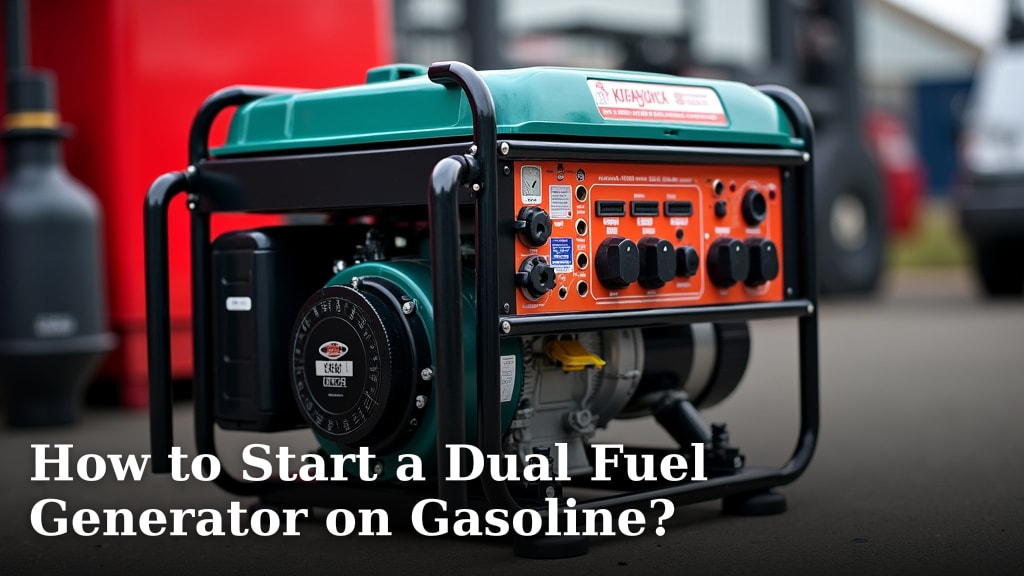
To start a dual fuel generator on gasoline, you’ll first want to ensure the fuel valve is open and switched to gasoline. Then, check the oil level and connect the battery if it’s an electric start model. Make sure the choke is set correctly for a cold start.
You might be wondering if it’s much different from starting a regular gas generator. We found that the main difference is simply managing the fuel selection before you begin. It’s really about making sure your generator is set up for the right fuel source before you pull the cord or press the button.
- Turn the fuel valve to gasoline.
- Check oil and battery levels.
- Set the choke for starting.
- Engage the starter (pull or electric).
- Allow it to run smoothly.
Ready to get your dual fuel generator purring on gasoline? Let’s walk through the steps, ensuring you know exactly what to do.
Getting Your Dual Fuel Generator Running on Gasoline
Starting your generator on gasoline is straightforward once you understand the basic steps. Think of it like cooking: you need the right ingredients and the right sequence. Let’s make sure your generator is ready to power up your home, campsite, or job site without a hitch.
Safety First: What You MUST Do Before Starting
Before you even think about pushing buttons or pulling cords, safety is paramount. Generators produce carbon monoxide, a colorless, odorless gas that can be deadly. Always operate your dual fuel generator outdoors in a well-ventilated area, far from windows and doors.
Choosing a Safe Location
Where you place your generator makes a big difference. We found that at least 20 feet away from your home is a good rule of thumb. Ensure the exhaust is pointing away from people and buildings. Never run it in a garage, even with the door open, federal safety guidelines suggest (CPSC).
Personal Protective Equipment (PPE)
It’s wise to wear gloves, especially when handling fuel. Eye protection is also a good idea. A small spill or splash can cause irritation. Think of it as preparing for a minor DIY project; you want to be protected.
Pre-Start Checklist: Making Sure Everything’s Ready
A few quick checks can save you a lot of frustration. These steps ensure your generator has everything it needs to start smoothly on gasoline. It’s like checking all the boxes before a road trip.
- Fuel Level Check: Is there enough gasoline in the tank?
- Oil Level Check: Is the oil at the correct mark on the dipstick?
- Spark Plug Condition: Is it clean and connected?
- Air Filter Cleanliness: Is the air filter free of debris?
- Generator Stability: Is it on a flat, stable surface?
Understanding Your Generator’s Fuel System
Dual fuel generators have a unique fuel selection system. You’ll have a switch or a valve that lets you choose between gasoline and propane. For this guide, we are focusing on gasoline, so make sure that switch is firmly set to gasoline.
We found that sometimes the lever might not be fully engaged. Give it a gentle but firm push to ensure it’s locked into the gasoline position. This prevents any confusion when the engine tries to draw fuel.
Step-by-Step Guide: Starting on Gasoline
Now, let’s get into the nitty-gritty of firing up your generator. We’ll break it down into manageable steps, whether you have an electric start or a recoil start.
1. Fuel Valve and Selector Settings
Locate your generator’s fuel valve. This is often a round knob or a lever. Turn it to the “ON” position. Remember, we are using gasoline today, so make sure your fuel selector switch is clearly on the “Gasoline” setting. This is crucial for proper fuel delivery.
You might hear a faint hiss or a slight movement of fuel as it enters the carburetor. That’s a good sign! It means the gasoline is flowing where it needs to go.
2. Choke Position
For a cold engine, you’ll almost always need the choke. The choke restricts airflow, enriching the fuel mixture to help the engine start faster. Look for a lever labeled “Choke” or with a butterfly symbol. Move it to the “Full Choke” position.
As the engine warms up, you’ll gradually move the choke to “Run.” Think of the choke like a boost button for starting; it’s not meant for continuous use.
3. Ignition Switch / Engine Switch
Find your generator’s main ignition switch or engine switch. This is typically a rocker switch. Flip it to the “ON” or “RUN” position. This enables the ignition system to create a spark.
Some generators have a separate “kill switch.” Make sure that’s not accidentally set to “OFF.” It’s a common oversight, and we found many users forget to check it.
4. Starting the Engine: Electric vs. Recoil
This is the moment of truth! Your generator will have either an electric start (via a button) or a recoil start (pull cord).
Electric Start
If your generator has an electric start (usually indicated by a “start” button or key ignition), simply press and hold the start button or turn the key to the “Start” position. Don’t hold it for more than 5 seconds at a time to prevent battery drain and starter motor wear. If it doesn’t start, wait about 10 seconds before trying again.
Recoil (Pull Cord) Start
For recoil start, grasp the pull handle firmly. Give a slow, gentle tug until you feel resistance, then pull with a brisk, continuous motion. Don’t let the cord snap back; gently guide it to prevent damage.
It might take a few pulls, especially if the generator hasn’t run in a while. Don’t get discouraged! It’s just like starting a lawnmower or a chainsaw.
5. Adjusting the Choke and Letting it Warm Up
Once the engine starts, you’ll hear it running. As it warms up (usually within a minute or two), slowly move the choke lever from “Full Choke” to “Half Choke,” then finally to the “RUN” position. Listen to the engine; it should smooth out and run steadily.
If you leave the choke on for too long, the engine might stall or run roughly. If you take it off too soon, it might sputter and die. It’s a bit of a feel, but you’ll get the hang of it quickly.
Common Starting Issues and How to Troubleshoot Them
Even with careful preparation, generators can sometimes be finicky. Don’t worry, we’re here to help you get past those common snags. It’s usually something simple!
| Problem | Possible Cause | Solution |
|---|---|---|
| Generator won’t start at all | No fuel, no spark, or wrong fuel selected. | Check gasoline level, ensure fuel valve is open, selector is on GAS. Check spark plug connection, ignition switch “ON.” |
| Engine cranks but won’t catch | Improper choke setting, old fuel, or clogged carburetor. | Adjust choke. Use fresh gasoline. If problem persists, carburetor cleaning might be needed (for advanced users or professional). |
| Engine starts then immediately dies | Choke moved off too soon, low oil shutdown, or fuel flow restriction. | Keep choke on longer. Check oil level. Ensure fuel cap vent is open (if applicable). |
| Electric start doesn’t work | Dead battery, loose battery terminals, or faulty starter. | Charge battery, clean and tighten terminals. Try recoil start as backup. |
The Importance of Fresh Fuel
Old gasoline can cause a lot of headaches. We found that gasoline starts to degrade after about 3-6 months. When it goes stale, it can gum up your carburetor and prevent your generator from starting. Always use fresh, clean gasoline. Consider using a fuel stabilizer if you store gasoline for longer periods.
Think of it like expired milk; you wouldn’t drink that, and your engine doesn’t “drink” old gas either!
Maintaining Your Dual Fuel Generator for Easy Starts
Regular maintenance is key to a reliable generator. A well-maintained generator is much easier to start and will last longer. This is simply good practice.
Regular Oil Changes
Just like your car, your generator needs its oil changed. Follow the manufacturer’s recommendations, usually after the first 20-25 hours, then every 50-100 hours or at least once a year. Fresh oil keeps the engine running smoothly.
Spark Plug Checks
Periodically inspect your spark plug. If it’s dirty or fouled, clean it or replace it. A healthy spark plug ensures a strong spark, which means easier starting. It’s a small part that plays a big role.
Air Filter Cleaning/Replacement
A clogged air filter starves your engine of vital air, making it hard to start and run efficiently. Clean or replace your air filter as recommended in your owner’s manual. It’s like your generator taking a deep, clear breath.
Conclusion
You’ve now got a clear roadmap for starting your dual fuel generator on gasoline. We covered everything from crucial safety precautions to step-by-step starting instructions and troubleshooting tips. Remember, a little preparation goes a long way in ensuring your generator is ready when you need it most.
By using fresh fuel, checking your oil, and understanding your generator’s specific features, you’ll feel confident in powering up. Now, go ahead and confidently get your generator running smoothly for your next outdoor adventure or power outage!
Frequently Asked Questions
Can I switch between gasoline and propane while the generator is running?
It depends on your specific generator model. Some dual fuel generators allow for “on-the-fly” switching, while others require you to shut down the engine before changing fuel sources. Always consult your owner’s manual to prevent damage.
What if my generator won’t start after sitting for a long time?
If your generator has been stored for a while, the most common culprit is old gasoline. Drain any stale fuel, add fresh gasoline, and consider cleaning the spark plug. A fuel stabilizer can prevent this issue in the future.
How often should I run my dual fuel generator to keep it in good condition?
We recommend running your generator for about 20-30 minutes every month, either on gasoline or propane. This circulates fluids, lubricates parts, and helps keep the carburetor from getting gummed up. Think of it as exercising the engine.
Is there a difference in power output when running on gasoline versus propane?
Yes, generally, dual fuel generators tend to produce slightly less power when running on propane compared to gasoline. We found this difference is often around 10-15%. Check your generator’s specifications for exact numbers.
Why is it so important to use fresh gasoline for my generator?
Gasoline degrades over time, especially when exposed to air, forming gummy deposits that can clog the carburetor. Using fresh gasoline ensures clean, efficient combustion and prevents starting problems. We always advise using fuel no older than 3-6 months.
