
How to Choose Propane Tank Size for a Generator?
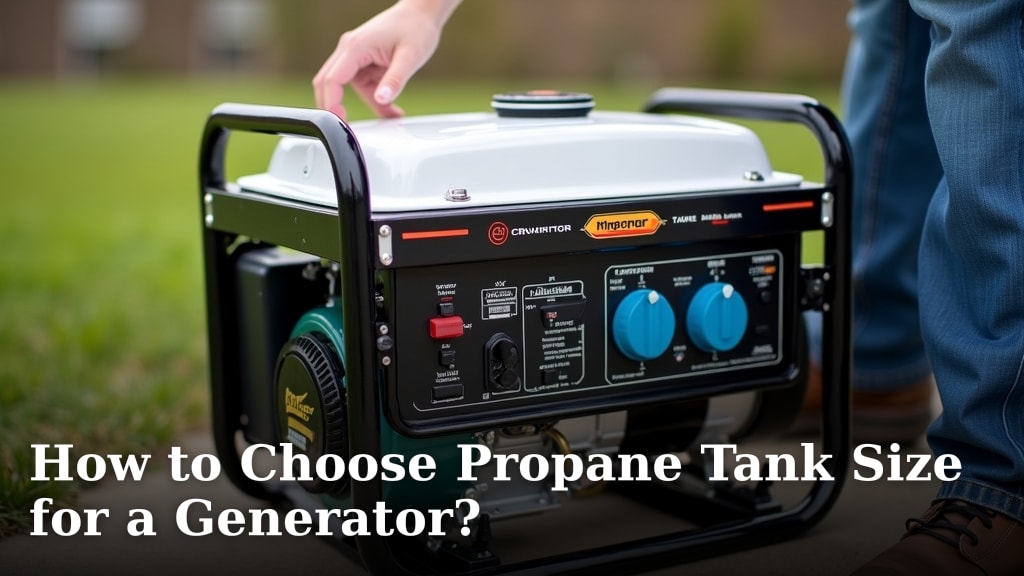
Choosing the right propane tank size for your generator is all about matching fuel supply to your generator’s Connecting the right propane tank is the first step to starting your dual fuel generator.power needs. You want a tank big enough to keep your generator running for the desired duration, without being so large it’s hard to store or refill. Think of it like picking the right gas can for your car – you wouldn’t use a thimble for a long road trip!
The size of your generator, measured in watts, directly impacts how much propane it consumes. You also need to consider how long you expect to run the generator during an outage. We found that many homeowners overlook this, leading to frustrating mid-storm trips to the propane station. Getting the tank size right upfront means peace of mind during unexpected events.
- Determine your generator’s wattage.
- Calculate expected run time.
- Match consumption rate to tank capacity.
- Consider refill convenience.
- Don’t forget local regulations.
Let’s walk through exactly how to figure out the perfect propane tank size for your generator, step by step.
Determining Your Generator’s Propane Needs
Figuring out the right propane tank size for your generator is key. It prevents frustrating shutdowns during an outage. We aim to make this process simple for you. You’ll need to consider two main things: your generator’s fuel consumption and how long you plan to run it.
Understanding Your Generator’s Wattage and Consumption Rate
The first step is understanding your generator’s power output. This is measured in watts. You’ll usually find this information on a sticker on the generator itself. It might also be in your owner’s manual. Generators have both a running wattage and a starting wattage. The running wattage is what it uses to continuously power your devices. The starting wattage is a surge needed for appliances with motors, like refrigerators or air conditioners, to kick on.
Propane generators have a specific fuel consumption rate. This tells you how much propane they burn per hour. It’s often listed in gallons per hour (GPH) or pounds per hour (PPH). You’ll find this in your generator’s manual. For example, a generator might consume 1 GPH at 50% load. This consumption rate is vital for calculating your fuel needs.
We found that many people overlook the difference between running and starting wattage. This can lead to underestimating fuel needs. Always consider the highest power draw you expect your generator to handle. This will give you a more accurate consumption figure.
Estimating Your Generator’s Run Time
Next, think about how long you anticipate needing your generator. During a power outage, do you plan to run it continuously? Or will you only use it for essential appliances during peak hours? Your desired run time directly impacts the amount of propane you’ll need. A longer run time means you’ll need a larger tank or multiple tanks.
Consider a scenario where the power is out for several days. You might want to run your generator for 12 hours a day. This means you need to calculate your total propane needed for that duration. We’ve found that being realistic here prevents future headaches. It’s better to have too much propane than too little.
Calculating Total Propane Needed
To calculate your total propane requirement, multiply your generator’s consumption rate by your desired run time. Let’s say your generator consumes 1 gallon of propane per hour. If you plan to run it for 24 hours, you’ll need 24 gallons of propane. This is a simple calculation but incredibly effective.
Remember, this calculation is often based on a specific load. If you run your generator at a higher load, it will consume propane faster. So, it’s wise to add a buffer. Many experts recommend adding an extra 10-20% to your calculation for safety and unexpected needs (National Fire Protection Association).
Understanding Propane Tank Sizes and Capacities
Propane tanks come in various sizes, measured by their capacity in pounds or gallons. Knowing these common sizes will help you match your calculated needs to an available tank. The most common sizes for generators are portable tanks, often called “grills tanks” or “barbecue tanks.”
Common Propane Tank Sizes and Their Capacities
The most common propane tank size you’ll see is the 20-pound tank. These are widely used for backyard grills. They hold approximately 20 pounds of propane, which is about 4.7 gallons. These are great for shorter run times or smaller generators.
Next up is the 30-pound tank. This tank holds about 30 pounds of propane, roughly 7.1 gallons. It offers more fuel than a 20-pound tank, allowing for longer run times between refills. These are a popular choice for many homeowners with standby generators.
You’ll also find 40-pound and 100-pound tanks. A 40-pound tank holds about 40 pounds of propane (9.4 gallons). A 100-pound tank is a much larger option, holding around 100 pounds of propane (23.7 gallons). These larger tanks are excellent for extended run times or when you want to minimize refill trips. We found that people often upgrade from 20-pound tanks to 30-pound or 100-pound tanks as their needs change.
Tank Capacity vs. Usable Capacity
It’s important to know that propane tanks are never filled to 100% of their capacity. This is a safety regulation. Tanks are typically filled to about 80% of their total capacity. This is to allow for expansion of the propane as temperatures change. So, a 20-pound tank doesn’t actually hold 20 pounds of usable propane. It holds about 16 pounds. Always factor this 80% rule into your calculations.
Comparing Tank Sizes for Generator Use
Let’s put this into perspective. If your generator uses 1 GPH and you want to run it for 10 hours, you need 10 gallons of propane. A 20-pound tank (roughly 4.7 usable gallons) won’t be enough for this. You would need at least two 20-pound tanks. A 30-pound tank (about 7.1 usable gallons) would still fall short. A 40-pound tank (around 9.4 usable gallons) would be close, but a 100-pound tank (about 23.7 usable gallons) would provide ample fuel with plenty to spare.
We found that many homeowners prefer the convenience of a 100-pound tank for their generator. It significantly reduces the frequency of needing to exchange or refill the tank. This is especially beneficial during prolonged outages. It’s a significant upgrade in convenience.
A Quick Look at Tank Weights
The “pound” rating on a propane tank refers to the weight of the propane it holds, not the weight of the tank itself. An empty 20-pound tank weighs around 15-20 pounds. A full 20-pound tank therefore weighs approximately 35-40 pounds. This is important to consider for handling and transport. Heavier tanks are harder to move around.
Factors Beyond Basic Calculations
While calculating your fuel needs is essential, other factors can influence your final decision on propane tank size. Thinking about these ahead of time will help you make a well-informed choice.
Storage and Handling Considerations
Where will you store your propane tank(s)? Larger tanks require more space. You need to ensure you have a safe, well-ventilated area for storage, away from ignition sources. Many local regulations dictate safe storage practices for propane tanks (Occupational Safety and Health Administration). Check these rules before you buy a large tank.
Handling larger tanks can also be a challenge. A full 100-pound tank weighs over 100 pounds. You might need a hand truck or assistance to move it. If you plan to swap tanks yourself, consider your physical capabilities. We found that many people opt for professional delivery and setup for larger tanks to avoid handling issues.
Refill vs. Exchange Programs
How will you get your propane refilled? You can exchange empty tanks for full ones at many retailers. This is convenient but you don’t always get a full refill, and you pay for the convenience. Alternatively, you can get your tanks refilled at a propane dealer.
Refilling at a dealer usually offers more propane for your money. You can also get larger tanks refilled this way. If you have a 100-pound tank, you’ll likely need to visit a dealer for a refill. Some dealers offer delivery services for very large tanks, which is a huge convenience for backup power setups.
Generator Connection and Hose Length
Your generator will come with a specific regulator and connection for propane tanks. Most smaller generators use a standard P.O.L. fitting, common on 20-pound tanks. Larger tanks or multiple tank setups might require longer hoses or specialized adapters.
Consider the distance between where you will store your tank(s) and where your generator will be running. Longer hoses are available, but they can sometimes affect pressure. We found that sticking to recommended hose lengths from your generator manufacturer is best. Using excessively long hoses can lead to poor generator performance.
Local Regulations and Safety Standards
It’s essential to be aware of local ordinances regarding propane tank storage and use. Some areas have specific rules about how close tanks can be to homes or other structures. There might also be limits on the total amount of propane you can store on your property. Always check with your local fire department or building code office for specific requirements.
Safety is paramount when dealing with propane. Ensure your tanks are always upright and stored in a cool, dry, well-ventilated area. Regularly inspect hoses and connections for any signs of damage or leaks. Many resources are available from organizations like the National Propane Gas Association, offering guidance on safe handling and storage practices.
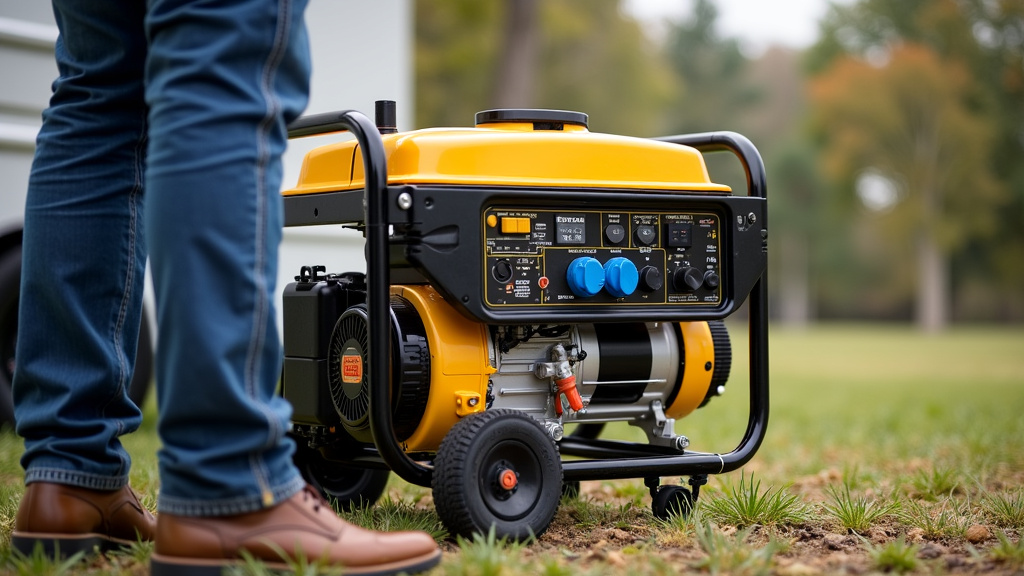
Checklist: Choosing Your Propane Tank Size
Ready to make a decision? Use this quick checklist to guide you:
- Know Your Generator: Confirm its running and starting wattage.
- Estimate Run Time: Decide how many hours/days you need power.
- Calculate Consumption: Multiply wattage by run time and factor in load.
- Review Tank Sizes: Compare your calculated needs to common tank capacities (20, 30, 40, 100 lbs).
- Consider Storage: Ensure you have a safe and adequate space.
- Check Local Rules: Verify any regulations for tank storage and use.
Conclusion
You’ve learned how to match your generator’s needs with the right propane tank size. Remember, it’s all about balancing your generator’s wattage and your expected run time with the tank’s usable capacity. We’ve seen that considering storage, handling, and refill options upfront makes a big difference. Don’t forget to check local regulations for safe storage. Your next step is to grab your generator’s manual and your desired run time, then use what you’ve learned to select the perfect tank size for your peace of mind.
Frequently Asked Questions
How do I know if a 20-pound tank is enough for my generator?
A 20-pound tank typically holds about 4.7 gallons of usable propane. We found this is usually suitable for smaller generators or shorter run times, like powering essential items for a few hours during an outage. If your generator has a high consumption rate or you need power for many hours, you’ll likely need a larger tank or multiple 20-pound tanks.
What’s the difference between a 30-pound and a 40-pound propane tank for my generator?
A 30-pound tank offers about 7.1 gallons of usable propane, while a 40-pound tank provides around 9.4 gallons. We’ve seen that the 40-pound tank gives you a bit more run time than the 30-pound, meaning fewer trips to refill or exchange. This can be a good middle-ground if a 100-pound tank seems too large for your storage space or needs.
Can I connect multiple propane tanks to my generator?
Yes, you can often connect multiple tanks. Many generators use a standard P.O.L. fitting that can accommodate adapters for two tanks. This is a great way to increase your total fuel supply without needing a single, very large tank. We recommend checking your generator’s manual for specific guidance on multi-tank setups.
How often will I need to refill a 100-pound propane tank for my generator?
A 100-pound tank holds about 23.7 gallons of usable propane. This is a substantial amount, and refill frequency depends heavily on your generator’s consumption rate and how long you run it. For most home backup scenarios, one 100-pound tank can provide many hours of run time, significantly reducing how often you need to worry about refills.
What are the safety considerations for storing propane tanks near my generator?
Always store propane tanks upright in a cool, dry, well-ventilated area away from ignition sources. We found that keeping tanks at least 10 feet away from any operational generator is a common safety recommendation. Ensure your storage area complies with local fire codes and regulations to prevent accidents.
