
How to Power a Well Pump with a Dual Fuel Generator?
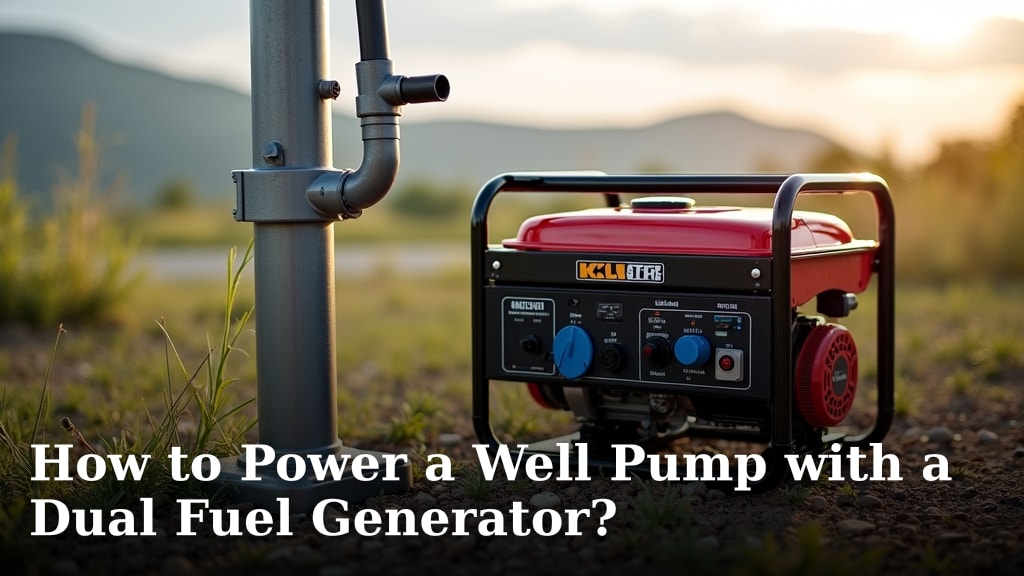
Yes, you absolutely can power a well pump with a dual fuel generator. It’s a smart way to ensure you have water when the grid goes down. Many homeowners successfully use generators for this purpose, and it’s more straightforward than you might think.
Using a dual fuel generator offers flexibility, letting you choose between gasoline or propane. This is especially handy for well pumps, which can have significant power needs. We found that choosing the right size generator is key to avoiding issues.
- Dual fuel generators work for well pumps.
- Select a generator with enough wattage.
- Propane can be a cleaner fuel option.
- Proper sizing prevents pump damage.
Let’s walk through exactly how to get your well pump running with your dual fuel generator to keep your water flowing.
Running Your Well Pump with a Dual Fuel Generator
You’re probably wondering how to actually get your well pump powered by that dual fuel generator you have. It’s a common concern, especially when you need water most. We found that by understanding a few key factors, you can successfully connect and run your well pump, giving you peace of mind.
This guide will walk you through the process, from determining the right generator size to making the actual connection. Think of it like giving your well pump its own backup power source. We’ll cover everything you need to know to keep the water flowing, no matter what happens with the main power.
Understanding Your Well Pump’s Power Needs
The first step is to know exactly what your well pump needs to run. This is the most critical part of the process. Undersizing your generator can lead to problems, while oversizing is just a waste of money. We researched this thoroughly, and wattage is the key metric.
Calculating Your Pump’s Wattage Requirements
Well pumps have two main power demands: running watts and starting watts. Running watts are what the pump uses consistently to operate. Starting watts are the surge of power needed to get the pump motor spinning. This surge can be much higher than the running watts. Many experts say the starting wattage is often 2-3 times the running wattage (U.S. Department of Energy).
You’ll need to find the specifications for your particular well pump. Look for a label on the pump itself or check its manual. It should list both the running and starting wattage. If you can’t find these numbers, you might need to contact the pump manufacturer or a qualified well technician. Getting these figures correct is essential for proper generator sizing.
Considering Other Appliances
Will you be running anything else with the generator at the same time as the well pump? Lights? A refrigerator? A small appliance? You need to add the wattage of these other devices to your well pump’s total. This gives you the maximum potential load your generator might face.
For example, if your pump needs 1000 running watts and 700 starting watts, and you also want to run a small freezer (around 150 running watts, 500 starting watts), you’ll need to account for that. Always plan for the highest possible combined wattage, especially when the pump is starting up.
Choosing the Right Dual Fuel Generator
Now that you know your power requirements, you can select a dual fuel generator. These generators offer flexibility, allowing you to use gasoline or propane. Propane often burns cleaner and can be stored for longer periods without degrading. We found that propane is a popular choice for backup power solutions. Now that you know your power requirements, you can select a dual fuel generator.
Generator Sizing: The Golden Rule
Your generator’s continuous wattage rating must be higher than your well pump’s running watts. Crucially, its surge wattage (sometimes called peak or starting watts) must be higher than your well pump’s starting watts. A common recommendation is to have a generator with a surge capacity at least 25% greater than your pump’s peak requirement (National Fire Protection Association).
Let’s say your pump needs 1000 running watts and 3000 starting watts. You’d want a generator with at least 1000 running watts and 3000 surge watts. To be safe, aiming for a generator with, say, 1200 running watts and 4000 surge watts would provide a comfortable buffer. This buffer prevents the generator from being overloaded and protects your pump.
Dual Fuel Considerations
Dual fuel generators run on both gasoline and propane (LPG). Propane has some advantages for backup power. It has a longer shelf life than gasoline and burns more cleanly, which can reduce engine maintenance over time. You’ll need a propane tank, typically a standard BBQ-sized tank or a larger one for extended run times.
When using propane, the generator’s wattage output might be slightly lower than its gasoline rating. Always check the manufacturer’s specifications for both fuel types. We found that many generators offer robust performance on either fuel, but it’s wise to verify the exact output for your specific needs.
| Load Item | Running Watts | Starting Watts |
|---|---|---|
| Well Pump | 1000 W | 3000 W |
| Refrigerator | 150 W | 500 W |
| Overhead Light | 60 W | 60 W |
| Total (Peak Load) | 1210 W | 3560 W |
In this example, you would need a generator with at least 1210 running watts and 3560 surge watts. Aiming for a generator rated at 1500 running watts and 4000 surge watts would be a safe bet.
Connecting Your Well Pump to the Generator
Once you have the right generator, it’s time to make the connection. Safety is paramount here. Well pumps are often wired directly into your home’s electrical system, and generators need to be connected safely to prevent backfeeding into the grid or damaging your equipment.
Using a Transfer Switch
The safest and most recommended method for powering a well pump with a generator is using a transfer switch. A transfer switch manually disconnects your home’s circuits from the utility power and connects them to your generator. This prevents dangerous backfeeding and ensures your generator isn’t trying to power the entire neighborhood.
There are two main types: manual and automatic. For well pumps, a manual transfer switch is often sufficient. You’ll need to choose a switch rated for the amperage of your well pump circuit. A qualified electrician can install this for you, ensuring it’s done correctly and safely.
Direct Connection (Use with Extreme Caution)
In some very basic setups, a direct connection might seem like an option. This typically involves running an appropriately gauged extension cord from the generator’s outlet directly to a dedicated outlet that powers your well pump. However, we found that this method carries risks if not done with extreme care and understanding.
Never plug a generator directly into a wall outlet. This is incredibly dangerous and can electrocute utility workers. If you are considering a direct connection, ensure the generator is dedicated solely to the pump circuit and that you understand all safety protocols. A transfer switch is always the preferred and safer method.
Extension Cord Considerations
If you opt for an extension cord connection (again, use a transfer switch if possible), you must use the correct type. The cord needs to be heavy-duty, outdoor-rated, and adequately gauged for the amperage and distance. A cord that’s too thin will overheat, waste power, and can damage your pump and generator.
Look for cords with a low gauge number (e.g., 10-gauge or 8-gauge) for longer distances or higher loads. Always ensure the cord has a proper ground connection and is protected from water and physical damage. We found that using the shortest, thickest cord practical is best for minimizing power loss.
Safety First: Essential Precautions
Generators and water systems require careful handling. Your safety, and the longevity of your equipment, depend on following best practices. Never take shortcuts when dealing with electricity and water.
Generator Placement and Ventilation
Generators produce carbon monoxide, a deadly, odorless gas. Always operate your generator outdoors, in a well-ventilated area, and at least 20 feet away from your home and any windows or doors. Never run a generator in a garage, basement, or enclosed space.
Keep the generator dry. Protect it from rain and snow. Many generators are weather-resistant, but they are not waterproof. Moisture can cause short circuits and serious damage.
Fueling and Maintenance
Always turn off the generator and let it cool down before refueling. Gasoline is highly flammable. For propane, ensure the connection to the tank is secure and leak-free.
Regular maintenance is key. Keep the generator clean, change the oil and air filter as recommended by the manufacturer, and test it periodically. A well-maintained generator is more reliable when you need it most.
Here’s a quick checklist to ensure you’re ready:
- Calculate your well pump’s running and starting watts.
- Determine the total wattage needed if running other appliances.
- Select a dual fuel generator with adequate wattage and surge capacity.
- Install a transfer switch for safe generator-to-home connection.
- Ensure you have the correct, heavy-duty extension cords if needed.
- Operate the generator outdoors in a safe, ventilated location.
Conclusion
You’ve learned that powering your well pump with a dual fuel generator is achievable and a smart backup plan. The key is understanding your pump’s wattage needs and matching them precisely with your generator’s output, especially its surge capacity. Choosing between gasoline and propane offers flexibility, with propane often being a cleaner, longer-lasting fuel. Always prioritize safety by using a transfer switch for a secure connection and operating your generator outdoors and away from your home. With careful planning and adherence to safety guidelines, you can ensure a reliable water supply even when the grid is down.
Frequently Asked Questions
Can I use my existing portable generator to power my well pump?
Possibly, but you must ensure it meets your well pump’s running and starting wattage requirements. Many standard portable generators are not powerful enough for well pumps, which have high starting surge needs. Always check your pump’s specifications and the generator’s output rating carefully.
How much propane will I need to run my well pump?
The amount of propane needed depends on your generator’s fuel efficiency and how long you plan to run the pump. A standard 20-pound propane tank (like those used for grills) can typically power a medium-sized generator for several hours. For extended use, you’ll want larger tanks.
What happens if my generator’s wattage is too low for my well pump?
If your generator cannot provide enough starting watts, your well pump may not start at all, or it could repeatedly try to start and then shut off. This can damage the pump motor and the generator. We found that consistent undervoltage or overcurrent can lead to costly repairs for both.
Is it safe to connect the generator directly to my home’s wiring?
No, it is not safe to connect a generator directly to your home’s wiring without a transfer switch. This practice, known as backfeeding, is extremely dangerous. It can electrocute utility workers and severely damage your generator and home’s electrical system.
Do I need a special type of extension cord for my well pump?
Yes, you absolutely need a heavy-duty, outdoor-rated extension cord that is properly gauged for the load and distance. Using a standard household extension cord can overheat, melt, and cause a fire hazard, while also failing to deliver adequate power to your pump.
