
Why Is My Generator Surging Under Load?
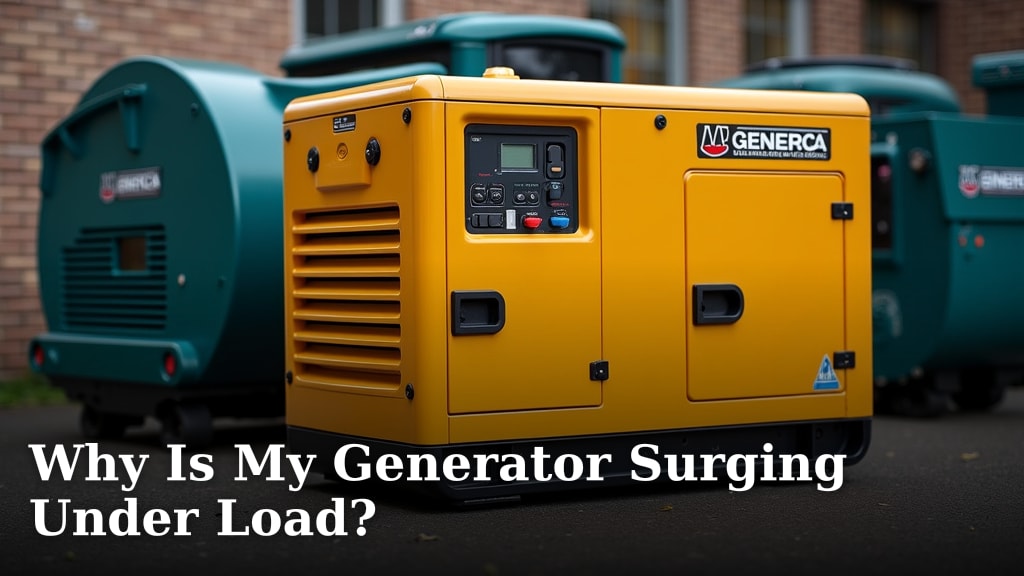
Your generator is surging under load usually because of a fuel delivery problem or a carburetor issue, causing an inconsistent air-fuel mixture. This often results in the engine revving up and down irregularly when it’s trying to power your appliances or tools.
You know that feeling when your lights flicker and your generator sounds like it’s taking a roller coaster ride? It’s not just annoying; it can be a sign of a serious underlying problem. Many experts say that addressing these fluctuations quickly can prevent bigger headaches and costly repairs down the line.
- Fuel system blockages are a common culprit.
- Carburetor clogs can cause surging too.
- Engine overload may trigger these issues.
- Regular generator maintenance is key.
Let’s research together and figure out why your generator might be acting up and what you can do about it.
Why Your Generator Might Be Acting Up Under Load
When your generator surges, it’s telling you something. This usually points to an inconsistent air-fuel mixture or another mechanical hiccup. Think of it like your car sputtering when it needs gas or has a clogged fuel injector.
Many generator issues are straightforward to fix once you know where to look. We’ll walk through the most common reasons and help you get your generator running smoothly again.
Fuel System Troubles: The Primary Suspect
Often, the root cause of surging is found in your generator’s fuel system. It’s like trying to drink through a straw that has a kink or a blockage. Your engine needs a steady flow of fuel to maintain a consistent speed.
When that flow is interrupted, the engine struggles. It speeds up when it gets enough fuel and then slows down when it doesn’t. This constant adjustment is what you hear as surging.
Stale Fuel or Contaminants
Did you know fuel can go bad? Over time, gasoline can break down, especially if it sits for months. This creates unwanted deposits and varnish that can clog fuel lines and filters.
Even worse, water can get into your fuel supply. This happens more often than you might think, especially with outdoor storage. Water doesn’t burn, so it causes massive disruptions in the fuel mixture, making your generator surge.
- Always use fresh, clean fuel.
- Add a fuel stabilizer if storing for more than a month.
- Keep fuel containers sealed and away from moisture.
Clogged Fuel Filter
Your generator has a fuel filter, just like your car. Its job is to catch impurities before they reach the carburetor. If this filter gets clogged, it restricts fuel flow.
Imagine trying to breathe through a coffee filter. That’s how your engine feels with a dirty fuel filter. A clogged filter is a very common reason for surging and can lead to bigger problems if not addressed.
Blocked Fuel Lines
Fuel lines can also become restricted. This might be due to debris, rust from the fuel tank, or even pinching from improper storage. Any obstruction means the carburetor isn’t getting enough fuel consistently.
We found that checking the entire length of your fuel line for kinks or visible damage is a good first step. It’s often the simplest solutions that fix the problem.
Carburetor Issues: The Heart of the Matter
If the fuel system is the supply chain, the carburetor is the mixing plant. It’s responsible for precisely mixing air and fuel before it enters the engine. When this balance is off, surging is a natural outcome.
A carburetor is a delicate instrument. Even tiny blockages can throw off its ability to create the perfect combustible mixture.
Dirty or Clogged Carburetor Jets
The carburetor has tiny passages called jets. These jets atomize the fuel, turning it into a fine mist. If these jets get clogged with varnish from old fuel or debris, the carburetor can’t deliver the right amount of fuel.
This is probably the most common carburetor problem causing surging. It’s like trying to spray water through a nozzle that has gunk in it—the spray comes out unevenly, or not at all sometimes.
You might notice surging only under load, as the engine demands more fuel. When the generator is idling, it might seem fine because it needs less fuel.
Incorrect Carburetor Settings
Generators have idle and high-speed adjustment screws on their carburetors. If these are out of whack, your engine won’t run correctly. Tampering with these without proper knowledge can make surging worse.
It’s generally best to avoid adjusting these unless you know what you’re doing or are following a service manual. Most home generators come pre-set from the factory.
Engine Overload: Asking Too Much From Your Generator
Sometimes, the problem isn’t the generator itself, but what you’re asking it to do. Every generator has a limit to how much power it can produce. If you exceed this limit, it enters survival mode.
When you plug in too many appliances, the generator tries to keep up. It struggles, dips in RPM, tries to compensate, and often results in that tell-tale surging sound. It’s like trying to pull a heavy wagon with a small toy car.
Total Wattage Exceeded
Always check the starting wattage and running wattage of your appliances. Starting wattage (surge wattage) is what an appliance needs for a brief moment to get going. Running wattage is what it needs consistently.
If the total running wattage of all your plugged-in devices exceeds your generator’s continuous output, it will struggle. Add in some starting wattages, and you’re almost guaranteed to hear that surging sound.
We’ve often found that people underestimate the power needs of multiple devices (Energy.gov).
High Starting Loads
Appliances with electric motors—like refrigerators, air conditioners, or power tools—have very high starting wattages. They need a big burst of power to overcome inertia.
Plugging one of these in when your generator is already near its capacity can cause a sudden, severe overload. This might cause a surge, or even trip the breaker.
Other Potential Issues Behind the Surge
While fuel and carburetor problems are the most common culprits, other components can also lead to your generator surging under load. It’s always good to consider the whole picture.
Worn Spark Plug
A dirty or worn-out spark plug can lead to incomplete combustion. If the spark isn’t strong and consistent, the engine won’t burn fuel efficiently. This can present as irregular power delivery and surging.
Replacing a spark plug is relatively inexpensive and easy. It’s often one of the first things to check during routine maintenance.
Governor System Problems
Your generator has a governor system. This is a mechanical part that regulates engine speed to maintain a constant output voltage. It’s like the cruise control in your car, but for RPMs.
If the governor linkage is loose, sticky, or damaged, it can’t react properly. This means the engine speed will fluctuate wildly, especially when a load is applied or removed. We found that a sticky governor assembly is a common cause in older generators.
Here’s a quick overview of potential causes and their symptoms:
| Problem Area | Common Symptoms | Likely Fix |
|---|---|---|
| Stale Fuel | Rough running, hard starting, foul smell | Drain old fuel, add fresh fuel + stabilizer |
| Clogged Fuel Filter | Reduced power, generator struggles | Replace fuel filter |
| Dirty Carburetor | Surging, black smoke, rough idle | Clean or rebuild carburetor |
| Engine Overload | Loud surging, breaker trips, dimming lights | Reduce load, use fewer appliances |
| Worn Spark Plug | Hard starting, misfires, poor fuel economy | Replace spark plug |
| Governor Issues | Inconsistent RPMs, erratic surging | Adjust or lubricate governor linkage |
Preventative Maintenance: Your Generator’s Best Friend
An ounce of prevention is worth a pound of cure, right? This old saying definitely applies to generators. Regular maintenance can save you a lot of headaches and costly repairs.
Treating your generator well means it will be ready when you need it most. And let’s be honest, you usually need it when the power is out, and you don’t have time for repairs.
Routine Maintenance Checklist
Here’s a simple checklist to keep your generator in top shape:
- Change the engine oil regularly.
- Inspect and clean or replace the air filter.
- Check and replace the spark plug as needed.
- Always use fresh fuel, and add stabilizer.
- Run your generator at least once a month under a light load.
- Keep the generator free of dust and debris.
- Store your generator properly when not in use.
By following these steps, you minimize the chances of your generator experiencing that frustrating surging behavior. Your efforts will translate into reliable power whenever you need it.
Don’t wait until the power goes out to find out your generator isn’t ready. A little preventative care goes a long way in ensuring your peace of mind.
Conclusion
Dealing with a surging generator can be frustrating, but now you understand the common reasons behind it. Most issues boil down to fuel quality, the carburetor’s condition, or simply overloading your unit. We’ve learned that a little preventative care goes a long way. By keeping your fuel fresh, maintaining your carburetor, and understanding your generator’s capacity, you can often avoid these power fluctuations.
Take charge of your generator’s health. Start with the easiest checks and work your way up. Your vigilance will ensure reliable power when you need it most, giving you peace of mind during outages.
Frequently Asked Questions
Can a generator surge damage my appliances?
Yes, a surging generator can potentially damage sensitive electronics. The inconsistent power delivery and voltage fluctuations that accompany surging can stress and eventually burn out components in your appliances. It’s always best to disconnect sensitive items if your generator is surging.
How often should I run my generator to prevent surging?
You should run your generator for 15-30 minutes at least once a month. This helps to circulate fuel, lubricate engine components, and prevent fuel system blockages that can lead to surging. Use a light load during these runs to fully exercise the generator.
Is it always a bad carburetor if my generator is surging?
While a dirty or faulty carburetor is a very common cause, it’s not the only one. Issues like old fuel, a clogged fuel filter, engine overload, a worn spark plug, or problems with the governor system can also cause surging. Always start by checking the simplest solutions first.
What’s the difference between starting wattage and running wattage?
Starting wattage (or surge wattage) is the extra power an appliance needs for a few seconds to kick on, especially those with motors like refrigerators. Running wattage is the continuous power it needs to operate normally. You must consider both when calculating your generator’s load to prevent surging.
Can using ethanol-free fuel help prevent generator surging?
Absolutely. Ethanol in gasoline can absorb water over time and cause corrosion, leading to fuel system issues and carburetor clogs that result in surging. Using ethanol-free fuel for your generator, especially if it sits for extended periods, can significantly reduce these problems.
