
What Is the Difference Between Electric Start or Recoil Start Generator?
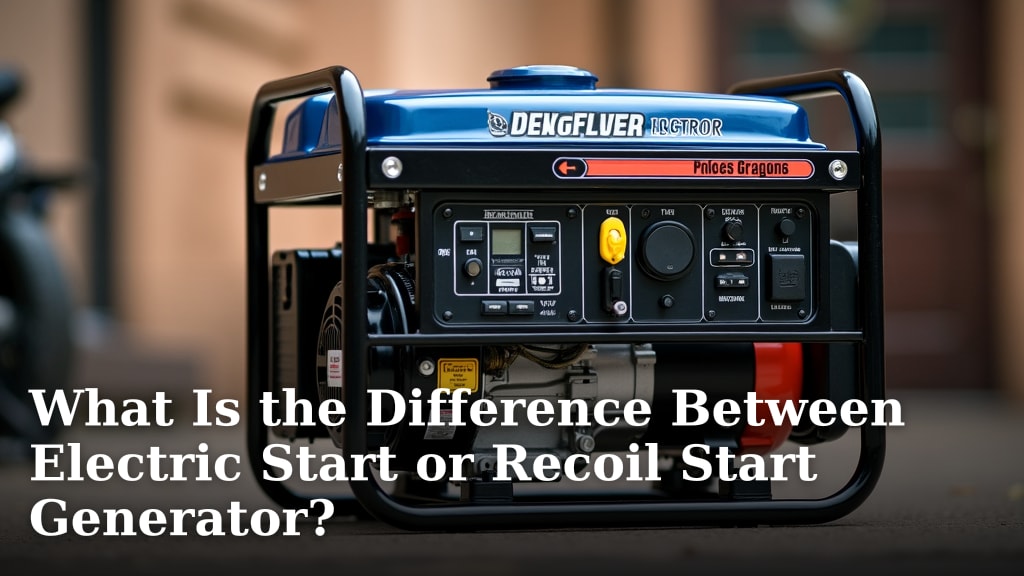
The main difference between an electric start and a recoil start generator lies in how they power on. Electric start generators use a battery and a push-button, much like your car, for effortless ignition. Recoil start generators require you to manually pull a cord, similar to a lawnmower, to get them going.
Choosing between these two generator types often comes down to your preference for convenience versus simplicity and cost. We found that electric start models are generally easier to use, especially for those with limited strength or in emergencies. Recoil start generators are typically more affordable and require less maintenance related to a battery system.
TL;DR
- Electric start uses a battery and button for easy ignition.
- Recoil start uses a pull cord, requiring manual effort.
- Electric start offers convenience, while recoil start is simpler.
- Cost and maintenance considerations vary between the two.
- Your choice depends on your needs and budget.
Ready to figure out which starting method is best for your power needs? Let’s walk through the details of each system so you can make an informed choice.
Unpacking Generator Starting Methods
Understanding how your generator starts is key to choosing the right model for your needs. We’ll break down the mechanisms behind electric and recoil starting systems.
What is an Electric Start Generator?
An electric start generator is all about convenience. It uses a small battery and a starter motor to get the engine running. Think of it like starting your car with a turn of the key or a push of a button.
How Does Electric Start Work?
When you press the start button, the generator’s battery sends power to the starter motor. This motor then cranks the engine rapidly, igniting the fuel and bringing the generator to life. It’s a quick, automated process.
- You push a button or turn a key.
- The battery sends power to the starter motor.
- The starter motor rotates the engine’s flywheel.
- The engine catches and begins to run.
This system eliminates the need for manual effort. We found this is particularly helpful in emergency situations or for users with limited physical strength.
Benefits of Electric Start
The primary benefit is ease of use. You don’t need to exert much physical effort to get the generator going. This can be a huge advantage during power outages when stress levels are already high. It’s also great for those who might struggle with repetitive pulling motions (AARP).
- Effortless ignition: Just push a button.
- User-friendly: Accessible to a wider range of users.
- Quick start: Gets power flowing faster in an emergency.
- Less fatigue: No physical strain required.
Drawbacks of Electric Start
While convenient, electric start generators have a few downsides. They generally cost more upfront due to the added components like the battery and starter motor. The battery also requires maintenance, like periodic charging or replacement. If the battery dies, you might be out of luck, unless there’s a backup recoil start.
- Higher initial cost: More parts mean a bigger price tag.
- Battery maintenance: Requires charging and occasional replacement.
- Potential for battery failure: A dead battery means no electric start.
- Added weight: The battery and motor add to the generator’s overall weight.
What is a Recoil Start Generator?
A recoil start generator is the classic, pull-cord model. It requires manual effort to start the engine. You might compare it to starting a lawnmower or an outboard boat motor.
How Does Recoil Start Work?
When you pull the recoil cord, a series of internal mechanisms engage the engine’s flywheel. This rapid pull turns the engine over, creating the necessary compression and spark to ignite the fuel. It’s a very direct, mechanical process.
- You grab the handle and pull the cord sharply.
- The cord unwinds, spinning a pulley connected to the engine.
- The engine rotates, initiating the combustion cycle.
- Once running, the cord rewinds automatically.
We found that a good, strong pull is usually all it takes. Sometimes, it might take a few pulls to get it going, especially if the generator hasn’t been used in a while.
Benefits of Recoil Start
Recoil start generators often come with a lower price tag. They have fewer complex parts, which means less to break down and simpler maintenance. You also don’t have to worry about a battery dying on you. Many users appreciate the straightforward, mechanical reliability.
- Lower cost: Typically more affordable.
- Simpler design: Fewer components mean less can go wrong.
- No battery worries: No need to charge or replace a battery.
- Lighter weight: Generally lighter than electric start models.
Drawbacks of Recoil Start
The main drawback is the physical effort required. Pulling a recoil cord can be challenging, especially for some individuals or if the generator is cold. In an emergency, repeated pulling can be tiring. You might also need to brace the generator to keep it steady while pulling.
- Physical exertion: Requires strength and coordination.
- Can be difficult: Especially in cold weather or for some users.
- Potential for injury: Sprains or strains from improper pulling.
- Less convenient: Not ideal for quick, hassle-free starts.
Hybrid Starting Systems
Did you know some generators offer the best of both worlds? Many modern generators feature both electric and recoil start options. This gives you the convenience of electric start with the reliability of a manual backup.
If the battery for the electric start dies, you can simply switch to the recoil cord. This can be a huge peace of mind, especially when you need power most. We’ve seen this hybrid approach become increasingly popular with homeowners.
Comparing Electric vs. Recoil: A Quick Look
Let’s put the key differences side-by-side. This table highlights the main points we’ve discussed so far, helping you visualize the trade-offs.
| Feature | Electric Start | Recoil Start |
|---|---|---|
| Starting Method | Button/Key, battery-powered motor | Manual pull cord |
| Effort Required | Minimal | Significant physical effort |
| Cost | Higher initial cost | Lower initial cost |
| Maintenance | Battery charging/replacement | Minimal, check cord for wear |
| Reliability | Dependent on battery charge | Mechanical, generally robust |
| Weight | Heavier | Lighter |
| Convenience | Very High | Moderate |
Choosing the Right Start for Your Generator
So, how do you decide which starting method is right for you? It really comes down to your personal needs, physical capabilities, and budget. We recommend thinking about how and where you’ll use the generator most often.
Consider Your Physical Capabilities
Are you comfortable with pulling a cord multiple times, possibly in an emergency or in cold weather? If you have mobility issues, back problems, or simply prefer an easier start, an electric start is likely a better fit. Children and some elderly individuals might find recoil start too challenging (CDC recommends considering physical ability for emergency preparedness).
Think About Your Budget
Electric start models are generally more expensive upfront. If you’re on a tight budget, a recoil start generator can save you money. Remember to factor in potential battery replacement costs for electric start models over time.
Where Will You Use It?
If your generator is for occasional recreational use, like camping, a recoil start might be fine. For home backup during frequent power outages, where you might need to start it in the dark or under pressure, the convenience of an electric start is a huge benefit.
Maintenance Preferences
Are you good at remembering to charge batteries? If not, a recoil start might be less hassle. Electric start batteries need periodic charging, even when not in use, to ensure they’re ready when needed. Neglecting this can lead to a dead battery right when you need power.
Pre-Purchase Checklist: Electric vs. Recoil
Before you make your final decision, run through this quick checklist. It helps solidify your priorities and ensures you’ve thought through all the important aspects.
- Do I need a generator that’s easy to start every time?
- Is my budget a primary concern, favoring lower initial cost?
- Will multiple people need to start the generator, including those with limited strength?
- Am I comfortable with periodic battery maintenance (charging, replacing)?
- How important is backup starting capability in case one method fails?
- What are the typical weather conditions where I’ll be starting the generator?
Answering these questions will guide you toward the best starting mechanism for your generator. Remember, the “best” option is the one that fits your unique situation and provides the most peace of mind.
Conclusion
Deciding between an electric start and recoil start generator boils down to your specific circumstances. We’ve shown you that electric start offers unmatched convenience, ideal for frequent use or anyone needing an effortless start. Recoil start, while requiring more physical effort, provides a simpler, more budget-friendly option with fewer components to maintain. Consider your physical ability, budget, and intended use carefully. We believe making an informed choice now ensures you have reliable power when you need it most.
Frequently Asked Questions
Can I add an electric start to a recoil-only generator?
Generally, converting a recoil-only generator to electric start is not practical or cost-effective. It would involve adding a battery, starter motor, and wiring. This modification is complex and usually more expensive than buying a generator with electric start built-in.
How do I maintain the battery on an electric start generator?
You should regularly check the battery’s charge, especially during long periods of storage. Use a trickle charger to keep it topped off. We recommend disconnecting the battery when not in use for extended times to prevent drain and prolong its lifespan.
Is it possible for both starting methods to fail on a hybrid generator?
While rare, it is possible for both to fail. The electric start could fail due to a dead battery or motor issue. The recoil start could fail if the cord breaks or the internal mechanism jams. Regular maintenance helps prevent both scenarios.
Are recoil start generators louder than electric start models?
The starting mechanism itself doesn’t significantly impact the overall noise level once the generator is running. The primary noise source is the engine itself. We found that the generator’s engine size and muffler design are the main factors determining its operating volume.
What safety precautions should I take when using a recoil start generator?
Always ensure the generator is on a stable, level surface before pulling the cord. Keep your feet firmly planted and pull with a smooth, strong motion to avoid injury. Wear appropriate gloves to protect your hands, and never wrap the cord around your hand.
