
What Is a Generator Transfer Switch Worth Buying for Home Backup?
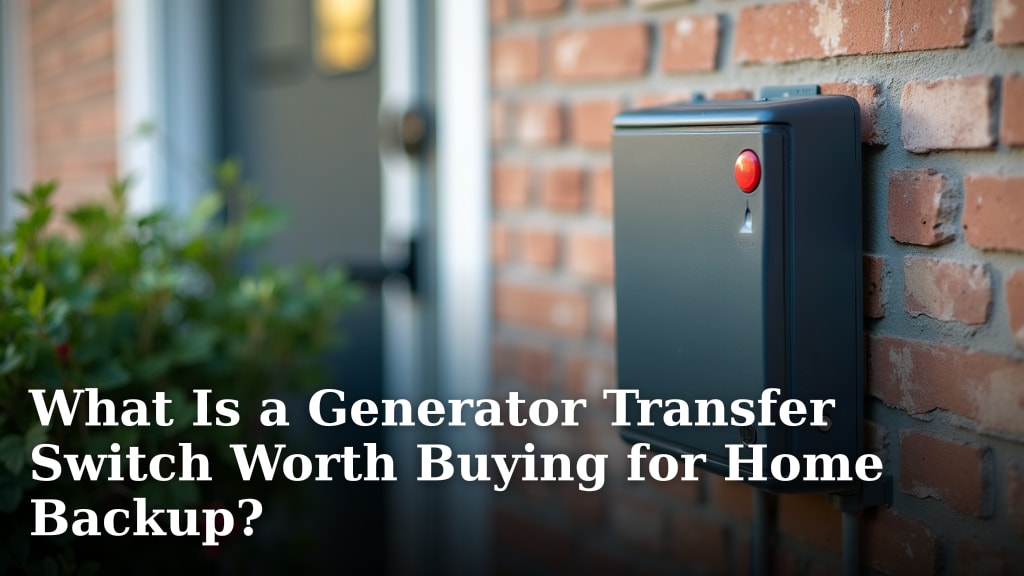
Yes, a generator transfer switch is worth buying for home backup if you own a portable generator. It keeps your home’s electrical system safe during an outage. Plus, it makes using your generator much easier and safer.
When the power goes out, a transfer switch lets you connect your generator directly to your home. This avoids dangerous “backfeeding” into the utility lines. We found that it’s essential for peace of mind during power interruptions.
- A transfer switch connects your generator safely to your home.
- It prevents dangerous power “backfeeding” to the utility.
- Makes using your home backup generator easy and quick.
- It’s required by electrical codes for many generator setups.
Ready to understand how this small device makes a big difference during a blackout? Let’s walk through everything you need to know about generator transfer switches.
Why a Generator Transfer Switch is Essential for Home Backup
A generator transfer switch is more than just a convenience; it’s a critical safety device for any home using a portable generator for backup power. It ensures your home’s electrical system remains isolated from the main power grid during an outage. This prevents dangerous situations for you and for utility workers.
Understanding How a Transfer Switch Works
Imagine your home’s electrical panel as the brain of your home’s power system. A transfer switch acts as a secure gateway between your generator and this panel. When the power goes out, it allows you to safely switch your home’s essential circuits from utility power to generator power.
The Two Main Modes: Utility and Generator
A transfer switch typically has two positions: “Line” (or “Utility”) and “Generator.” In the “Line” position, your home runs on normal utility power. When an outage hits, you manually (or sometimes automatically, with certain models) flip the switch to the “Generator” position. This disconnects your home from the utility grid before connecting it to your generator. This isolation is key.
We found that this simple mechanism prevents “backfeeding.” Backfeeding is when your generator sends electricity out onto the utility lines. This could severely injure or even kill a utility worker trying to restore power. It’s a serious hazard, and many electrical codes require a transfer switch to prevent it.
Safety First: Preventing Backfeeding
Safety is the number one reason to install a transfer switch. Connecting a generator directly to your home’s outlets without a transfer switch is extremely dangerous. It creates the risk of backfeeding, as mentioned. It can also damage your generator or home appliances if not done correctly.
Consider this: your home’s electrical system isn’t designed to handle two power sources at once. A transfer switch guarantees that only one power source is connected to your home at any given time. This keeps everything safe and functioning as it should. It’s a non-negotiable safety feature for portable generator owners, we found.
Ease of Use and Convenience
Beyond safety, a transfer switch makes using your generator incredibly simple. No more running extension cords through windows or doors. No more deciding which few appliances get power.
With a transfer switch, selected circuits in your home are powered directly. You simply start your generator, flip a switch, and your furnace, refrigerator, lights, and other essential items are back online. It’s a much more elegant and organized solution than a spaghetti of cords.
Quick Power Restoration
During a blackout, every minute counts, especially if you have medications needing refrigeration or a sump pump to prevent flooding. A transfer switch allows for rapid power restoration to critical areas of your home. You won’t be fumbling in the dark trying to find the right outlets.
Meeting Electrical Codes and Regulations
In many areas, installing a transfer switch isn’t just a good idea; it’s the law. Electrical codes, like the National Electrical Code (NEC) in the United States, often require a proper transfer switch when connecting a generator to your home’s electrical system. This ensures that installations are safe and standardized.
Ignoring these codes could lead to fines, insurance issues, or, worst of all, dangerous situations. We always recommend checking with your local authority having jurisdiction (AHJ) or a qualified electrician. They can confirm the specific requirements in your area (National Fire Protection Association).
Types of Generator Transfer Switches
When you’re ready to buy, you’ll generally find two main types of transfer switches: manual and automatic.
Manual Transfer Switches
This is the most common type for portable generators. With a manual transfer switch, you are actively involved in the process. When the power goes out, you’ll need to go to the switch, start your generator, and then flip the switch yourself. It’s straightforward and reliable.
Manual switches are typically less expensive to purchase and install. They give you full control over when generator power is used. Many homeowners find this manual control comforting.
Automatic Transfer Switches (ATS)
An ATS is more common with whole-home standby generators. These switches detect a power outage automatically. Then they start your generator, and transfer the load to it, all without you lifting a finger. When utility power returns, the ATS switches back and shuts down the generator.
While incredibly convenient, ATS units are more complex and costly. For a portable generator, a manual transfer switch is usually the practical and budget-friendly choice.
What to Consider When Choosing a Transfer Switch
Choosing the right transfer switch involves a few key decisions. It’s not a “one size fits all” purchase. You’ll want to match it to your generator and your home’s needs.
- Generator Wattage: Ensure the transfer switch can handle the full output of your generator.
- Number of Circuits: How many circuits do you want to power during an outage? A 6-circuit switch for essentials or a 10-circuit for more?
- Amperage Rating: Match the transfer switch’s amperage to your electrical panel’s main breaker or subpanel.
- Installation Location: Will it be indoors or outdoors? This affects the type of enclosure needed.
- Budget: Manual switches are generally more affordable than automatic ones.
Checklist for a Generator Transfer Switch Installation
Before you commit to a purchase and installation, we recommend running through this quick checklist. It helps ensure you’re prepared and make informed decisions.
- Have you determined your essential circuits (e.g., refrigerator, furnace, some lights, well pump)?
- Do you know the running watts and starting watts of your portable generator?
- Have you researched local electrical codes for generator connections?
- Have you contacted a qualified electrician for installation quotes?
- Do you have a safe and dry place to operate your generator outdoors?
- Is your budget clear for both the switch and professional installation?
Choosing and installing a generator transfer switch means you’re investing in your home’s safety and comfort. It gives you peace of mind when the lights go out. It means you’re prepared.
Is Professional Installation Necessary?
For most homeowners, yes, professional installation is strongly recommended. Wiring a transfer switch involves working with your home’s main electrical panel. This can be extremely dangerous if you don’t have the proper training and experience.
An experienced, licensed electrician will ensure the installation meets all local and national electrical codes. They will also make sure it’s done safely. This protects your home, your family, and utility workers. We found that trying to DIY this type of electrical work can lead to serious injury, property damage, or even a fire (Electrical Safety Foundation International).
While the initial cost of professional installation might seem like an extra expense, think of it as an investment. It guarantees a safe, reliable, and compliant setup. It’s not a place to cut corners, truly.
Conclusion
You’ve seen how a generator transfer switch is a smart investment for home backup. It’s not just about convenience; it’s primarily about safety. We found it keeps your home and utility workers protected from dangerous backfeeding. Plus, it simplifies powering your essential appliances during an outage.
Choosing the right type and ensuring professional installation are key steps. This ensures your system is safe, compliant, and ready when you need it most. Take control of your home’s power during blackouts. Start planning for your transfer switch today.
Frequently Asked Questions
Are all transfer switches compatible with any portable generator?
No, they are not universally compatible. You need to match the transfer switch’s wattage and amperage ratings to your specific generator’s output. Consult your generator’s manual or an electrician to ensure proper sizing and compatibility.
Can I install a generator transfer switch myself to save money?
For most homeowners, we strongly advise against DIY installation. Working with your home’s main electrical panel is risky and requires specialized knowledge. A licensed electrician will ensure the installation is safe and meets all local electrical codes.
How long does a typical transfer switch installation take?
Installation time can vary depending on your home’s electrical setup and the type of switch. Generally, a professional electrician can install a manual transfer switch in a few hours to a full day. Automatic systems may take longer.
Will a transfer switch power my entire home during an outage?
Not necessarily. A transfer switch typically connects your generator to a select number of critical circuits in your home. These might include your refrigerator, furnace, some lights, and essential outlets. Whole-home transfer switches exist, but they are usually for larger, whole-home standby generators.
What’s the average cost for a manual transfer switch and installation?
The cost varies based on the switch’s size, features, and local labor rates. We found that a manual transfer switch itself might range from a few hundred dollars to over a thousand. Professional installation can add several hundred to over a thousand dollars to that cost.
