
What Do You Need to Power a Well Pump with a Dual Fuel Generator?
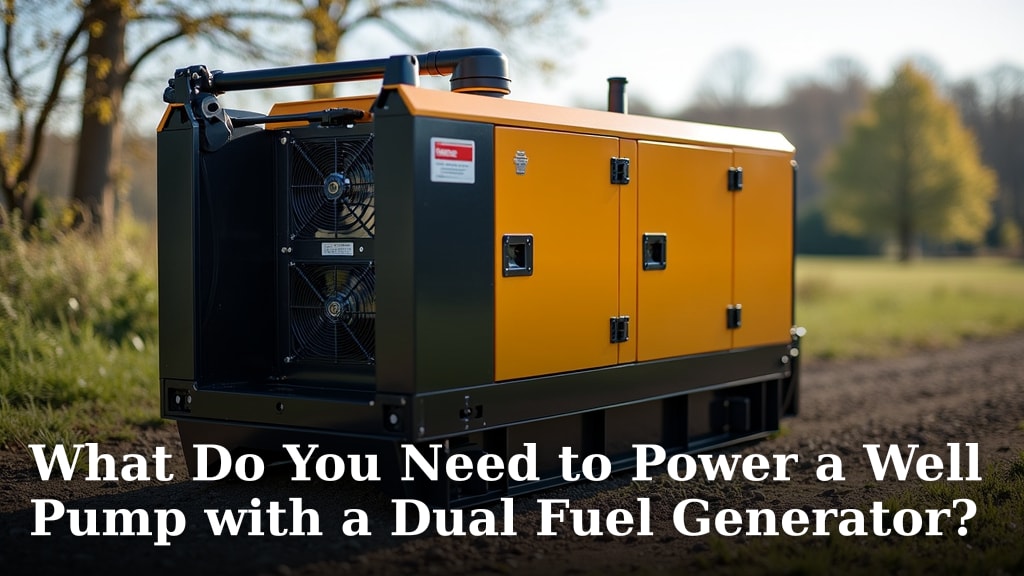
Yes, you can definitely power a well pump with a dual fuel generator, but it requires careful planning. You’ll need a generator with enough surge wattage to start the pump and enough running wattage to keep it going. Understanding your pump’s specific power needs is the first step to ensuring you have reliable water when you need it most.
When choosing a generator, consider both the pump’s starting (surge) and running (continuous) power requirements. Most well pumps need a significant surge of power to overcome initial resistance, which can be 3-5 times their normal running wattage. A generator that’s too small might not be able to handle this initial demand, leading to an unsuccessful start or even damage to the pump or generator. Many experts recommend having a generator with at least 20-30% more wattage than your pump’s peak requirement.
- Generator wattage is key: watch for surge and running power.
- Well pumps need a big “kick” to start (surge wattage).
- Your generator must handle this surge, not just the steady hum.
- Always aim for a generator with a bit extra power.
- Know your pump’s specs before buying a generator.
Let’s walk through exactly what you need to consider to make sure your dual fuel generator can reliably power your well pump.
Powering Your Well Pump with a Dual Fuel Generator: What You Need
So, you’re wondering exactly what it takes to get your well pump humming with a dual fuel generator? It’s a smart move to prepare for power outages. You’ll need to match your generator’s power output to your well pump’s specific appetite. This isn’t just about having a generator; it’s about having the right generator for the job.
Understanding Your Well Pump’s Power Demands
The heart of this setup is knowing your pump. Every well pump is different. They vary based on size, depth, and type. You need to find out two key numbers: its running wattage and its starting (surge) wattage. Think of running wattage as the power the pump uses to just keep the water flowing. Starting wattage is like the extra burst of energy needed to get things moving from a standstill.
Finding Your Pump’s Wattage Specifications
Where do you find these numbers? Your pump’s manufacturer label is usually the best place. It’s often a small plate attached directly to the pump or its control box. If it’s not there, check the owner’s manual. Sometimes, you might need to contact the pump manufacturer directly if you’re still unsure. Don’t guess here; accurate numbers are important.
Running Wattage Explained
The running wattage, also called continuous wattage, is the steady amount of power your pump consumes once it’s up and running. This is the number you’ll see listed as the pump’s typical operational load. For most submersible well pumps, this can range from 750 watts to 1500 watts or even more, depending on the horsepower. A 1 horsepower pump, for example, might run around 1000 watts.
Starting Wattage: The Big Kick
This is where things get tricky. Well pumps, especially those with motors, need a powerful surge of electricity to get started. This is the starting wattage, or surge wattage. Researchers have found this surge can be anywhere from 3 to 7 times the running wattage. For a pump that runs at 1000 watts, the starting surge could be as high as 7000 watts! This brief, intense demand is what most often trips up undersized generators.
Calculating Your Total Power Needs
Once you have your pump’s running and starting wattages, you can calculate what your generator needs to supply. You’ll need enough power for the pump to start and then to keep running. Let’s say your pump has a running wattage of 1000 watts and a starting wattage of 4000 watts. Your generator must be able to handle at least that 4000-watt surge.
But wait, there’s more! What else might be running when the pump kicks on? Consider any other appliances or lights that could be on simultaneously. Add their wattage to your pump’s running wattage. Then, compare that total to your pump’s surge wattage. The highest number will be your benchmark for generator size.
Choosing the Right Dual Fuel Generator
Now that you know your pump’s needs, you can select a generator. Dual fuel generators offer flexibility, running on gasoline or propane. This is a huge advantage for extended outages. Propane often stores longer and burns cleaner. Gasoline is widely available.
Generator Wattage Ratings: What to Look For
Generators have two main wattage ratings: peak (surge) wattage and running (continuous) wattage. The peak wattage is the maximum power the generator can produce for a short burst, usually during startup. The running wattage is the stable output it can sustain over time. For your well pump, you must focus on the generator’s peak wattage to handle the pump’s starting surge.
Many experts suggest having a generator with at least 20% to 30% more peak wattage than your pump’s maximum surge requirement. This buffer ensures the generator isn’t constantly strained. It helps prevent overheating and extends the generator’s lifespan. So, if your pump needs a 4000-watt surge, aim for a generator with at least 4800-5200 peak watts. Many experts recommend this buffer (National Electrical Code).
Inverter Generators vs. Conventional Generators
For sensitive electronics, inverter generators are often preferred. They produce cleaner, more stable power. However, for simply powering a well pump, a conventional generator might suffice and often offers more wattage for the price. Always check your pump’s manual; some newer pumps might have sensitive electronics that benefit from an inverter’s cleaner power.
We found that a robust conventional generator often has the necessary surge capacity. But, if your pump is particularly delicate or expensive, an inverter might offer extra peace of mind. It’s a trade-off between cost and potential protection for your pump.
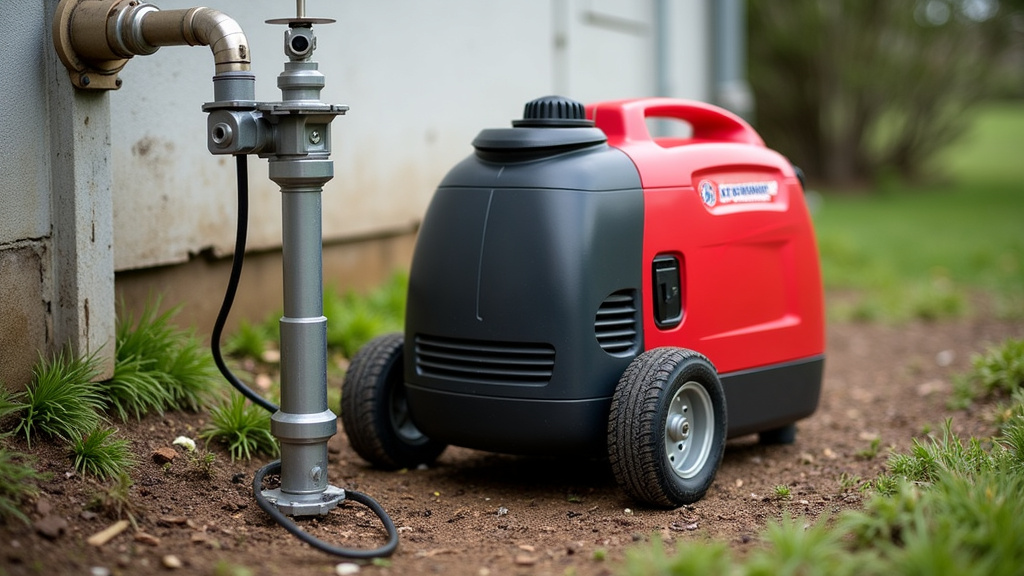
Essential Accessories and Connections
It’s not just about the generator and the pump. You’ll need the right connections to get the power from the generator to the pump safely and efficiently. This involves more than just plugging it in.
Transfer Switches for Safety and Convenience
A manual transfer switch is highly recommended. It safely disconnects your home’s electrical system from the utility grid and connects it to the generator. This prevents dangerous backfeeding that could electrocute utility workers or damage your generator and home wiring. It also allows you to easily switch power sources without complex wiring.
Installation of a transfer switch should always be done by a qualified electrician. They ensure it meets local codes and is properly sized for your home’s electrical load. This is a critical safety step often overlooked.
Heavy-Duty Extension Cords and Wiring
If you’re not using a transfer switch and need to run a cord directly to the pump or a sub-panel, you need the right cables. Use heavy-duty, outdoor-rated extension cords. They must be appropriately gauged for the wattage and distance. An undersized cord can overheat, melt, and cause a fire hazard. It also causes voltage drop, meaning less power actually reaches your pump.
We found that for most well pumps, you’ll need cords rated for at least 12-gauge or 10-gauge wire. Always check the generator and pump’s requirements. A short, thick cord is better than a long, thin one. Ensure all connections are secure and protected from the elements.
Fuel Storage and Safety
Dual fuel generators mean you need to manage two types of fuel. Store gasoline in approved containers, away from living areas and ignition sources. Store it upright. It degrades over time, so rotate your stock. Propane tanks should also be stored upright, outdoors, and secured.
Running the generator on propane is often easier for storage. Propane tanks have a much longer shelf life than gasoline. It’s a good idea to keep at least one full propane tank on hand specifically for the generator. Many generators can run on a standard 20-pound BBQ tank, but larger tanks offer longer run times.
A Quick Checklist for Success
Here’s a rundown to make sure you have everything in order:
- Know Your Pump’s Wattage: Find the running and surge watts on the label or manual.
- Size Your Generator: Choose one with enough peak wattage to cover your pump’s surge, plus a buffer.
- Consider Dual Fuel Benefits: Propane offers longer storage and cleaner burning.
- Install a Transfer Switch: For safe and easy power switching (hire an electrician!).
- Get the Right Cords: Use heavy-duty, outdoor-rated cords of the correct gauge.
- Secure Fuel Storage: Keep gasoline and propane stored safely and ready to use.
Conclusion
Powering your well pump with a dual fuel generator is totally achievable with the right preparation. You’ve learned that understanding your pump’s specific surge and running wattage is the absolute first step. Then, selecting a generator that comfortably exceeds those needs, especially the initial surge, is key. Don’t forget the importance of safe connections with a transfer switch and heavy-duty cords.
By following these guidelines, you can ensure a reliable water supply even when the grid goes down. Your next step is to grab your pump’s manual and start checking those wattage numbers to find the perfect generator match.
Frequently Asked Questions
How much extra wattage do I need for my well pump?
Experts often suggest having a generator with at least 20-30% more peak wattage than your pump’s maximum surge requirement. This buffer prevents the generator from being constantly overloaded. It helps ensure longevity and reliable performance during power outages.
Can I just use a long extension cord to connect my generator to the pump?
While possible, it’s not ideal. If you must use an extension cord, ensure it’s heavy-duty, outdoor-rated, and the correct gauge for the wattage and distance. Undersized cords can overheat and cause voltage drop, reducing power to the pump. A transfer switch is a much safer and more efficient solution.
Does it matter if my generator is inverter or conventional for a well pump?
For most standard well pumps, a conventional generator will work fine and often offers more wattage for the price. However, if your pump has sensitive electronics, an inverter generator provides cleaner, more stable power and might offer extra peace of mind.
What’s the biggest danger when connecting a generator to a well pump?
The biggest danger is backfeeding electricity into the grid, which can be lethal to utility workers. This is why a properly installed manual transfer switch by a qualified electrician is so important. It safely disconnects your home from the utility before connecting to the generator.
How long can a dual fuel generator power my well pump?
The run time depends on the generator’s fuel tank size, its fuel efficiency, and the pump’s wattage. Running on propane generally offers longer storage and cleaner burning. You can extend run time by using larger propane tanks or having extra fuel readily available.
