
What Causes Generator Overloading with an Air Conditioner?
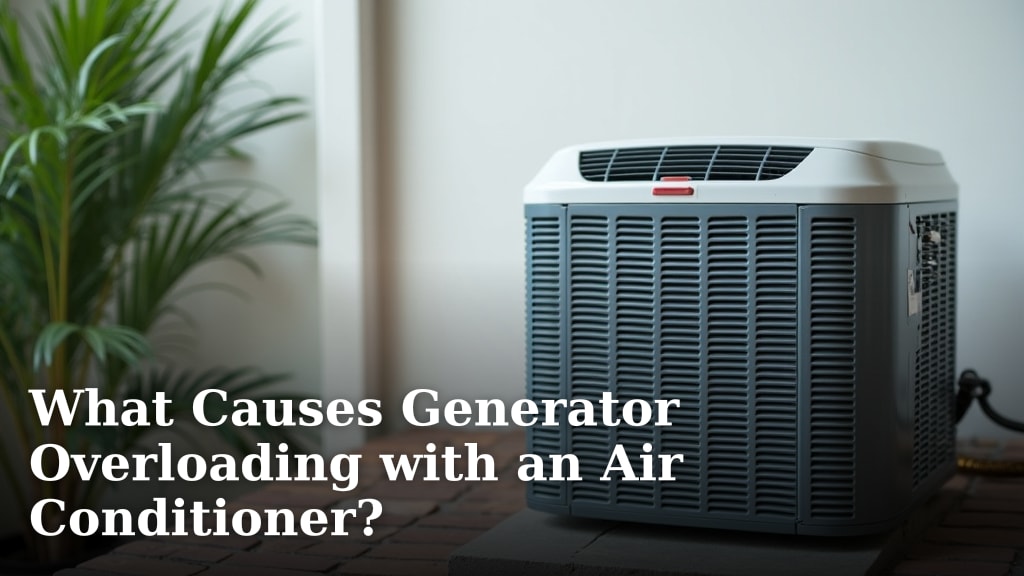
Generator overloading with an air conditioner happens because your AC unit needs a big surge of power to start up. This initial demand can exceed what your generator can safely provide. Even if the generator runs your AC once it’s on, the startup spike can trip its circuit breaker or damage its components. So, it’s not just about sustained power, but that initial jolt.
Most air conditioners have a two-part power requirement. They need a certain wattage to run continuously, but they require much more power for a few seconds when the compressor kicks in. This is often called “starting wattage” or surge wattage. If your generator isn’t rated for this higher surge capacity, you’ll run into trouble. It’s like trying to push a heavy door open when it’s stuck – it takes a lot more effort at first.
- Your AC needs way more power to start than to keep running.
- Generators can’t always handle this sudden, high power demand.
- This can cause the generator to shut down or get damaged.
- It’s all about the “starting wattage” vs. “running wattage.”
Let’s break down why this happens and what you can do to keep both your generator and your cool air working harmoniously.
You’ve got your generator ready, your air conditioner humming (or about to), and then… nothing. Or worse, a funny noise from the generator followed by silence. It’s a frustrating experience, especially when you’re counting on that cool air. The main culprit? Generator overloading. But what exactly does that mean when an air conditioner is involved?
Understanding Generator Overload with Your AC
Generator overload happens when your generator is asked to produce more electrical power than it’s designed to handle. Think of it like trying to squeeze too much toothpaste out of the tube at once. Eventually, it just won’t budge, or something might burst.
For your air conditioner, this isn’t usually about the steady power it needs to keep the air blowing. Instead, it’s all about the initial jolt required to get things started. We’ll break down exactly why that surge is so demanding.
The Power Demands of an Air Conditioner
Air conditioners are energy-hungry appliances. They have two main power needs that often catch people by surprise. Understanding these differences is key to preventing overload.
Running Wattage: The Steady Job
This is the power your AC needs to simply keep running. It powers the fan and maintains the cool temperature. It’s the consistent draw your air conditioner puts on the generator once it’s up and operating smoothly. This is the easier part for your generator to handle.
Starting Wattage: The Big Hurdle
This is where most issues arise. When your air conditioner’s compressor kicks in, it needs a massive burst of electricity. This is called the starting wattage, or surge wattage. The compressor is essentially a motor, and starting motors requires significantly more power than running them.
We found that this starting wattage can be two to three times higher than the running wattage. For a typical window AC unit, the running wattage might be around 700 watts. But its starting wattage could jump to 1500 watts or even higher for a few seconds. It’s a brief but intense demand.
Why the Starting Surge is So High
Imagine trying to push a car. It takes a lot of effort to get it rolling from a standstill. Once it’s moving, it’s much easier to keep it going. The compressor in your AC works much the same way. It has to overcome inertia and internal friction to start spinning.
This is why simply matching your generator’s wattage to your AC’s running wattage isn’t enough. You absolutely must account for that initial surge of power. Failure to do so is the most common reason for generator overload when running an air conditioner.
Generator Capacity: What’s “Enough”?
Generators are rated by their wattage. These ratings usually have two numbers: running watts and surge watts (also called starting watts). It’s vital to know both of these for your generator.
Understanding Generator Ratings
The running wattage (or rated wattage) is the continuous amount of power your generator can safely produce. The surge wattage (or starting wattage) is the extra power your generator can supply for a short period to handle startup demands of appliances like your AC.
Many experts recommend choosing a generator with a surge wattage rating that is at least 20% higher than the combined starting wattage of all the appliances you plan to run simultaneously. For just an air conditioner, you’d need a generator whose surge capacity comfortably exceeds your AC’s starting wattage.
The Calculation You Need to Make
Here’s a simple way to look at it. Let’s say your air conditioner has:
- Running Wattage: 800 watts
- Starting Wattage: 2000 watts
You would need a generator with a surge wattage of at least 2000 watts. Ideally, you’d want a bit more headroom. A generator with a running wattage of around 1000-1500 watts and a surge wattage of 2500 watts or more would likely do the trick for this AC unit alone.
However, remember that you might want to run other small appliances too. Always add up the running watts of everything you might use and the starting watts of the biggest “surge” item (your AC). This total needs to be less than your generator’s surge capacity.
Why Your Generator Trips or Shuts Down
When the power demand from your air conditioner’s startup exceeds the generator’s capacity, several things can happen. The outcome depends on the generator’s safety features and the severity of the overload.
Circuit Breaker Trips
Most generators have built-in circuit breakers. These are safety devices designed to protect the generator and your appliances. If the generator senses an overload, it will trip the breaker, shutting off the power flow. This is the generator doing its job to prevent damage.
You’ll often hear a click, and then all power will be cut. You’ll then need to reset the breaker after ensuring the load is reduced or the appliance’s surge demand has passed (though with an AC, it’s the initial surge that’s the problem).
Generator Shuts Down
More sophisticated generators have an automatic shutdown feature for severe overloads or other issues. If the overload is too significant, or if it persists, the generator might shut itself down completely to prevent internal damage. This is a more serious response than a tripped breaker.
This shutdown is your generator’s way of saying, “I can’t handle this!” You’ll need to identify the cause and make sure the load is appropriate before restarting. Trying to start the AC again immediately without addressing the overload will likely result in another shutdown.
Damage to Generator Components
In the worst-case scenario, repeated or extreme overloads can cause physical damage to the generator. This could include damage to the engine, alternator, or other electrical components. This is a costly problem that could have been avoided with proper planning.
Manufacturers design generators with specific tolerances. Pushing them beyond these limits, especially repeatedly, can lead to premature wear and tear or outright failure. Always consult your generator’s manual for its exact specifications.
The Role of Air Conditioner Type and Age
Not all air conditioners are created equal when it comes to power draw. The type and age of your AC unit can also play a role in whether it overloads your generator.
Different AC Types, Different Needs
A small window AC unit will have different power requirements than a central air system or a portable AC unit. Central air conditioners, especially larger ones, often have much higher starting wattages due to their larger compressors and more powerful fans.
Even within window units, older models might be less energy-efficient and have higher surge demands compared to newer, ENERGY STAR-rated models. Always check the nameplate on your AC unit for its specific wattage requirements.
Age and Efficiency
As appliances age, their efficiency can sometimes decrease. An older AC unit might draw more power to perform the same job as it did when it was new. This means its running wattage could creep up, and its starting wattage might become even more demanding.
This is another reason why knowing your AC’s specific power needs is essential. If you have an older unit, factor that into your generator calculations. You might need a slightly larger generator than you would for a brand-new, high-efficiency model.
Beyond Wattage: Other Factors
While wattage is the primary concern, a couple of other factors can influence how well your generator handles your air conditioner.
Generator Quality and Type
Not all generators are built the same. Inverter generators, for example, are generally more efficient and produce cleaner power than traditional conventional generators. They can often handle fluctuating loads better.
Inverters produce “cleaner” power, which is especially important for sensitive electronics, but they also have advanced engine control that can adapt power output more smoothly. This can sometimes help with surge demands, though you still need adequate overall capacity.
Starting Method (Manual vs. Auto)
Some air conditioners have different starting mechanisms. For instance, a “hard start” capacitor can be added to an AC unit. This small device provides an extra boost of power precisely when the compressor is trying to start.
Adding a hard start capacitor can significantly reduce the surge wattage required by the AC. This makes it much easier for a generator to handle the startup. If you frequently struggle with generator overload, this is a relatively inexpensive modification to consider. We found it to be a very effective solution for many.
Is Your Generator Up to the Task? A Quick Check
Before you try to power up your AC with your generator, take a moment to ensure you’re set up for success. Here’s a simple checklist:
- Check Your Generator’s Surge Wattage: Find the highest number on your generator’s rating plate.
- Find Your AC’s Starting Wattage: Look for the nameplate on your air conditioner. It will list running watts and often surge watts or amps (which you can convert to watts).
- Add Other Loads: If you plan to run anything else, add their running wattage to your AC’s requirements.
- Compare the Numbers: Ensure your generator’s surge wattage is comfortably higher than your AC’s starting wattage (plus any other running loads).
- Consider a “Hard Start” Kit: If your numbers are too close, research adding one to your AC unit.
Conclusion
You’ve learned that generator overload with an air conditioner isn’t about the steady power draw, but that initial surge of electricity your AC needs to start. This “starting wattage” is often much higher than its running wattage. Failing to match your generator’s surge capacity to your AC’s demand is the main cause of tripped breakers or shutdowns. Before you power up, always check your generator’s surge rating and your AC’s starting wattage. Your next step is to ensure your generator is adequately sized or consider simple upgrades like a hard start kit. This preparation keeps you cool and your equipment safe.
Frequently Asked Questions
Can I run my AC and other appliances at the same time with my generator?
You can, but you must calculate the combined wattage. Add up the running wattage of all appliances you plan to use simultaneously, and then add the starting wattage of your air conditioner (or the appliance with the highest surge demand). Ensure this total is well within your generator’s surge wattage rating.
How do I find the starting wattage for my air conditioner?
Look for the nameplate on your air conditioner. It usually lists the running watts and sometimes the starting watts directly. If it only lists amps, you can convert it to watts by multiplying amps by your home’s voltage (typically 120V in the US). Remember, the starting wattage is often 2-3 times the running wattage.
What happens if my generator trips its breaker when I try to start the AC?
A tripped breaker is your generator’s safety mechanism. It means the power demand exceeded its capacity. You’ll need to turn off the AC and any other appliances, reset the breaker, and then try starting the AC again, ideally first. If it trips again, your generator is likely too small for the AC’s starting surge.
Are inverter generators better for running air conditioners than conventional generators?
Inverter generators produce cleaner, more stable power, which is gentler on electronics. They can also adapt their output more smoothly, which may help with fluctuating loads. However, you still need to ensure the inverter generator’s surge wattage is sufficient for your air conditioner’s startup needs.
Can an old air conditioner cause generator overload more easily than a new one?
Yes, older air conditioners can sometimes be less energy-efficient and may have higher starting wattage requirements compared to newer models. As appliances age, their components can wear, potentially increasing their power draw. It’s always wise to check the specific wattage requirements of your AC unit, regardless of its age.
