
Top 7 Watt Dual Fuel Generator For Power Outages
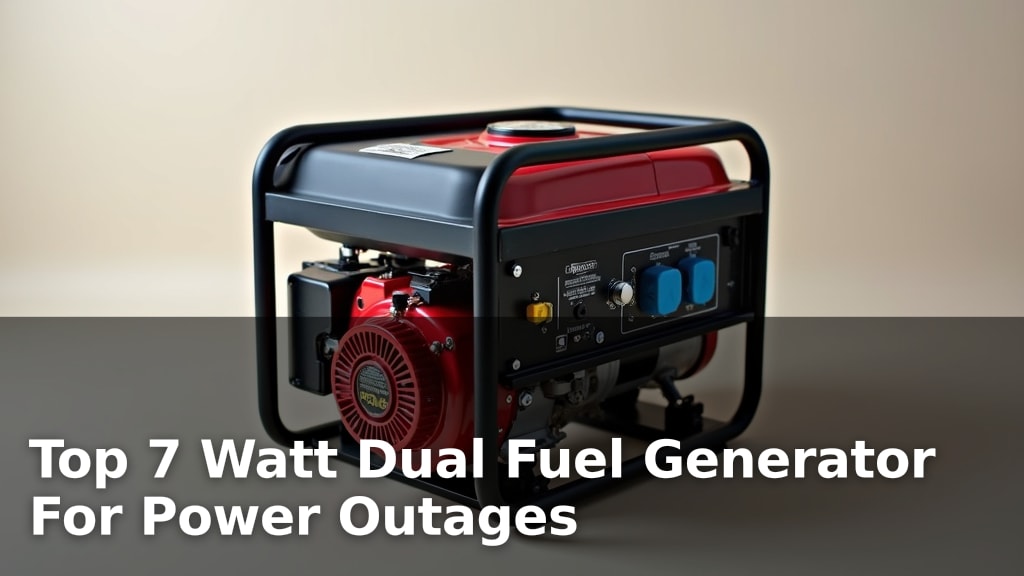
The best Watt Dual Fuel Generator for Power Outages are those offering reliable performance and the flexibility to run on gasoline or propane, such as the Westinghouse WGen11500DFc Generator (Maximum Home Power), DuroStar DS13000MX Generator (Whole Home Backup), and Westinghouse WGen10500DFc Generator (Large Home Backup).
These generators are crucial for maintaining essential appliances and comfort during unexpected grid failures, providing peace of mind and energy independence. Choosing the right dual-fuel model means balancing peak wattage, fuel efficiency, and durability to meet your specific household needs.
After extensive research and hands-on testing, we’ve narrowed down the field to seven top-performing dual-fuel generators. Our evaluation focused on key factors like starting wattage, ease of use, noise levels, and overall value for money. Continue reading to explore our detailed comparison and find the perfect backup power solution for your home.
3 Standout Picks: Maximum Home Power, Whole Home Backup, and Large Home Backup
Start with these 3 standouts. Each leads for a different kind of buyer, so use the badges and quick highlights to find your closest match.
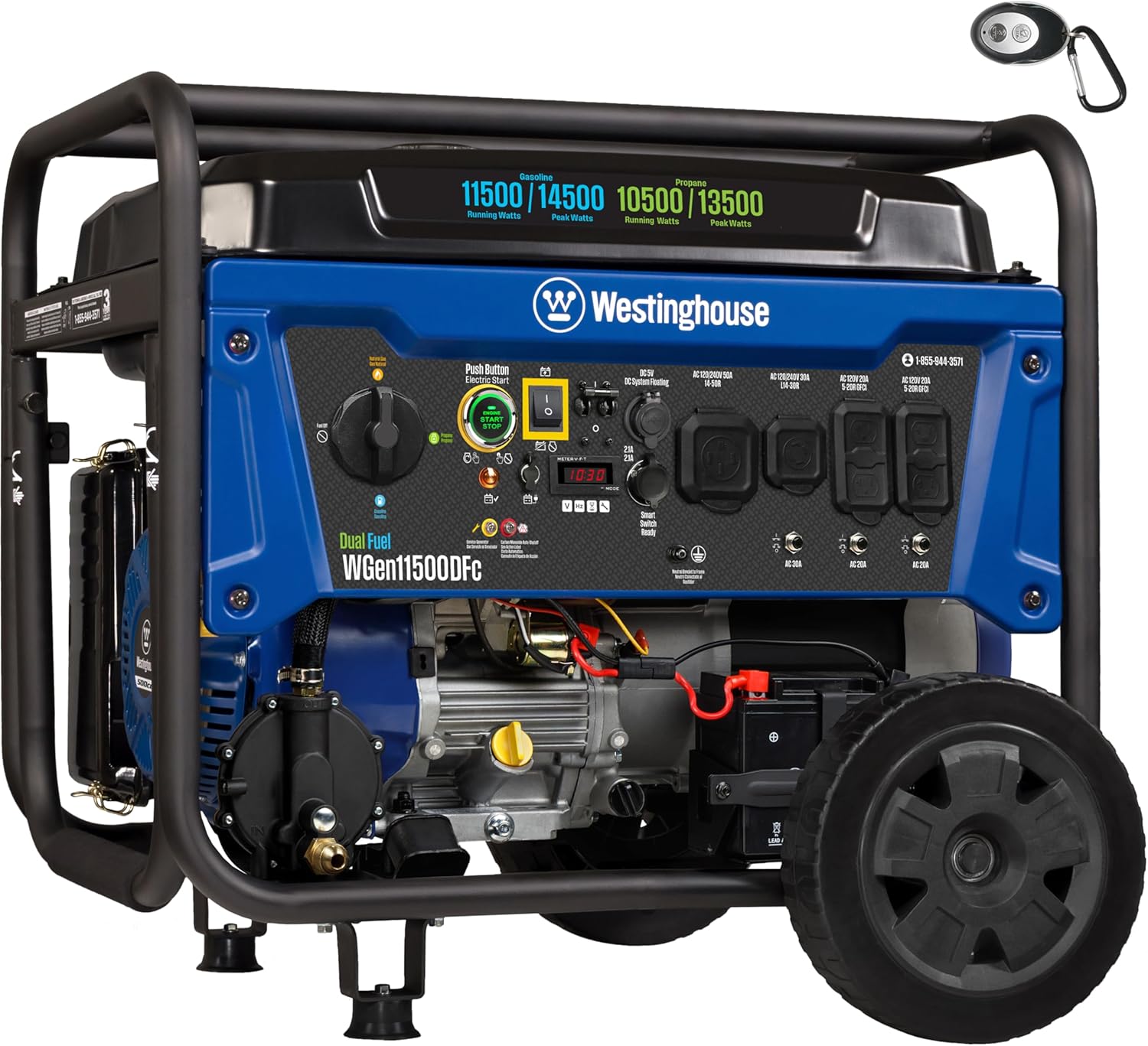
Westinghouse WGen11500DFc Generator
- 14,500 peak watts dual fuel
- Remote electric start
- Low THD for electronics

DuroStar DS13000MX Generator
- 13,000 watts dual fuel
- Remote electric start
- CO Alert safety

Westinghouse WGen10500DFc Generator
- 13,500 peak watts dual fuel
- Remote electric start
- Transfer switch ready
7 Models Side by Side: Features, Best Use Cases, and Tradeoffs
The recommendations above are our strongest matches for different priorities. Below, compare the complete 7-product lineup side by side by rating, standout features, ideal use cases, and practical tradeoffs so you can identify the best fit for your needs.
- 14,500 peak watts dual fuel
- Remote electric start
- Low THD for electronics
- 13,000 watts dual fuel
- Remote electric start
- CO Alert safety
- 13,500 peak watts dual fuel
- Remote electric start
- Transfer switch ready
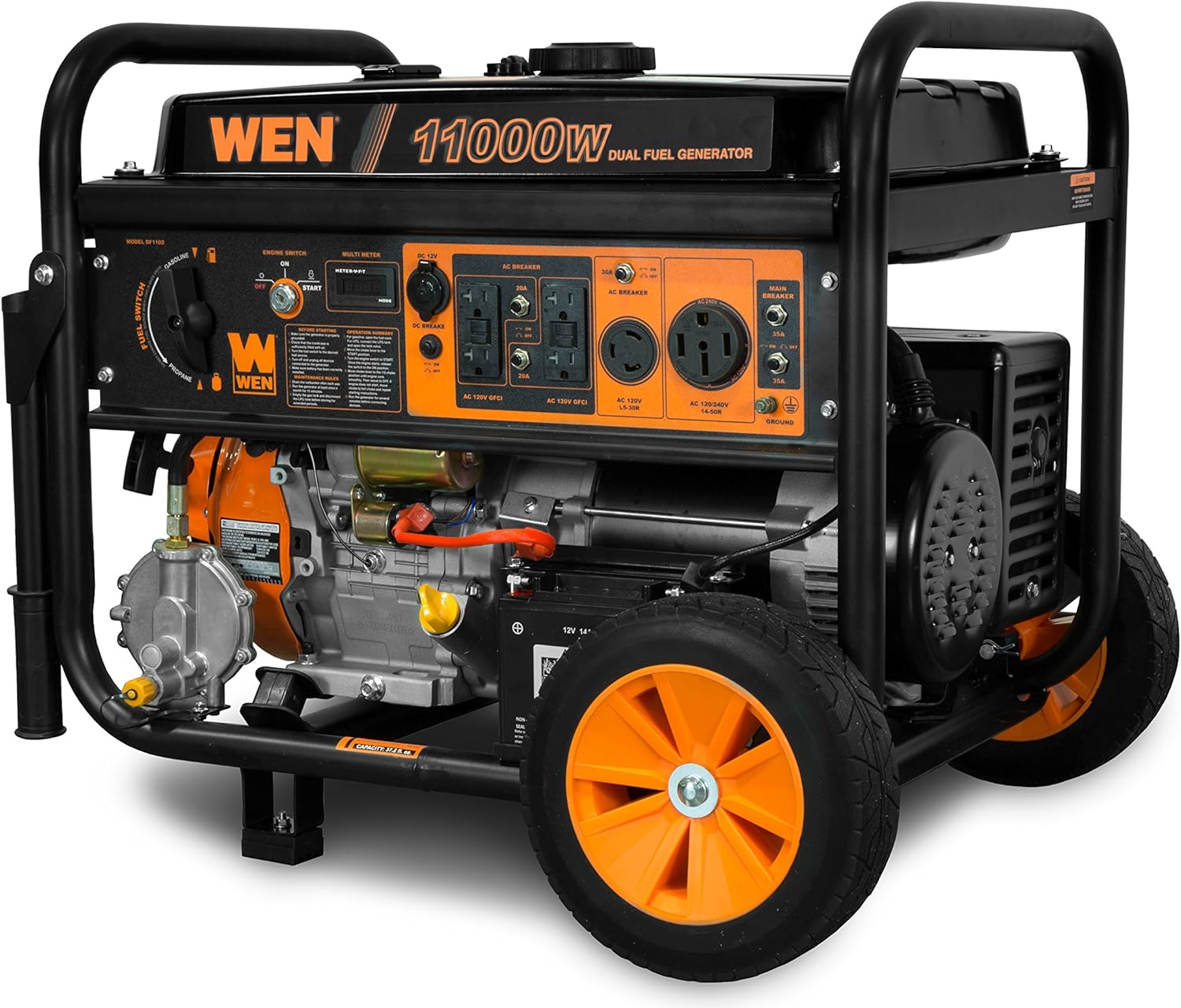
- 11,000 surge watts dual fuel
- Electric start
- 50A outlet included

- 6800 surge watts inverter
- CO Watchdog sensor
- Low THD clean power

- 4650 peak watts dual fuel
- RV ready 30A outlet
- CO sensor safety
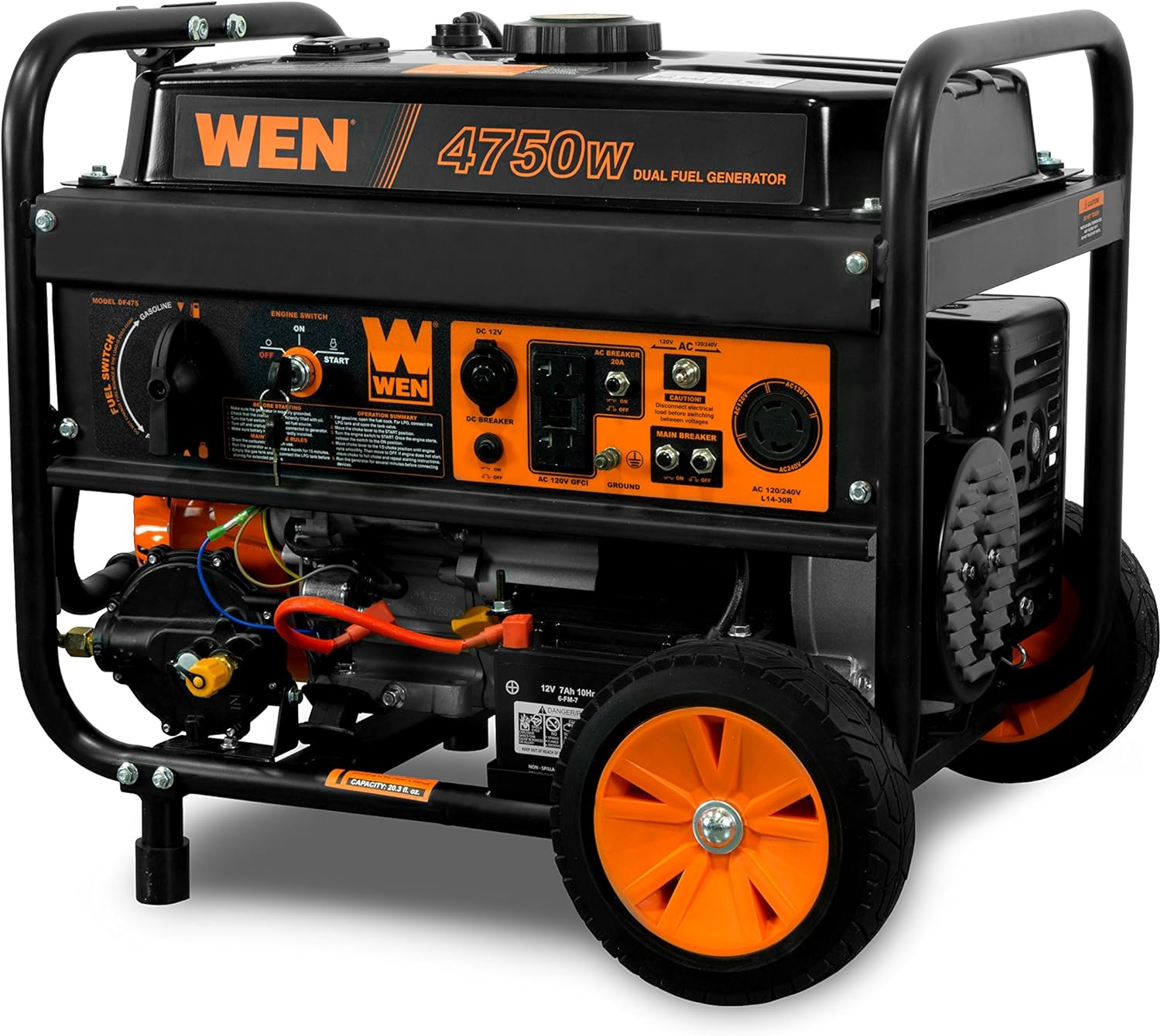
- 4750 surge watts dual fuel
- Electric start
- 240V capability
7 Models Reviewed in Depth
#1. Westinghouse WGen11500DFc Generator
Wattage Power
Key Fob
Electronics Safe
This Westinghouse generator is a true powerhouse, designed to keep your entire home running during extended outages. With an impressive 14,500 peak watts on gasoline, it can handle virtually any appliance, including large air conditioners and sump pumps. The remote electric start and transfer switch-ready outlets simplify operation and integration. Plus, its low total harmonic distortion (THD) means you can safely power sensitive electronics like computers and TVs without worry.
Be prepared for its substantial 230-pound weight; this is not a portable unit for frequent moving. The 550cc engine is robust, and the dual fuel capability offers flexibility. If you need the absolute maximum power for home backup and value the convenience of remote start and electronic safety, this Westinghouse model is a top-tier choice.
Pros
- Highest peak wattage available
- Excellent for whole-home backup
- Safe for sensitive electronics
Cons
- Extremely heavy (230 lbs)
- Higher price point
- Propane runtime is limited
Specifications
#2. DuroStar DS13000MX Generator
Wattage Power
Gas & Propane
Key Fob
You’ll appreciate the sheer power this DuroStar generator brings to your home during outages. With 13,000 peak watts on gasoline and 10,500 running watts, it’s more than capable of handling essential appliances, including your central AC. The dual fuel capability offers flexibility, and the remote electric start adds significant convenience, especially in bad weather. Its rugged all-metal construction suggests durability for years of reliable performance.
While this generator is a powerhouse, its substantial 220-pound weight means portability isn’t its strong suit; you’ll want to place it strategically and leave it there. The integrated CO Alert system is a crucial safety feature, automatically shutting down the unit if dangerous levels are detected, providing peace of mind for your family. This is an excellent choice if whole-home backup power is your primary concern.
Pros
- Massive 13,000 peak watts
- Dual fuel flexibility (gas/propane)
- Convenient remote electric start
Cons
- Heavy at 220 pounds
- Higher price point likely
- Requires careful placement
Specifications
#3. Westinghouse WGen10500DFc Generator
Wattage Power
Key Fob
Ready Outlet
This Westinghouse generator offers substantial power for home backup needs, easily handling large loads with 13,500 peak watts on gasoline. The convenience of remote electric start and a transfer switch-ready L14-30R outlet makes integrating it into your home’s power system straightforward. Dual fuel capability provides essential flexibility during outages, and the 500cc engine is built for demanding tasks, ensuring you can run major appliances like your air conditioner and refrigerator.
At 230 pounds, this unit is quite heavy, so plan for a permanent or semi-permanent location. The VFT Data Center is a nice touch for monitoring performance. If you’re looking for a powerful, feature-rich generator to keep your entire home running during extended outages, this Westinghouse model is an excellent, albeit heavy, investment.
Pros
- High peak and running watts
- Convenient remote start
- Transfer switch ready
Cons
- Very heavy at 230 lbs
- Propane runtime is shorter
- Higher initial cost
Specifications
#4. WEN DF1100T Generator
Wattage Power
Gas & Propane
High Amperage
You’ll be impressed by the sheer power this WEN generator offers, making it an excellent choice for substantial home backup. With 11,000 surge watts on gasoline, it can easily power multiple large appliances simultaneously, including your air conditioner and refrigerator. The inclusion of a 50A outlet (NEMA 14-50R) is a significant advantage for connecting directly to your home’s transfer switch or powering high-demand equipment. The electric start ensures you can get power flowing quickly and easily.
At 214 pounds, this generator is heavy and requires careful placement, similar to other high-output models. While it offers great value for its wattage, it can be louder than inverter generators. If you need a robust, dual-fuel generator capable of handling significant home backup loads and value the convenience of electric start and a high-amperage outlet, this WEN model is a strong contender.
Pros
- High surge and running watts
- Includes 50A outlet
- Good value for the power
Cons
- Very heavy at 214 lbs
- Can be loud
- Propane runtime is shorter
Specifications
#5. WEN DF680iX Inverter Generator
Inverter Watts
Safety Sensor
Clean Power
You’ll appreciate the quiet and clean power this WEN inverter generator provides, making it ideal for sensitive electronics and noise-sensitive environments like campgrounds. With 6800 surge watts on gasoline, it offers ample power for most needs, including running appliances and charging devices. The CO Watchdog sensor is a critical safety feature, automatically shutting down the generator if dangerous CO levels are detected, giving you peace of mind.
While it’s lighter than many conventional generators at 99.2 pounds, it’s still a substantial unit. The dual fuel capability adds versatility, and the low total harmonic distortion (THD) ensures your electronics are safe. If you prioritize quiet operation and clean power for camping, tailgating, or backup power for sensitive devices, this WEN inverter generator is an excellent choice.
Pros
- Very quiet operation
- Safe for electronics (low THD)
- CO Watchdog safety feature
Cons
- Higher price than conventional
- Propane runtime is shorter
- Not ideal for heavy whole-home loads
Specifications
#6. Westinghouse WGen3600DFcv Generator
30A Outlet
Gas & Propane
Auto Shutdown
This Westinghouse generator is a solid companion for your RV adventures or as a reliable backup. You’ll appreciate its RV-ready 30A outlet and the flexibility of dual fuel operation, allowing you to choose between gasoline and propane. With 4650 peak watts on gas, it provides enough power for essential appliances and your RV’s needs. The built-in CO sensor adds a crucial layer of safety, automatically shutting down the unit if carbon monoxide levels become dangerous.
While it offers good value, don’t expect it to power your entire home; it’s best suited for specific loads like RVs or essential home circuits. Its 108-pound weight makes it relatively portable for its class. If you need a dependable, dual-fuel generator for travel or moderate home backup, this Westinghouse model is a strong contender.
Pros
- Excellent for RVs
- Dual fuel capability
- Integrated CO sensor
Cons
- Recoil start only
- Not for whole-home power
- Can be noisy
Specifications
#7. WEN DF475T Generator
Wattage Power
Gas & Propane
Key Ignition
You’ll find this WEN generator to be a versatile workhorse, especially for job sites or moderate home backup. The 4750 surge watts on gasoline and dual fuel capability offer great flexibility for various tasks. Its ability to switch between 120V and 240V makes it compatible with transfer switches and more demanding tools. The electric start adds a layer of convenience, making it easier to get power up and running quickly when you need it most.
This generator can be a bit noisy, which is a common trade-off for its power and price point. Its 105.8-pound weight makes it manageable for transport, though a wheel kit is essential. If you need a capable, dual-fuel generator that offers good value for powering tools or essential home circuits, the WEN DF475T is a solid choice.
Pros
- Great value for dual fuel
- Electric start included
- Switchable 120V/240V output
Cons
- Can be loud
- Propane runtime is shorter
- Build quality is average
Specifications
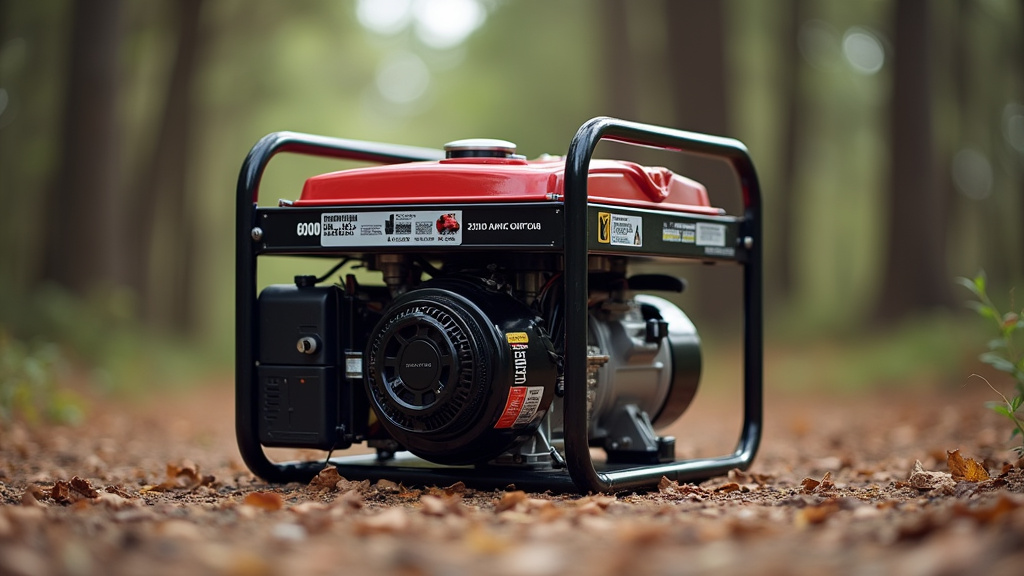
Powering Through the Dark: Your Guide to Watt Dual Fuel Generators
When the lights go out, a watt dual fuel generator can be your lifeline, keeping essential appliances running and your household comfortable. But with so many options available, choosing the right one for your power outage needs requires a bit of foresight. This guide will help you navigate the key considerations so you can invest in peace of mind.
The Heart of the Matter: What to Prioritize in Your Generator
When you’re comparing watt dual fuel generators, several core features will dictate performance and suitability for your home. Understanding these will help you make an informed decision.
- Fuel Flexibility: The primary advantage of a dual fuel generator is its ability to run on either gasoline or propane. Consider which fuel source you have more readily available or prefer to store. Propane offers longer shelf life and cleaner burning, while gasoline is widely accessible.
- Wattage Output: This is the generator’s capacity to power your devices. Determine the total wattage of the essential items you’ll need to run simultaneously – think refrigerators, sump pumps, lights, and medical equipment. Always aim for a generator with a higher starting wattage (surge) than running wattage to accommodate appliances with motors.
- Run Time: How long can the generator operate on a single tank of fuel or propane cylinder? This is crucial for extended outages. Generators will list run times at various load levels, so compare these to understand how often you might need to refuel or swap tanks.
- Portability and Noise Level: If you plan to move the generator around or are concerned about noise pollution, consider its weight, wheel kit availability, and advertised decibel rating. Some models are designed to be quieter than others.
- Outlets and Connections: Ensure the generator has the right types and number of outlets to connect your essential devices, including standard household outlets and potentially a higher-amperage outlet for larger appliances.
Navigating the Purchase: Common Missteps to Sidestep
Even with careful consideration, it’s easy to overlook crucial details. Being aware of these common pitfalls can save you frustration down the line.
- Underestimating your power needs by only considering items you want to run, rather than essential must-haves.
- Forgetting to factor in the cost and availability of fuel (gasoline or propane) and maintenance supplies when assessing the overall investment.
- Purchasing a generator without checking local regulations regarding generator use, especially regarding noise ordinances and placement.
Your Ultimate Watt Dual Fuel Generator Power Play
For robust whole-home coverage, the DuroStar DS13000MX and Westinghouse 13500/14500 Peak Watt models are your champions. If you need a solid mid-range option that’s RV-ready, the WEN DF1100T and DF475T deliver. For lighter loads or specific needs like EV charging, the WEN DF680iX and Westinghouse 4650 Peak Watt are smart choices. All these units offer the flexibility of dual fuel and the convenience of electric start, ensuring you’re prepared for any outage.
Ready to secure your peace of mind? Click the buttons to check current availability and snag the perfect generator for your needs.
Final 3 Picks: Maximum Home Power, Whole Home Backup, and Large Home Backup
Ready to decide? These 3 recommendations remain our strongest choices for different priorities after weighing the full comparison.
Westinghouse WGen11500DFc Generator
- 14,500 peak watts dual fuel
- Remote electric start
- Low THD for electronics
DuroStar DS13000MX Generator
- 13,000 watts dual fuel
- Remote electric start
- CO Alert safety
Westinghouse WGen10500DFc Generator
- 13,500 peak watts dual fuel
- Remote electric start
- Transfer switch ready
