CARB vs EPA Generators: What Is the Difference? (November 2026)
EPA and CARB labels refer to emissions standards, with CARB generally applying stricter rules in California. Check the exact model’s certification and your local requirements before buying, because a label alone doesn’t confirm that a generator is allowed everywhere.
On this page (10 sections)
- CARB vs EPA Generators: What Is the Difference?
- What do EPA and CARB mean on a generator?
- Does EPA compliant mean CARB compliant?
- How do the labels affect your buying choice?
- Which listed generator has a clear EPA label?
- What do the carburetor products have to do with EPA vs CARB?
- What should you verify before buying?
- Can you rely on a broad product-family claim?
- What does CARB compliance not tell you?
- How should you decide between CARB and EPA generators?
CARB vs EPA Generators: What Is the Difference?
EPA and CARB generator labels describe emissions standards, and CARB rules are generally stricter in California. The phrase “EPA compliant” alone does not tell you whether a specific generator meets CARB requirements or is allowed in your location.
For the search “generator EPA vs CARB,” start with the exact model’s certification and where you plan to buy and use it. Then compare output, fuel, portability and the loads you need to run.
A carburetor is a generator engine part. It is not an emissions certification, even though the words look similar.
This distinction matters most when a listing uses short phrases. A title may highlight one standard while leaving another unanswered.
You need to check the full model details before you treat that claim as complete.
The exact model ties the label to a real unit. A product family can include several sizes and versions, and certification can differ across that range.
A general claim may not cover your choice.
Start your check with the model number on the unit or in the manual. Then look for a certification statement tied to that number.
Separate the emissions check from the practical check that follows. Power, outlets, fuel and runtime still need to fit the loads you plan to run.
Also separate the label check from safe placement and operation. The manual sets out where the unit may run and what precautions apply.
If the wording is unclear, ask for the details in writing and keep the reply with your purchase records. In short, treat EPA and CARB as separate questions, confirm the exact model, confirm your location rules, then compare the practical fit.
 Best for specified Champion repairs
SOOGE Carburetor for Champion Power Equipment
What do EPA and CARB mean on a generator?
EPA refers to federal emissions rules, while CARB refers to California Air Resources Board rules. A generator may meet one standard, both, or have a certification status that needs to be checked for its exact model.
Small engines burn fuel and release exhaust emissions. Emissions standards limit what covered engines may release, and manufacturers design and certify models to meet the rules that apply to them.
EPA compliance is a federal baseline. CARB rules are generally stricter, and California uses its own certification requirements for covered engines and equipment.
A short label on a product description may not answer every question. Look for the exact model number and certification statement, then confirm it with the manufacturer or the relevant regulator if your location has special requirements.
Does EPA compliant mean CARB compliant?
No, an EPA compliant statement does not automatically prove CARB compliance. Treat the two labels as separate checks when California rules matter to your purchase or use.
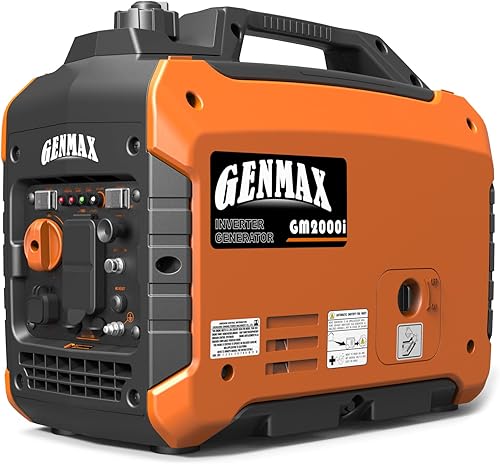
The GENMAX Portable Generator is described as EPA compliant. The details do not specify CARB certification, so don't infer it from the EPA wording.
The Oxseryn 4400-Watts Inverter Generator is described as “EPA Compliment” in its title, and its description calls its models EPA certified. Those phrases do not identify the CARB status of this exact model.
If a seller or manufacturer uses unclear wording, ask for the model’s certification information in writing. Match it to the model number on the unit, since certification can differ across models in a product family.
This is where careful reading saves trouble. The GENMAX listing gives a clear EPA claim, yet it leaves the CARB question open.
You should not fill that gap with an assumption.
The Oxseryn wording needs the same care for a different reason. Its title uses “EPA Compliment,” which is not a precise certification statement.
A family description about EPA certified models also does not settle this exact model.
Ask for the model number and the certification statement together. That pairing shows whether the claim applies to the unit you plan to buy.
It also avoids confusion with a nearby size in the same range.
Keep the answer in your records once you receive it. Match it against the label on the unit when it arrives.
If the wording differs, raise it with the seller before you rely on the unit.
For buyers outside California, the CARB check may still be worth making. It can clarify a model’s status if you later move, lend the unit, or sell it on.
A clear check now prevents a harder question later.
How do the labels affect your buying choice?
Choose a generator certified for the place where you plan to buy and use it, then check that its power fits your needs. Emissions compliance and practical fit are separate decisions.
If you live in California, confirm CARB certification for the exact generator before committing. If you live elsewhere, check state or local requirements and any restrictions where you plan to operate it.
Next, estimate the load you expect to run. Add the running watts for appliances and tools, and account for starting demand where equipment needs extra power at startup.
The GENMAX offers 1600 running watts and 2000 starting watts. The Oxseryn lists 3400 running watts and 4400 peak watts, so it may suit a higher stated load, provided the outlets and operating instructions match your plans.
A larger wattage number doesn't settle the emissions question. Verify certification independently, and choose based on your loads, fuel plan and permitted use.
Which listed generator has a clear EPA label?
The GENMAX Portable Generator has an explicit EPA compliant label in its title. Its CARB status is not specified in the information here, so California buyers should confirm that detail before buying.
The GENMAX is a 2000W low-noise gasoline inverter generator with 1600 running watts and a listed weight of 34 lb. The title also says it has an Eco mode and is suitable for backup home use and camping.
The Oxseryn lists 3400 running watts, a 30A RV outlet and a 2 gallon tank. Its EPA wording is spelled “Compliment” in the title, so verify the exact model’s certification rather than treating that phrase as a clear CARB statement.
These generator examples show why labels need careful reading. Compare the formal certification and model number, not just a general claim or a similar model name.
What do the carburetor products have to do with EPA vs CARB?
Carburetors are replacement engine parts, while EPA and CARB are emissions standards. A carburetor kit cannot tell you whether the generator it fits is certified.
The SOOGE Carburetor for Champion Power Equipment is described for specified Champion gasoline generator models. Its kit includes a carburetor, fuel tank shutoff valve, spark plug and other parts.
The Buckbock GP5500 Carburetor for 0J58620157 Generac GP5500 names several Generac models and includes an air filter and spark plug. Match the part number and engine model before buying either replacement.
These kits suit a narrow job, which is repair on a listed model. They are not generators and they do not carry an emissions label of their own.
For the SOOGE kit, the listed Champion models set the boundary. The package includes the carburetor, choke lever, fuel line, gaskets, fuel tank shutoff valve, spark plug and fuel filter.
For the Buckbock kit, part number 0J58620157 is the key match. It names Generac GP5000, GP5500, GP6500, GP6500E and GP7500E models.
The package includes a carburetor, choke lever, air filter, gaskets, spark plug, fuel lines, valve, fuel filter and clamps. That bundle suits repair work on one of those listed models.
Set up starts with confirming the engine and part numbers against your unit and manual. If they do not match, stop and look for the correct part.
Care after fitting follows the manual for your generator. Keep the work area clean and follow the maker’s guidance for leaking fuel, hot parts and safe handling.
A correct kit can address a repair need on a listed model. It cannot turn that model into a different certified version or settle an EPA or CARB question.
Use these parts only when the model match is clear. Keep the old part numbers in your records for the next repair.
A replacement part should match the exact engine and generator. Don't assume that fitting a new carburetor changes a model’s certification or makes it compliant with a different emissions rule.
What should you verify before buying?
Confirm the generator’s exact model certification, local rules, available output and operating instructions. This short check can prevent a mismatch between a label and your intended use.
Use this order:
- Find the exact model number, not only the product family name.
- Check whether the manufacturer identifies EPA, CARB or both certifications for that model.
- Confirm any state or local purchase and use restrictions.
- Compare running watts, starting watts, outlets and fuel with your planned loads.
- Read the manual for placement, ventilation, maintenance and operating directions.
For a home connection, plan the electrical setup separately from emissions compliance. Read How Do You Choose Between Transfer Switch or Interlock Kit? before deciding how a generator may connect to home circuits.
Neutral configuration is another distinct compatibility issue. This guide to bonded or floating neutral generators can help you identify the question to raise with an electrician or the generator maker.
For an RV, consider the full power protection setup too. The Progressive Industries EMS-PT30X Review covers an electrical management device, while transfer equipment has a different role.
If you are comparing home connection options, this explanation of transfer switch or interlock kit differences can help frame the next decision. The dual fuel or tri fuel generator comparison and propane or gasoline for a dual fuel generator guide cover fuel choices, which are also separate from emissions certification.
Can you rely on a broad product-family claim?
Use a broad claim as a prompt to verify, not as proof for every model in a family. Names and features can vary between versions, and the unit’s model number is the useful match point.
The Oxseryn description refers to several inverter generator models and says its EPA certified models meet emissions standards. That general wording does not confirm the status of every named wattage or the specific model in this comparison.
The same caution applies to product titles that use abbreviated or misspelled compliance wording. Ask the brand to confirm the model and certification when the information is unclear.
Keep the answer with your purchase records. That makes it easier to resolve questions if the unit label, packaging and online description use different wording.
What does CARB compliance not tell you?
CARB compliance does not tell you whether a generator has enough power, the right fuel, suitable outlets or safe placement for your situation. Compare those needs after confirming the rules.
A compliant model can still be too small for your loads. A higher output model can still be unsuitable if its certification does not meet the rules where you need it.
Emissions labels also do not replace safe operation. Follow the manual, keep the generator outdoors and away from openings, and use the required carbon monoxide precautions.
Start every comparison with the load list you plan to run. Add the running watts for each item, then note which ones need extra power to start.
The GENMAX GM2000i states 2000 starting watts and 1600 running watts. It weighs 34 pounds and runs on gasoline, with a 79.7cc engine.
That may suit lighter backup or camping loads, but it will not cover a larger home load by default. Portability also differs, since a 34 pound unit is easier to move than a heavier one.
The Oxseryn OXOG10 states 4400 peak watts and 3400 running watts. It has a 2 gallon tank, a 30A RV outlet and a listed weight of 57 pounds.
That may suit a higher load, provided the outlets match your equipment. Count how many devices you need to plug in at once and confirm voltage and outlet type, not just total wattage.
Fuel planning also affects real use. Think about tank size, runtime at your expected load, storage and refuelling in a safe place.
Place certification first, then power, outlets, fuel and portability. That order keeps a compliant but undersized unit from becoming a poor fit.
How should you decide between CARB and EPA generators?
Choose a CARB certified model when California requirements apply, and verify the exact model’s status before purchase. Elsewhere, check local rules and compare the generator’s power and features against your intended use.
The GENMAX offers a clearly stated EPA compliant label and lower output for smaller loads. The Oxseryn states higher output and an EPA phrase, but its CARB status needs separate confirmation.
The carburetor kits are for repairs on specified generator models, not for choosing an emissions class. Match the part number for repairs, and match the certification for generator compliance.
FAQs answer the common label questions, but the useful next step is checking the model number and rules for your location. That is the clearest way to resolve “generator EPA vs CARB” before you buy.
Frequently asked questions
What is the difference between EPA and CARB generators?
EPA and CARB refer to emissions standards, but they are not interchangeable labels. CARB standards are generally stricter and apply in California.
Check the exact generator’s certification and current local rules, since a broad “EPA compliant” phrase does not guarantee CARB compliance or confirm where the unit may be sold or used.
Can I use an EPA generator in California?
Don't assume an EPA label alone is enough for California. Check the exact model’s CARB certification and current state requirements before buying or using it there.
The model name and certification details matter, so verify them with the manufacturer or the relevant state agency.
Does CARB compliance mean a generator is cleaner?
CARB compliance means the model meets applicable California emissions requirements, which are generally stricter than federal EPA rules for small engines. It doesn't tell you the generator’s fuel use, sound level, power output or suitability for your loads, so compare those separately.
Is an EPA compliant label enough when buying a generator?
An EPA compliant label is useful, but it may not meet local rules where you plan to buy or use the generator. Confirm the exact model’s certification, then check its watts, outlets, fuel, location rules and safe operating instructions.
Do replacement carburetors change a generator’s emissions certification?
A replacement carburetor does not by itself mean a generator meets EPA or CARB rules. Use the correct part for the exact engine and follow the manufacturer’s repair guidance.
For emissions questions after a repair, check with the generator maker or a qualified service technician.