How to Choose a Diesel Camping Generator
Choose a diesel camping generator only when its fuel efficiency and long-duty potential justify the extra weight and noise. Compare transport weight, campsite rules, sound level, starting and running watts, fuel access, and safe outdoor placement before you buy.
On this page (10 sections)
- Is a diesel generator suitable for camping?
- How much power does a diesel camping generator need?
- How much does generator weight matter at a campsite?
- How quiet should a generator be at a campground?
- What fuel and runtime issues should you compare?
- What generator features help with camping?
- How should you set up a generator at camp?
- What maintenance does a diesel camping generator need?
- Diesel camping generator or gasoline inverter generator?
- Final decision rule for a diesel camping generator
A diesel camping generator makes sense when you need extended power and can accept more transport weight, engine noise, fuel handling and maintenance than a small gasoline inverter generator. For many campers, the best choice is the lightest generator that safely covers the devices they actually plan to run.
Start with your largest combined load. Then compare the generator's running watts, starting watts, sound rating, physical weight, fuel access and campground rules.
A generator that covers your power needs but is too heavy to move or too loud to operate may not be practical at the campsite.
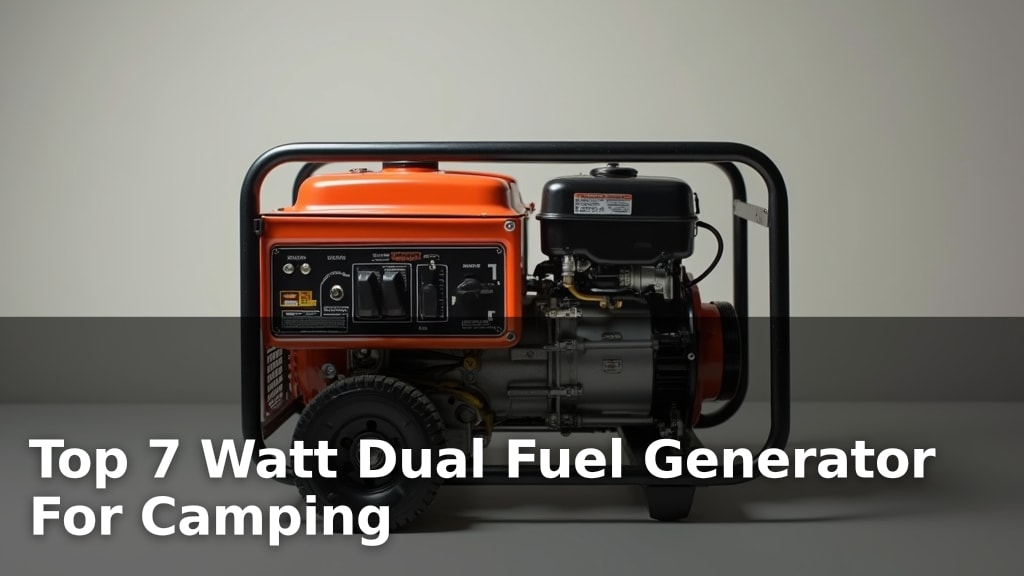
The products below are gasoline inverter generators, not diesel models. They give you useful reference points for the trade-off.
A 25.3 lb unit is easier to carry than a 51 lb unit, while a 2,350-watt model offers more output than a 1,200-watt model.
Is a diesel generator suitable for camping?
A diesel generator is suitable for camping when power demand, long operating periods or fuel preference matter more than low weight and quiet operation. It is less suitable when you hike from the vehicle, share a quiet campground or only need power for phones, lights and small appliances.
Diesel engines are often chosen for demanding work because of their fuel and duty characteristics. That does not automatically make a diesel generator the right camping choice.
A camping generator must also fit into your vehicle, remain stable during transport, meet local rules and operate far enough from occupied spaces.
Ask these questions before you choose:
- Will you run an RV air conditioner, microwave, heater or other high-demand appliance?
- Will several devices operate at the same time?
- Can you lift and secure the generator without help?
- Does the campground permit diesel generators during your planned hours?
- Can you carry the correct fuel safely and keep it protected?
- Is the sound rating acceptable for nearby campers?
- Can you place the unit outdoors with exhaust away from people and openings?
If your answers point toward a compact, quiet setup, compare the best Honda camping generator options before settling on diesel. If fuel flexibility matters more than diesel specifically, the Best Dual Fuel Generator For RV Camping guide can help you compare another route.
How much power does a diesel camping generator need?
Choose a diesel camping generator by adding the running watts of the devices you expect to use together, then allowing extra capacity for starting loads. Motors and compressors can draw more power briefly when they start, so the total running wattage alone is not enough.
Make a simple load list:
| Device or use | What to record |
|---|---|
| RV air conditioner | Running watts and starting demand |
| Microwave | Running watts |
| Refrigerator | Running watts and compressor start |
| Coffee maker or kettle | Running watts |
| Television or computer | Running watts |
| Lights and chargers | Combined running watts |
| Water pump or fan | Running watts and starting demand |
Do not assume that a generator's maximum or surge number is its continuous output. Use the rated or running watt figure for the load you need to maintain, then compare the surge figure with the largest starting demand.
An RV air conditioner can change the decision more than a phone charger or a few LED lights. If you plan to run cooling, cooking and refrigeration together, calculate that combination rather than choosing from the generator's headline wattage.
You also need to decide which devices can wait. Running a microwave for a few minutes may be possible after switching off another high-draw appliance.
A smaller generator can work if your routine uses one major load at a time, but that requires a clear plan.
What does each reference generator show?
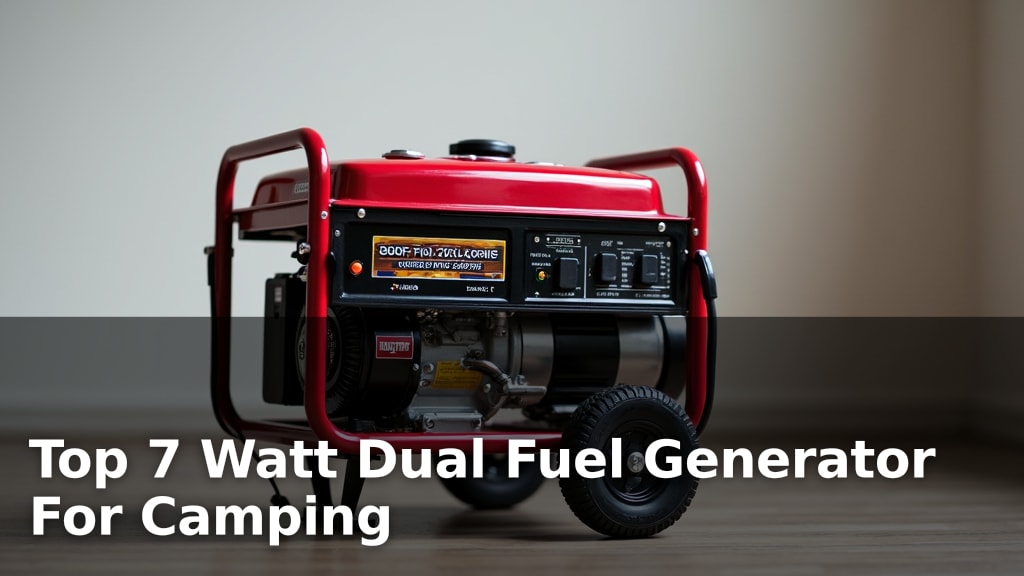
These three gasoline models show how output and transport weight affect camping choices. They are not diesel generators, but their published specifications help set practical comparison points.
The WEN has a 2,350-watt maximum and 1,900-watt rated output. Its 39 lb weight is lower than the Honda model below, while its title identifies gasoline power and a portable inverter design.
The Honda EU2200i has a 2,200-watt maximum output and weighs 51 lb in the supplied specifications. Its title identifies a 2,200-watt inverter generator, so compare its output with your running and starting load rather than with diesel labels alone.
The GENMAX provides 1,200 starting watts and 1,000 running watts. Its 25.3 lb weight makes it the lightest of these three reference models, but its lower output limits the number of larger appliances you can run together.
How much does generator weight matter at a campsite?
Generator weight matters because you may need to lift it from your vehicle, carry it across uneven ground and position it safely away from occupied areas. A diesel unit that requires two people to move can be inconvenient even if its output is suitable.
Separate the transport problem into three parts:
- The generator's empty weight.
- The weight of fuel and any required accessories.
- The distance and surface between your vehicle and the operating spot.
A short campsite parking pad creates a different problem from a remote campsite reached by a cart or a long walk. Check the generator's handles and lifting points, but do not assume a handle makes a heavy unit easy to carry.
The reference models range from 25.3 lb to 51 lb. The GENMAX is the lightest, the WEN is in the middle, and the Honda is the heaviest of the three.
A diesel camping generator may add more weight, so compare the complete transport plan instead of looking only at power.
Secure the generator during vehicle travel so it cannot slide, tip or damage other equipment. Keep fuel containers secured separately according to their instructions, and leave access to the generator's controls once you arrive.
How quiet should a generator be at a campground?
Choose a generator with a sound rating that fits the campground's quiet hours and your distance from other campers. A unit that seems acceptable beside a work area may be intrusive in a small shared campground.
Sound ratings need careful comparison. Check whether the measurement uses a stated load and distance, because two numbers may not describe the same operating condition.
A lower published decibel figure is useful only when the testing conditions are comparable.
The WEN description identifies operation at 51 decibels at quarter load. Honda identifies 48 to 57 dB(A) for the EU2200i.
GENMAX identifies as low as 58 dBA at 25% load and 23 ft. These figures are reference points, not a promise that every generator will sound the same at every load.
Diesel engines can be a poor match for quiet tent camping if the available unit has a louder engine or open frame. A larger enclosure or sound-control design may reduce noise, but you still need to follow the operating distance and ventilation instructions.
Place the generator on a stable outdoor surface. Keep it away from tents, RV openings, neighboring campsites and areas where people gather.
Never try to reduce noise by covering the generator with blankets or placing it inside a vehicle, shelter or enclosure.
What fuel and runtime issues should you compare?
Compare fuel availability, safe transport, tank size, expected runtime and storage needs before buying a diesel generator for camping. A generator is only useful if you can bring the correct fuel and operate it within campsite rules.
Diesel may be easy to find along a road trip, but availability depends on your route and destination. Plan where you will refuel instead of assuming the nearest station will stock what you need.
Carry fuel only in an approved container and follow transport rules.
Runtime depends on load, tank capacity, engine design and operating mode. Do not compare two runtime claims unless they use similar loads.
A generator running at a light load may use fuel very differently from one running an air conditioner or microwave.
Fuel management also affects storage. Keep fuel away from flames and hot surfaces, protect containers from movement and follow the generator manual for shutdown and storage.
At the end of a trip, use the manufacturer's storage procedure rather than leaving fuel unmanaged for long periods.
For RV trips where fuel choice is the main concern, compare the Best Dual Fuel Generator For RV Use For RV Camping guide. Dual-fuel models can offer more flexibility, but they still need correct setup, safe storage and a sound level that fits your campground.
What generator features help with camping?
The most useful camping features are clear output information, low-load fuel control, safe shutdown systems, useful outlets and a design that is manageable at your campsite. Features only matter when they support the loads and routine you have already identified.
Inverter technology can be useful for electronics because it is designed to provide cleaner power than many conventional generator designs. The WEN description identifies clean power for phones, tablets, televisions and computers.
Honda identifies inverter technology for computers and other camping and home uses.
The WEN includes two 120V three-prong receptacles, one 12V DC receptacle and two 5V USB ports. GENMAX identifies 120V/20A outlets, one 5V/1A outlet and one 5V/2.1A outlet.
Check the actual plugs and cable lengths you need before assuming the outlet layout will suit your campsite.
Fuel shutoff can help with storage care. WEN describes a fuel shutoff that uses remaining fuel in the carburetor before shutdown.
That is different from simply turning off the engine, so read the manual and use the feature as directed.
Eco-mode features can reduce fuel use when demand is low. They do not create extra power, and they cannot replace correct load planning.
A generator still needs enough running and starting capacity for the appliances you connect.
Carbon monoxide protection is another useful feature. Honda identifies CO-MINDER, and GENMAX identifies a CO detect shutdown sensor.
These systems are additional protection, not permission to run a generator indoors or close to openings.
How should you set up a generator at camp?
Set up the generator outside, in an open area with the exhaust directed away from people and openings. Keep it dry, stable and accessible, and follow the manual's required clearances and operating instructions.
Before starting:
- Confirm the generator is on a stable surface.
- Check that the exhaust points away from tents, RV doors, windows and vents.
- Keep people, pets and flammable materials away from the hot exhaust.
- Inspect the fuel container and connections.
- Connect only cables and devices rated for the generator's output.
- Keep the generator protected from rain without blocking ventilation.
- Check campground hours and local operating rules.
Do not use a generator inside an RV, tent, vehicle, shed, garage or partly enclosed shelter. Carbon monoxide has no reliable warning smell, so an outdoor setup and a working carbon monoxide alarm inside the RV are both important.
Avoid connecting a generator directly to an RV or building unless the connection method is designed for that use and installed correctly. If you are unsure about transfer equipment, ask a qualified electrician rather than improvising.
Shut the generator down before refueling. Let hot surfaces cool as directed, and keep fuel handling away from flames, cigarettes and cooking equipment.
What maintenance does a diesel camping generator need?
A diesel camping generator needs regular checks of fuel, oil, filters, cooling airflow, battery or starting equipment and storage condition. Follow the maintenance intervals in the manual because the correct schedule depends on the engine and operating hours.
Before each trip, inspect the unit for damage and confirm that controls and cables are in good condition. Check the oil level, fuel system and air openings.
Remove dirt that could restrict cooling, but avoid forcing water into electrical areas.
During use, watch for changes in sound, smell, exhaust or output. Stop the generator if it behaves unusually, then let it cool before inspection.
Do not continue running it to see whether a problem disappears.
After the trip, clean the exterior, secure the fuel system and follow the storage steps for the model. Fuel left in the wrong place for too long can create starting and maintenance problems.
Store the generator where it stays dry and cannot be knocked over.
If you choose a gasoline inverter generator instead, maintenance still matters. The WEN's fuel shutoff, for example, is intended to use remaining carburetor fuel before shutdown.
Honda and GENMAX also identify operating features that should be used according to their manuals.
Diesel camping generator or gasoline inverter generator?
Choose diesel when your planned loads and operating pattern justify the added transport and campsite trade-offs. Choose a gasoline inverter generator when low weight, quiet operation and compact RV use matter more than diesel fuel.
Use this decision rule:
- Pick diesel for a demanding, planned power setup where the unit can stay securely near the vehicle and campground rules allow it.
- Pick a small gasoline inverter generator for lights, chargers, fans and other light loads.
- Pick a mid-size inverter generator when you need more output but still want manageable transport.
- Pick a dual-fuel generator when fuel flexibility is more important than choosing one fuel type.
- Recalculate the load if your main need is an RV air conditioner, microwave or other motor-driven appliance.
The WEN is a useful reference for campers who want 2,350 surge watts, 1,900 rated watts and a 39 lb portable design. The Honda offers 2,200 watts in a 51 lb inverter generator.
GENMAX is easier to carry at 25.3 lb, but its 1,200 starting watts and 1,000 running watts suit lighter loads.
For another set of gasoline and dual-fuel comparisons, see Top 7 Watt Dual Fuel Generator For Camping and the Top 7 Watt Dual Fuel Generator For Camping guide. A third comparison of Top 7 Watt Dual Fuel Generator For Camping can help if your trip plans change between small camping loads and RV power needs.
Final decision rule for a diesel camping generator
Choose a diesel camping generator only after you confirm the total running and starting watts, the unit's transport weight, the campsite sound limit, fuel access and safe outdoor placement. Power capacity is just one part of a workable camping setup.
If you need portable power for light loads, the 25.3 lb GENMAX is the easiest of these reference models to carry. If you need more output, compare the WEN's 2,350 surge watts and 1,900 rated watts with the Honda's 2,200-watt maximum, then check which weight, noise range and outlet layout fit your trip.
For a diesel choice, use the same checklist and reject any model that cannot meet your campsite's safety and noise requirements. The right generator is the one you can transport, operate safely and use without exceeding its rated capacity.
Frequently asked questions
Is a diesel generator good for camping?
A diesel generator can suit camping when you need extended power for larger loads and can safely transport fuel and the generator. For many tent and RV trips, a gasoline inverter generator is easier to carry and quieter.
Compare running watts, weight, sound, fuel access and campsite rules before choosing diesel.
What size diesel generator do I need for camping?
Choose generator size by adding the running watts of the devices you will use together, then allow extra capacity for motors and compressors that need more power to start. List your air conditioner, refrigerator, microwave, lights and chargers, and check their nameplates before selecting a diesel camping generator.
Are diesel generators too loud for campgrounds?
Some diesel generators may be too loud for quiet campgrounds, especially if they are larger open-frame units. Check the sound rating and the campground's generator hours before buying.
A quiet inverter generator may fit shared campsites better, even when a diesel unit offers longer-duty capability.
Can I run a diesel generator inside an RV or tent?
No. Run a generator outdoors, well away from tents, RV doors, windows and vents, with the exhaust directed away from occupied areas.
Carbon monoxide can build up quickly in enclosed or partly enclosed spaces.
Follow the generator manual and campground safety rules every time.
What should I check before taking a diesel generator camping?
Check the generator's weight, handles, fuel requirements, output, sound rating, maintenance needs, start procedure and storage position. Confirm that your vehicle can carry it securely and that your campground allows it.
Pack only the approved fuel container, cables and accessories you need for the planned loads.