
Can You Learn to Power a Well Pump with a Dual Fuel Generator?
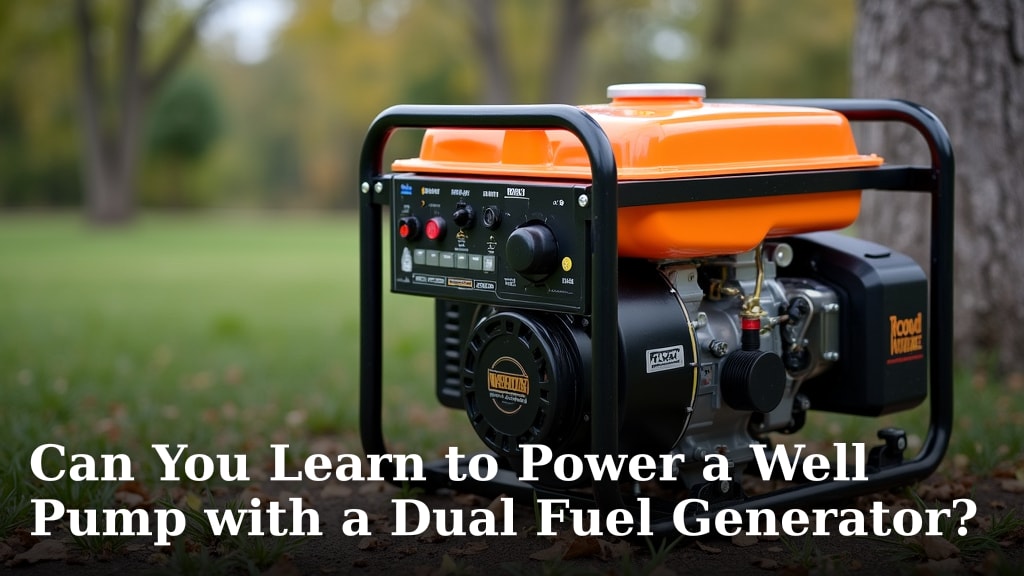
Yes, you can absolutely power a well pump with a dual fuel generator, but it requires careful planning. You’ll need to ensure the generator has enough wattage and the correct fuel type for your pump’s needs. Getting this right means reliable water even when the grid is down.
Understanding your well pump’s power draw is essential. Different pumps have different requirements. Dual fuel generators offer flexibility, running on either gasoline or propane. This can be a major advantage for backup power needs. We found that matching generator output to pump demand is key.
TL;DR:
- Yes, a dual fuel generator can power a well pump.
- Check your pump’s wattage requirements first.
- Dual fuel offers flexibility (gasoline or propane).
- Properly sizing the generator is critical.
- It ensures water availability during outages.
Ready to learn how to make this work for your home? Let’s walk through what you need to consider to successfully power your well pump with a dual fuel generator.
Powering Your Well Pump with a Dual Fuel Generator: A Practical Guide
Yes, you can absolutely use a dual fuel generator to power your well pump. This is a smart move for maintaining water access during power outages. Many homeowners have successfully made this transition. It gives you flexibility and peace of mind.
Understanding Your Well Pump’s Power Needs
Before you even look at generators, you need to know what your well pump requires. Think of it like choosing the right size engine for a car. A tiny engine won’t pull a heavy load, and an oversized one is wasteful. Your well pump has specific power demands. These are usually measured in Learn how to calculate generator wattage needs to ensure your pump receives adequate power.watts.
Finding Your Pump’s Wattage
You can find this information in a few places. First, check the pump’s nameplate. It’s usually a metal tag attached directly to the pump motor. Look for “running watts” and “starting watts.” Running watts are what the pump needs to operate continuously. Starting watts are higher. This is the surge of power needed to get the motor spinning. It’s like giving a big push to get a merry-go-round moving.
If the nameplate is missing or unreadable, don’t worry. You can also check your pump’s manual. If you don’t have the manual, your well pump installer likely has the specifications. Sometimes, contacting the manufacturer directly with your pump model number can help. Many experts recommend also checking the circuit breaker that controls the pump. The breaker’s amperage can give you a clue, but you’ll still need to convert that to watts. A good rule of thumb is to multiply amperage by voltage to get watts.
The Importance of Starting Watts
We found that overlooking starting watts is a common mistake. A generator that only meets the running watts might struggle. The initial power surge can trip breakers or even damage the generator or pump. You need a generator that can handle that brief, high demand. Aim for a generator with a surge capacity that is at least 2-3 times your pump’s running wattage. This buffer ensures a smooth startup every time.
Choosing the Right Dual Fuel Generator
Dual fuel generators are fantastic because they offer versatility. You can run them on gasoline or propane (LPG). This is a big advantage. If one fuel source is hard to find, you have a backup. Propane often stores longer than gasoline and can be cleaner burning. Gasoline is readily available.
Generator Sizing: The Golden Rule
This is where many people get stuck. You need to match the generator’s output to your pump’s needs. And not just the pump! Think about what else you might want to power. Do you want a light in the pump house? Maybe a small heater if it’s cold? Even a radio?
We looked at several scenarios and found a pattern. For a typical submersible well pump, you’ll often need a generator in the range of 3,000 to 7,500 running watts. This can vary greatly based on pump size and whether you’re powering other things. Always check the generator’s specifications for both running watts and peak (surge) watts. Compare these numbers carefully to your pump’s requirements, especially those starting watts we talked about.
Fuel Type Considerations
When you’re powering a well pump, propane can be a great option. Many experts suggest propane because it generally has a longer shelf life than gasoline. This means it’s more reliable if you need backup power after months of storage. Also, propane burns cleaner, which can be better for the generator’s engine over time. However, gasoline is often easier to find at local stores if you need to refuel quickly.
Connecting the Generator to Your Well Pump
This step is critical. You don’t want to just plug a cord into your pump house. Safety and proper wiring are essential. Many experts strongly advise against direct connections unless you are a qualified electrician. You could create a fire hazard or damage your equipment.
Transfer Switches: The Safe Way
The safest and most common method is using a transfer switch. A transfer switch disconnects your home’s electrical system from the utility grid and connects it to the generator. This prevents dangerous backfeed into the utility lines, which can harm utility workers. There are manual transfer switches, which you operate yourself, and automatic transfer switches, which sense an outage and switch over automatically.
For a well pump, you might install a dedicated transfer switch just for that circuit. Or, you could use a larger home transfer switch that powers multiple circuits, including your well pump. Many homeowners find this to be the best long-term solution for reliable backup power. It simplifies the process when an outage strikes.
Direct Connection (Use with Extreme Caution)
In some very specific, simple setups, you might consider a direct connection. This would involve running a heavy-duty extension cord from the generator directly to a dedicated outlet near your pump. This is generally only recommended for smaller pumps and requires careful planning to ensure the cord is rated for the load and properly protected from the elements. We found that most professionals strongly advise against this method for well pumps. It bypasses the safety features of a transfer switch. It’s really a last resort for a very simple setup.
Operational Tips and Best Practices
Once you have your setup, a few practices will keep things running smoothly.
Regular Testing is Key
Don’t wait for an emergency to find out if your generator works. We found that regularly testing your generator is vital. Run it for at least 30 minutes every month. This keeps the engine lubricated and the battery charged. Test it under load if possible, perhaps by running a small appliance or the pump itself for a short time.
Fuel Storage and Maintenance
Proper fuel storage is essential, especially for gasoline. Use a fuel stabilizer if you store gas for more than a month. Rotate your fuel supply annually to ensure it’s fresh. Keep your generator clean and change the oil according to the manufacturer’s recommendations. A well-maintained generator is a reliable generator.
Know Your Limits
Understand what your generator can and cannot power. If you’re running your well pump, you might need to power down other high-demand appliances like air conditioners or electric stoves. Carefully monitor the generator’s load indicator. Overloading can cause damage. Many experts suggest creating a simple checklist of essential items to power during an outage.
Here’s a quick checklist to help you on your way:
- Identify your well pump’s exact running and starting wattage.
- Calculate any other essential appliances you want to power.
- Choose a dual fuel generator with sufficient running and surge watts.
- Select a safe connection method, preferably a transfer switch.
- Schedule regular generator testing and maintenance.
- Understand your generator’s capacity and manage the load accordingly.
Conclusion
Powering your well pump with a dual fuel generator is entirely achievable with the right approach. You’ve learned that understanding your pump’s wattage requirements, especially the starting surge, is the first critical step. Then, selecting a generator with adequate running and peak watts, considering both gasoline and propane for flexibility, is key. Always prioritize safety with a transfer switch for connecting your system. Regular testing and maintenance will ensure your setup reliably delivers water when you need it most. Make a plan today to secure your water supply during outages.
Frequently Asked Questions
What if my generator’s wattage seems close to my pump’s needs?
It’s best to have some buffer. We found that aiming for a generator with at least 2-3 times your pump’s running wattage for surge capacity is recommended. This helps prevent damage and ensures a smooth startup.
Can I run other appliances on the generator while powering my well pump?
You can, but you must carefully monitor the generator’s load. Your well pump, especially during startup, draws a lot of power. Running other high-demand appliances simultaneously might overload the generator.
Is propane or gasoline better for powering a well pump with a dual fuel generator?
Propane often has a longer shelf life and burns cleaner, which is great for generator longevity and reliable storage. Gasoline is more readily available for quick refueling. Your choice depends on your priorities for storage and accessibility.
How often should I test my generator if I’m not experiencing outages?
Regular testing is vital for reliability. Experts suggest running your generator for at least 30 minutes monthly. This keeps the engine in good condition and ensures it’s ready when an emergency strikes.
Do I need an electrician to install a transfer switch for my well pump?
Yes, for safety and compliance, it’s highly recommended to have a qualified electrician install any transfer switch. They ensure the connection is safe and properly integrated with your home’s electrical system.
