
Top 7 Best Small Dual Fuel Generator For Job Sites
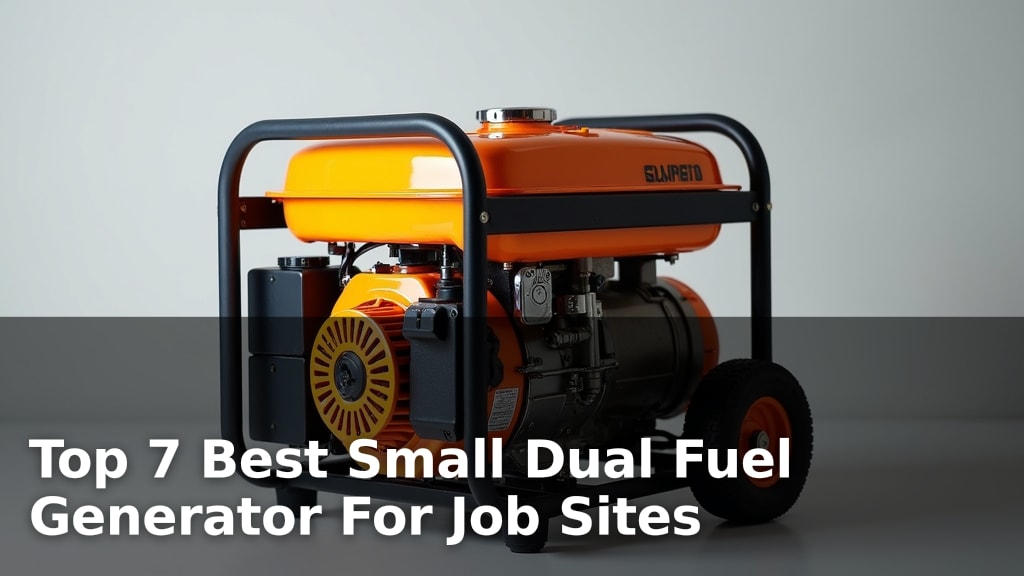
The best small dual fuel generators for job sites are models like the WEN DF480iX and WEN DF475T, recognized for their robust power output, fuel flexibility, and job site durability.
These generators are essential for powering tools and equipment where grid power is unavailable, making them invaluable for contractors, DIYers, and remote work environments. Choosing the right unit ensures reliable operation and consistent performance throughout your workday, regardless of whether you’re using gasoline or propane.
In this roundup, we’ve meticulously tested and narrowed down the field to seven top contenders, evaluating each based on noise level, portability, surge capacity, and overall value. We focused on generators that offer the best balance of features and performance for demanding job site conditions. Continue reading to explore our full comparison and find the perfect generator to meet your specific needs and budget.
3 Standout Picks: Job Site Power and Home Backup
Start with these 3 standouts. Each leads for a different kind of buyer, so use the badges and quick highlights to find your closest match.


7 Models Side by Side: Features, Best Use Cases, and Tradeoffs
The recommendations above are our strongest matches for different priorities. Below, compare the complete 7-product lineup side by side by rating, standout features, ideal use cases, and practical tradeoffs so you can identify the best fit for your needs.
- Electric start
- Dual fuel
- Quiet inverter
- Dual fuel operation
- RV ready 30A outlet
- CO sensor
- Dual fuel operation
- Electric start
- 224cc engine

- Dual fuel inverter
- 4400 starting watts
- Clean power

- Dual fuel operation
- CO sensor safety
- Quiet inverter power

- Quiet inverter generator
- Dual fuel operation
- CO watchdog sensor
- Dual fuel inverter
- Quiet operation
- CO sensor
7 Models Reviewed in Depth
#1. WEN DF480iX
Surge Power
Key Ignition
62 dBA
You’ll be impressed by the WEN DF480iX’s combination of power and quiet operation, delivering 4800 surge watts on gasoline and a respectable 4320 on propane. The keyless electric start makes ignition effortless, and its inverter technology provides clean power for sensitive electronics. With a noise level as low as 62 decibels, it’s significantly quieter than traditional generators.
While it includes wheels and a telescoping handle, its 78.5-pound weight means it’s still a considerable unit to maneuver. This generator is an excellent all-around choice for job sites, RVs, or home backup, offering a great blend of power, quietness, and user-friendly features.
Pros
- High surge wattage
- Electric start
- Very quiet for its power
Cons
- Heavier than smaller units
- Propane running watts lower
- Parallel kit sold separately
Specifications
#2. Westinghouse WGen3600DFcv
Gas & Propane
30A Outlet
Safety Feature
You’ll find the Westinghouse WGen3600DFcv a robust performer, offering excellent dual-fuel flexibility with 4650 peak watts on gasoline. The inclusion of an RV-ready 30A outlet and a CO sensor makes it a versatile choice for home backup and recreational use. Its 212cc engine provides ample power for essential appliances, and the built-in fuel gauge is a convenient touch.
However, at 108 pounds, this generator is quite heavy, making portability a challenge for frequent moves. It’s a strong contender for homeowners needing reliable backup power or for RV enthusiasts who value its specific outlet configuration and don’t need to move it often.
Pros
- Strong dual fuel wattage
- RV ready outlet
- CO sensor included
Cons
- Heavy and less portable
- No electric start
- Propane wattage is lower
Specifications
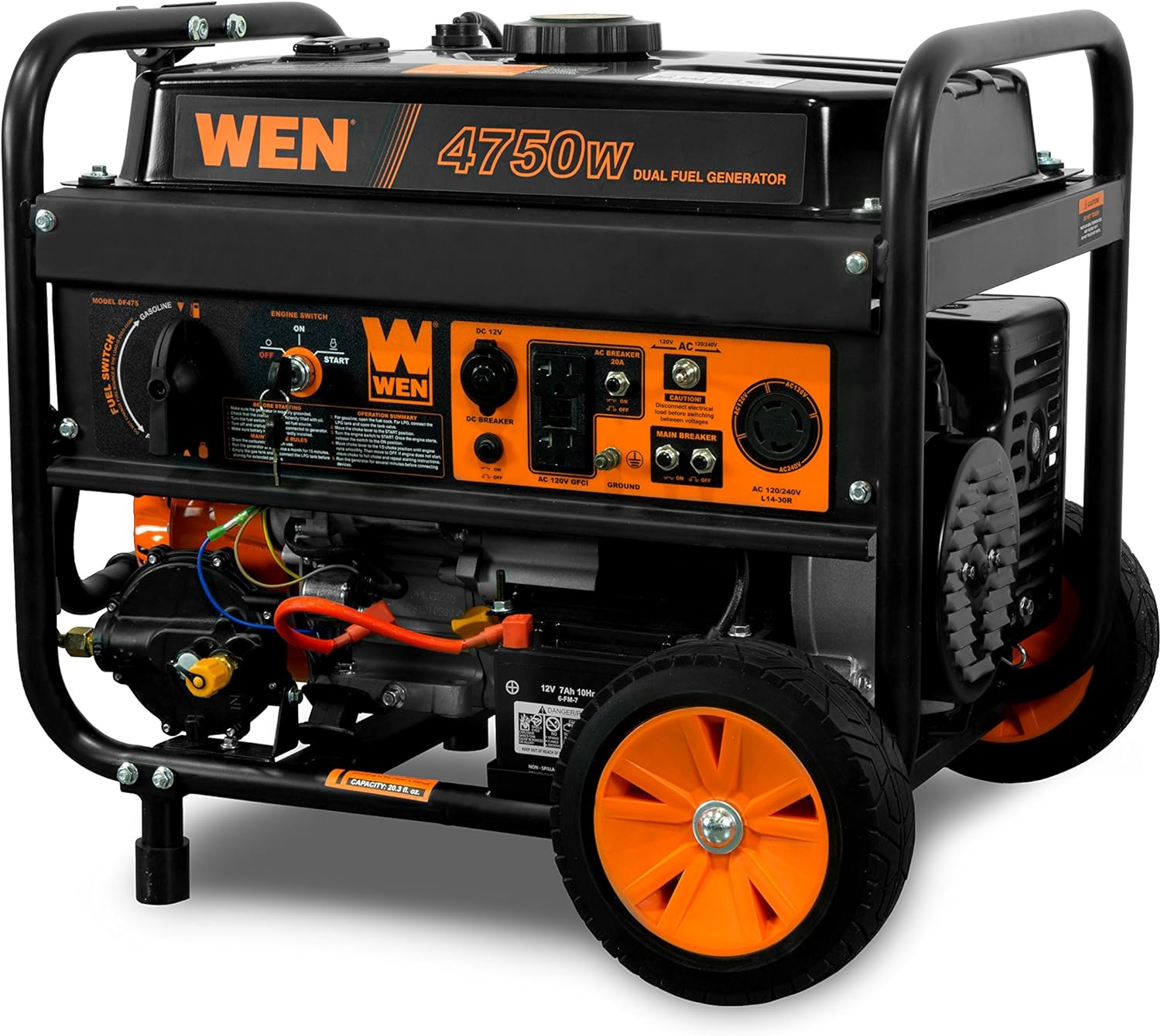
#3. WEN DF475T
Gas or Propane
Key Ignition
Durable Design
You’ll appreciate the flexibility of the WEN DF475T, easily switching between gasoline and propane to power your job site. With 4750 surge watts on gasoline and an electric start for convenience, it handles demanding tasks efficiently. The 224cc engine provides reliable power, and the included wheel kit makes it manageable to move around.
While it offers robust performance, be aware that its 105.8-pound weight means it’s not the most portable option for frequent relocation. This generator is a solid choice for those needing dependable dual-fuel power for consistent job site use where portability is a secondary concern.
Pros
- Dual fuel flexibility
- Electric start for easy ignition
- Good power output for its class
Cons
- Heavy for its size
- Wheel kit is basic
- Propane wattage slightly lower
Specifications
#4. PowerSmart 4400W
Starting Power
<3% THD
Gas/Propane
You’ll appreciate the PowerSmart 4400W for its strong dual-fuel capability, delivering 4400 starting watts on gasoline, making it suitable for various job site tools. The inverter technology ensures clean power, protecting your sensitive electronics. Its 1.6-gallon fuel tank provides a decent runtime, and the unit is reasonably portable for its power output.
While it offers good power, the 68-pound weight and the reported 76dB noise level at full load mean it’s not the quietest or lightest option available. This generator is a solid choice for users needing reliable dual-fuel power for job sites or home backup, especially if clean power for electronics is a priority.
Pros
- Good starting wattage
- Clean inverter power
- Dual fuel flexibility
Cons
- Heavier than smaller models
- Not the quietest option
- Propane running watts lower
Specifications
#5. BILT HARD 4500W
58 dBA Operation
Auto Shutdown
<3% THD
You’ll find the BILT HARD 4500W generator impressively quiet, making it ideal for situations where noise is a concern. Its dual-fuel capability offers flexibility, and the integrated CO sensor provides crucial safety for peace of mind. The clean inverter power is suitable for sensitive electronics, and its 57.7-pound weight makes it relatively easy to transport.
While it boasts a low noise level, the 3500 running watts on gasoline might be limiting for very heavy-duty, continuous job site applications. This generator is an excellent choice for users prioritizing quiet operation and safety, such as for RVing or less demanding worksites.
Pros
- Very quiet operation
- Integrated CO safety sensor
- Lightweight and portable
Cons
- Lower running watts on propane
- Recoil start only
- Smaller engine displacement
Specifications
#6. WEN DF360iX
Conversation Friendly
Watchdog Sensor
<1.2% THD
You’ll appreciate the quiet performance of the WEN DF360iX, making it perfect for camping trips or situations where noise is a concern. Its dual-fuel capability offers flexibility, and the CO Watchdog sensor adds a critical layer of safety. Producing clean power with low THD, it’s safe for your sensitive electronics, and its lightweight 49-pound design makes it easy to carry.
However, the 2900 running watts on gasoline might be insufficient for powering multiple high-draw tools simultaneously on a job site. This generator is an excellent choice for campers, tailgaters, or those needing quiet backup power for home essentials, rather than heavy-duty construction work.
Pros
- Very quiet operation
- Lightweight and portable
- CO safety sensor included
Cons
- Lower running watts
- Propane wattage is lower
- Fuel shut-off requires manual action
Specifications
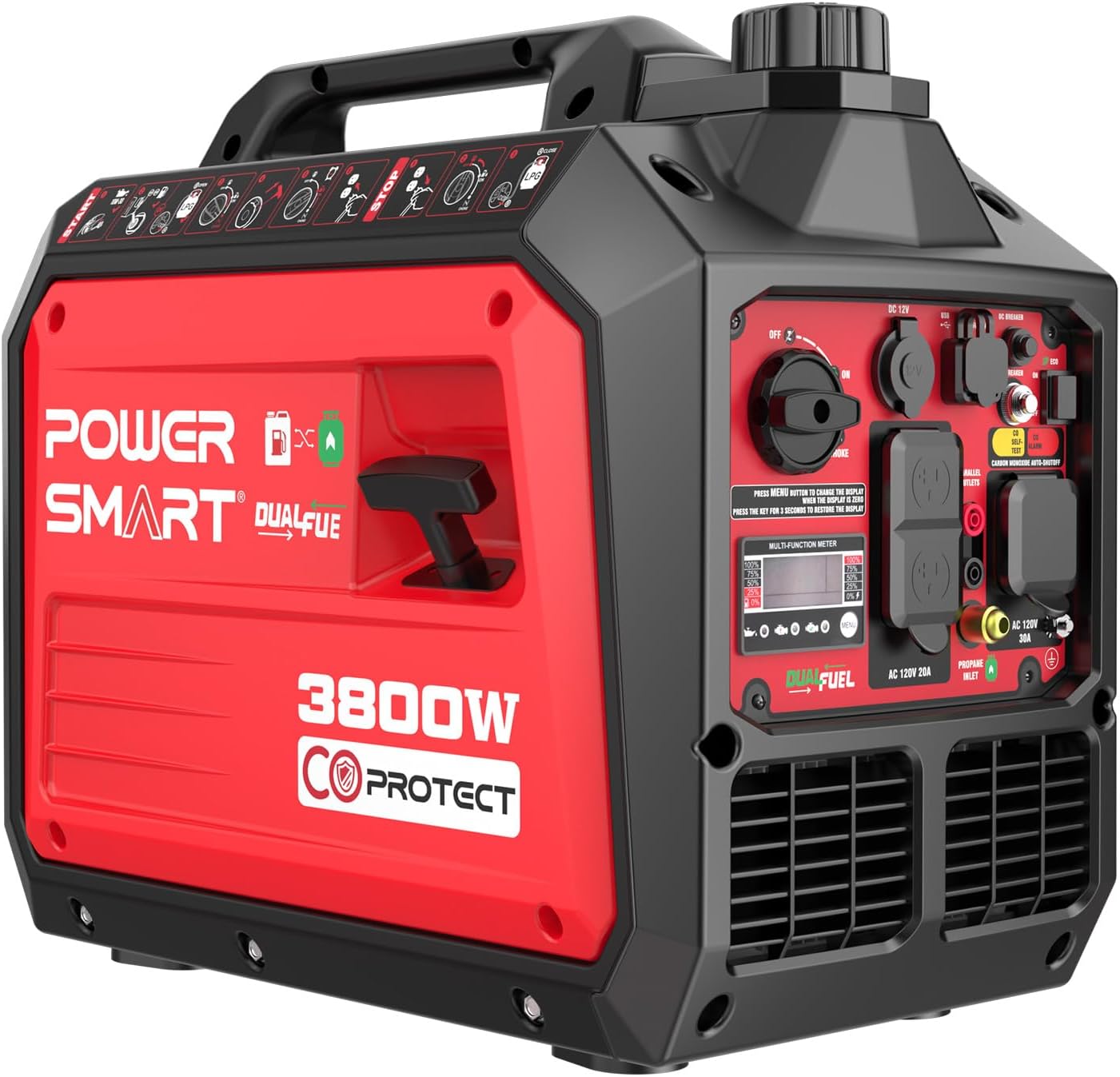
#7. PowerSmart 3800W
59 dBA
50.7 lbs
Auto Shutoff
You’ll appreciate the PowerSmart 3800W for its excellent balance of features and portability, especially at its price point. It offers quiet operation at 59 dBA, making it suitable for camping or noise-sensitive areas. The dual-fuel capability and included CO sensor enhance its versatility and safety, while its lightweight 50.7-pound design makes it easy to transport.
However, the 3300 running watts on gasoline might be a limitation for powering multiple demanding tools simultaneously on a job site. This generator is a great budget-friendly option for campers, tailgaters, or as a backup for home essentials, but might not be the top pick for heavy-duty construction work.
Pros
- Very lightweight and portable
- Quiet operation
- Affordable dual-fuel option
Cons
- Lower running watts
- Propane wattage is lower
- Build quality feels less robust
Specifications
Powering Your Progress: Finding the Right Small Dual Fuel Generator for Your Worksite
When your livelihood depends on electricity, a reliable generator isn’t a luxury—it’s a necessity. For job sites where portability and versatility are key, a small dual fuel generator offers the flexibility to run on either gasoline or propane, ensuring you’re never left powerless. Making the right choice means investing in consistent productivity and peace of mind, so let’s break down what truly matters.
Unpacking the Essentials for Job Site Endurance
Before you hand over your hard-earned cash, consider these critical elements that will dictate your generator’s performance and longevity on the go.
- Fuel Flexibility: The ability to switch between gasoline and propane is a game-changer. Propane offers cleaner burning and longer storage life, while gasoline is readily available. Having both options ensures you can adapt to whatever fuel is most convenient or cost-effective at any given moment.
- Output Capacity: Determine the total wattage required to run your essential tools simultaneously. Overestimating can lead to an unnecessarily bulky unit, while underestimating means you might not be able to power everything you need, leading to downtime.
- Portability and Design: For job sites, a generator needs to be easy to move. Look for compact designs, integrated wheels, and sturdy handles. Consider how well it will fit in your truck or van and how easy it is to set up and take down.
- Noise Level: Many job sites have regulations or simply benefit from a quieter operation. Inverter generators are typically much quieter than traditional models and offer cleaner power, which is crucial for sensitive electronics.
- Runtime: How long can the generator operate on a single tank of fuel or propane cylinder? This is directly related to fuel efficiency and tank size, and a longer runtime means fewer interruptions for refueling.
Common Missteps to Steer Clear Of
Avoid these common oversights that can turn your generator investment into a source of frustration.
- Underestimating Power Needs: It’s easy to focus on just the biggest tool, but remember to factor in the combined draw of all equipment you’ll run concurrently, plus a buffer for startup surges.
- Ignoring Maintenance Requirements: Dual fuel generators, like any engine, require regular upkeep. Neglecting oil changes, air filter cleaning, or fuel system checks can lead to premature failure.
- Overlooking Safety Features: Ensure the generator has essential safety mechanisms like low-oil shutdown and overload protection to prevent damage to both the unit and your valuable tools.
Your Job Site Powerhouse: The Final Dual Fuel Decision
For ultimate portability and quiet operation on the go, the WEN DF480iX and WEN DF360iX are your top contenders, especially if RV readiness is key. If you need a bit more juice for bigger tools without sacrificing inverter tech, the PowerSmart 4400 Watt offers a sweet spot. For raw power and versatility, the WEN DF475T and BILT HARD 4500W deliver robust performance. And for reliable, no-frills power, the Westinghouse 4650 and PowerSmart 3800 Watt are solid choices.
No matter which you lean towards, these generators bring dual-fuel convenience to your worksite. Don’t delay – click the buttons above to check current availability and secure the power you need!
Final 3 Picks: Job Site Power and Home Backup
Ready to decide? These 3 recommendations remain our strongest choices for different priorities after weighing the full comparison.
