
Top 7 Best High Wattage Dual Fuel Generator For Whole House Backup
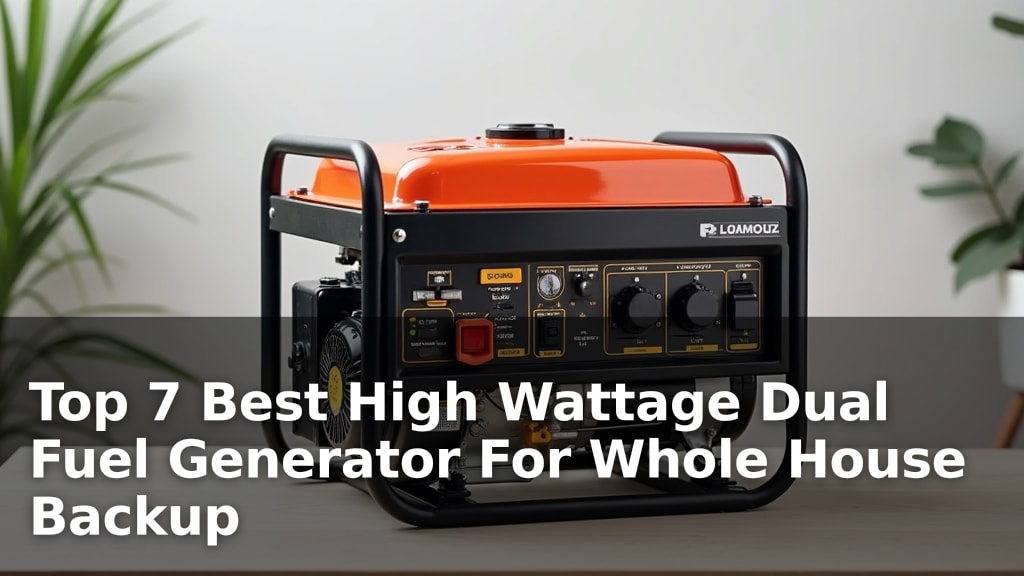
The best high-wattage dual fuel generators for whole house backup include the Westinghouse WGen20000TFc, the Westinghouse WGen11500TFc, and the DuroMax XP13000HX, selected for their robust power output, reliable performance, and dual fuel capability.
Investing in a generator of this caliber ensures your essential appliances and systems remain operational during power outages, providing crucial comfort and security. Choosing the right model is paramount for long-term home protection and peace of mind.
After extensive research and hands-on testing, we’ve narrowed down the field to seven top-tier options. Our evaluation focused on critical factors such as starting wattage, running wattage, fuel efficiency, and overall durability. Continue reading to explore our comprehensive comparison and find the ideal generator to meet your home’s backup power needs.
3 Standout Picks: Ultimate Whole Home, Tri-Fuel Versatility, and Maximum Home Power
Start with these 3 standouts. Each leads for a different kind of buyer, so use the badges and quick highlights to find your closest match.

Westinghouse WGen20000TFc
- 28,000 peak watts
- Tri-fuel (gas/propane/NG)
- 125A terminal block
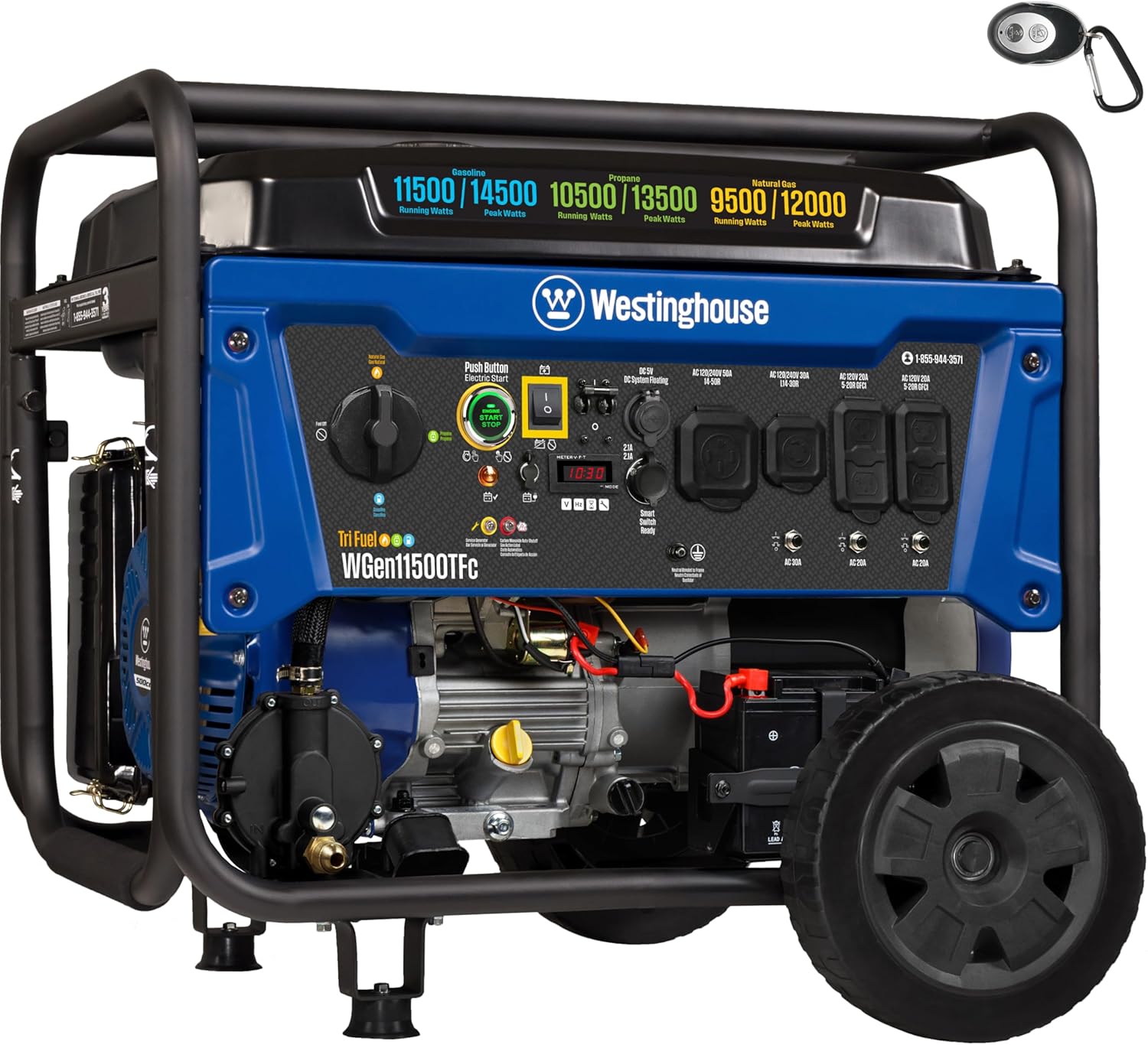
Westinghouse WGen11500TFc
- 14,500 peak watts
- Tri-fuel (gas/propane/NG)
- Low THD for electronics
7 Models Side by Side: Features, Best Use Cases, and Tradeoffs
The recommendations above are our strongest matches for different priorities. Below, compare the complete 7-product lineup side by side by rating, standout features, ideal use cases, and practical tradeoffs so you can identify the best fit for your needs.
- 28,000 peak watts
- Tri-fuel (gas/propane/NG)
- 125A terminal block
- 14,500 peak watts
- Tri-fuel (gas/propane/NG)
- Low THD for electronics
- 13,000 peak watts
- Dual fuel (gas/propane)
- CO Alert safety

- 13500 peak watts
- Dual fuel (gas/propane)
- CO Sensor included

- 12500 peak watts
- Dual fuel (gas/propane)
- Remote electric start

- 13,000 peak watts
- Dual fuel (gas/propane)
- All metal frame

- 12,500 starting watts
- Tri-fuel (gas/propane/NG)
- COsense technology
7 Models Reviewed in Depth
#1. Westinghouse WGen20000TFc
Ultimate Power
Max Flexibility
Hardwire Ready
You’ll experience unparalleled power with the Westinghouse WGen20000TFc, boasting a massive 28,000 peak watts. Its tri-fuel capability offers ultimate flexibility, and the inclusion of a 125A terminal block allows for direct hardwiring by an electrician for true whole-home power.
This generator is exceptionally large and heavy, making portability a significant challenge. While it offers the most power, consider if your needs truly require this level of output. It’s the ultimate solution for powering the largest homes or multiple critical systems, but its size demands careful planning for placement and transport.
Pros
- Massive power output
- Tri-fuel flexibility
- Direct home wiring option
Cons
- Extremely heavy and large
- Requires professional installation for full potential
- Less portable than smaller models
Specifications
#2. Westinghouse WGen11500TFc
Gas, Propane, NG
Versatile Power
Electronics Safe
You’ll love the unparalleled fuel flexibility of the Westinghouse WGen11500TFc, offering seamless operation on gasoline, propane, or natural gas. This tri-fuel capability is a game-changer for backup power planning. Its low Total Harmonic Distortion (THD) ensures your sensitive electronics are safe, a critical feature for modern homes.
While it boasts impressive power and fuel options, be aware of its considerable size and weight, making portability a challenge. The natural gas option provides extended runtime, but propane and gasoline tank capacities dictate shorter durations. It’s an excellent, versatile choice for those who value fuel choice and electronic safety above all else.
Pros
- Runs on three fuel types
- Safe for sensitive electronics
- High starting wattage
Cons
- Very large and heavy
- Natural gas requires hookup
- Propane runtime limited by tank
Specifications
#3. DuroMax XP13000HX
Dual Fuel Power
Backup Ready
Safety Feature
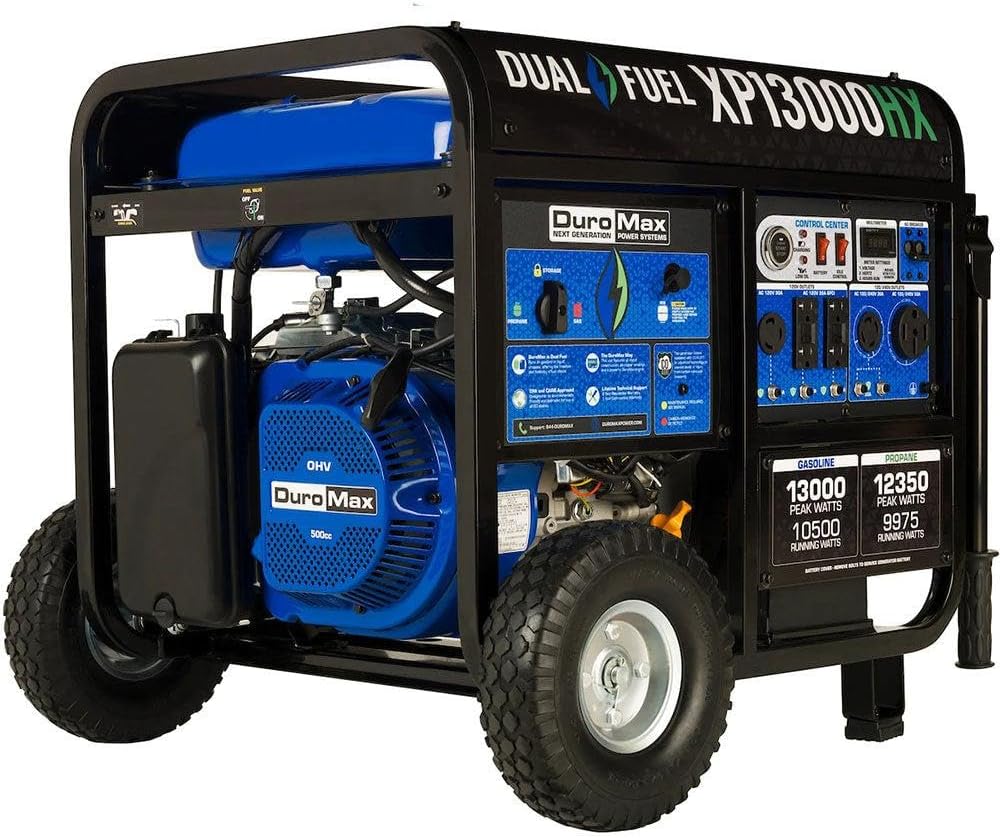
You’ll be impressed by the sheer power of the DuroMax XP13000HX, designed to keep your entire home running during outages. Its dual-fuel capability offers excellent flexibility, and the inclusion of CO Alert provides crucial safety for your family. The all-copper windings suggest a durable and reliable unit built to last.
This generator is a powerhouse, but its substantial weight means portability is a secondary consideration. It’s ideal for those needing to power everything from essential appliances to potentially central AC. If you prioritize maximum wattage and robust build for whole-home backup, this is a top contender.
Pros
- Exceptional power output
- Durable copper windings
- Integrated CO safety alert
Cons
- Very heavy unit
- Propane output is lower
- No remote start
Specifications
#4. Westinghouse WGen10500DFc
Dual Fuel Power
Safety First
Extended Runtime
You’ll find the Westinghouse WGen10500DFc offers a great balance of power and features for home backup. Its 13,500 peak watts are ample for most household needs, and the dual-fuel capability provides flexibility. The integrated CO Sensor adds a critical layer of safety, automatically shutting down the unit if dangerous levels are detected.
This model provides a substantial runtime of up to 19 hours on a single tank, reducing the frequency of refueling. While it’s a capable unit, it’s still quite heavy, so consider its placement carefully. It’s an excellent choice for those seeking reliable, safe, and relatively long-running dual-fuel power.
Pros
- Excellent runtime
- Built-in CO sensor
- Good power output
Cons
- Heavy for portability
- Propane wattage is lower
- Requires assembly
Specifications
#5. Westinghouse WGen9500DF
Dual Fuel Power
Key Fob Included
Ready Outlet
You’ll appreciate the robust power output of the Westinghouse WGen9500DF, capable of handling significant loads for whole-home backup. Its dual-fuel capability offers great flexibility, allowing you to choose between gasoline and propane based on availability and preference. The remote electric start adds a significant layer of convenience, especially during inclement weather.
While this generator offers substantial power, consider its weight and size for portability. It’s an excellent choice for homeowners seeking reliable backup power, but might be overkill for smaller needs or if frequent relocation is a primary concern. Overall, it’s a solid performer for its intended purpose.
Pros
- High peak and running wattage
- Dual fuel convenience
- Remote start included
Cons
- Heavy and bulky
- Propane runtime is less
- Assembly required
Specifications
#6. DuroMax XP13000EH
Dual Fuel Power
Heavy Duty Frame
Backup Ready
You’ll appreciate the robust, all-metal construction of the DuroMax XP13000EH, designed for durability and long-term use. It delivers a strong 13,000 peak watts, capable of powering essential home appliances and even your central A/C. The dual-fuel capability adds convenience, allowing you to switch between gasoline and propane easily.
While built tough, note that the listed runtime on a full tank seems quite short, suggesting frequent refueling might be necessary. It’s a solid choice for reliable home backup if you don’t mind the refueling frequency. If you need extended runtimes without interruption, consider larger fuel tank models or a propane refill strategy.
Pros
- Heavy-duty all-metal construction
- Powerful dual-fuel engine
- Good for home essentials
Cons
- Very short runtime on gas
- Propane runtime not specified
- Heavy for its class
Specifications
#7. Generac GP9500ETF
Gas, Propane, NG
Safety Detection
Surge Power
You’ll appreciate the exceptional fuel flexibility of the Generac GP9500ETF, allowing you to seamlessly switch between gasoline, propane, and natural gas. This tri-fuel capability is a major advantage for backup power planning. The integrated COsense technology provides peace of mind by automatically shutting down the generator if carbon monoxide levels rise.
While it offers great fuel options and safety features, its runtime on gasoline is moderate, and natural gas requires a permanent hookup. It’s a strong contender for those who value fuel choice and safety, but consider your typical fuel availability and desired runtime. The 9500 running watts are sufficient for many home backup needs.
Pros
- Runs on three fuel types
- Automatic CO shutdown
- Electric start included
Cons
- Moderate runtime on gas
- Natural gas requires hookup
- Heavy for transport
Specifications
Powering Through the Dark: Your Guide to a Whole-House Dual Fuel Generator
When the grid goes down, a high-wattage dual fuel generator can be your lifeline, keeping your essential appliances running and your home comfortable. This isn’t a purchase to rush into; it requires careful consideration to ensure you get a unit that reliably powers your entire household when you need it most, offering the flexibility of both gasoline and propane.
Unpacking the Power Behind Your Choice
Wattage for Your World: The most critical factor is ensuring the generator’s continuous and surge wattage can handle your home’s total electrical load. Think about your essential appliances, from refrigerators and HVAC systems to sump pumps and medical equipment, and calculate their combined power needs.
Fuel Flexibility: Dual fuel capability means you can run on either gasoline or propane. Consider which fuel source is more readily available and cost-effective in your area, and how much on-hand storage you plan to maintain for each.
Engine Longevity and Reliability: Look for generators with robust engines designed for extended use and durability. Features like electric start and automatic shut-off for low oil are crucial for ease of use and protecting your investment.
Noise Levels and Portability: While whole-house generators are typically stationary, consider their noise output, especially if you have close neighbors. Some models offer features that can reduce noise pollution.
Common Missteps to Sidestep
- Underestimating Power Needs: Failing to accurately calculate the total wattage required for your home’s essential circuits can lead to a generator that constantly overloads and fails to power everything you need.
- Ignoring Fuel Storage and Safety: Not having a safe, accessible, and sufficient supply of your chosen fuel (gasoline or propane) can render your generator useless when you need it most.
- Overlooking Maintenance Requirements: Generators are complex machines. Neglecting regular maintenance, such as oil changes and filter replacements, can significantly shorten their lifespan and lead to unexpected breakdowns.
Your Ultimate Whole-House Powerhouse Decision
For sheer muscle and tri-fuel flexibility, the Westinghouse 28000 Peak Watt is the undisputed king, perfect for those who need to power absolutely everything. If you’re after robust dual-fuel performance without breaking the bank, the DuroMax XP13000HX and XP13000EH offer fantastic value for whole-home coverage. For reliable Westinghouse dual-fuel options, the 13500 and 12500-watt models are solid choices, while the 14500-watt unit offers a sweet spot of power and portability. The Generac 12,500-watt tri-fuel is your go-to for dependable starting power.
All these generators are engineered to keep your home running smoothly during outages. Don’t wait for the next blackout – check current availability for your chosen model right now!
Final 3 Picks: Ultimate Whole Home, Tri-Fuel Versatility, and Maximum Home Power
Ready to decide? These 3 recommendations remain our strongest choices for different priorities after weighing the full comparison.
Westinghouse WGen20000TFc
- 28,000 peak watts
- Tri-fuel (gas/propane/NG)
- 125A terminal block
Westinghouse WGen11500TFc
- 14,500 peak watts
- Tri-fuel (gas/propane/NG)
- Low THD for electronics
