
What Do You Need to Run a Dual Fuel Generator in Rain Safely?
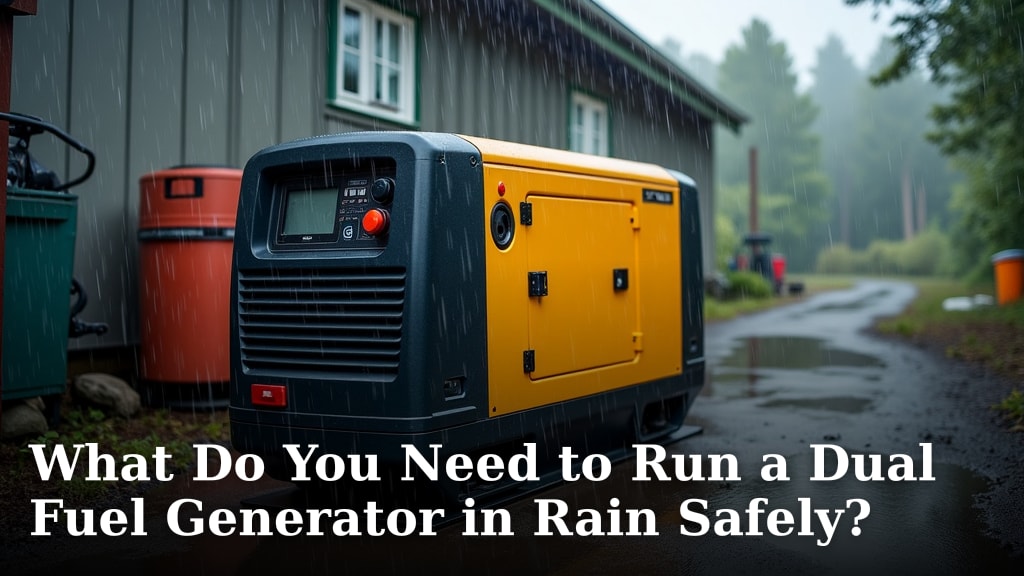
Yes, you can run a dual fuel generator safely in the rain, but only with a proper weatherproof shelter or a dedicated generator cover. Never operate it in direct, heavy rain without protection. The key is to keep the unit, especially the engine and electrical outlets, completely dry to prevent short circuits or fires.
Running your generator in wet weather requires extra care beyond just a cover. We found that proper ventilation is critical to avoid dangerous carbon monoxide buildup. Also, you must use GFCI-protected outlets and keep all cables elevated off wet ground. Many experts say these simple steps are non-negotiable for safety.
- Always place your generator under a sturdy, waterproof canopy or use a certified cover.
- Ensure the exhaust is pointed away from your home and any shelter to prevent CO poisoning.
- Use heavy-duty extension cords rated for outdoor use and keep connections off wet surfaces.
- Check your manual for specific guidance on wet weather operation.
- Never attempt to move or refuel a generator while it is wet or running.
Below, we break down exactly what gear you need and the simple steps to follow. Let’s walk through how to keep your power on safely, even when the skies open up.
Essential Gear and Setup for Rainy-Day Generator Use
Let’s get straight to what you need in your garage before the storm hits. Running a generator in the rain isn’t about being reckless; it’s about being prepared. Your primary goal is to create a dry, ventilated bubble around your machine. Think of it as building a small, temporary garage just for your generator. We found that having the right equipment on hand beforehand turns a stressful situation into a manageable one.
Creating a Safe, Dry Shelter
You can’t just throw a tarp over it and call it a day. A proper shelter must be sturdy, waterproof, and positioned correctly. Many experts point to two main options: a dedicated generator tent or a hard-cover canopy. Your choice depends on your budget and how often you expect to run it in wet weather.
Option 1: The Purpose-Built Generator Tent
These are designed specifically for this job. They have clear panels so you can see the controls, vents for airflow, and doors that open for access. They sit on the ground and provide excellent protection from rain. We found that a good tent keeps the generator dry while allowing you to check fuel levels and make adjustments without getting soaked.
Option 2: The DIY Canopy Approach
A temporary carport or pop-up canopy can work in a pinch. You must ensure it’s anchored well so wind doesn’t blow it away. The key is to position it so the generator’s exhaust pipe points completely outside the shelter’s footprint. Never run the exhaust under the canopy. This simple rule prevents **carbon monoxide** from accumulating in your workspace.
The table below compares these common shelter options to help you decide.
| Shelter Type | Main Benefit | Key Safety Consideration |
|---|---|---|
| Generator Tent | Designed for airflow and access. | Ensure all vents are not blocked. |
| Pop-Up Canopy | Offers more workspace around the unit. | Must anchor securely and keep exhaust outside. |
| Permanent Overhang | Provides a fixed, reliable cover. | Still requires open sides for ventilation. |
No matter which you choose, remember this: the shelter is not an airtight box. It’s a roof that keeps rain off while letting air flow through freely.
Critical Ventilation to Prevent Carbon Monoxide Poisoning
This is the most important safety point, and it cannot be overstated. A generator produces **carbon monoxide (CO)**, an odorless, deadly gas. The CDC states that CO can cause serious illness or death in minutes. Running a generator in a fully enclosed space, even a shed or garage, is incredibly dangerous. The shelter must allow air to circulate.
Always position the shelter so the generator’s **exhaust port** faces away from your home, windows, and the shelter’s entrance. CO dissipates quickly in open air but can build up rapidly under a roof. We found that following the manufacturer’s distance guidelines (often 5+ feet from any structure) is a solid rule of thumb. An inexpensive **CO detector** placed nearby is a cheap, lifesaving investment.
Electrical Safety on Wet Ground
Water and electricity are a terrible mix. Your focus here is on using the right cords and keeping everything off the wet ground. We found that most generator-related safety incidents in rain involve improper electrical setups. Don’t be the person who gets a nasty shock while trying to power the fridge.
The Right Cords and Connections
You need **heavy-duty, outdoor-rated extension cords**. Look for the letters “W” or “W-A-R” on the jacket. These are built to withstand moisture and rough handling. Never use a cheap indoor cord for outdoor work. The cord should be thick enough (10 or 12-gauge) to handle the generator’s output without overheating.
Most importantly, keep the plug connection **elevated off the ground**. Use a small table, a milk crate, or a dedicated cord cover to prevent the plug from sitting in a puddle. Moisture creeping into the connection is a leading cause of shorts.
Utilizing GFCI Protection
Many modern generators have built-in **Ground Fault Circuit Interrupter (GFCI)** outlets. This is a critical safety feature. A GFCI is designed to shut off power in a fraction of a second if it detects an electrical fault, like a current leak to the ground through water. If your generator has them, use them. If it doesn’t, you can use a GFCI adapter for your extension cord. This simple device adds a crucial layer of protection.
Safe Fueling and Operation Practices
Your setup isn’t just about plugs and roofs. How you handle the generator itself matters immensely. Refueling in the rain is a hazard that’s easily avoided with good planning.
The Golden Rule of Refueling
Always turn the generator **off** and let it **cool down completely** before adding fuel. Spilling gasoline on a hot engine is a fire risk, and doing so in the rain while everything is wet only compounds the danger. We found that pouring fuel into a wet filler neck can cause contamination. Keep a clean, dry rag handy to wipe the cap area before opening it.
For dual-fuel models, this rule applies to both gasoline and propane. For propane, ensure the tank and its connection points are dry before hooking it up. A wet connection might not seal properly, leading to a gas leak.
Monitoring and Maintenance
While the generator runs, you might need to check on it. Use the access points in your shelter without stepping inside. Listen for any unusual sounds and watch the control panel. Keep a flashlight handy for gloomy, stormy conditions. A quick visual check can ensure everything is running smoothly and safely.
Your Rainy-Day Generator Safety Checklist
Before you pull the cord next time a storm rolls in, run through this quick mental checklist. It packs all the essentials into a simple routine.
- Shelter is Secure: Is the generator under a stable, waterproof cover with clear airflow?
- Exhaust is Clear: Does the exhaust pipe point completely away from the shelter and my home?
- Cords are Dry and Rated: Am I using outdoor-rated cords elevated off wet ground?
- GFCI is Active: Are my outlets protected by a GFCI, either built-in or an adapter?
- CO Detector is Ready: Is my carbon monoxide alarm installed and working nearby?
- Fueling Plan is Set: Do I know I will turn it off and let it cool fully before adding more gas?
By treating your generator with respect and preparing for the weather, you can maintain your home’s power safely. It’s not about being a mechanic; it’s about being a prepared homeowner.
Conclusion
You now know exactly what it takes to run your dual fuel generator safely in the rain. It comes down to three pillars: a sturdy, ventilated shelter, a meticulous electrical setup with GFCI protection, and disciplined fueling habits. Remember, you’re not just powering appliances; you’re managing a serious piece of equipment in tricky conditions. The goal is simple: keep it dry, keep it breathing, and keep it stable.
Your next step is clear. Before the next storm season, gather your gear: a generator tent or canopy, outdoor-rated cords, and a CO detector. Do a test run on a dry day to ensure everything fits and works. That preparation will turn a potential crisis into a manageable event, keeping your home powered and your family safe.
Frequently Asked Questions
Can I just use a regular tarp to cover my generator in the rain?
A regular tarp is risky and not recommended. It can trap heat and block essential airflow, creating a fire or overheating hazard. Tarps also often touch the unit, which can conduct electricity or retain moisture against the engine. Always use a dedicated generator cover or shelter with built-in ventilation.
Is it safe to run my generator under a carport attached to my house?
This is extremely dangerous. Exhaust fumes containing deadly carbon monoxide can easily flow under the overhang and into your home through windows or vents. Your generator must always be placed a minimum of 5-10 feet away from any structure, with the exhaust pointed away.
What makes extension cords “outdoor-rated,” and why does it matter?
Outdoor-rated cords have thicker insulation that’s resistant to moisture, sunlight, and physical damage. Using an indoor cord in wet conditions can lead to short circuits, shocks, or fire. Look for a jacket marked with a “W” or “W-A-R” for wet locations.
Do I need a special cover for my propane tank when using dual fuel in rain?
Yes, you should keep the tank and its connection points as dry as possible. While the tank itself is weather-resistant, water can interfere with the connection seal or enter the valve area. A simple, dry tarp over the tank during a storm is a good precaution.
How can I tell if my GFCI protection is working?
Most GFCI outlets have a “Test” and “Reset” button. You should test it monthly by plugging in a lamp, pressing “Test” (the light should go out), and then “Reset” (the light should come back on). If it doesn’t trip properly, replace the outlet or adapter immediately.
