
Which Is Better Propane or Gasoline for a Dual Fuel Generator?
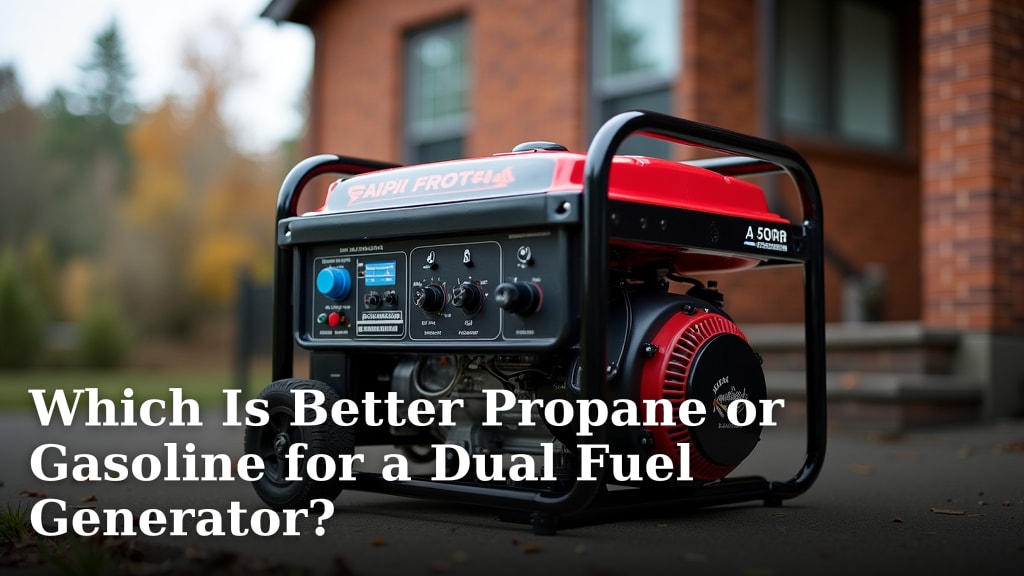
When comparing propane or gasoline for a dual fuel generator, propane often comes out ahead for long-term storage and cleaner burning, while gasoline offers a higher power output for its volume. We found that your best choice truly depends on your specific needs and priorities, especially during a power outage.
Dual fuel generators give you handy flexibility. You can switch fuels based on what’s available or what works best for the situation. Thinking about how you’ll use your generator, and for how long, helps you pick the right fuel for the moment.
- Propane stores longer and burns cleaner.
- Gasoline typically provides more power.
- Dual fuel offers flexibility in fuel choice.
- Consider your power needs and storage options.
Let’s break down the pros and cons of each fuel type. We’ll help you decide which fuel is better for your generator needs.
Comparing Propane and Gasoline for Your Dual Fuel Generator
Deciding between propane and gasoline for your dual fuel generator can feel like picking between two good friends. Both have strengths and weaknesses. Your perfect choice really hinges on what you need most during a power outage or when using your generator for projects.
Understanding Propane as a Generator Fuel
Propane, also called LPG (liquefied petroleum gas), is a popular choice for many reasons. It’s a clean-burning fuel that can be stored for extended periods without degrading. Think of it like a dependable, quiet workhorse for your generator.
The Benefits of Using Propane
There are some really compelling advantages to choosing propane. You might find these make it your preferred fuel, especially for emergencies.
- Long Shelf Life: Propane can be stored for 10-12 years, far longer than gasoline. This means you can keep tanks on hand without worrying about them going bad. The Propane Education & Research Council (PERC) confirms its excellent storage stability.
- Cleaner Burning: Propane burns much cleaner than gasoline. This results in less carbon buildup in your engine. Less buildup means less wear and tear, and fewer maintenance issues over time.
- Safer Storage: Propane is stored in sturdy, sealed tanks, reducing the risk of spills. It also has a distinct odor (added deliberately) that helps you detect leaks quickly.
- Readily Available: In many areas, propane is easy to find. You can often refill tanks at gas stations, hardware stores, or dedicated propane dealers.
- Environmentally Friendlier: Burning propane produces fewer harmful emissions compared to gasoline. This is a plus if you’re concerned about your environmental footprint.
The Drawbacks of Using Propane
While propane is fantastic, it’s not without its downsides. Knowing these helps you make an informed choice.
- Lower BTU Output: Propane generally offers less power per gallon than gasoline. This means your generator might produce slightly less wattage when running on propane. For example, a 5000-watt generator on gasoline might only output 4500 watts on propane.
- Fuel Consumption: You’ll likely use more propane than gasoline to get the same amount of run time. This can mean needing more tanks to achieve your desired power duration.
- Tank Storage: While safer, propane tanks can be bulky. Storing multiple tanks can take up significant space. Also, tanks need proper ventilation and should not be stored indoors.
- Cold Weather Performance: In very cold temperatures, propane can have difficulty vaporizing. This might make starting your generator more challenging.
Understanding Gasoline as a Generator Fuel
Gasoline is what most people are familiar with for generators. It’s powerful and readily available, often seen as the quick-fix fuel during unexpected outages.
The Benefits of Using Gasoline
Gasoline certainly has its moments of shining a little brighter than propane. For some situations, it’s the clear winner.
- Higher Power Output: Gasoline packs more energy per unit of volume. This means your generator will typically produce its maximum rated wattage when running on gasoline. It’s great when you need full power.
- Easy Refueling: Gasoline is everywhere. You can fill up cans at almost any gas station, making quick refueling simple during an emergency.
- Better Cold Weather Starting: Gasoline is usually easier to start in colder temperatures compared to propane. It vaporizes more readily.
- Compact Storage: While you need more of it for long-term use, small gasoline cans are generally less bulky than propane tanks per unit of energy carried.
The Drawbacks of Using Gasoline
Gasoline’s convenience comes with several well-known drawbacks. You’ll want to carefully consider these.
- Short Shelf Life: This is gasoline’s biggest weakness. Untreated gasoline starts degrading in as little as 3-6 months. It can gum up carburetors and fuel lines, leading to engine problems. You really need to rotate your fuel supply or use stabilizers (EPA guidance often recommends stabilizers if storing for more than 30 days).
- Flammability and Storage Risk: Gasoline is highly flammable. Storing large quantities can be a fire hazard. It also produces fumes that require proper ventilation. The National Fire Protection Association (NFPA) offers strict guidelines for gasoline storage.
- Environmental Impact: Burning gasoline produces more harmful emissions, including carbon monoxide and unburnt hydrocarbons. It’s generally considered less environmentally friendly.
- Engine Maintenance: Due to its less clean burn and potential for degradation, gasoline can lead to more frequent maintenance. Carburetor cleaning, for instance, is a common task for gas generators.
Key Differences: Propane vs. Gasoline at a Glance
Sometimes seeing things side-by-side really helps. This table summarizes the main points you just learned about. It’s like comparing their report cards.
| Feature | Propane | Gasoline |
|---|---|---|
| Energy Output | Lower wattage (often 10% less) | Higher wattage (full rated power) |
| Shelf Life | Excellent (10-12 years) | Poor (3-6 months without stabilizer) |
| Cleanliness | Very clean, less engine wear | Dirtier burn, more carbon buildup |
| Storage Risk | Safer (sealed tanks, less flammable) | Higher (flammable liquid, fumes) |
| Fuel Consumption | More fuel needed per hour | Less fuel needed per hour |
| Cold Start | Can be challenging in extreme cold | Generally easier |
| Emissions | Lower emissions | Higher emissions |
| Cost (Per Energy Unit) | Can sometimes be higher | Can sometimes be lower |
Choosing Your Fuel: What’s Your Priority?
Your “best” fuel really depends on how you plan to use your dual fuel generator. There’s no single right answer for everyone.
For Emergency Preparedness and Long-Term Storage
If you’re buying a generator primarily for power outages and want fuel you can keep on hand for years, propane is often your best bet. Its incredible shelf life means you won’t be scrambling to rotate fuel or risking a generator that won’t start when you need it most. We found that most emergency preparedness experts lean heavily towards propane for this reason. Imagine losing power and discovering your gasoline has turned to sludge! It happens.
For Maximized Power and Immediate Use
If you need your generator to deliver its absolute maximum power output for, say, a construction site or to run specific high-demand appliances, gasoline will likely be your go-to. It’s also great if you’re using the generator regularly and don’t have to worry about long-term fuel storage.
For Flexibility and adaptability
The beauty of a dual fuel generator is that you don’t have to pick just one! You can carry a few gasoline cans for that immediate, powerful punch and keep several propane tanks for longer-term, cleaner operation. This gives you incredible peace of mind. You adapt to whatever fuel supplies are available or whatever the situation demands.
- Consider your typical run time needs.
- Think about how often you’ll use the generator.
- Evaluate your available storage space.
- Assess your local fuel availability.
- Factor in the cost difference for each fuel.
- Prioritize either power output or fuel longevity.
Safety First: Handling Both Fuels
No matter which fuel you lean towards, safety is paramount. Treat both propane and gasoline with respect. We always stress following the manufacturer’s guidelines for your generator and fuel.
Safe Gasoline Handling Tips
Gasoline, being highly flammable, demands careful attention. You want to avoid nasty accidents at all costs.
- Always store gasoline in approved, red fuel containers.
- Store fuel away from living spaces and heat sources.
- Use fuel stabilizer if storing for more than 30 days.
- Never refuel a hot or running generator. Allow it to cool first.
- Ensure good ventilation when refueling to avoid fume buildup.
Safe Propane Handling Tips
Propane, while safer in some ways, still requires specific handling procedures. It’s a pressurized gas, after all.
- Store propane tanks outdoors, in a well-ventilated area, away from direct sunlight.
- Always keep tanks upright.
- Check hoses and connections for leaks (use soapy water to spot bubbles).
- Never store propane tanks indoors or in enclosed spaces.
- Ensure the tank valve is fully closed when not in use.
Maintenance Differences: Fuel’s Impact on Your Generator
The type of fuel you primarily use will directly affect how much maintenance your generator needs. This is an often-overlooked cost and time commitment.
Generator Care for Gasoline Use
Generators running on gasoline usually require more frequent attention to the fuel system. This is mainly due to potential fuel degradation. You might be cleaning carburetors more often. The less clean burn also means you might see more engine residue. Regular oil changes and air filter checks are always important, but the fuel system requires extra diligence.
Generator Care for Propane Use
Because propane burns so cleanly, generators running primarily on it often experience less engine wear and tear. You might find fewer issues with the carburetor or fuel lines becoming clogged. This translates to potentially less frequent maintenance and a longer overall lifespan for your generator’s engine components. Of course, regular preventative maintenance, like oil changes and spark plug checks, is still essential.
Conclusion
When it comes to deciding between propane or gasoline for your dual fuel generator, there’s no single “best” answer. Your real-world needs and priorities dictate the choice. We found that propane shines for long-term storage and cleaner operation, while gasoline offers maximum power output.
The true advantage of a dual fuel generator is its flexibility. Stocking both types of fuel creates a powerful, adaptable system for any situation. Assess your storage, typical usage, and power demands, then confidently choose the fuel strategy that works best for you and your family.
Frequently Asked Questions
Is it better to run a dual fuel generator on propane or gasoline first?
Many experts suggest starting and running your dual fuel generator on gasoline briefly to ensure all systems are functioning smoothly. Then, you can switch to propane for extended, cleaner operation. This uses gasoline’s easier cold-start capabilities.
Does propane make a generator louder than gasoline?
Generally, no. The fuel type itself does not significantly impact the generator’s noise level. The generator’s design, engine, and muffler are the primary factors affecting how loud it is, regardless of whether it’s running on propane or gasoline.
Can I switch fuel types while my dual fuel generator is running?
Typically, yes, you can switch fuel types while the generator is running. Your generator’s manual will provide specific instructions on the safest way to do this. Always follow the manufacturer’s guidelines to prevent damage and ensure safety.
How much propane do I need to store for a power outage?
This depends on your generator’s run time on propane and how long you anticipate needing power. It’s smart to have enough propane to run your essential appliances for at least 3-7 days. Factor in your generator’s fuel consumption rate.
Will using propane void my generator’s warranty?
No, using propane in a generator designed for dual fuel operation will not void its warranty. Dual fuel generators are specifically built and tested to run on both fuel types. Always refer to your generator’s owner’s manual for specific warranty details.
