
What Do You Need to Transport a Dual Fuel Generator?
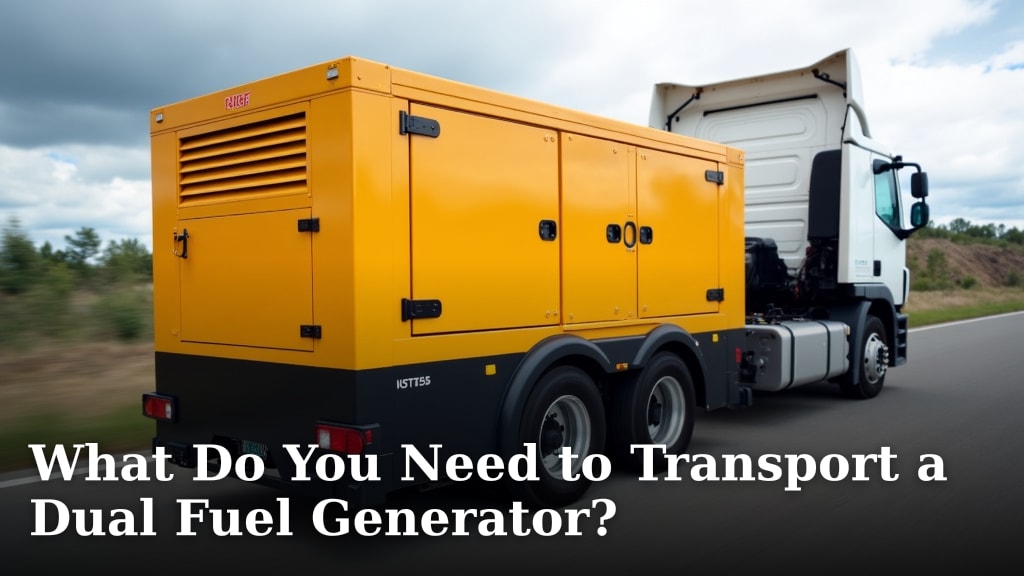
To transport a dual fuel generator, you’ll primarily need a sturdy dolly or hand truck, appropriate tie-down straps, and possibly a moving blanket for protection. Always ensure the generator is turned off and cool before you begin moving it. Your main goal is to move it safely and prevent damage.
Transporting a dual fuel generator involves more than just rolling it from point A to point B. You need to consider its weight and bulk, as well as the fuel source. Proper preparation protects both the generator and you from potential hazards and damage. We found that thinking ahead makes the whole process much smoother.
- Use a dolly or hand truck designed for heavy loads.
- Secure the generator tightly with strong straps.
- Protect the unit with padding if it’s being transported in a vehicle.
- Always ensure it’s completely off and cool.
Let’s walk through exactly what you’ll need to make transporting your dual fuel generator a safe and successful task.
“`htmlMoving Your Dual Fuel Generator: What You’ll Need
Transporting a dual fuel generator requires a few key items to ensure safety and prevent damage. Think of it like preparing for any important move. You wouldn’t move a prized antique without proper padding, right? Your generator deserves the same consideration.
We’ve found that having the right equipment makes all the difference. It turns a potentially back-breaking and hazardous task into a manageable one. Your primary goal is always safety. This means protecting yourself, the generator, and anything it might come into contact with.
The Essential Gear for Generator Transport
A Reliable Dolly or Hand Truck is Non-Negotiable
First and foremost, you absolutely need a sturdy dolly or hand truck. Generators can be surprisingly heavy, and their awkward shape makes them difficult to grip. Trying to lift and carry one without proper equipment is a recipe for disaster. We looked at several options, and a heavy-duty model designed for loads exceeding your generator’s weight is your best bet.
Look for a dolly with a weight capacity well above your generator’s specs. This gives you a safety margin. Wheels are important too. Larger wheels handle uneven surfaces better. Think about whether you’ll be moving it over grass, gravel, or just smooth concrete. A wider base on the dolly also provides more stability.
Many hand trucks have an adjustable strap built-in. This is fantastic for securing the generator to the frame. If yours doesn’t, don’t worry, we’ll cover other strapping options soon. Researching the specific dimensions of your generator beforehand can help you choose a dolly with a suitable platform size.
Secure Your Generator with Tie-Down Straps
Once the generator is on the dolly, it needs to be securely fastened. This is where tie-down straps come in. You’ll need straps that are strong and long enough to go around the generator and the dolly. Ratchet straps are excellent for this because they allow you to tighten them down firmly. Cam buckle straps are another good option if you prefer simpler tensioning.
We found that using at least two straps is recommended. One can secure the base to the dolly, and another can go around the top to prevent shifting. Make sure the straps are in good condition, without any fraying or damage. A worn-out strap could snap mid-move, which is exactly what you want to avoid. Always double-check the tightness of your straps before you start moving.
Consider the anchor points on your generator. Some have built-in handles or frame parts that are perfect for attaching straps. Avoid strapping around delicate components or wires. You want to create a solid, unified unit that moves as one. Imagine it as creating a strong, protective hug around your generator.
Padding for Protection: The Moving Blanket
If you’re transporting your generator inside a vehicle, like a truck bed or an SUV, padding is a must. A thick moving blanket can protect both the generator’s finish and your vehicle’s interior. Scratches and dents are less likely to happen if there’s a buffer in place. This is especially important if the generator might shift during transit.
You can use blankets to cushion the generator against the vehicle walls. They also prevent metal-on-metal contact. If your generator has a sensitive control panel or display, pay extra attention to cushioning that area. Some people use bubble wrap or foam for added protection on these sensitive parts, though a thick moving blanket often suffices.
Remember to secure the blanket itself. You don’t want it to become a tripping hazard or get caught in moving parts if the generator were to be accidentally started (though we’ll ensure that doesn’t happen!). Think of the blanket as a cozy, protective shell.
Pre-Move Generator Preparation: Safety First!
Turn It Off and Let It Cool Down
This step cannot be stressed enough: your generator must be completely off and cool before you even think about moving it. Generators get very hot during operation. Touching a hot engine or exhaust can cause severe burns. We’ve heard stories, and trust us, you do not want that to happen to you.
Allow ample time for the generator to cool down after its last use. This usually means at least 30 minutes to an hour, but longer is always better if you can manage it. Check that the engine is not warm to the touch before proceeding. This is a critical safety measure.
Dealing with Fuel: A Vital Consideration
Dual fuel generators run on gasoline and/or propane. Both require careful handling during transport. For gasoline, it’s best to run the fuel tank almost dry before moving. This significantly reduces the risk of leaks and fire hazards. If you can’t empty it completely, try to stabilize the remaining fuel by closing the fuel valve and ensuring the cap is tightly sealed.
If you are transporting a propane tank attached to the generator, it’s often recommended to disconnect the propane tank. Transport the tank separately, upright, and secured. Always transport propane tanks in a well-ventilated area, never inside a closed passenger vehicle. Many fire departments and safety organizations advise this (National Fire Protection Association).
When reconnecting the propane tank at your destination, do so carefully and check for leaks. For gasoline, refuel only when the generator is cool and in a well-ventilated area. Being mindful of fuel is a huge part of safe transport.
The Actual Moving Process: Step-by-Step
Securing to the Dolly
Carefully tilt the generator onto the dolly’s platform. If it has wheels, try to position them so they are stable. Use your tie-down straps to secure the generator firmly to the dolly frame. Ensure it’s snug and won’t wobble or slide off. We found that wrapping straps around the main body and frame provides the most security.
Maneuvering and Transporting
With the generator secured, you can now carefully move it. Tilt the dolly back slowly and use your legs, not your back. Move deliberately, avoiding sudden jerks. If you’re going up or down ramps or steps, take extreme caution. It’s often best to have a second person assist you, especially for tricky terrain.
Loading into a Vehicle
If loading into a truck bed or van, use a ramp if possible. Secure the generator inside the vehicle so it cannot slide or tip over. Use more tie-down straps if needed. Place the moving blankets around it to prevent damage. Make sure nothing can fall onto it during transit. A generator that shifts is a hazard.
A Quick Checklist for Your Generator Move
- Sturdy dolly or hand truck with adequate weight capacity.
- Strong tie-down straps (ratchet or cam buckle).
- Moving blankets or other padding.
- Ensure generator is completely off and cool.
- Minimize fuel in the gasoline tank.
- Consider disconnecting and separately transporting propane tanks.
Conclusion
Transporting your dual fuel generator safely is all about preparation. You’ve learned that having the right gear like a sturdy dolly and reliable tie-down straps makes a huge difference. Remember to always prioritize safety by ensuring the generator is off and cool, and by managing the fuel properly. By following these steps, you’ll protect your equipment and yourself.
Your next step is to gather these essential items before your next generator move. Taking a few moments to prepare will save you a lot of hassle and potential damage.
Frequently Asked Questions
Can I use a regular car jack to move my generator?
No, a regular car jack is not suitable for moving a generator. Jacks are designed to lift, not to transport. You need a device like a dolly or hand truck that can safely support and move the generator’s weight and size.
How do I safely handle propane tanks during transport?
It’s best to disconnect propane tanks from the generator. Transport them upright and secure them in a well-ventilated area, never inside a closed passenger car. Always check for leaks after reconnecting them at your destination.
What if my generator doesn’t have wheels?
If your generator lacks wheels, a dolly or hand truck becomes even more critical. Ensure the dolly has a broad, stable platform to rest the generator on securely. You’ll rely heavily on straps to keep it firmly attached.
Should I drain the oil as well as the fuel?
While draining the fuel is essential, you typically don’t need to drain the oil for short transports. However, always ensure the generator is kept upright to prevent oil leaks. Check your generator’s manual for specific transport recommendations.
How many people do I need to move a dual fuel generator?
While one person can often manage with the right equipment, having a second person is highly recommended, especially for navigating stairs, ramps, or uneven terrain. An extra set of hands ensures better control and safety.
